


Xolotl : The Aztec God of Lightning, Death, and Lost Souls
At a glance
| Description | |
|---|---|
| Origin | Aztec Mythology |
| Classification | Gods |
| Family Members | Chimalma (Mother), Quetzalcoatl (Brother) |
| Region | Mexico |
| Associated With | Underworld, Fire, Lightning |
Mythlok Perspective
In Mythlok’s Perspective, Xolotl can be seen as the Aztec counterpart to Anubis, but with a far more tragic and transformative role. Rather than simply ruling over the dead, he walks beside souls through the unknown and embodies sacrifice, change, and survival. His unusual appearance reminds us that divinity is not always found in beauty or perfection. Xolotl teaches that every ending is part of a greater journey, and that the courage to face darkness is often what leads us toward renewal.
Xolotl
Introduction
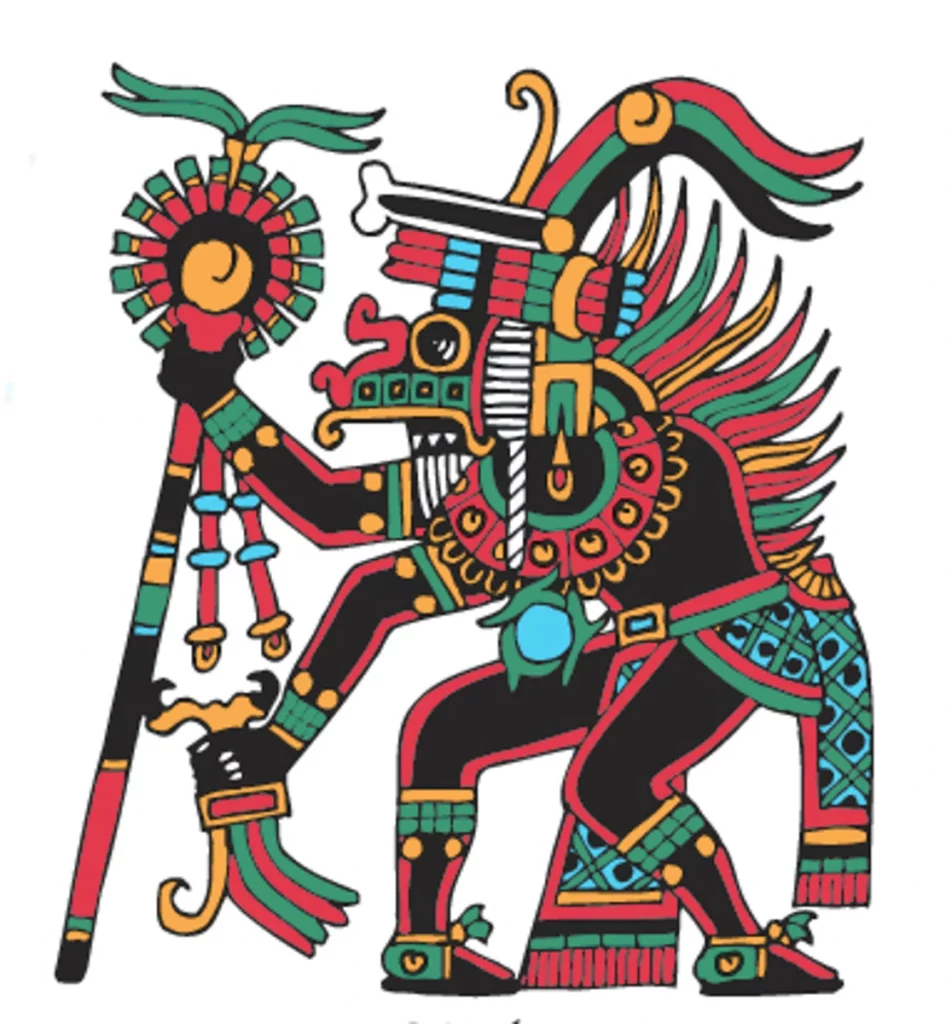
In Aztec mythology, Xolotl emerges as a complex and enigmatic figure. Often depicted as a dog-headed man, he plays a unique and paradoxical role in the pantheon of deities. Revered and feared in equal measure, Xolotl is associated with a diverse range of attributes, including fire, lightning, twins, monsters, death, misfortune, sickness, and deformities. Despite his fearsome reputation, he also serves as a guide for the souls of the departed, making him a multifaceted deity.
Xolotl is a fascinating figure, often linked with lightning, death, and the evening star. As a twin of the more well-known deity Quetzalcoatl, Xolotl embodies the dualities of life and death, light and darkness. Unlike Quetzalcoatl, the feathered serpent associated with life and creation, Xolotl represents the darker aspects of existence. His position within the Aztec pantheon highlights the complex understanding the Aztecs had of the natural world and the interconnectedness of life and death.
Xolotl’s role in Aztec mythology is multifaceted, as he is involved in various myths that explain the cycles of the sun, the nature of death, and the journey of souls. He is often depicted in art and stories as a dog-headed figure, reflecting his association with dogs, which were believed to guide souls through the underworld. This connection underscores his role as a guide and protector in the journey to Mictlan, the Aztec underworld. Through his association with fire, lightning, and guiding souls, Xolotl weaves together elements of mystery, transformation, and cosmic significance, illustrating the complex nature of Aztec mythology.
Physical Traits
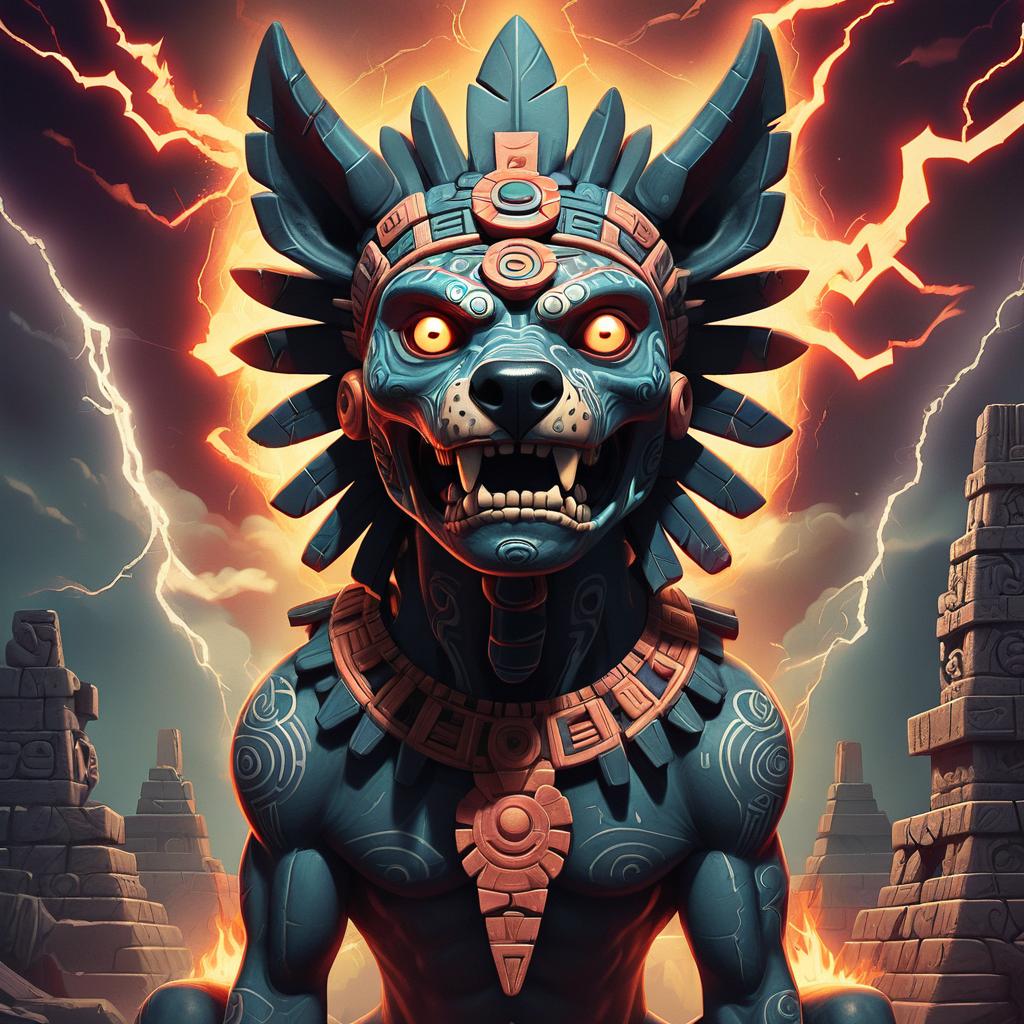
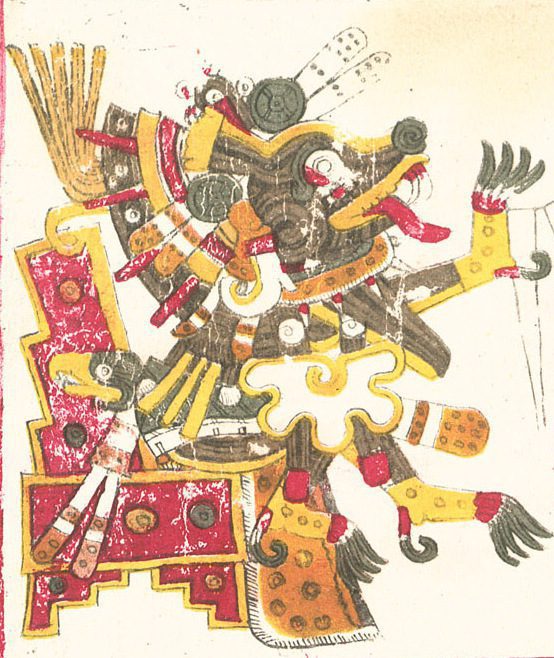
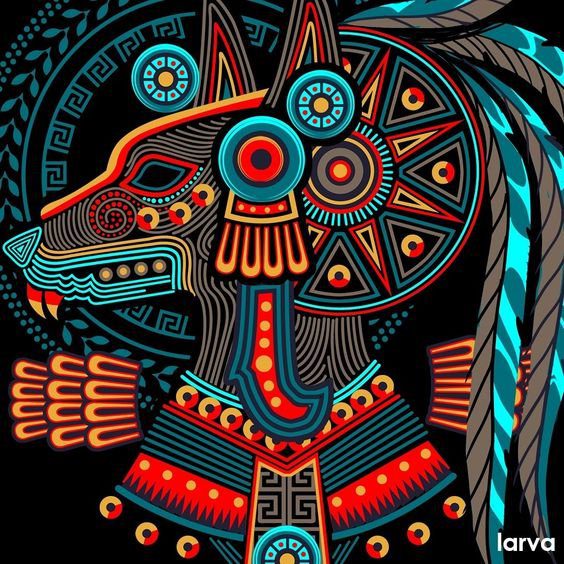
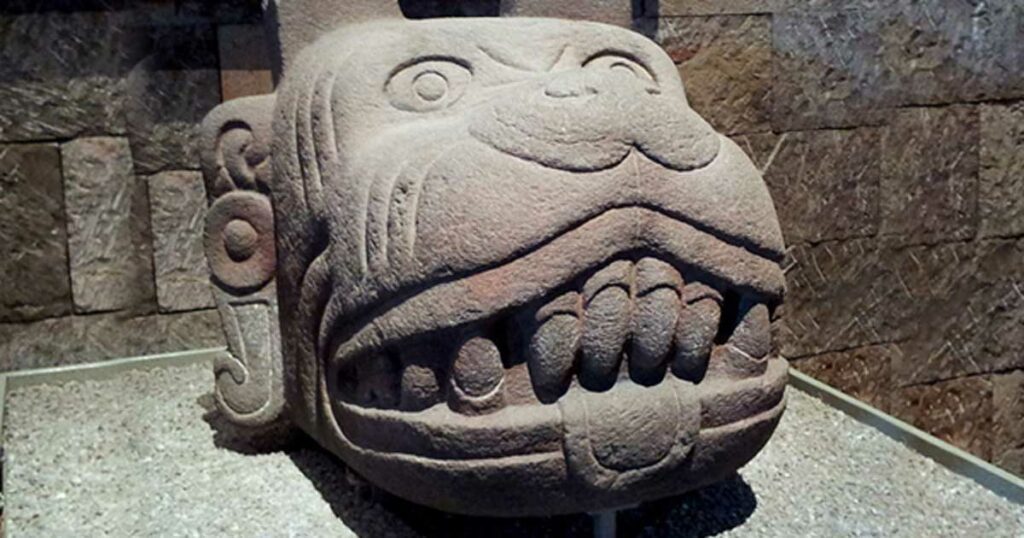
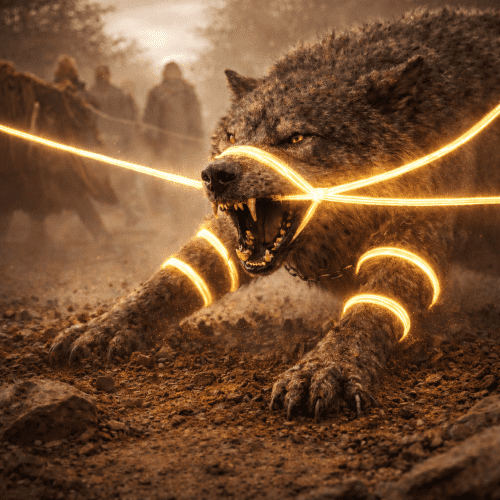
Xolotl is typically depicted with distinct physical features that set him apart from other deities in the Aztec pantheon. He is often shown with the head of a dog, emphasizing his connection to canines and his role as a guide to the underworld. This appearance reflects the belief that dogs have a special relationship with the afterlife, acting as companions and protectors for souls on their journey. In addition to his canine features, Xolotl is frequently portrayed with skeletal elements or symbols of death, such as bones or skulls, reinforcing his association with the darker aspects of existence. Despite his fearsome appearance, Xolotl is not an evil figure; instead, he represents the natural cycle of life and death, guiding souls with compassion and understanding.
Xolotl is also sometimes shown with backward feet, symbolizing his connection to the evening star and his role in the sun’s journey through the underworld. This unusual trait highlights his liminal nature, existing between the realms of the living and the dead, light and darkness. While Xolotl’s canine head sets him apart from other Aztec gods, his body is typically depicted in human form. This hybrid form symbolizes his dual nature—bridging the earthly and spiritual realms. Some interpretations suggest that his dog-headed form symbolizes loyalty and companionship, while others view it as a representation of the primal and instinctive nature of the underworld.
Family
Xolotl’s family connections are key to understanding his place in Aztec mythology. He is the twin brother of Quetzalcoatl, a revered deity associated with creation, knowledge, and the morning star. In contrast, Xolotl represents destruction, mystery, and the evening star, embodying the complementary aspects of existence that balance life and death, light and darkness. Their shared parentage links Xolotl to a broader divine lineage. Their father, Ometeotl, is a primordial deity embodying both male and female aspects and is regarded as the source of all creation.
The twins’ mother, the virgin goddess Chimalma, also plays a significant role in their mythological background. While Quetzalcoatl is associated with positive forces such as civilization and wisdom, Xolotl encompasses the more enigmatic and darker elements of the cosmos. Additionally, Xolotl’s connections extend to other underworld deities, such as Mictlantecuhtli, the god of the dead, and his wife, Mictecacihuatl, the goddess of the underworld. These relationships emphasize Xolotl’s role as a guide and protector in the afterlife, aligning him with the broader themes of death and transformation within Aztec cosmology.
Other names
Xolotl is known by several names and titles, each reflecting his multifaceted nature within Aztec mythology. One of his primary titles is “Monstruo de las Estrellas” or “Monster of the Stars,” highlighting his connection to the celestial realm and his association with the evening star, Venus. This name underscores his role in the transition between day and night, linking him to the mysterious and shifting aspects of the cosmos. Another significant title is “Nahualli,” which refers to his ability to shape-shift and navigate between different realms. This aspect connects Xolotl to the nahual, a spirit or animal companion that embodies the inner self, emphasizing his role as a guide for souls and his liminal nature.
Xolotl is also referred to as “Hombre Perro” or “Dog Man,” a name that reflects his canine features and his function as a psychopomp. This title highlights his role as a protector and guide for souls traveling through the underworld. In addition to these names, he holds titles that emphasize his broader attributes and roles, such as “God of Fire and Lightning,” linking him to powerful natural forces associated with both destruction and renewal. As the “Soul Guide,” Xolotl is acknowledged for his role in leading the deceased to the afterlife, while the title “God of Twins” recognizes his fraternal relationship with Quetzalcoatl.
Other names and titles further reveal different facets of Xolotl’s character. For instance, “God of Monsters and Deformities” reflects the darker aspects of his nature, tied to abnormalities and chaos. The name “Evil Twin” underscores his paradoxical nature, balancing light and shadow. Xoloitzcuintli” connects him to the sacred Xoloitzcuintli dog revered by the Aztecs, while “Xolo” serves as a shorter form emphasizing his canine aspect. Each of these names provides insight into the complex and enigmatic figure of Xolotl in Aztec mythology.
Powers and Abilities
Xolotl’s powers and abilities are diverse, reflecting his multifaceted nature in Aztec mythology. As the deity of fire and lightning, he wields control over these forces, symbolizing both destruction and purification. His connection to fire extends to transformation and rebirth, linking him to the regenerative aspects of creation. Xolotl’s role as a psychopomp is one of his most crucial functions; he guides souls through Mictlan, the Aztec underworld, ensuring their safe passage through its nine challenging levels to their final resting place.
Additionally, Xolotl’s shape-shifting ability, highlighted by his title “Nahualli,” allows him to assume various forms and navigate between different realms. This power is vital for his role as a guide, enabling him to adapt and protect souls throughout their journey. Xolotl also serves as a protector of the sun, shielding it from the perils of the underworld and ensuring its daily rebirth. His shape-shifting abilities include transformations into maize plants, maguey stalks, or the aquatic axolotl, showcasing his adaptability and creative influence.
Xolotl’s mythological significance is further underscored by his legendary sacrifice during the creation of the Fifth Sun. According to legend, his eyes fell out, symbolizing his willingness to sacrifice for the balance of the cosmos. This aspect of his myth highlights his deep connection to cosmic balance and the enduring role he plays in maintaining the natural order.
Modern Day Influence
Xolotl’s influence endures in modern culture and spirituality, despite the passage of time. In contemporary Mexico, he is honored during the Day of the Dead (Día de los Muertos), a festival that celebrates the deceased and mirrors the Aztec view of death as an integral part of life. Xolotl’s role as a guide and protector aligns with the festival’s themes, demonstrating how ancient beliefs continue to shape cultural practices.
In popular culture, Xolotl appears in various forms, including literature, art, and media, where he often symbolizes duality and transformation. His presence in these modern expressions explores themes of life, death, and identity, reflecting the enduring relevance of his mythological role. The Xoloitzcuintli, a hairless dog breed from Mexico named after the god, symbolizes loyalty and protection, further linking Xolotl to contemporary symbols of companionship and resilience.
Xolotl’s legacy also extends to spiritual practices, where his connection to the underworld and the journey of the soul provides insight and comfort to those exploring life’s mysteries. The axolotl, an amphibian named after Xolotl, represents regeneration and adaptability, echoing his transformative powers. This continued presence in cultural and spiritual contexts underscores Xolotl’s lasting impact, bridging ancient mythology with modern interpretations.
Related Images

Sources
Getty Research Institute. (n.d.). Digital Florentine Codex. https://florentinecodex.getty.edu/
World History Encyclopedia. (2025). Florentine Codex. https://www.worldhistory.org/Florentine_Codex/
Encyclopaedia Britannica. (n.d.). Aztec religion. https://www.britannica.com/topic/Aztec-religion
World History Encyclopedia. (2025). Axolotl. https://www.worldhistory.org/image/21238/axolotl/
Boone, E. H. (2007). Cycles of Time and Meaning in the Mexican Books of Fate. University of Texas Press.
Miller, M., & Taube, K. (1993). The Gods and Symbols of Ancient Mexico and the Maya: An Illustrated Dictionary of Mesoamerican Religion. Thames & Hudson.
Read, K. A., & González, J. J. (2000). Handbook of Mesoamerican Mythology. Oxford University Press.
Neumann, F. (1975). The dragon and the dog: Two symbols of time in Nahuatl religion. Numen, 22(1), 1–22. https://doi.org/10.1163/156852775X00012
Frequently Asked Questions
Who is Xolotl in Aztec mythology?
Xolotl is the Aztec god of lightning, death, monsters, and transformation. He is the twin brother of Quetzalcoatl and is best known for guiding the souls of the dead through Mictlan, the Aztec underworld.
Why does Xolotl have a dog's head?
Xolotl is depicted with a dog’s head because dogs were believed to guide souls safely through the afterlife in Aztec belief. His canine appearance symbolizes loyalty, protection, and his role as a psychopomp who escorts the dead.
Is Xolotl the twin of Quetzalcoatl?
Yes. According to Aztec mythology, Xolotl is the divine twin of Quetzalcoatl. While Quetzalcoatl represents life, creation, and the morning star, Xolotl is associated with death, transformation, and the evening star, reflecting the balance between opposing cosmic forces.
What are Xolotl's powers?
Xolotl possesses the power to guide souls to the underworld, transform into different creatures, control lightning and fire, and accompany the sun on its nightly journey through the underworld. His shape-shifting abilities also make him a symbol of survival and adaptation.
What is the connection between Xolotl and the axolotl?


