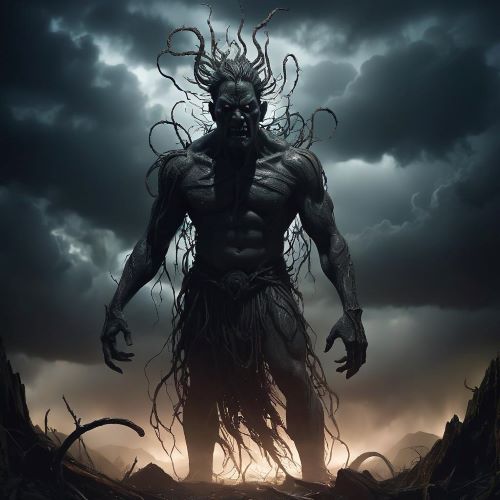
Māori Mythology
Māori mythology forms an important part of the spiritual and cultural heritage of the Māori people of Aotearoa New Zealand. Passed down through oral traditions, carving, weaving, song, and performance, these stories explain the origins of the universe, the natural world, and humanity’s relationship with the atua, or spiritual beings. These traditions remain relevant to Māori identity and cultural practice today.
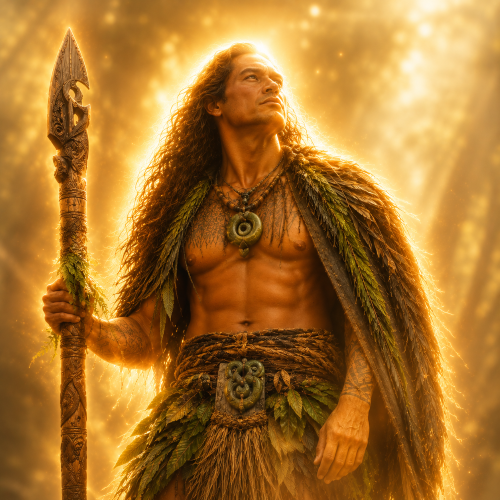
One of the central creation narratives tells of Ranginui, the Sky Father, and Papatūānuku, the Earth Mother. Their children, the atua, lived in darkness between them until Tāne separated his parents and allowed light into the world. The story establishes a profound relationship between people, the land, sky, forests, waters, and other forms of life.
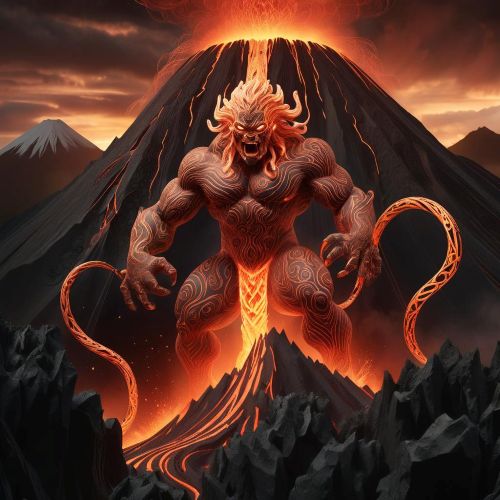
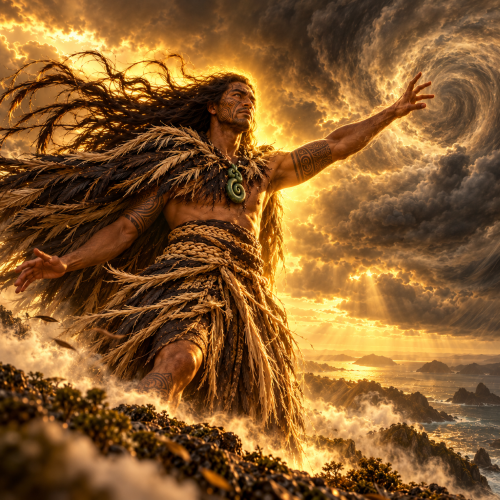
The atua represent different aspects of the natural and human worlds. Tāwhirimātea governs winds and storms, Tangaroa is associated with the sea, while Rongo and Haumia are connected with cultivated and wild foods. Tūmatauenga represents warfare and human strength. Together, these figures express the interconnected nature of the Māori cosmos.
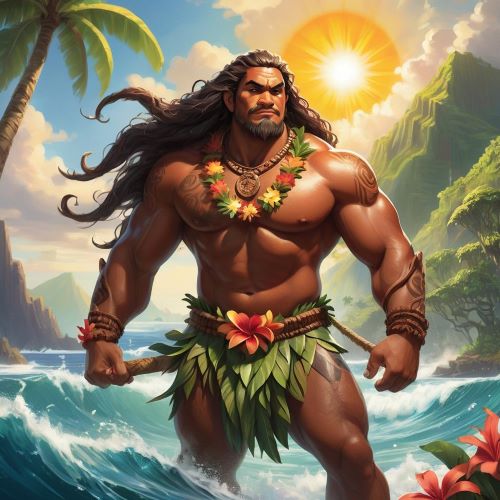
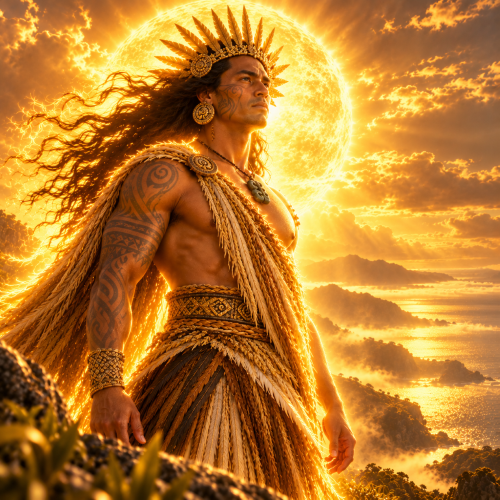
Māori traditions also celebrate heroic ancestors, particularly Māui, the famous demigod whose adventures are found across Polynesia. His feats include slowing the sun, obtaining fire, and fishing up Te Ika-a-Māui, the North Island. His stories emphasize ingenuity, courage, and the relationship between people and the forces of nature.
Whakapapa, or genealogy, is fundamental to Māori thought. People understand themselves as connected through ancestral lines to atua, ancestors, the land, and the wider natural world. This relationship is reflected in kaitiakitanga, the responsibility to act as guardians of the environment.
Mythological knowledge continues to be expressed through waiata, haka, pūrākau, carving, and gatherings at marae. Language revitalization and cultural renewal have also strengthened the transmission of Māori traditions.
Māori mythology remains a living expression of ancestry and identity, connecting people to the land, the natural world, and the generations that came before them.