


Paikea : The Māori Ancestor Who Rode a Whale to Aotearoa
At a glance
| Description | |
|---|---|
| Origin | Maori Mythology |
| Classification | Mortals |
| Family Members | Uenuku (Father), Ruatapu (Half-brother) |
| Region | New Zealand |
| Associated With | Whales, Cceanic journeys, Survival, Ancestry |
The Mythlok Perspective
In Mythlok’s Perspective, Paikea represents the idea that survival can become the foundation of collective identity. Like Odysseus in Greek mythology, who depends on intelligence and divine intervention to survive the dangers of the sea, Paikea’s journey illustrates the fragile relationship between human determination and forces beyond human control. Yet their stories serve different purposes: Odysseus’s voyage centres on returning home, while Paikea’s journey establishes an enduring ancestral connection between people, place, and the ocean. His whale rescue also challenges the assumption that nature exists merely as a resource for humanity.
Paikea
Introduction
Paikea is a legendary ancestor in Māori tradition, best known for surviving an attempt on his life and reaching Aotearoa (New Zealand) with the help of a whale. Originally known as Kahutia-te-rangi, he is closely associated with Hawaiki, the ancestral homeland featured in Polynesian traditions, and Whāngārā on the East Coast of New Zealand. His story is particularly important to Ngāti Porou and Ngāti Konohi, communities whose whakapapa (genealogy) connects them to his legacy.
According to a widely recorded version of the story, Paikea’s half-brother Ruatapu attempted to drown him and other young men at sea. Paikea survived by calling upon the guardians of the ocean, and a whale carried him to safety. This extraordinary journey established his enduring association with whales, survival, ancestry, and the relationship between people and the natural world.
Paikea is not a conventional deity with a defined collection of supernatural powers. He is primarily remembered as an ancestral figure whose story continues through Māori oral traditions, genealogies, carvings, and cultural expression. His legend also inspired Witi Ihimaera’s novel The Whale Rider (1987) and its internationally recognised film adaptation released in 2002.
Physical Traits
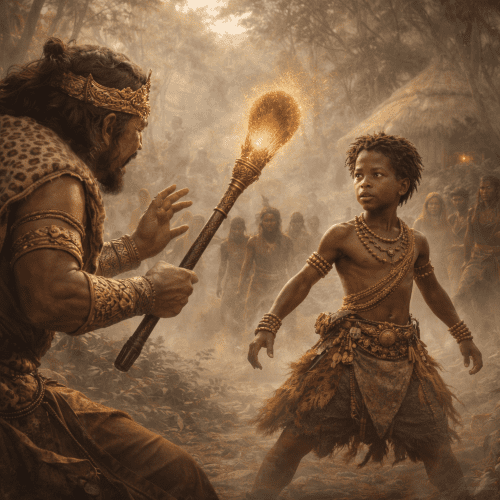
Traditional Māori accounts do not establish a definitive physical description of Paikea. They do not consistently specify his height, facial features, clothing, or other bodily characteristics. His identity is instead expressed through his ancestry and extraordinary connection with the sea.
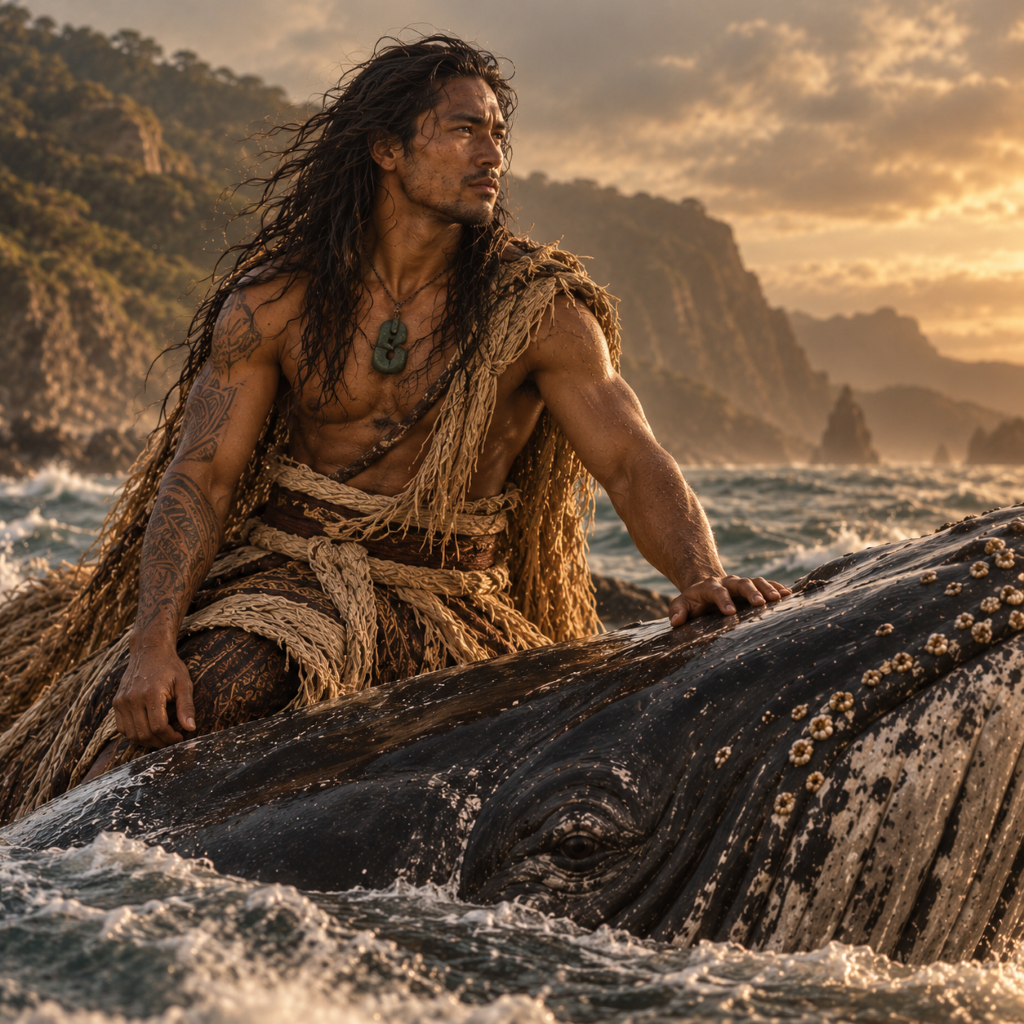
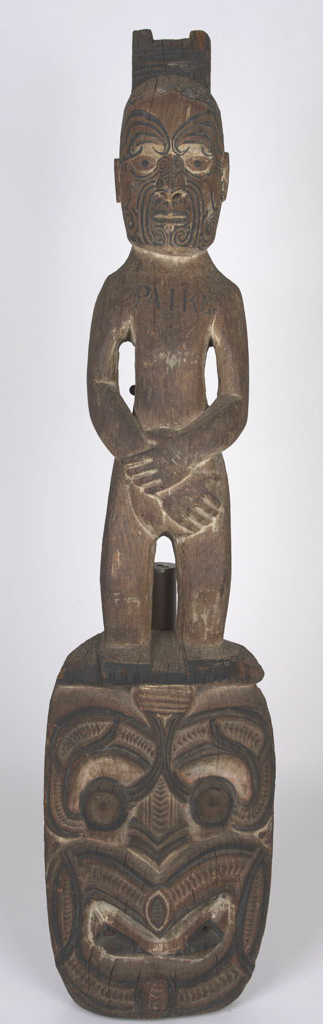
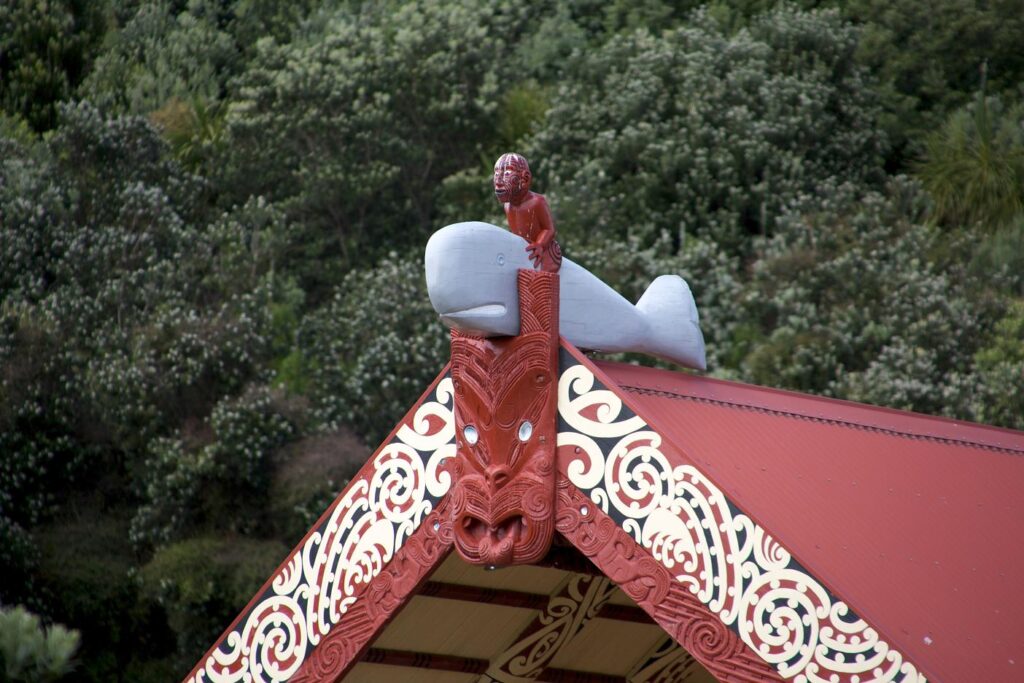
Artistic representations commonly depict Paikea riding a whale, making this image the defining visual element associated with him. A carving displayed at Waipapa Marae at the University of Auckland depicts the ancestral story of Kahutia-te-rangi, including the family conflict that preceded his rescue. Other carvings and representations connect Paikea with the East Coast community of Whāngārā.
Some accounts describe Paikea as becoming identified with a whale, while others present him as a human rescued by one. Such differences reflect the diversity of Māori oral traditions. For an accurate visual interpretation, Paikea is best represented as a Māori man in a culturally grounded setting, accompanied by a whale that symbolises his survival and ancestral significance.
Family
Paikea’s genealogy is central to his place in Māori tradition. He is commonly identified as the son of Uenuku, a high-ranking figure in Hawaiki. His original name was Kahutia-te-rangi, and his family relationships provide the background to the conflict that shaped his legend.
His half-brother Ruatapu became resentful after being humiliated over differences in their social standing. In a widely recorded account, Uenuku’s treatment of Kahutia-te-rangi as a high-born son intensified Ruatapu’s anger. Seeking revenge, Ruatapu lured Kahutia-te-rangi and other young men into a canoe and attempted to drown them at sea.
Kahutia-te-rangi survived, eventually becoming known as Paikea. His descendants are particularly significant to the history and identity of Ngāti Porou. Genealogical traditions connect him with Porourangi, the eponymous ancestor of Ngāti Porou. Other Māori traditions also associate Paikea with ancestral lines beyond the East Coast.
The precise relationships and details vary between accounts, so individual genealogies should be understood within their respective iwi traditions rather than combined into a single universal family tree.
Other names
Paikea is also known as Kahutia-te-rangi, the name associated with him before his celebrated whale journey. Some sources write this name as Kahutiaterangi, without hyphens. The name Paikea became associated with his survival and arrival on the New Zealand coast. It also has a direct connection to the natural world: paikea is a Māori term for the southern humpback whale.
This linguistic association reinforces the relationship between the ancestor and the animal that defines his story. However, the name’s use for a whale should not be taken as proof that Paikea was universally understood to be a whale or a transformed supernatural being. Paikea is also commonly referred to in English-language retellings as the Whale Rider. This description captures the central episode of his legend and has become the most recognisable way to introduce his story to international audiences.
Related traditions across Polynesia contain different accounts of Paikea’s survival and travels, demonstrating that the figure’s significance extends beyond a single written version of the Māori narrative.
Powers and Abilities
Paikea is remembered for his survival at sea and his extraordinary relationship with the ocean rather than for a standardised set of supernatural abilities. In the widely recorded Māori account, Ruatapu’s attempt to drown him leaves Paikea in mortal danger. He calls upon the guardians of the sea for assistance, and a whale arrives to carry him to safety. This episode presents him as a figure who possesses the spiritual knowledge and ancestral connection necessary to seek help from powers beyond the ordinary human world.
His principal attributes include resilience, spiritual connection, and a close relationship with whales. His survival also establishes his role as an enduring ancestral figure whose descendants preserve his story through whakapapa and community traditions. Some versions of the narrative describe a stronger identification between Paikea and the whale, but transformation should not be treated as a universal feature of his legend.
Similarly, although his journey is extraordinary, it is more accurate to describe it as a traditional account of ancestral survival than to assign him unrelated abilities such as immortality, flight, or healing. Paikea’s significance lies in the combination of human vulnerability, spiritual assistance, and the ocean’s protective role. His story reflects a wider pattern in Māori traditions in which whales can act as guides, protectors, and companions during dangerous journeys.
Modern Day Influence
Paikea remains an important ancestral figure in Māori cultural identity, particularly for communities associated with Whāngārā and Ngāti Porou. His story survives through oral traditions, genealogy, carvings, and the continuing cultural significance of places connected with his journey.
Whales also occupy an important place in Māori relationships with the natural world. Traditional accounts describe them guiding voyagers, protecting people at sea, and appearing in ancestral narratives. Paikea’s story belongs to this broader tradition rather than standing as an isolated tale about an extraordinary animal encounter.
His influence reached a global audience through Witi Ihimaera’s The Whale Rider, published in 1987, and the 2002 film directed by Niki Caro. The modern narrative centres on a Māori girl named Paikea, commonly called Pai, who seeks recognition as a leader within her community. Although inspired by the ancestral tradition, Pai is a fictional character rather than the historical or traditional ancestor himself. The novel and film reinterpret the older story through themes of leadership, cultural continuity, gender expectations, and the responsibilities of the next generation.
Paikea’s name has consequently become familiar to audiences who may encounter his story first through literature or cinema rather than Māori oral tradition. For Māori communities, however, his importance extends beyond popular culture. His legacy remains connected to ancestry, place, and the transmission of cultural knowledge between generations.
Related Images


Source
Lythberg, B., & Ngata, W. (n.d.). Te Aitanga a Hauiti: A history of place, people, and art. Environment & Society Portal. https://www.environmentandsociety.org/sites/default/files/14_lyth_ng.pdf
Ministry for Culture and Heritage. (2004, February 1). Te whānau puha – whales. Te Ara: The Encyclopedia of New Zealand. https://teara.govt.nz/en/te-whanau-puha-whales/print
Ministry for Culture and Heritage. (2004, February 1). Ngāti Porou. Te Ara: The Encyclopedia of New Zealand. https://teara.govt.nz/en/ngati-porou/print
Ministry for Culture and Heritage. (2009, March 2). Whale Rider: Paikea rides the whale. Te Ara: The Encyclopedia of New Zealand. https://teara.govt.nz/en/video/9199/whale-rider-paikea-rides-the-whale
Ministry for Culture and Heritage. (2009, March 4). Paikea, the whale rider. Te Ara: The Encyclopedia of New Zealand. https://teara.govt.nz/en/photograph/2228/paikea-the-whale-rider
Orbell, M. (1998). Traditional Māori stories. Reed Books.
Toitū Te Whenua Land Information New Zealand. (n.d.). Paikea: Memories of home.
https://www.linz.govt.nz/our-work/new-zealand-geographic-board/place-name-stories/maori-oral-history-atlas/paikea-memories-home
University of Canterbury. (2017). Post-graduate certificate in Antarctic studies 2016/2017 [Research report]. UC Research Repository. https://ir.canterbury.ac.nz/server/api/core/bitstreams/a43f3a84-df1e-4f0e-8eed-81460a3a0eee/content
Frequently Asked Questions
Who is Paikea in Māori mythology?
Paikea is a legendary Māori ancestor who survived an attempt by his half-brother Ruatapu to drown him at sea. A whale carried him to safety and connected his story with Aotearoa New Zealand.
Why is Paikea called the Whale Rider?
Paikea is called the Whale Rider because Māori tradition describes him surviving a dangerous sea journey with the help of a whale. His journey connects him with the ocean and ancestral traditions.
Who were Paikea's parents and siblings?
Paikea, originally known as Kahutia-te-rangi, is commonly identified as the son of Uenuku. His half-brother Ruatapu attempted to drown him after a dispute involving their father’s treatment of them.
Was Paikea a god or a mortal?
Paikea is primarily understood as an ancestral figure in Māori tradition, not a conventional god. His extraordinary survival and relationship with a whale give his story spiritual significance.
How did Paikea influence The Whale Rider?
Paikea’s ancestral legend inspired Witi Ihimaera’s 1987 novel The Whale Rider and its 2002 film adaptation. The modern story follows Pai, a fictional girl challenging expectations about leadership.


