


Alexandria’s Genesis : The Internet Legend of the Perfect Human
| Description | |
|---|---|
| Origin | Internet |
| Classification | Digital |
| Demeanour | Neutral |
| Habitat | Online |
| Status | Proven Hoax |
Mythlok Perspective
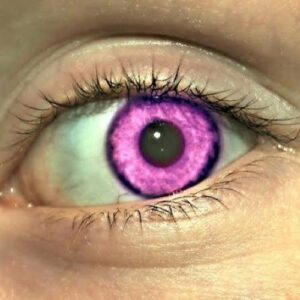
From the Mythlok perspective, Alexandria’s Genesis reflects an ancient human desire wrapped in modern technology. Like the Fountain of Youth, the Philosopher’s Stone, or tales of divine immortality, it promises beauty, perfect health, and an escape from the limits of the human body. The difference is that instead of gods or magic, this legend invokes genetics and scientific language. In doing so, Alexandria’s Genesis demonstrates how the internet has become a new birthplace for mythology, where pseudoscience often replaces the supernatural, but the timeless longing for perfection remains unchanged.
Alexandria’s Genesis
Introduction
Alexandria’s Genesis is one of the internet’s most enduring urban legends. It claims that a rare genetic mutation creates individuals with extraordinary physical perfection, including violet eyes, flawless skin, immunity to disease, and exceptionally long lifespans. For years, the story circulated across internet forums, blogs, social media posts, and copied articles, often presented as though it described a genuine but little-known medical condition.
In reality, Alexandria’s Genesis has no scientific basis. It originated as a piece of fanfiction before evolving into one of the web’s best-known digital hoaxes. As the story spread, its fictional origins were gradually stripped away, allowing many readers to mistake it for legitimate genetic research.
The legend remains fascinating because it blends pseudo-science with human aspirations. It borrows scientific terminology, references genetics, and presents an appealing vision of physical perfection, making the story feel believable at first glance. Today, Alexandria’s Genesis is studied not as a medical phenomenon but as an example of how internet folklore can transform fiction into widely accepted misinformation.
Physical Attributes
According to the legend, people born with Alexandria’s Genesis possess an almost supernatural collection of physical traits. The most recognizable feature is a dramatic eye colour change. Infants are supposedly born with blue or grey eyes that gradually become violet or deep purple during early childhood before darkening further during puberty.
The myth claims these individuals also have exceptionally pale, smooth skin that never burns in sunlight. Dark hair on the scalp contrasts with the complete absence of body and facial hair. Their eyesight is described as perfect, while their immune systems supposedly eliminate all illness, allowing them to remain healthy throughout life.
Women with the condition are said to remain fertile without menstruating, a claim that has no biological basis. The legend further insists that carriers maintain an ideal body weight regardless of diet because of an extraordinarily efficient metabolism. Some versions even claim they produce little or no bodily waste, another impossibility under normal human physiology.
Perhaps the most remarkable claim is longevity. Individuals with Alexandria’s Genesis supposedly age very slowly, often living for more than 150 years while retaining a youthful appearance. None of these characteristics have ever been documented in medical literature, and no recognised genetic disorder resembles the combination of traits described in the legend.
First Sighting/Reporting
Although many versions of the story claim Alexandria’s Genesis dates back to medieval England, its actual origin is far more recent. The modern legend began in 1998 when writer Cameron Aubernon created a piece of Daria fanfiction titled Purple Eyes and Other Interesting Anomalies. The fictional condition was introduced simply as a creative storytelling device to explain characters with unusual eye colours. Aubernon later confirmed that the mutation was entirely invented.
As the story spread beyond fanfiction communities, readers copied and reposted it without mentioning its fictional source. Over time, the narrative acquired an elaborate historical background that claimed the first known case occurred in London in 1329. According to this invented history, a girl named Alexandria Augustine developed striking purple eyes shortly after birth, frightening her parents until a priest declared the child blessed rather than cursed.
Some later versions expanded the mythology even further by connecting the mutation to ancient Egypt. These stories claimed mysterious “spirit people” received the mutation after a brilliant light appeared in the sky. No historical records, archaeological evidence, or medical documents support any of these origin stories. They exist solely as part of the evolving folklore surrounding Alexandria’s Genesis.
Other Names
As the legend spread across different online communities, Alexandria’s Genesis became known by several alternative names. The most common variations include Alexandria Genesis Syndrome, Purple Eye Syndrome, Violet Eye Mutation, and simply Purple Eyes.
These names helped the story circulate more widely because readers often encountered the legend under different titles without realising they referred to the same fictional condition. The medical-sounding terminology also gave the hoax an appearance of legitimacy, encouraging people to assume they had discovered a little-known genetic disorder rather than an internet myth. Despite these variations, Alexandria’s Genesis remains the name most closely associated with the legend today.
Modus Operandi
Unlike traditional folklore centred on monsters or ghosts, Alexandria’s Genesis spreads as digital misinformation rather than through eyewitness accounts. The story follows a pattern common to many successful internet hoaxes. It combines scientific vocabulary with extraordinary claims while avoiding details that can be easily verified. References to genetics, mutations, inheritance, and physiology create an illusion of medical credibility, even though the described traits contradict established biology.
During the early 2000s, Alexandria’s Genesis appeared on internet forums, email chains, Yahoo Answers, personal blogs, and copy-and-paste websites. As social media platforms became more popular, the legend found new audiences on Tumblr, Reddit, TikTok, Facebook, and YouTube. Each repost often removed references to its fictional origins, making the story appear increasingly authentic.
The legend also exploits confirmation bias. Purple eyes have long been associated with mystery and beauty in literature and popular culture, so readers are more willing to believe stories that promise a hidden genetic explanation. The appeal lies less in scientific accuracy than in the fantasy of possessing unique and desirable traits unavailable to ordinary people. Alexandria’s Genesis demonstrates how digital folklore evolves. A fictional narrative, repeated often enough and detached from its original context, can eventually be mistaken for historical or scientific fact.
Pop Culture References
Although Alexandria’s Genesis has never appeared in mainstream medical literature, it has become a notable part of internet culture. Its origins remain closely tied to the Daria fanfiction community, but the legend quickly spread into wider online folklore. It became a frequent topic on urban legend websites, creepypasta collections, paranormal forums, and speculative discussion groups where fictional stories were often presented alongside genuine mysteries.
The myth has also inspired YouTube explainers, TikTok videos, podcasts, Reddit discussions, and ASMR roleplay content that imagines Alexandria’s Genesis as a real medical condition. Artists and digital creators have used the concept to explore themes of beauty, identity, perfection, and misinformation.
The legend is frequently linked to actress Elizabeth Taylor, whose eyes were sometimes described as violet because of lighting, makeup, and naturally deep blue eye colour. However, there is no evidence that Taylor had purple eyes or any connection to the Alexandria’s Genesis myth. The association simply reinforced the fantasy that naturally violet eyes might exist. Today, Alexandria’s Genesis is recognised as one of the internet’s defining examples of digital folklore born from fan-created fiction.
Current Status
Alexandria’s Genesis is universally regarded by geneticists, medical professionals, and fact-checking organisations as a fictional internet hoax. No scientific evidence supports the existence of the mutation, and none of its claimed characteristics correspond to any recognised human genetic condition.
The original author has publicly confirmed that the concept was entirely fictional, bringing its true origins beyond dispute. Medical experts also note that naturally occurring violet eyes do not exist as a distinct eye colour. While lighting conditions, pigmentation disorders, or certain eye diseases may alter the appearance of eye colour, they cannot produce the collection of traits described by the legend.
Despite repeated debunking, Alexandria’s Genesis continues to circulate online because it combines appealing fantasies with scientific language. The story offers readers an idealised vision of beauty, health, and longevity while encouraging the belief that extraordinary genetic secrets remain hidden from the public. Today, Alexandria’s Genesis survives not as medicine but as digital mythology—a reminder that compelling stories can spread across the internet far faster than verified facts.



Source
All About Vision. (2021, October 13). What is Alexandria’s Genesis? https://www.allaboutvision.com/resources/human-interest/alexandrias-genesis/
Aubernon, C. (1998). Purple Eyes and Other Interesting Anomalies [Fan fiction]. Daria Fanworks Wiki. https://daria-fanworks.fandom.com/wiki/Alexandria%27s_Genesis
FactDr. (2021, December 20). Alexandria’s Genesis: Eyes, symptoms, mutation, … https://factdr.com/health-conditions/alexandrias-genesis/
Springhole.net. (n.d.). Alexandria’s Genesis is not real. https://springhole.net/other/alexandria%27s-genesis.htm
Waffles at Noon. (2015, November 1). Alexandria’s Genesis: Real or Fake? https://wafflesatnoon.com/alexandrias-genesis/
Answers.com. (2011, March 22). Where did the myth of Alexandria’s genesis originate? https://www.answers.com/fiction/Where_did_the_myth_of_Alexandria’s_genesis_originate
Frequently Asked Questions
Is the Bongcheon-Dong Ghost based on a true story?
Is Alexandria’s Genesis a real genetic condition?
No. Alexandria’s Genesis is a fictional condition created for a 1998 Daria fanfiction story and has no scientific or medical basis.
Who created Alexandria’s Genesis?
The concept was created by writer Cameron Aubernon as part of the fanfiction story Purple Eyes and Other Interesting Anomalies.
Why is the Bongcheon-Dong Ghost so scary?
Its fear comes from sudden animations, realistic setting, and emotional themes of loss rather than explicit violence.
Can humans naturally have purple eyes?
No. Humans do not naturally have purple eyes. Certain lighting conditions, makeup, or rare eye disorders may make blue or grey eyes appear violet, but true purple eyes are not recognised by medical science.
Why do people believe Alexandria’s Genesis is real?
The legend uses scientific language and an invented historical backstory, making it sound plausible. Years of reposting online also separated the story from its fictional origins.
What makes Alexandria’s Genesis an internet myth?
It began as fiction, spread through online communities without proper context, and became widely accepted by some readers despite the complete lack of scientific evidence.


