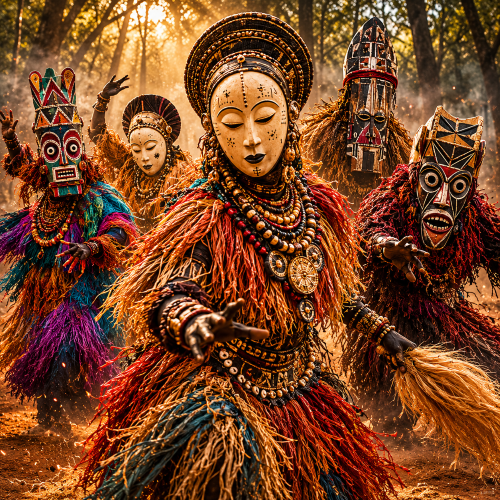
Puberty Rituals and the Journey from Childhood to Adulthood
Puberty rituals have long marked one of the most powerful turning points in human life. Across world traditions, the transition from childhood to adulthood was never treated as a quiet biological process. It was sacred, communal, and deeply symbolic. In ancient societies, puberty rituals did more than celebrate physical maturity. They shaped identity, responsibility, spirituality, and social belonging.
For students exploring world traditions, understanding puberty rituals reveals how civilizations interpreted growth, gender roles, courage, endurance, and transformation. These rites of passage were often woven into stories of gods, heroes, and cosmic cycles. Through myth and ceremony, young individuals were guided into adulthood with meaning rather than confusion. This article explores the importance of puberty rituals across different cultures and why they remain relevant even today.
Puberty Rituals as Sacred Rites of Passage
Anthropologists describe puberty rituals as “rites of passage,” a term popularized by scholar Arnold van Gennep. These rituals typically followed three stages: separation, transformation, and reintegration. Ancient societies understood that adolescence was not just physical change but a spiritual crossing.
Among the Maasai people of East Africa, boys underwent the warrior initiation known as Emuratare, involving circumcision and a period of seclusion. During this time, they learned discipline, bravery, and tribal responsibilities. Girls also participated in ceremonies marking their entry into womanhood, emphasizing community continuity.
In Australia, Aboriginal groups practiced the Walkabout, where adolescent boys spent time alone in nature. This was not exile but spiritual education. Guided by Dreaming stories, they connected with ancestral beings and the land itself. Similarly, in North America, the Navajo ceremony Kinaaldá celebrated a girl’s first menstruation. Inspired by the mythic figure Changing Woman, the ritual emphasized strength, beauty, endurance, and harmony with cosmic forces. These puberty rituals ensured that young individuals did not face adulthood alone. Instead, the entire community recognized and supported their transformation.
Mythological Foundations of Puberty Rituals
They were rarely isolated customs. They were rooted in mythological narratives. Many traditions connected adolescence to divine transformation. In ancient Greece, myths of Persephone symbolized seasonal change and feminine maturation. Her descent into the underworld and return each year mirrored cycles of growth and fertility. While not a direct ceremony, the myth influenced Greek views on womanhood and agricultural renewal. In India, coming-of-age ceremonies such as the Upanayana (sacred thread ceremony) signified spiritual rebirth for boys. This ritual marked the beginning of Vedic education and moral responsibility. It symbolized intellectual awakening alongside biological growth.
Among certain Native American tribes, vision quests were linked to mythic ancestors who first communed with spirits during adolescence. These stories reinforced the belief that puberty rituals allowed individuals to encounter divine guidance. Across cultures, mythology provided a script. Adolescents were not merely growing up; they were reenacting cosmic stories.
Social and Psychological Importance
Puberty rituals were deeply practical. Ancient communities depended on cooperation, survival skills, and clearly defined roles. Transitioning youth needed training and acknowledgment.
For boys, ceremonies often emphasized endurance, hunting skills, or warrior identity. For girls, rituals centered on fertility, domestic knowledge, and spiritual wisdom. While modern readers may critique rigid roles, in historical context these rituals provided structure and belonging.
From a psychological perspective, puberty rituals reduced uncertainty. Adolescence can be confusing. Ancient societies addressed this by openly discussing bodily changes, sexuality, and responsibility within sacred frameworks. Shame was replaced with ceremony. Isolation was replaced with mentorship.
The communal nature also strengthened intergenerational bonds. Elders passed down myths, laws, and survival knowledge. Young people gained confidence through public recognition. The ritual effectively told them: you are ready.
Trials, Symbolism, and Transformation
A striking feature of puberty rituals is the presence of trials. These could involve fasting, scarification, tattooing, solitude, or physical endurance. While intense, they symbolized death of childhood and rebirth into adulthood.
Among some Indigenous Australian communities, scarification symbolized connection to ancestral beings. In parts of the Pacific Islands, tattooing marked lineage and maturity. In Mesoamerican traditions, bloodletting ceremonies symbolized sacrifice and responsibility.
These acts were not random suffering. They mirrored mythological themes of descent and return, much like the hero’s journey. Just as heroes faced trials before achieving greatness, adolescents faced symbolic ordeals before claiming adult identity. The message was clear: transformation requires effort.
Gender and Puberty Rituals
Many puberty rituals were gender-specific, reflecting cultural expectations. However, both boys and girls underwent powerful ceremonies acknowledging their importance. For girls, menstruation ceremonies often emphasized creative power. In Navajo tradition, the Kinaaldá honored the belief that a young woman embodied divine creative energy during her first menstrual cycle. She was treated as spiritually powerful, capable of blessing others.
For boys, initiation often emphasized responsibility and protection. In African and Pacific traditions, the shift from boyhood to warrior status carried deep communal honor. Although modern societies debate traditional gender roles, studying puberty rituals reveals that ancient cultures viewed adolescence as sacred regardless of gender.
Why Puberty Rituals Still Matter
In many modern societies, puberty rituals have weakened or disappeared. Adolescence is often marked by confusion rather than ceremony. Yet echoes remain in graduations, confirmations, bar mitzvahs, quinceañeras, and other coming-of-age celebrations.
Understanding puberty rituals helps students appreciate how ancient societies integrated biology with spirituality. These rituals offered clarity, identity, and belonging. They transformed private change into communal celebration.
Today, psychologists recognize that meaningful rites of passage can strengthen resilience and self-esteem. While practices evolve, the human need to mark transition remains universal. Puberty rituals remind us that growth is not accidental. It is acknowledged, guided, and honored.
Conclusion
Across continents and centuries, puberty rituals have served as sacred bridges between childhood and adulthood. Rooted in mythology, reinforced by community, and marked by symbolism, these ceremonies shaped individuals into responsible members of society.
For students exploring world traditions, puberty rituals reveal how ancient cultures understood transformation not just as physical change but as spiritual awakening. They demonstrate that every society, regardless of geography, sought to answer the same question: how do we guide the young into maturity with dignity and meaning? Even today, the lessons of puberty rituals remain relevant. They teach us that growth deserves recognition, mentorship, and celebration.



No posts were found.