

Sword of Freyr : The Self-Fighting Blade of Freyr
At a glance
| Description | |
|---|---|
| Mythology | Norse Mythology |
| Type | Carried |
| Power | 08/10 |
Mythlok Perspective
In Mythlok’s Perspective, the Sword of Freyr is the Norse equivalent of legendary weapons like Excalibur or the Spear of Destiny, not because of the battles it won, but because of what its owner chose to sacrifice. Unlike most mythical heroes who seek ever-greater power, Freyr willingly gave up the greatest weapon in the Nine Realms for love. That decision makes the Sword of Freyr less a symbol of war and more a reminder that our defining moments are often the sacrifices we choose to make. In Norse mythology, destiny is rarely forged by victory alone, it is shaped by the price we willingly pay.
Sword of Freyr
Introduction
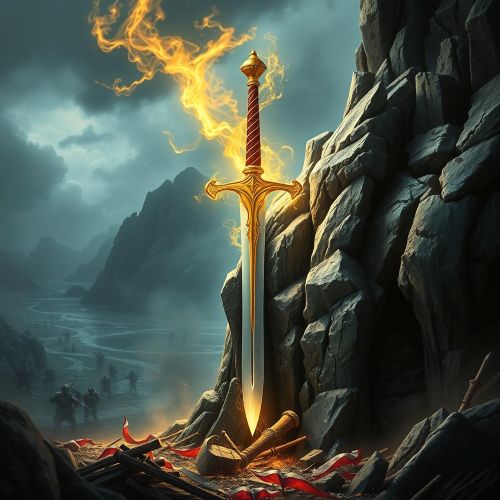
The Sword of Freyr is one of the most fascinating magical weapons in Norse mythology. Unlike Thor’s hammer or Odin’s spear, this legendary blade required little guidance from its owner. According to Old Norse tradition, it could fight on its own, making it one of the most powerful divine weapons in the Nine Realms.
Yet the Sword of Freyr is remembered less for the battles it won than for the one battle it never fought. When the Vanir god Freyr surrendered the sword in exchange for the chance to marry the giantess Gerðr, he unknowingly gave up the only weapon that might have saved his life during Ragnarök. This choice transformed the sword into a lasting symbol of sacrifice, love, and the unavoidable consequences of fate.
Origins
The earliest references to the Sword of Freyr appear in the Poetic Edda, especially in Skírnismál, and later in *Snorri Sturluson’s Prose Edda. These medieval sources describe Freyr as possessing several extraordinary treasures, including the ship Skíðblaðnir, the golden boar Gullinbursti, and his remarkable sword.
Unlike Mjölnir or Gungnir, the medieval texts never clearly explain who forged the sword. While many modern articles state that dwarves created it, the surviving sources do not explicitly say so. Because Freyr’s other treasures were crafted by dwarven smiths, many scholars consider a dwarven origin likely, but it cannot be stated as established fact.
The weapon is never given a personal name in the original Norse texts. The popular name Sumarbrandr or Sumarbrander, meaning “Summer Sword,” comes from later literature, games, and modern adaptations rather than medieval mythology.
The sword also reflects Freyr’s role as a god of sunshine, fertility, peace, and prosperity. Rather than representing conquest alone, it embodies the idea that divine strength exists to preserve balance, protect life, and ensure abundance.
Powers
What makes the Sword of Freyr unique is its extraordinary ability to fight without being wielded. The Prose Edda describes it as a weapon capable of battling on its own, making it unlike any other famous weapon in Norse mythology.
This supernatural independence meant that Freyr possessed a weapon that could defend him even without direct control. Such an ability elevated the sword far above ordinary enchanted blades and demonstrated the magical craftsmanship associated with the gods‘ greatest treasures.
The sword was also renowned for its effectiveness against giants. Since Freyr frequently represented order, fertility, and civilization, the blade symbolized the divine power that kept the destructive forces of chaos at bay. It was both a weapon of war and a guardian of peace.
Many modern interpretations also connect the sword with sunlight because of Freyr’s close association with warmth and growing seasons. Although the medieval sources never describe the blade as radiating solar energy, this symbolism has become a widely accepted interpretation among scholars and storytellers alike.
Owners/Users
Freyr was the original owner of the Sword of Freyr, and it remained one of his greatest treasures until he fell deeply in love with the giantess Gerðr.
Unable to approach her himself, Freyr sent his loyal servant Skírnir to win her hand. Skírnir agreed to undertake the dangerous journey into Jötunheim only after Freyr offered him several valuable gifts, including his magical horse and the Sword of Freyr.
During the mission, Skírnir carried the sword as both protection and a powerful bargaining tool. When Gerðr rejected generous gifts and promises of wealth, he finally resorted to threats backed by the divine weapon and powerful magical curses before she accepted the meeting with Freyr.
After this exchange, Freyr never reclaimed the sword. Its absence would define the final chapter of his story and become one of the most tragic examples of sacrifice in Norse mythology. In modern popular culture, the sword appears under different names and interpretations, including Sumarbrander in Magnus Chase and the sentient sword Ingrid in God of War Ragnarök. These versions are creative adaptations rather than direct representations of the medieval myths.
Instances used
The Sword of Freyr plays its most important role during the events of Skírnismál. Armed with the magical blade, Skírnir journeys across dangerous lands into Jötunheim to seek Gerðr on Freyr’s behalf. The sword serves as a symbol of divine authority throughout the mission, reinforcing the seriousness of Freyr’s proposal.
Later, Freyr faces the giant Beli after having already given away his legendary weapon. Without his magical sword, he kills Beli using nothing more than a stag’s antler. Although this victory demonstrates Freyr’s courage and strength, it also foreshadows the cost of surrendering his greatest weapon.
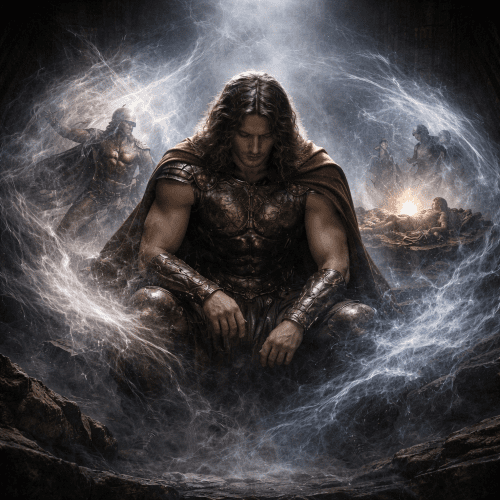
The sword’s absence becomes even more significant during Ragnarök. According to the Prose Edda, Freyr confronts the fire giant Surtr without his magical blade and is ultimately killed in battle. Snorri Sturluson directly links Freyr’s death to his earlier decision to part with the sword.
Some later interpretations speculate that Surtr may have wielded Freyr’s own sword against him. However, the surviving medieval sources do not explicitly confirm this, making it an intriguing possibility rather than established Norse tradition.


Source
Sturluson, S. (1995). The Prose Edda (A. G. Brodeur, Trans.). Dover Publications.
Dronke, U. (1997). The Poetic Edda: Volume II: Mythological Poems. Oxford University Press.
Lindow, J. (2001). Norse Mythology: A Guide to Gods, Heroes, Rituals, and Beliefs. Oxford University Press.
Davidson, H. R. E. (1990). Gods and Myths of Northern Europe. Penguin Books.
Hurstwic. (n.d.). Freyr. Hurstwic Articles on Norse Mythology. http://www.hurstwic.com/history/articles/mythology/myths/text/freyr.htm
Timeless Myths. (2002). Freyr — Norse Gods. TimelessMyths.com. https://timelessmyths.com/gods/norse/freyr
Wikipedia contributors. (2017). Sword of Freyr. In Wikipedia, Weapons of Norse mythology. https://en.wikipedia.org/wiki/Sword_of_Freyr
Frequently Asked Questions
What is the Sword of Freyr in Norse mythology?
The Sword of Freyr is the magical weapon of the Vanir god Freyr, famous for its ability to fight independently without needing a wielder.
Why did Freyr give away his sword?
Freyr gave the sword to his servant Skírnir as payment for convincing the giantess Gerðr to marry him.
Could the Sword of Freyr really fight on its own?
Yes. According to the Prose Edda, the sword could fight by itself, making it one of the most extraordinary weapons in Norse mythology.
How did Freyr die at Ragnarök?
Freyr faced the fire giant Surtr without his magical sword and was killed in battle, fulfilling the tragic consequence of giving away his greatest weapon.
Is Sumarbrandr the original name of the Sword of Freyr?
No. The medieval Norse sources do not give the sword a personal name. “Sumarbrandr” or “Sumarbrander” is a later name popularized by modern literature and adaptations.