Avaiki : The Primordial Underworld of the Cook Islands
| Description | |
|---|---|
| Mythology | Cook Islands Mythology |
| Description | Hollow coconut shell underworld |
| Ruler/Guardian | Varima-te-takere |
| Inhabitants | Spirits, ancestors |
| Nature | Neutral |
Mythlok Perspective
In Mythlok’s Perspective, Avaiki occupies a fascinating space between the Greek Underworld and the Polynesian idea of Hawaiki, yet it ultimately resembles neither. Unlike Hades, it is not defined by judgment, and unlike many ancestral homelands, it is also the very womb of creation. Avaiki reminds us that many ancient cultures saw life and death as parts of the same cycle rather than opposing forces. Its image as the hidden interior of a cosmic coconut shell suggests that every ending returns to the same source from which every beginning emerged. The deeper lesson of Avaiki is that origins are never truly left behind—they continue to shape identity, destiny, and belonging across generations.
Avaiki
Introduction
Avaiki is one of the most important concepts in Cook Islands mythology, particularly in the traditions of Mangaia. Often described as an underworld, Avaiki is far more than a realm of the dead. It is the primordial homeland from which gods, humans, and even the island itself emerged. In traditional Cook Islands cosmology, Avaiki represents the source of existence, the dwelling place of ancestors, and the destination of souls after death.
The name Avaiki is closely related to other Polynesian ancestral homeland traditions, including Hawaiki in Aotearoa (New Zealand), Hawaiʻi in Hawaii, and Havai‘i in Tahiti. While these traditions share common roots, Mangaian mythology developed a unique vision of Avaiki as a vast subterranean realm beneath the visible world. As a result, Avaiki occupies a central place in Cook Islands beliefs about creation, ancestry, life, death, and the structure of the universe itself.
Description
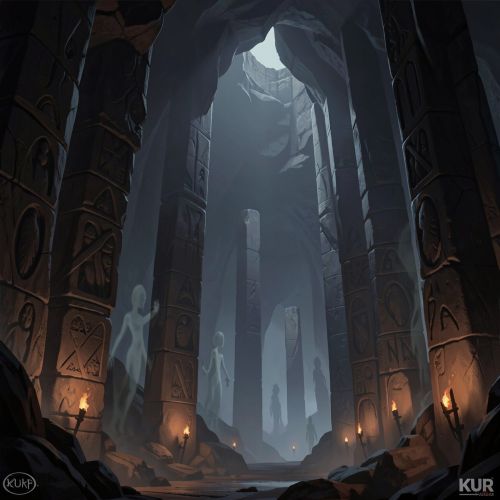
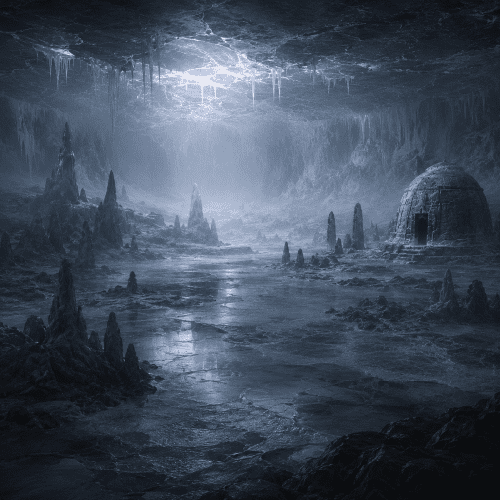
According to Mangaian cosmology, the universe resembles the interior of a giant coconut shell. Avaiki occupies the hollow interior of this cosmic shell, while the world of living humans exists above and around it. Rather than being a single location, Avaiki consists of multiple levels connected through spiritual pathways.
The deepest part of Avaiki narrows to a point at the base of the cosmic structure. Here resides the mysterious force known as Te Aka Ia Roe, often translated as “the root of all existence.” This primordial spiritual essence forms the foundation upon which all creation depends.
Above this deepest point lies a series of increasingly expansive realms inhabited by divine beings and ancestral spirits. The imagery of a hollow coconut shell reflects the idea that life begins in an enclosed, hidden space before expanding outward into the visible world. In this way, Avaiki serves as both the cosmic interior and the womb of creation.
Unlike many underworlds found in other mythologies, Avaiki is not primarily associated with punishment or suffering. Instead, it functions as a sacred place of origins where the forces that shaped the universe first emerged.
Ruler/Guardian
The deity most closely associated with Avaiki is Varima-te-takere, a primordial goddess whose name is often interpreted as “the very beginning.” She occupies the deepest levels of the underworld and plays a crucial role in Mangaian creation mythology.
Traditional stories describe Varima-te-takere as dwelling in a confined space at the base of existence. From her own body she created the first divine beings, including Avatea, one of the most important figures in Cook Islands mythology. Avatea later became associated with light, life, and the continuation of creation.
Rather than ruling Avaiki as a monarch governing the dead, Varima-te-takere embodies the generative power of the universe itself. Her role resembles that of a cosmic mother whose creative energy gives rise to gods, humans, and the natural world.
Other divine beings inhabit the upper levels of Avaiki, but no single deity acts as an absolute ruler over every aspect of the realm. Instead, Avaiki functions as a layered spiritual domain inhabited by numerous ancestral and divine powers.
Inhabitants
Avaiki is home to a wide variety of supernatural beings. The realm contains primordial deities, ancestral spirits, culture heroes, and the souls of deceased humans. Among its earliest inhabitants are the creator gods who emerged during the formation of the cosmos. These divine figures occupy different levels of the underworld and play important roles in shaping the world above.
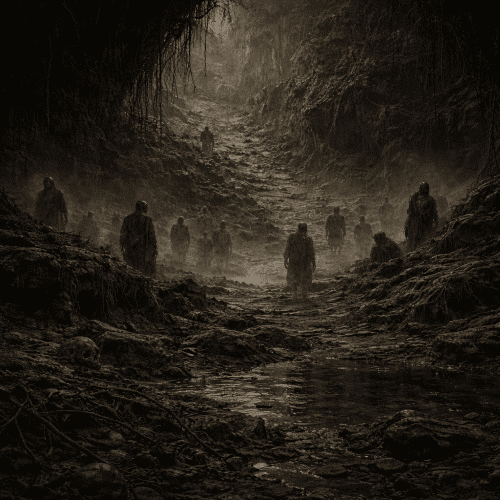
The spirits of ancestors also reside within Avaiki. In traditional Cook Islands belief, the dead remain connected to their living descendants and can influence human affairs. Their presence reinforces the importance of genealogy, family lineage, and ancestral respect throughout Polynesian culture.
Mythological heroes are likewise linked to Avaiki. Some narratives describe early cultural ancestors journeying from the underworld into the world of the living, emphasizing the idea that humanity itself originated from this sacred realm. Because Avaiki serves as both an ancestral homeland and a spiritual destination, its population continually bridges the worlds of gods, spirits, and humans.
Access
Access to Avaiki is most commonly associated with the journey of the soul after death. Across the Cook Islands, certain coastal locations were traditionally regarded as departure points where spirits began their voyage to the underworld.
One of the best-known examples is the site known as Black Rock on Rarotonga. Local traditions identify this location as a spiritual gateway through which departing souls entered the sea and continued their journey toward Avaiki.
These sacred departure points mirror similar traditions found throughout Polynesia, where specific cliffs, rocks, or coastal landmarks serve as thresholds between the worlds of the living and the dead.
While ordinary people could not physically enter Avaiki, ritual specialists known as ta‘unga were believed to communicate with its inhabitants through chants, prayers, and spiritual practices. Through these sacred acts, connections between the visible and invisible worlds could be maintained.
Instances of Visit
Several traditional narratives describe interactions between the human world and Avaiki. One of the most significant involves Rangi, a culture hero associated with the origins of Mangaia itself. According to tradition, Rangi hauled the island of Mangaia upward from Avaiki, bringing it into the world of light. This story highlights the close relationship between the underworld and the physical landscape of the Cook Islands. Rather than existing as separate realities, the two realms remain deeply interconnected.
Other accounts describe priests and spiritual experts communicating with the inhabitants of Avaiki to seek guidance, healing, or solutions to communal problems. These interactions were not necessarily physical journeys but spiritual exchanges that reinforced the ongoing relationship between the living and their ancestors. Such stories portray Avaiki as an accessible spiritual reality whose influence extends into everyday life.
Symbolism
Avaiki symbolizes both the beginning and the end of existence. It is simultaneously a womb from which life emerges and a destination to which life ultimately returns. The coconut-shell cosmology captures this dual symbolism perfectly. The enclosed interior represents gestation, creation, and hidden potential, while the outer world symbolizes growth, experience, and visible existence.
Varima-te-takere’s position at the deepest point of the cosmos further reinforces the idea of Avaiki as a source of life. Her role as a creator mother reflects themes of birth, transformation, and renewal.
At a broader level, Avaiki symbolizes ancestral continuity. The living are never fully separated from those who came before them. Instead, both groups remain connected through genealogy, memory, ritual, and spiritual obligation. For the people of the Cook Islands, Avaiki represents the enduring relationship between origin, identity, and destiny.
Comparative Analysis
Avaiki belongs to a wider family of Polynesian traditions centered on an ancestral homeland known by related names such as Hawaiki, Havai‘i, and Hawaiʻi. These shared names point to a common cultural heritage stretching across the Pacific Ocean.
What distinguishes the Mangaian understanding of Avaiki is its elaborate cosmological structure. While other Polynesian traditions often describe the ancestral homeland as a distant island across the sea, Cook Islands mythology places Avaiki beneath the world itself.
This makes Avaiki both a homeland and an underworld. Its role is therefore broader than many comparable mythological realms. Rather than serving solely as a place of the dead, it acts as the birthplace of creation, the residence of ancestral spirits, and the foundation of cosmic order.
In comparison with Western underworlds such as Hades, Avaiki places far less emphasis on judgment and punishment. Its primary function is to preserve the continuity between ancestors, gods, and the living world.
Modern Influence
Avaiki continues to hold cultural significance throughout the Cook Islands and the wider Polynesian world. Traditional stories about Avaiki remain important sources of cultural identity and historical memory.
Heritage organizations frequently highlight the connection between sacred landscapes and ancestral beliefs, particularly at sites associated with spirit journeys. These locations serve as reminders of the enduring relationship between mythology and place.
Modern writers, educators, and artists also draw inspiration from Avaiki when exploring themes of ancestry, migration, identity, and spirituality. The concept continues to appear in literature, cultural programs, and academic studies focused on Polynesian history and religion. Today, Avaiki remains more than a mythological underworld. It stands as a powerful symbol of origin, belonging, and the unbroken connection between past and present in Cook Islands culture.
Sources
Buck, P. H. (Te Rangi Hīroa). (1934). Mangaian society. Bernice P. Bishop Museum.
Buck, P. H. (Te Rangi Hīroa). (1927). The material culture of the Cook Islands (Aitutaki). Bernice P. Bishop Museum.
Buck, P. H. (Te Rangi Hīroa). (1944). Vikings of the sunrise. J. B. Lippincott.
Bučková, B. (2010). A comparison and analysis of eschatological themes in selected Polynesian traditions. Asian and African Studies, 19(1), 5–24.
Wikipedia contributors. (2023, May 6). Avaiki. In Wikipedia, The free encyclopedia. Retrieved June 22, 2026, from https://en.wikipedia.org/wiki/Avaiki
Wikipedia contributors. (2012, July 30). Cook Islands mythology. In Wikipedia, The free encyclopedia. Retrieved June 22, 2026, from https://en.wikipedia.org/wiki/Cook_Islands_mythology
Cook Islands Natural Heritage Trust. (2024, April 9). “That isn’t really a pig”: The Cook Islands’ spirits and priests. Cook Islands Natural Heritage. https://cinature.org/2024/04/09/post-template/
Frequently Asked Questions
What is Avaiki in Cook Islands mythology?
Avaiki is the primordial underworld and ancestral homeland in Cook Islands mythology. It is believed to be the place where gods, humans, and the cosmos originated.
Is Avaiki the same as Hawaiki?
Avaiki is closely related to Hawaiki and other Polynesian ancestral homeland traditions. They share common linguistic and cultural roots, although Avaiki developed unique features in Cook Islands mythology.
Who rules Avaiki?
The primordial goddess Varima-te-takere is the deity most closely associated with Avaiki. She is regarded as a creator figure who gave birth to the first divine beings.
Do souls go to Avaiki after death?
Yes. Traditional Cook Islands beliefs hold that the spirits of the dead travel to Avaiki through sacred departure points such as coastal cliffs and rocks.
Why is Avaiki important in Polynesian culture?
Avaiki connects creation, ancestry, and the afterlife into a single worldview. It serves as a symbol of origin, identity, and the enduring bond between the living and their ancestors.