
Incan Creation Story : How Viracocha Created the World
| Description | |
|---|---|
| Origin | Inca Mythology |
| Country | Peru, Bolivia |
| Deities Involved | Viracocha, Inti, Mama Killa |
| Symbolism | Water (chaos/life), Flood (renewal), Clay (human fragility), Sun/Moon (order) |
| Process | Emergence from Lake Titicaca, Creation of giants, Flood, Creation of sun, moon, and stars, Humanity from clay, Teaching civilization |
Mythlok Perspective
In Mythlok’s View, the Incan Creation Story presents creation not as a perfect act, but as a process of refinement shaped by trial and correction. This aligns with the Norse cycle of destruction and rebirth seen in Ragnarok, as well as the cyclical creation themes in Indian cosmology. Unlike the singular creation of Abrahamic traditions, the Andean vision accepts imperfection as part of divine design. In comparison to figures like Quetzalcoatl or Prometheus, Viracocha stands apart as both creator and distant observer, emphasizing balance over control.
Incan Creation Story
Introduction
The Incan Creation Story stands at the heart of Andean belief, weaving together cosmology, geography, and identity into a single powerful narrative. At its center is Viracocha, the supreme creator god, a mysterious and often distant figure who shaped the world, humanity, and the rhythms of existence. Long before the Inca Empire rose to power, this myth circulated among earlier Andean cultures such as Tiwanaku, eventually becoming a cornerstone of Inca state ideology.
What makes the Incan Creation Story especially compelling is how deeply it ties creation to the physical landscape. Mountains, lakes, and stones are not just scenery but remnants of divine action. The myth was preserved through oral tradition and later recorded by Spanish chroniclers, meaning what we know today is a blend of indigenous memory and colonial interpretation. Even so, the essence remains clear: the world was not created once, but refined through cycles of failure, destruction, and renewal.
Cosmic Origins
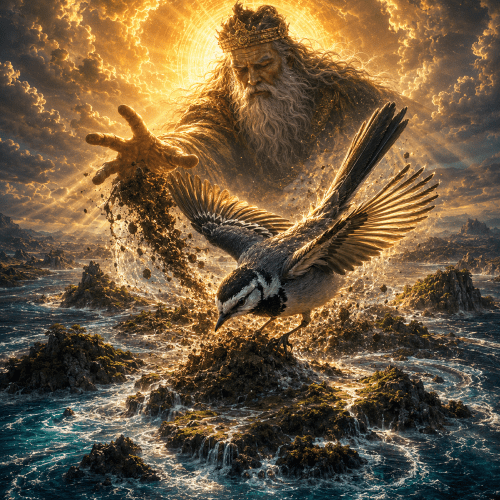
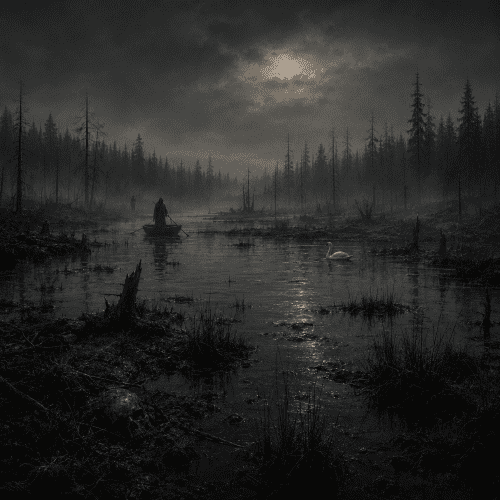
In the beginning, the universe existed in complete darkness. There was no sun, no moon, no stars—only an endless void and the waters of Lake Titicaca, which held a sacred place in Andean cosmology. From these waters emerged Viracocha, a solitary and all-powerful creator who brought order to chaos.
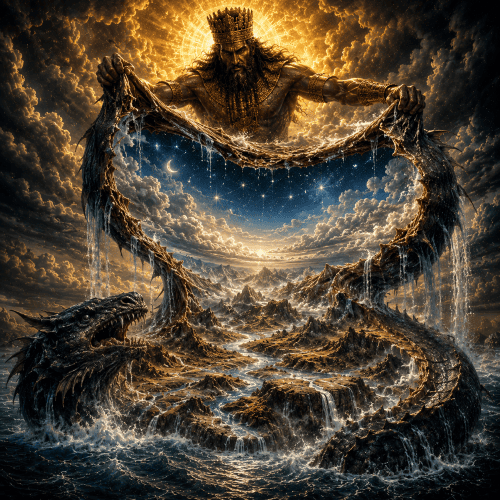
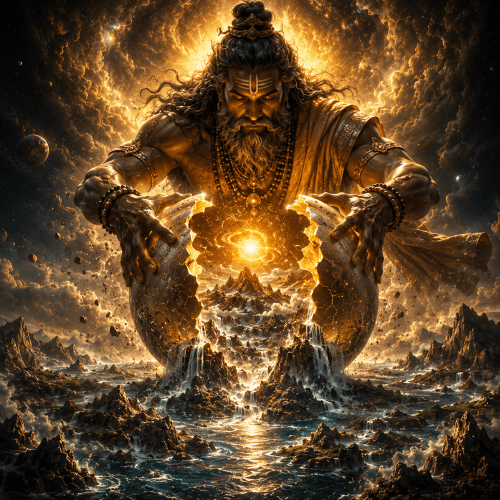
The Incan Creation Story emphasizes that creation begins not with light, but with intention. Viracocha first formed the heavens and the earth, establishing the structure of the cosmos. Only later did he create light, causing the sun, moon, and stars to rise—often said to emerge from the very waters of Lake Titicaca itself.
This origin reflects a worldview where water is both the beginning of life and the foundation of existence. The lake was not just symbolic; it was seen as a literal birthplace of creation, anchoring mythology to a real, sacred geography that still holds cultural significance today.
Deities and Forces Involved
Viracocha dominates the Incan Creation Story as the ultimate creator, often described as self-born and without equal. He is known by several names, including Ticci Viracocha and Wiraqoca, each emphasizing his role as originator and teacher.
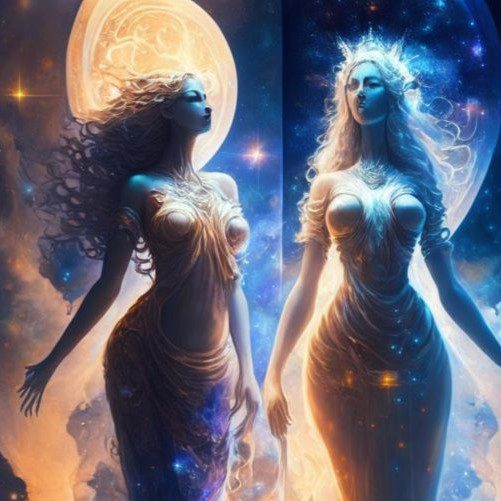
After shaping the cosmos, Viracocha created the celestial deities who would govern the natural order. Inti, the sun god, became one of the most important figures in Inca religion, believed to be the divine ancestor of the Inca rulers. Mama Killa, the moon goddess, balanced the sun’s power and was associated with timekeeping and ritual cycles. The stars and constellations were also brought into existence, completing the structure of the sky.
The myth also includes earlier beings—giants or primordial humans—who represent an imperfect first attempt at creation. These figures are less gods and more symbolic stages in the evolution of humanity, showing that creation was a process rather than a single event.
Process
The Incan Creation Story unfolds in distinct phases, each revealing a deeper layer of meaning about existence. Viracocha’s first act was to create a race of giants from stone. These beings, however, were flawed—often described as chaotic or disobedient. Dissatisfied with his creation, Viracocha destroyed them with a great flood, an event that echoes across many global mythologies.
Some of these giants, according to tradition, were turned back into stone, becoming part of the landscape itself. This idea transforms mountains and rock formations into living memories of creation, blurring the line between myth and geography.
After this destruction, Viracocha began anew. He created humans, often said to be fashioned from clay or smaller stones, giving them intelligence and purpose. He assigned them languages, clothing, and territories, effectively organizing the world into distinct communities.
But Viracocha did not stop at creation. He walked among humans, teaching them agriculture, craftsmanship, and moral order. This phase of the story is crucial—it presents the creator not just as a maker, but as a civilizer. Eventually, he departed across the ocean, promising to return, leaving behind a world structured yet still evolving.
Symbolism
The Incan Creation Story is rich with layered symbolism, much of it rooted in the natural environment of the Andes. Water, especially Lake Titicaca, represents both chaos and potential—the raw material from which life emerges. The flood symbolizes purification and renewal, suggesting that destruction is sometimes necessary for creation to succeed. Stone plays a dual role. It is both the material of the first failed beings and the enduring foundation of the world. This reflects a belief in permanence and transformation, where even failure becomes part of the cosmic order.
The sun and moon embody balance, representing dual forces that govern time and life. Meanwhile, Viracocha’s journey across the land symbolizes the spread of knowledge and culture, reinforcing the idea that civilization itself is a divine gift. Even his depiction as a bearded wanderer with a staff carries meaning. It suggests wisdom, authority, and a connection to natural forces like rain and water, which were essential for survival in the Andean environment.
Comparative Analysis
The Incan Creation Story shares striking similarities with myths from other parts of the world, yet retains its unique identity. The great flood used to destroy the first beings mirrors the story of Noah’s Ark in the Bible, as well as flood myths from Mesopotamia. In each case, water acts as both destroyer and renewer. The idea of humans being shaped from earth or clay can be compared to Greek myths of Prometheus or various Mesoamerican traditions. These parallels suggest a shared human tendency to see creation as an act of craftsmanship.
Viracocha’s role as a wandering teacher also finds echoes in figures like Quetzalcoatl in Mesoamerican belief, who similarly brings knowledge and civilization to humanity. However, unlike many creator gods who remain actively involved, Viracocha becomes distant after creation, emphasizing a more detached form of divine authority.
Legacy
The Incan Creation Story played a significant role in shaping the political and social structure of the Inca Empire. Rulers claimed divine descent from Inti, the sun god created by Viracocha, thereby linking their authority directly to the cosmic order.
Temples and sacred sites were built to honor these deities, with locations like Cusco considered the “navel of the world.” Rituals and ceremonies reinforced the idea that the empire itself was part of a divine plan, rooted in the original act of creation. Even after the Spanish conquest, the story of Viracocha endured. It was adapted, reinterpreted, and sometimes merged with Christian ideas, but never fully disappeared. Its survival speaks to its deep cultural significance and resilience.
Modern Influence
Today, the Incan Creation Story continues to shape cultural identity in regions like Peru and Bolivia. Sacred sites such as Lake Titicaca and Tiwanaku remain powerful symbols of origin, attracting both pilgrims and travelers. In modern art and literature, Viracocha is often reimagined as a symbol of indigenous heritage and continuity. Festivals and rituals in the Andes still carry echoes of ancient beliefs, blending them with newer traditions in a living, evolving culture.
Scholars and storytellers alike continue to explore the myth, using it to understand broader themes of creation, destruction, and renewal. In a world increasingly concerned with environmental balance, the story’s emphasis on harmony with nature feels especially relevant.

Sources
Axis Mundi. (2017, January 12). Viracocha and the myths of the origins: Creation of the world, anthropogenesis, myths of foundation. https://axismundi.blog/en/2017/01/12/viracocha-and-the-myths-of-the-origins-creation-of-the-world-anthropogenesis-myths-of-found/
Britannica. (1999, May 3). Viracocha | Creator god, Andean culture, supreme being. https://www.britannica.com/topic/Viracocha
Gaia. (2020, June 11). The mysterious Inca creator god: Viracocha. https://www.gaia.com/article/viracocha-the-great-creator-god-of-the-incas
Kuoda Travel. (2025, October 27). The Inca creation myth: The origin of the Inca Empire. https://www.kuodatravel.com/blog/the-inca-creation-myth/
Wikipedia. (2002, September 24). Inca mythology. https://en.wikipedia.org/wiki/Inca_mythology
Wikipedia. (2002, September 24). Viracocha. https://en.wikipedia.org/wiki/Viracocha
World History Encyclopedia. (2014, February 22). Viracocha. https://www.worldhistory.org/Viracocha/
Frequently Asked Questions
What is the Incan Creation Story?
The Incan Creation Story explains how the god Viracocha created the world, the sun, moon, and humanity, shaping the cosmos from chaos.
Who is Viracocha in Incan mythology?
Viracocha is the supreme creator god who emerged from Lake Titicaca and brought order, light, and civilization to the world.
Why did Viracocha destroy the first humans?
He destroyed the first beings, often described as giants, because they were flawed and chaotic, replacing them with improved humans.
What role does Lake Titicaca play in the myth?
Lake Titicaca is considered the birthplace of creation, where Viracocha emerged and began forming the world.
Is the Incan Creation Story similar to other myths?
Yes, it shares themes like floods, clay creation, and divine teachers with myths from the Bible, Greece, and Mesoamerica.