Inca Mythology
Inca mythology was closely connected to the sky, the natural landscape, agriculture, and the cycles of life. The Inca developed their religious traditions in the Andes around their capital of Cuzco, where mountains, rivers, springs, caves, and other natural features could be regarded as sacred. The heavens were equally important. Inca observers studied the movements of the Sun, Moon, stars, and planets to understand the changing seasons and coordinate agricultural activities. The Milky Way was particularly significant and could be understood as a celestial river, while dark shapes within it were recognized as constellations, including the llama.
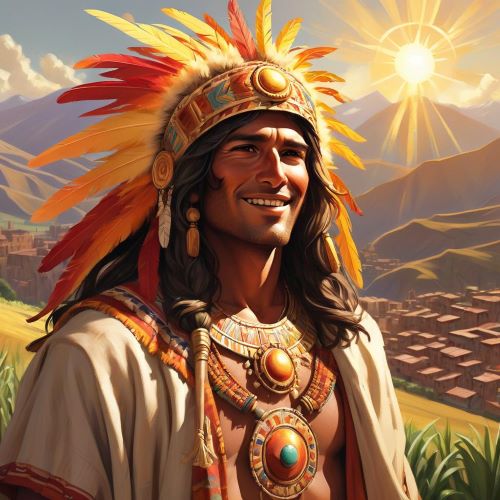
At the centre of the imperial Inca religious system was Inti, the Sun deity. The Inca ruling dynasty claimed a special relationship with Inti, helping connect the emperor’s authority to the sacred order of the cosmos. The state promoted the worship of the Sun across the empire, while other important sacred beings and forces included Viracocha, associated in various traditions with creation, Pachamama, associated with the earth and fertility, and powerful mountain beings known as apus. Inca religion also placed considerable importance on ancestors, whose mummified remains could continue to participate in the social and ritual life of their descendants.
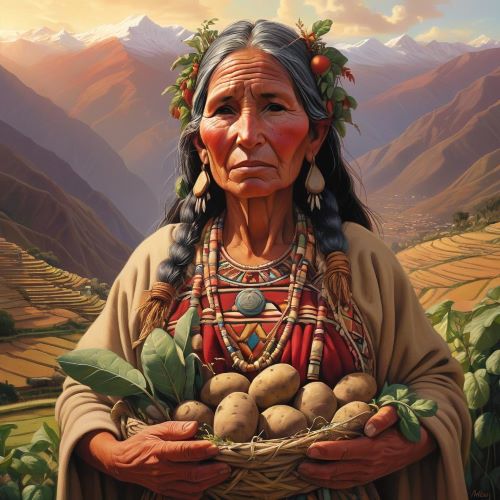
Agriculture was deeply connected with this religious worldview. The changing positions of celestial bodies helped mark seasonal cycles, while rituals sought to maintain relationships between humans, the land, water, ancestors, and divine powers. The Inca understood the natural world as an active and sacred environment rather than a passive backdrop to human life. The agricultural calendar, ritual offerings, irrigation systems, terraces, and sacred landscapes were therefore closely interconnected. The Met describes the Milky Way as part of an Andean conception of a continuous cycle of water flowing between the heavens, earth, rivers, and sea.
The Inca Empire, or Tawantinsuyu, expanded rapidly from the Cuzco region during the fifteenth and early sixteenth centuries. At its height, it extended from northern Ecuador to central Chile and incorporated a vast range of peoples, languages, environments, and existing religious traditions. Rather than completely replacing local beliefs, the Inca state often incorporated them into an imperial framework while introducing its own political and religious institutions. The Sun cult became an important state religion, while local sacred places and traditions continued to exist under imperial supervision.
The Inca did not possess a conventional alphabetic writing system, but this did not mean they lacked sophisticated methods of recording information. Khipus, made from knotted cords, were used to record administrative information such as tribute and population figures, although the full range of information encoded in them remains an active area of research. Much of what is known about Inca mythology today also comes from archaeology, colonial chronicles, Indigenous accounts, oral traditions, and surviving ritual and artistic traditions.
The Spanish conquest in the sixteenth century caused enormous disruption to Inca religious and political life. Temples, sacred objects, and ritual practices were attacked or suppressed as colonial authorities attempted to convert Indigenous populations to Christianity. Nevertheless, many elements of Andean religious thought survived and continue to influence cultural traditions in the Andes today. Inca mythology remains an important window into a worldview in which the Sun, mountains, ancestors, water, agriculture, and the wider cosmos were deeply interconnected.