
Mama Sara : The Sacred Maize Mother of the Inca
At a glance
| Description | |
|---|---|
| Origin | Inca Mythology |
| Classification | Gods |
| Family Members | N/A |
| Region | Peru |
| Associated With | Agriculture, Maize, Fertility, Sustenance, Abundance |
The Mythlok Perspective
In Mythlok’s Perspective, Mama Sara represents a form of divinity that is inseparable from survival itself. Unlike sky-bound gods of power, she exists in the soil, in the seed, and in the act of cultivation. This places her closer to Demeter of Greek tradition and Ceres of Roman belief, yet she feels more grounded and immediate. Where others rule over harvests, Mama Sara becomes the harvest. This distinction reflects a deeper Andean philosophy where divinity is not above nature but embodied within it.
Mama Sara
Introduction
In the rich agricultural worldview of the ancient Andes, Mama Sara stands as one of the most quietly powerful deities. Known as the “Maize Mother,” she embodies the sacred essence of corn, the crop that sustained the Inca Empire both physically and spiritually. In the Quechua language, “sara” means maize, and her name reflects not just ownership but origin. She is not merely a guardian of crops but the living spirit within them.
For the Inca civilization, maize was far more than food. It was ritual, economy, identity, and survival. As a result, Mama Sara was deeply woven into everyday life, from planting seasons to harvest celebrations. Farmers believed that her favor determined whether crops would flourish or fail. This made her one of the most essential divine forces in Andean belief, representing nourishment, continuity, and the fragile balance between humans and nature.
Physical Traits
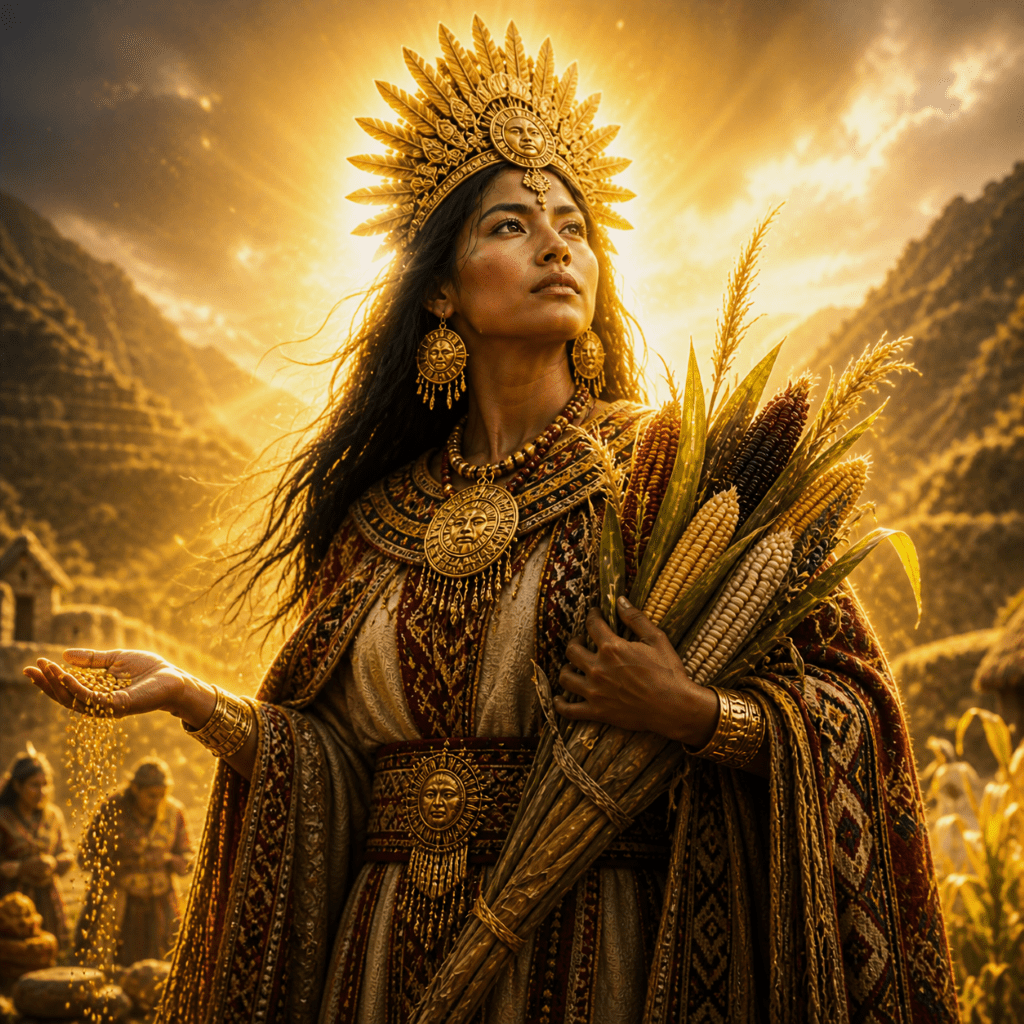
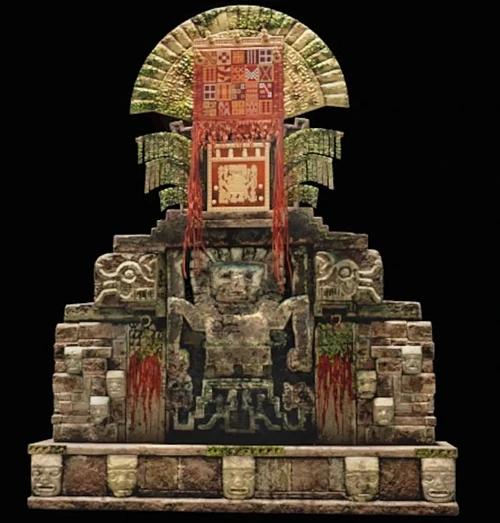
Mama Sara’s appearance is fluid, shifting between human and natural forms. In anthropomorphic depictions, she is often imagined as a youthful and serene woman, symbolizing fertility and abundance. Her presence is gentle rather than commanding, reflecting the quiet but vital role of agriculture in sustaining life.
However, her most authentic form is found within maize itself. The Inca believed that unusual corn growths, such as stalks with multiple ears or distorted shapes, were manifestations of her spirit. These were not treated as anomalies but as sacred signs. Such maize heads were carefully preserved, sometimes dressed like dolls, and revered as living embodiments of the goddess.
She is also symbolically linked to plant life more broadly, reinforcing the idea that divinity in Andean belief is not distant but embedded in the natural world. Through these forms, Mama Sara exists both as a figure and as a presence that can be touched, grown, and harvested.
Family
Unlike many deities in global traditions, Mama Sara does not have a consistently documented or universally agreed-upon genealogy. While some later interpretations attempt to position her as a daughter of Inti and Pachamama, this lineage is not firmly established in primary sources.
What is more reliable is her functional relationship within the Inca cosmology. She exists in harmony with the forces of sun, earth, and rain. The warmth of Inti, the fertility of Pachamama, and the life-giving rains often associated with Illapa all contribute to her domain. Rather than being defined by family ties, Mama Sara is defined by her role in this interconnected system of life.
This reflects a broader Andean philosophy where divinity is relational rather than hierarchical. Gods are not isolated individuals but interdependent forces working together to sustain existence.
Other names
Mama Sara is known by several variations, including Saramama, Zaramama, and Mama Zara. These names all stem from the same linguistic roots, combining “sara” for maize and “mama” for mother. The variations arise from regional dialects, colonial transcriptions, and evolving oral traditions.
Despite these differences, the meaning remains consistent. Each name reinforces her identity as the maternal force behind grain and nourishment. Titles such as “Corn Mother” or “Goddess of Grain” are often used in modern interpretations to make her role clearer to wider audiences.
Powers and Abilities
As a divine embodiment of maize, Mama Sara’s powers revolve around growth, fertility, and sustenance. She is believed to influence every stage of the agricultural cycle, from the sprouting of seeds to the final harvest. Her blessing ensures abundance, while her absence could result in scarcity or crop failure.
She is also associated with protection. Crops were vulnerable to harsh weather, pests, and disease, and rituals dedicated to Mama Sara sought to safeguard fields from these threats. Offerings of maize, chicha, and coca leaves were made to honor her and maintain her favor.
One of the most striking aspects of her mythology is her connection to transformation. Some traditions describe her as becoming maize itself, suggesting a divine sacrifice that provides eternal nourishment to humanity. This idea reinforces the sacred bond between humans and the land, where sustenance is not taken but received through divine generosity.
Beyond physical growth, Mama Sara also influences social harmony. Agricultural rituals often brought communities together, turning farming into a shared spiritual act. In this way, her power extends beyond crops into the cohesion of society itself.
Modern Day Influence
The presence of Mama Sara continues to echo across the Andes, particularly in regions like Peru and Bolivia. Maize remains a cornerstone of local culture, cuisine, and identity, and its cultivation still carries deep symbolic meaning.
Traditional farming communities continue to practice rituals that reflect ancient beliefs, even if they are not always explicitly tied to her name. Offerings to the land, respect for planting cycles, and communal harvest celebrations all carry the imprint of her legacy.
Festivals such as Inti Raymi often include maize as a sacred element, indirectly honoring her role. Meanwhile, the cultural significance of chicha, a fermented corn drink, preserves the ritual importance of maize in social and ceremonial life.
In modern times, Mama Sara has also found a place in academic discussions, cultural revival movements, and digital storytelling. She represents more than a mythological figure; she symbolizes a worldview where food, land, and spirituality are inseparable.
Related Images

Source
Comboni Missionaries Ireland. (2020, May 3). Bolivia: The corn festival. https://combonimissionaries.ie/2020/05/04/bolivia-the-corn-festival/
Farm & Folk. (2025, July 22). Mama Sara: Incan maize goddess. https://farm.muisca.co/post/321/mama-sara-incan-maize-goddess.html
Pisco Trail. (2022, May 31). You say corn, I say sara. https://www.piscotrail.com/p/you-say-corn-i-say-sara
An unbroken Inca weaving tradition in northern Peru. (n.d.). University of Nebraska-Lincoln Digital Commons. https://digitalcommons.unl.edu/cgi/viewcontent.cgi?article=1344&context=tsaconf
Religion Wiki. (n.d.). Sara Mama. https://religion.fandom.com/wiki/Sara_Mama
Allen, C. J. (2002). The Hold Life Has: Coca and Cultural Identity in an Andean Community. Smithsonian Institution Press.
Rostworowski, M. (1999). History of the Inca Realm. Cambridge University Press.
Silverblatt, I. (1987). Moon, Sun, and Witches: Gender Ideologies and Class in Inca and Colonial Peru. Princeton University Press.
Urton, G. (1999). Inca Myths. University of Texas Press.
Zuidema, R. T. (1990). Inca Civilization in Cuzco. University of Texas Press.
Frequently Asked Questions
Who is Mama Sara?
Mama Sara is the Inca goddess of maize, representing fertility, agriculture, and the sacred importance of corn in Andean life.
What does Mama Sara mean?
Her name means “Maize Mother” in Quechua, reflecting her role as the spirit and protector of corn.
Did Mama Sara have a family?
No consistent genealogy exists; she is mainly viewed as a personification of maize within Inca belief systems.
What were Mama Sara’s powers?
She controlled crop growth, ensured harvest abundance, and protected maize from natural threats.
Is Mama Sara still worshipped today?
Not directly, but her influence survives in Andean farming rituals, festivals, and cultural traditions.