


Toyotama-Hime : The Sea Goddess Behind Japan’s Imperial Ancestry
At a glance
| Description | |
|---|---|
| Origin | Japanese Mythology |
| Classification | Gods |
| Family Members | Watatsumi (Father), Hoori (Husband), Tamayori-hime (Sister) Ugayafukiaezu-no-Mikoto (Son), Emperor Jimmu (Grandson) |
| Region | Japan |
| Associated With | Sea, Marine life, Transformation, Childbirth, Fertility, Divine ancestry |
The Mythlok Perspective
In Mythlok’s Perspective, Toyotama-Hime represents the complicated relationship between divine identity and human intimacy. Unlike many goddesses whose power is demonstrated through conquest or creation, her story centres on vulnerability, transformation and separation. Her narrative also resembles the European legend of Mélusine, where a hidden supernatural identity threatens a marriage. Both traditions reveal how ancient societies explored the fragile boundaries between human relationships and the supernatural world.
Toyotama-Hime
Introduction
Toyotama-Hime (豊玉姫) is a goddess in Japanese mythology best known as the daughter of the sea deity Watatsumi and the wife of Hoori, also called Hikohohodemi-no-Mikoto or Yamasachi-hiko. Her story appears in the Kojiki (712 CE) and the Nihon Shoki (720 CE), two of Japan’s earliest surviving chronicles. Through her marriage and descendants, she becomes an important figure in the legendary genealogy of Japan’s imperial family.
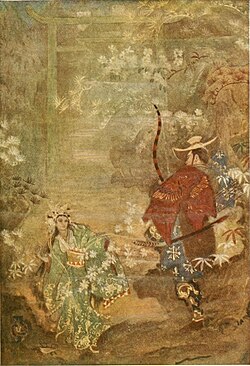
Her story begins when Hoori travels to his father-in-law’s underwater palace while searching for a fishing hook belonging to his elder brother, Hoderi. There, he meets Toyotama-Hime, and the two eventually marry. After spending three years in the sea deity’s palace, Hoori returns to the surface world, accompanied by the events that eventually bring Toyotama-Hime to land.
Their relationship takes a dramatic turn when Toyotama-Hime becomes pregnant and prepares to give birth. She asks Hoori not to watch her during childbirth, explaining that she must assume her original form. However, he ignores her request and discovers her transforming into a gigantic sea creature. Overcome with shame and anger, she returns to the ocean, leaving their newborn son behind. This unusual marriage and separation connect the divine world beneath the sea with the ancestral traditions surrounding Japan’s legendary first emperor, Jimmu.
Physical Traits
The earliest Japanese chronicles provide little information about Toyotama-Hime’s ordinary human appearance. Her identity is primarily established through her divine ancestry, her residence in the underwater palace and her extraordinary transformation during childbirth.
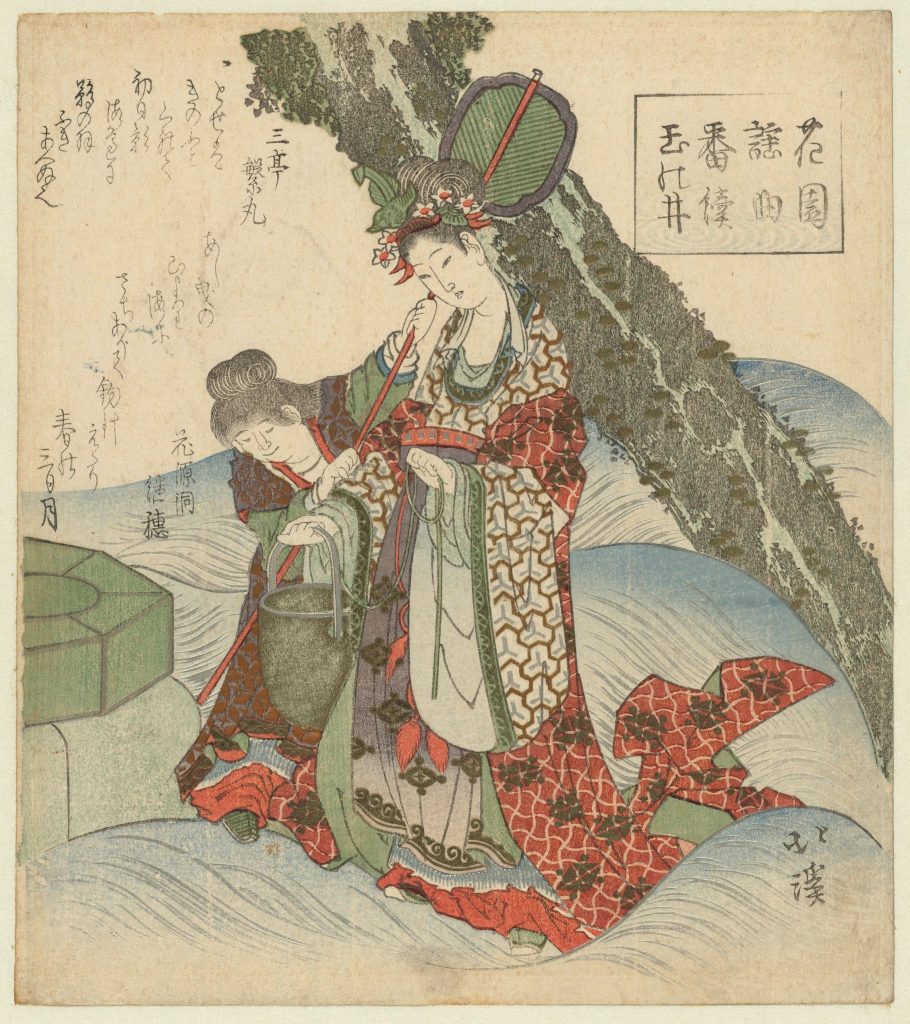
In artistic interpretations, she is generally represented as a beautiful young woman wearing traditional Japanese garments associated with aristocratic or divine status. Pearl ornaments, flowing robes and marine-inspired decorations are common visual elements in modern representations, although these details are artistic interpretations rather than descriptions established by the ancient texts.
Her most distinctive physical characteristic is her ability to assume a non-human aquatic form. The Kojiki describes her transformation into an enormous wani, a creature traditionally translated as a crocodile but generally understood in this context as a shark or other large marine animal. The Nihon Shoki, meanwhile, describes her as transforming into a dragon in its principal account.
These differences are important because they demonstrate how ancient Japanese traditions represented supernatural marine beings through different animal forms. Rather than having one universally established appearance, Toyotama-Hime occupies a space between human and aquatic existence.
Family
Toyotama-Hime belongs to the divine lineage associated with the Japanese sea. Her father is Watatsumi, also known as Ōwatatsumi-no-Kami, the deity who rules the ocean and resides in an underwater palace. Her connection to this divine household establishes her authority and identity within the marine world.
Her husband is Hoori, also known as Hikohohodemi-no-Mikoto or Yamasachi-hiko. He is the younger son of Ninigi-no-Mikoto and Konohanasakuya-hime and a grandson of Amaterasu, the Japanese sun goddess. Their marriage therefore brings together the heavenly ancestry associated with Amaterasu and the marine lineage of Watatsumi. Together, Toyotama-Hime and Hoori have a son named Ugayafukiaezu-no-Mikoto. Following her separation from Hoori, Toyotama-Hime’s younger sister, Tamayori-hime, takes responsibility for raising the child.
Ugayafukiaezu eventually marries Tamayori-hime, and they become parents to several children. Their youngest son is Kamuyamato Iwarebiko, better known as Emperor Jimmu, the legendary first emperor of Japan. Through this genealogy, Toyotama-Hime becomes the paternal grandmother of Emperor Jimmu. Her importance consequently extends beyond her marriage, making her an essential link between the marine deities and the legendary origins of the Japanese imperial family.
Other names
Toyotama-Hime appears under different spellings and honorific forms in Japanese religious and literary traditions. Her name is written as 豊玉姫 in modern Japanese, while the Kojiki uses the older form Toyotama-bime (豊玉毘売). Other recognised variations include Toyotama-bime-no-Mikoto, Toyotama-Hime-no-Mikoto and Toyotamahime. The suffix hime generally denotes a princess or noblewoman, while mikoto is an honorific frequently used for deities and revered figures.
Her name is often interpreted through the imagery of abundant or precious jewels. The element tama can refer to a jewel or sacred spiritual essence, although translations of the complete name vary. She is also described as the Sea Princess or Dragon Princess in modern retellings. These are descriptive titles reflecting her parentage and aquatic associations rather than separate mythological identities.
Powers and Abilities
Toyotama-Hime’s supernatural identity is closely connected to the ocean, transformation and divine ancestry. Although the ancient chronicles do not provide an extensive catalogue of her abilities, several characteristics emerge clearly from her narrative. Her most distinctive supernatural ability is the capacity to assume a non-human aquatic form. The Kojiki associates this transformation with a wani, while the principal account in the Nihon Shoki identifies her true form as a dragon. This transformation becomes central to the circumstances surrounding her son’s birth.
As Watatsumi’s daughter, Toyotama-Hime belongs to the divine marine realm. She lives in her father’s underwater palace and maintains a connection with the ocean even after marrying Hoori. Her eventual return to the sea reinforces her identity as a being belonging to the marine world. One of her most significant attributes is her role in transmitting Watatsumi’s divine lineage into the ancestry of Japan’s legendary imperial family. Through Ugayafukiaezu and Emperor Jimmu, her influence becomes part of the country’s foundational mythology.
Her story has also contributed to later religious associations with safe childbirth and healthy children. These connections are particularly visible at shrines dedicated to her, where worshippers seek blessings for motherhood and family life.
Modern Day Influence
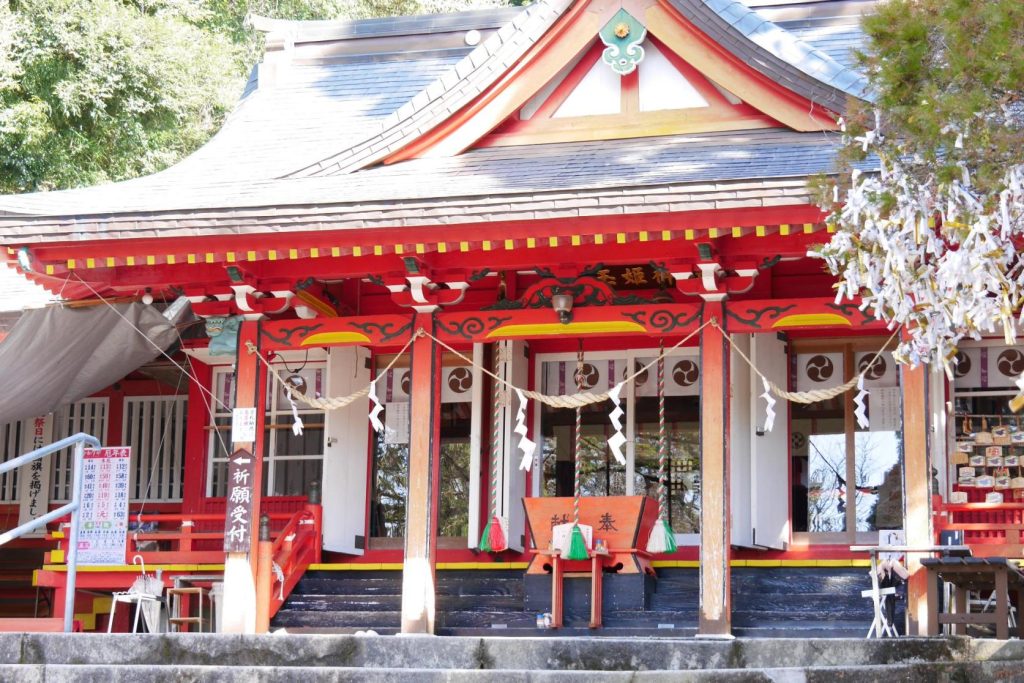
Toyotama-Hime continues to hold a place in Japanese cultural heritage, particularly through shrines, traditional storytelling and scholarly interpretations of ancient Japanese literature. One important location associated with her is Toyotama-hime Shrine in Chiran, Kagoshima Prefecture. The shrine venerates her as a deity and is particularly associated with prayers for safe childbirth and healthy children. Local traditions connect these blessings with her own successful childbirth in the ancient narrative.
Aoshima Shrine in Miyazaki Prefecture also honours Toyotama-Hime alongside Hoori and Shiotsuchi-no-Okami. The shrine is closely associated with the romantic story of Hoori and Toyotama-Hime and attracts visitors seeking blessings for marriage and childbirth.
Her narrative has also attracted attention in comparative folklore studies. Scholars have examined similarities between Toyotama-Hime and Mélusine, a European legendary figure associated with a hidden supernatural identity, a prohibition against being observed and a marriage between human and non-human beings. These parallels demonstrate how similar narrative structures appear across geographically distant traditions.
Toyotama-Hime’s story also remains relevant to discussions of Japanese literature, particularly the relationship between supernatural beings and human society. Her transformation, separation from Hoori and connection to imperial ancestry continue to provide material for interpretations of ancient Japanese beliefs. Rather than being remembered solely as a sea princess, Toyotama-Hime represents an important connection between Japan’s marine traditions, divine genealogies and cultural understanding of childbirth. Her story remains one of the most distinctive examples of supernatural marriage in early Japanese literature.
Related Images






Source
Ashkenazi, M. (2003). Handbook of Japanese mythology. ABC-CLIO.
Chamberlain, B. H. (1982). The Kojiki: Records of ancient matters. Tuttle Publishing. (Original work published 1882)
Encyclopaedia Britannica. (2025, March 26). Japanese mythology. https://www.britannica.com/topic/Japanese-mythology
Encyclopaedia Britannica. (1998, July 20). Kojiki. https://www.britannica.com/topic/Kojiki
Philippi, D. L. (Trans.). (1968). Kojiki. University of Tokyo Press.
Sakamoto, T. (Trans.). (1991). The Nihongi: Chronicles of Japan from the earliest times to A.D. 697. Tuttle Publishing. (Original work published 1896)
Yokai JP. (2026, June 9). Toyotama-hime. https://yokai.jp/en/yokai/toyotama-hime
Japanese Wiki Corpus. (n.d.). Toyotama-hime. https://www.japanesewiki.com/Shinto/Toyotama-hime.html
Frequently Asked Questions
Who is Toyotama-Hime in Japanese mythology?
Toyotama-Hime is a Japanese sea goddess, daughter of Watatsumi and wife of Hoori. She is also an ancestor of Japan’s legendary imperial family.
Who is Toyotama-Hime's husband?
Toyotama-Hime is married to Hoori, also known as Hikohohodemi-no-Mikoto, a grandson of the sun goddess Amaterasu.
What animal does Toyotama-Hime transform into?
In the Kojiki, Toyotama-Hime transforms into a gigantic wani, often interpreted as a shark. The Nihon Shoki describes her as a dragon.
Who are Toyotama-Hime's children?
Toyotama-Hime and Hoori have one son, Ugayafukiaezu-no-Mikoto, who later becomes the father of Emperor Jimmu.
Why did Toyotama-Hime leave Hoori?
Toyotama-Hime returned to the sea after Hoori broke his promise not to watch her during childbirth and discovered her original aquatic form.


