


Sypave : The First Mother of the Guarani People
At a glance
| Description | |
|---|---|
| Origin | Guarani Mythology |
| Classification | Mortals |
| Family Members | Rupave (Husband), Tumé Arandú, Marangatú, Japeusá, Porãsy, Guarasyáva, Tupinamba, Yrasêma (Children) |
| Region | Paraguay |
| Associated With | First woman, Motherhood, Ancestry, Human creation |
The Mythlok Perspective
In Mythlok’s Perspective, Sypave is more compelling as an ancestor than as a conventional mythological heroine. Unlike figures whose identity depends on supernatural power, her importance comes from being the beginning of a human lineage. In that sense, she resembles Eve or Embla, yet her creation from the materials of the natural world gives the Guaraní tradition its own distinctive emphasis: humanity is not merely created upon the earth, but emerges directly from it.
Sypave
Introduction
Sypave, also written Sypavé, Sypavẽ, or Sypaue, is a foundational ancestral figure in the Paraguayan tradition of Guaraní mythology. She is presented as the first woman created by Tupã and the female counterpart of Rupave, the first man. Her name is generally translated as “Mother of the People” or “Mother of the peoples,” reflecting her role as the ancestral mother from whom later generations descend.
The best-known account describes Tupã and Arasy descending to the earth and creating the first human pair from clay and ingredients drawn from the natural world. One Paraguayan source specifies clay, the juice of ka’a ruvicha, blood of the yvyja’u bird, plant leaves, a centipede, and water from a nearby spring. Tupã shaped the human forms, allowed them to dry in the sun, and then gave them life. Arasy named the woman Sypave, while Tupã named the man Rupave.
Sypave’s importance therefore comes less from supernatural power than from ancestry. She represents the beginning of human life within this particular Guaraní creation tradition, while her descendants become some of the most important figures in Paraguayan mythic storytelling.
It is important, however, to distinguish this tradition from the diverse oral traditions of Guaraní-speaking peoples. Modern scholars have noted that the familiar creation narrative involving Tupã, Sypave, Rupave, and their descendants was shaped in part through later written and missionary-era compilations. It should therefore be understood as one influential strand of Guaraní mythology rather than a single universal Guaraní creation account.
Physical Traits
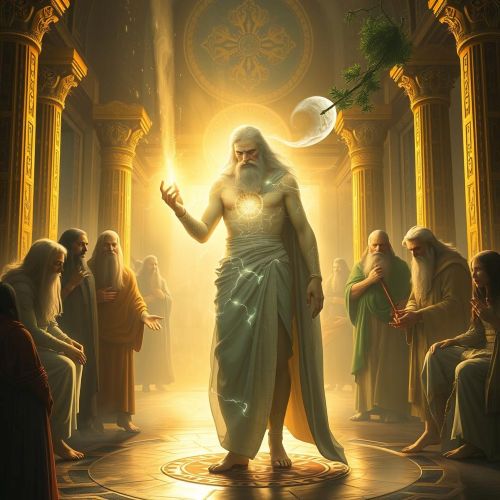
Sypave is portrayed fundamentally as a human woman, rather than as a goddess with an elaborate supernatural appearance. Her significance lies in how she was created and what she represents, not in a distinctive divine form.
According to the Paraguayan creation narrative, Tupã formed Sypave from earth-based materials before giving her life. This origin gives her physical existence a direct connection with the natural world. She is therefore an embodiment of the relationship between earth, human life, and the creative forces represented by Tupã and Arasy.
Some versions connect Sypave particularly closely with Arasy, who names her and describes her as having been created in her likeness. This reinforces the maternal and ancestral symbolism attached to Sypave.
Descriptions of specific features such as height, complexion, clothing, or supernatural markings are not consistently established in the primary versions of the story. Later artistic depictions may therefore vary considerably. For a historically grounded representation, Sypave is best shown as a natural human woman of the Guaraní world rather than as an exaggerated fantasy goddess.
Family
Sypave’s family forms the central genealogical framework of the myth. She is paired with Rupave, whose name is translated as “Father of the People.” Together, they are described as the first human couple and the ancestors of subsequent generations.
Traditional Paraguayan accounts attribute three sons and many daughters to the couple. Their sons are Tumé Arandú, Marangatú, and Japeusá. Tumé Arandú is remembered as a great sage and prophet associated with wisdom. Marangatú is portrayed as virtuous, generous, and benevolent, and becomes the father of Keraná. Japeusá is remembered as the rebellious and deceptive son who eventually becomes associated with the crab after his death.
Several daughters also become important in later stories. Porãsy is celebrated for her beauty and physical strength and eventually sacrifices herself in the struggle against the monstrous descendants of Tau and Keraná. Guarasyáva is remembered as an exceptional swimmer and is associated with the ancestral lineage of the Guaraní in Colmán’s account. Tupinamba is associated with the ancestry of the Tupi, while Yrasêma, known as the “murmur of the waters,” is celebrated for music and song.
Through Marangatú and his daughter Keraná, Sypave’s lineage also connects to the famous cycle of the seven monstrous children of Tau and Keraná. Her genealogy therefore becomes a bridge between the creation story and some of the best-known legendary narratives of Paraguayan folklore.
Other names
The name Sypave appears in several written forms because Guaraní names have been transcribed differently across Spanish, Portuguese, and other orthographic systems. Common variants include Sypavé, Sypavẽ, Sypaue, and Sypavê.
The meaning associated with the name remains consistent across the principal versions: “Mother of the People” or “Mother of the peoples.” This meaning is particularly significant because it describes her function within the creation narrative rather than simply identifying her as an individual character.
Some modern or regional discussions associate Sypave with broader maternal concepts such as Ñande Sy or Nhandexy, meaning “Our Mother.” These expressions belong to wider Guaraní religious and linguistic contexts and should not automatically be treated as exact alternative names for the specific mythological Sypave of Paraguayan folklore.
Powers and Abilities
Sypave is not generally described as a goddess possessing a catalogue of supernatural powers. Her importance is ancestral, symbolic, and cultural. Her defining attribute is her position as the first woman and mother of later generations. Through her descendants, Sypave becomes connected to wisdom, leadership, deception, sacrifice, music, and the supernatural beings who appear in later Guaraní legends. Her influence is therefore expressed through genealogy rather than magical abilities.
The creation itself also gives Sypave a strong symbolic relationship with nature. She is formed from earth and natural materials before receiving life, making her a figure who represents humanity’s physical connection with the world. Tupã’s instructions to the first humans emphasize peaceful living, reproduction, and responsible use of the products of the earth.
This makes Sypave particularly important as an ancestral figure. Her story is less about commanding nature and more about belonging to it. She represents the beginning of human society and the continuation of life through generations.
Modern Day Influence
Sypave continues to appear in discussions of Paraguayan folklore, Guaraní heritage, literature, education, and cultural identity. Her story is especially prominent in written collections of Paraguayan mythology, where the creation of Sypave and Rupave provides an entry point into a much larger cycle of ancestral heroes, spirits, monsters, and legendary families. The Biblioteca del Congreso Nacional de Paraguay, for example, catalogs works dealing with the creation of the Guaraní world and the descendants of Rupave and Sypave as part of Paraguayan folklore and mythology.
The story is also frequently compared with creation narratives from other cultures, particularly the Biblical account of Adam and Eve. Such comparisons can make Sypave easier for modern audiences to understand, but they should not obscure the distinctive Guaraní elements of her story: her creation from materials of the natural world, the role of Tupã and Arasy, and the extensive ancestral mythology that follows her creation.
For contemporary audiences, Sypave is most valuable as a representation of ancestry, continuity, and the relationship between human life and the natural world. Her story also demonstrates how Guaraní mythology has been preserved through oral traditions, written folklore collections, literary works, and cultural education.
Rather than portraying Sypave as a conventional goddess, it is more accurate to understand her as a primordial human ancestor whose importance comes from being the Mother of the People. Her story establishes the beginning of a mythological family whose descendants populate some of the most enduring narratives associated with Guaraní folklore.
Related Images





Source
Asunción Times. (2026, March 23). Guaraní Legends #3, Rupavẽ and Sypavẽ: The first humans and their legendary descendants. https://asunciontimes.com/culture/paraguayan-history/guarani-legends-3-rupave-and-sypave-the-first-humans-and-their-legendary-descendants/
Lafrankie. (2013, December 16). Guaraní mythology. WordPress. https://lafrankie.wordpress.com/2013/12/16/guarani-mythology/
LiquiSearch. (n.d.). Guarani mythology – Early humanity. https://www.liquisearch.com/guarani_mythology/early_humanity
Myth and Folklore Wiki. (2008). Rupavé and Sypavé. Fandom. https://mythus.fandom.com/wiki/Rupav%C3%A9_and_Sypav%C3%A9
Native Languages. (n.d.). Guarani legends (folklore, myths, and traditional Indian stories). https://www.native-languages.org/guarani-legends.htm
Portal Guaraní. (2025). Origen de los mitos guaranes. https://www.portalguarani.com/detalles_museos_otras_obras.php?PqwoiflUYTeslk=MjM1Mw==
Simon’s Paraguay. (2024, September 5). The Guarani creation myth. https://simonsparaguay.com/the-guarani-creation-myth/
Staff.uni-mainz.de. (n.d.). Tupã. https://www.staff.uni-mainz.de/lustig/guarani/tupa_rosicran.htm
VisitParaguay.net. (n.d.). The myths, legends and folklore of Paraguay. https://www.visitparaguay.net/articles/myths-legends-and-folklore-paraguay.html
Wikipedia. (2002, September 27). Guarani mythology. https://en.wikipedia.org/wiki/Guarani_mythology
Frequently Asked Questions
Who is Sypave in Guaraní mythology?
Sypave is the first woman in the best-known Paraguayan Guaraní creation tradition. She is created by Tupã and named by Arasy, with her name generally translated as “Mother of the People.”
Who is Sypave's husband?
Sypave’s husband is Rupave, the first man created alongside her. His name is generally translated as “Father of the People,” making the pair the primordial human couple in this tradition.
How was Sypave created?
According to the Paraguayan tradition recorded by several folklore sources, Sypave was formed from clay combined with materials from the natural world. Tupã shaped the human figures, exposed them to the sun, and then gave them life.
What powers does Sypave have?
Sypave is not normally described as a goddess with supernatural powers. Her importance comes from her role as the first woman, ancestral mother, and progenitor of later generations.
Who are Sypave's children?
Traditional accounts name Tumé Arandú, Marangatú, and Japeusá among her sons, while notable daughters include Porãsy, Guarasyáva, Tupinamba, and Yrasêma. The exact genealogy varies between versions of the tradition.


