


Suangi : The Feared Witch Spirit of Papuan Folklore
At a glance
| Description | |
|---|---|
| Origin | Papuan Mythology |
| Classification | Spirits |
| Family Members | N/A |
| Region | Papua / Western New Guinea |
| Associated With | Witchcraft, Black magic, Curses, Illness, Death, Shape-shifting |
The Mythlok Perspective
From the Mythlok perspective, Suangi represents humanity’s enduring fear of unseen threats and the social consequences of unexplained tragedy. Unlike malevolent spirits such as the Pontianak, which are tied to a single origin story, or the Aswang, which exists as a distinct creature in Philippine folklore, Suangi is often a belief embodied in ordinary people. This makes it not just a supernatural figure, but a reflection of how communities interpret illness, misfortune, and the hidden forces they cannot easily explain.
Suangi
Introduction
Suangi is one of the most feared supernatural figures in the folklore of Papua, particularly among communities in western New Guinea (now part of Indonesia). Rather than referring to a single mythical character, the term generally describes a person believed to practice powerful black magic or a malevolent supernatural being capable of causing illness, death, and unexplained misfortune. Depending on the community, Suangi may be viewed as a witch, sorcerer, spirit, or ghost, making it one of the most complex figures in Papuan mythology.
Belief in Suangi extends beyond Papua into parts of eastern Indonesia, including Maluku, North Maluku, Flores, and Sulawesi, where similar traditions exist under different local names. Although the details vary, the central idea remains remarkably consistent: a hidden supernatural force capable of attacking people through magical means.
Unlike many mythological beings that belong to ancient legends, Suangi is often discussed as part of living cultural belief. In some Papuan communities, unexplained deaths or sudden illnesses have traditionally been attributed to Suangi, reflecting how mythology, spirituality, and community life have remained closely connected for generations.
Physical Traits
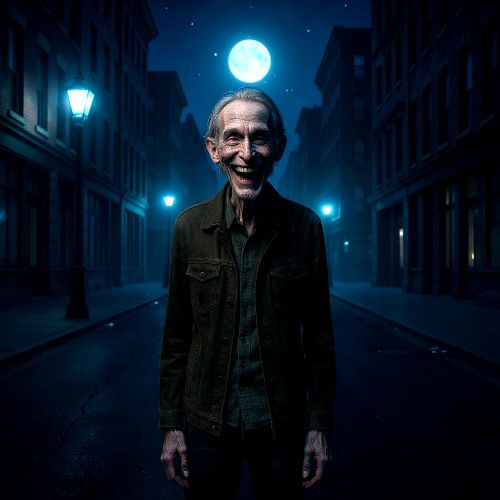
There is no single physical description of Suangi because it is believed to possess the ability to change its appearance. In many traditions, a Suangi looks completely human, making it almost impossible to identify through ordinary observation. This belief reinforces the fear that anyone within a community could secretly possess supernatural powers.
When appearing in its spiritual form, Suangi is often described as a shadowy figure, a glowing ball of fire moving through the night sky, or an invisible presence entering homes after dark. Some stories describe glowing eyes, unusually sharp teeth, or an animal-like odour, although these features are not universal across Papuan traditions.
Shape-shifting is another commonly reported characteristic. Folklore describes Suangi taking the form of birds, animals, or other creatures to approach victims unnoticed. These transformations are not viewed as permanent forms but as magical disguises that allow the spirit or witch to move without attracting suspicion.
Family
Unlike many figures in mythology, Suangi has no established genealogy or divine lineage. It is not portrayed as a god, ancestor, or legendary hero with named relatives. Instead, the concept represents a role within traditional belief systems rather than an individual supernatural personality.
Some Papuan communities believe that knowledge of black magic associated with Suangi can be inherited within families or passed from one practitioner to another through initiation. However, these traditions differ significantly between ethnic groups, and there is no consistent evidence of a recognised bloodline connected to every Suangi. Because the figure represents a belief in witchcraft rather than a specific mythological individual, references to parents, spouses, or descendants are absent from reliable ethnographic sources.
Other names
The most common alternative spelling is Suanggi, although Swangi and Suwangi also appear in regional literature. Indonesian dictionaries record the pronunciation as su-a-ngi, while some Papuan communities use the term cuwig alongside Suanggi.
Different regions across eastern Indonesia have their own names for similar supernatural beings. In parts of Yapen and Waropen, related figures are known as kalarja or nyata, while other islands use entirely different local terms for witches believed to possess comparable powers. Although these names describe similar traditions, they do not always refer to exactly the same supernatural entity.
In modern Indonesian, Suangi is sometimes associated with sihir or santet, terms that broadly refer to witchcraft or harmful sorcery. However, Suangi remains culturally distinct because it is deeply rooted in Papuan cosmology and local oral traditions.
Powers and Abilities
The defining characteristic of Suangi is its ability to inflict supernatural harm. According to traditional belief, it can curse victims from a distance, causing mysterious illnesses, prolonged suffering, or sudden death without any obvious physical cause.
Many stories claim that Suangi feeds on human life force rather than simply attacking the body. Some traditions describe it consuming blood, internal organs, or even the victim’s soul. In these accounts, a person may appear healthy immediately after an encounter before gradually falling ill and eventually dying from an unexplained condition.
Shape-shifting is another frequently mentioned ability. Suangi is believed to transform into animals, ordinary people, or glowing fireballs to travel unnoticed through forests and villages. Some traditions also claim it can enter locked homes as a shadow or invisible presence, making physical barriers ineffective against its supernatural abilities.
Folklore further attributes magical attacks through cursed objects, food, drink, or personal belongings. Because these attacks are believed to originate from invisible forces, identifying a Suangi is considered extremely difficult, contributing to its enduring reputation as one of the most feared beings in Papuan folklore.
Modern Day Influence
Belief in Suangi continues to influence life in parts of Papua today, although its role has evolved alongside modern society. Anthropologists and historians regard Suangi as an important part of Papuan cosmology, while many local communities continue to preserve stories through oral tradition.
In some rural areas, accusations of being a Suangi have historically led to fear, social exclusion, and even violence. These accusations often arise following unexplained deaths or illnesses, highlighting the role mythology can play in shaping community relationships. Researchers studying Papua frequently examine Suangi beliefs to better understand local concepts of justice, illness, spirituality, and social conflict.
The figure has also become a subject of documentaries, folklore collections, academic research, and digital storytelling. Rather than disappearing with modernization, Suangi has found a place in contemporary discussions about indigenous knowledge, cultural identity, and the preservation of Papuan heritage.
Today, Suangi stands as more than a supernatural villain. It represents the enduring power of traditional belief systems and offers valuable insight into how Papuan communities have historically understood danger, disease, and the unseen forces believed to influence everyday life.
Related Images


Source
Wikipedia contributors. (n.d.). Suangi. Wikipedia. https://en.wikipedia.org/wiki/Suangi
Good News From Indonesia. (2024, March 27). Mengenal Suanggi, Mitos, Legenda, dan Kepercayaan Masyarakat Papua. https://www.goodnewsfromindonesia.id/2024/03/28/suanggi-kepercayaan-lama-suku-aru-di-papua
Papua iNews. (n.d.). Misteri Suanggi di Papua, penganut ilmu hitam yang jadi hantu pemangsa manusia. https://papua.inews.id/berita/misteri-suanggi-di-papua-penganut-ilmu-hitam-yang-jadi-hantu-pemangsa-manusia
Gods and Monsters. (2024, June 3). Suangi: Shape-Shifting Witch of New Guinea Folklore. https://godsandmonsters.info/suangi/
Jurnal Pendas. (2026, June 27). Kastrasi kuasa suangi dalam tinjauan kristologi…. https://journal.unpas.ac.id/index.php/pendas/article/view/51176
Ellen, R. F. (1988). Nuaulu Religious Practices: The Structure and Symbolism of a Central Moluccan System of Belief. Leiden: KITLV Press.
Taylor, P. (1999). The Politics of Spirits: Religion and Social Change in Eastern Indonesia. Honolulu: University of Hawai‘i Press.
Kamma, F. C. (1972). Religion and Social Change in the Moluccas. The Hague: Martinus Nijhoff.
Rutherford, D. (2003). Raiding the Land of the Foreigners: The Limits of the Nation on an Indonesian Frontier. Princeton: Princeton University Press.
Frequently Asked Questions
What is Suangi in Papuan mythology?
Suangi is a feared supernatural being in Papuan folklore, usually described as a witch, sorcerer, or malevolent spirit believed to cause illness, death, and misfortune through black magic.
Is Suangi a spirit or a human?
Traditional beliefs vary. Some communities consider Suangi to be a human practitioner of witchcraft, while others believe it is a malevolent spirit capable of possessing or transforming into different forms.
What powers does Suangi possess?
Suangi is believed to cast curses, cause mysterious illnesses, shape-shift into animals or fireballs, enter homes unseen, and attack victims through supernatural means.
Is belief in Suangi still common today?
Yes. Although perspectives differ, belief in Suangi continues in parts of Papua and eastern Indonesia, where it remains part of local folklore, oral tradition, and anthropological research.
Is Suangi unique to Papua?
Suangi is most strongly associated with Papua, but similar witch-spirit traditions exist throughout eastern Indonesia, including Maluku, Flores, North Maluku, and Sulawesi, often under different regional names.


