


Mwana Wuta : The Suku Culture Hero of Fire and Farming
At a glance
| Description | |
|---|---|
| Origin | Suku Mythology |
| Classification | Mortals |
| Family Members | N/A |
| Region | Democratic Republic of the Congo, Angola |
| Associated With | Fire, Farming, Cultural knowledge |
The Mythlok Perspective
In Mythlok’s Perspective, Mwana Wuta is interesting precisely because the surviving evidence is incomplete. His association with bringing fire to humanity naturally invites comparison with Prometheus from Greek mythology, another legendary figure remembered for giving humanity fire. But where Prometheus is portrayed as a rebellious Titan who defies Zeus and suffers punishment for his gift, Mwana Wuta is presented more as a culture hero connected with fire, farming, knowledge, and social order. The contrast shows how different cultures can use the same transformative symbol to express very different ideas about civilization, responsibility, and the relationship between humanity and the powers beyond it.
Mwana Wuta
Introduction
Mwana Wuta is a little-documented figure associated with Suku tradition in southwestern Democratic Republic of the Congo and northwestern Angola. Modern accounts of Suku mythology identify him as a culture hero connected with fire, farming, and moral order. In that role, Mwana Wuta represents the idea that important elements of human civilization can be traced to ancestral or legendary figures who helped establish the conditions for organized community life.
The Suku, also known as the Basuku, are a Bantu-speaking people whose traditional homeland is centred on the Kwango region of the Democratic Republic of the Congo, with Suku communities also found in Angola. Traditional Suku society has been described as matrilineal, with local chiefly institutions, lineage structures, initiation practices, farming, hunting, and a religious worldview involving a creator, ancestors, medicines, divination, and spiritual forces.
Mwana Wuta needs to be approached carefully because detailed primary accounts of his mythology are difficult to verify. Major ethnographic sources on Suku religion discuss the Creator, ancestors, medicines, divination, kinship, political organization, and initiation, but do not provide a substantial independent narrative cycle about Mwana Wuta. For that reason, the safest description is that Mwana Wuta is presented in modern Suku mythology summaries as a culture hero associated with fire, farming, and moral instruction, rather than as a fully documented deity with an extensive supernatural biography.
Physical Traits
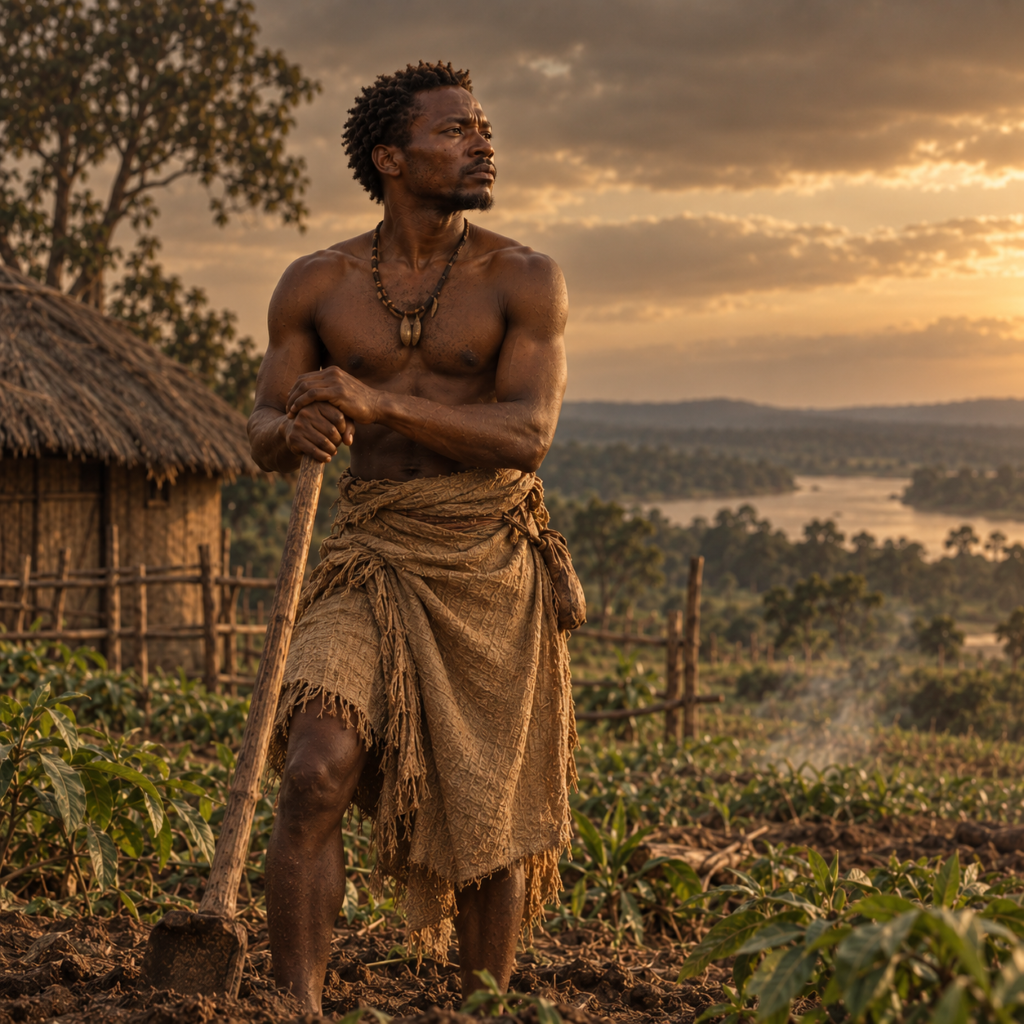
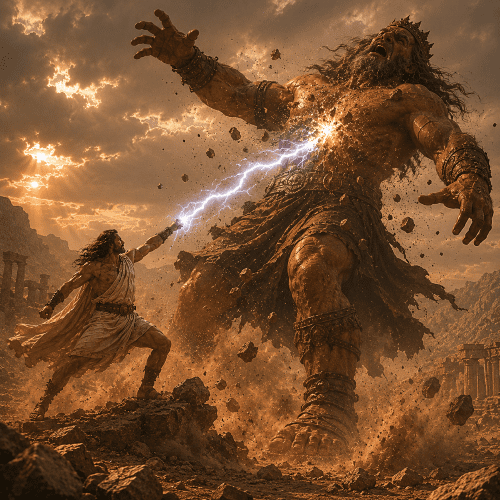
There is no reliable traditional physical description of Mwana Wuta in the sources currently available. No verified account establishes his height, facial features, hairstyle, clothing, weapons, age, distinctive markings, or supernatural anatomy. This distinction matters because Mwana Wuta is sometimes presented online as though a detailed visual tradition exists around him. The available evidence does not support that assumption. There is no reliable basis for portraying him with horns, wings, unusual skin colour, animal characteristics, magical armour, or other fantasy elements.
His classification as a culture hero also does not automatically mean that he was imagined as a god. Culture heroes can occupy an intermediate narrative role: they may be remembered as legendary ancestors or civilizing figures whose importance comes from what they introduced or taught rather than from divine powers. The broader Suku artistic tradition includes masks, sculptures, ritual objects, and wooden figures, but these should not automatically be identified as representations of Mwana Wuta. Suku visual culture is much broader than the mythology of any single named figure.
Family
Very little can be established about Mwana Wuta’s family. The available material does not provide a verified genealogy identifying his parents, spouse, children, siblings, or descendants. A separate account supplied for comparison describes Mwana Wuta as a chief’s eldest son who defended his father’s rights. However, this description has not been independently corroborated in the major ethnographic sources located for this research. It should therefore be treated as a secondary tradition rather than presented as an established fact.
Likewise, there is no reliable evidence that Mwana Wuta was a son or relative of Ndzambyaphuungu, the creator figure identified in accounts of Suku traditional religion. Suku sources describe Ndzambyaphuungu as a creator associated with life, death, and the ultimate explanation of existence, but they do not establish a family relationship between this being and Mwana Wuta. Mwana Wuta has also been grouped with Nkumba in modern presentations of Suku mythology. This association does not, by itself, establish that the two figures were relatives. It is better understood as a classification of figures associated with culture-bringing traditions.
Other names
The principal documented form of the name is Mwana Wuta. The hyphenated form Mwana-Wuta also appears in written material. The expression should not automatically be treated as a collection of different mythological names. Variations in spelling and punctuation are common when African names and terms are transferred between oral traditions, local languages, colonial-era records, and modern English-language publications.
There is also insufficient linguistic evidence to give the name a definitive translation. Although elements resembling words for “child” and “fire” occur in several Bantu languages, linguistic similarities across related languages do not by themselves establish the precise meaning of a Suku personal name. No securely documented praise name, epithet, secret name, or alternative mythological identity for Mwana Wuta has been established in the sources consulted.
Powers and Abilities
Mwana Wuta’s principal associations are with fire, farming, and moral order. Modern Suku mythology material describes him as a culture hero credited with bringing these important elements of human life to people. Fire is particularly significant in the culture-hero interpretation. Across many traditions, the acquisition of fire represents a major transition from an undifferentiated natural existence to organized human society. Fire provides cooking, warmth, protection and the ability to transform materials. In Mwana Wuta’s case, however, the available sources do not preserve a detailed story explaining where the fire came from or exactly how it was given to humanity.
His association with farming similarly presents him as a civilizing figure. Agriculture creates a more dependable relationship between people, land, seasons, food production, and community organization. Yet there is no sufficiently documented source establishing that Mwana Wuta personally introduced a particular crop or specific agricultural technique.
The moral dimension is also best understood symbolically. Modern summaries associate Mwana Wuta with moral codes, but no authoritative list of laws or commandments attributed directly to him has been identified. Suku religious scholarship instead emphasizes the importance of ancestors, elders, medicines, divination, and social relationships in maintaining order and dealing with misfortune.
Modern Day Influence
Mwana Wuta has relatively little documented presence in contemporary popular culture. Unlike better-known African mythological figures, he does not appear to have a substantial body of modern films, novels, games, comics, or widely documented religious movements centred on him. The broader Suku tradition, however, remains much richer than a catalogue of named mythological characters. Ethnographic research records a religious system involving a creator concept, ancestral relationships, medicines, divination, chiefly authority, lineage structures, and initiation practices. Suku communities have also maintained distinctive artistic traditions involving masks and woodcarving.
This wider context is important when understanding Mwana Wuta. His value as a culture hero is not necessarily that he represents a powerful supernatural personality, but that his story connects fundamental human concerns—food, fire, social responsibility, and knowledge—with the remembered wisdom of earlier generations.
Because the surviving documentation is limited, Mwana Wuta should be presented with appropriate caution. The evidence supports describing him as a Suku culture hero associated in modern accounts with fire, farming, and moral order, while details about his appearance, genealogy, personal adventures, and supernatural abilities remain uncertain. That approach preserves the figure’s significance without filling gaps in the historical record with invented mythology.
Related Images
Source
Encyclopaedia Britannica. (n.d.). Suku. Retrieved October 7, 2026, from https://www.britannica.com/topic/Suku-people
Encyclopedia.com. (n.d.). Suku. In Encyclopedia of world cultures. Retrieved October 7, 2026, from
https://www.encyclopedia.com/humanities/encyclopedias-almanacs-transcripts-and-maps/suku
Kopytoff, I. (1964). Family and lineage among the Suku of the Congo. In R. F. Gray & J. A. Gulliver (Eds.), The family estate in Africa (pp. 83–116). Routledge & Kegan Paul.
Kopytoff, I. (1981). Knowledge and belief in Suku thought. Africa, 51, 709–723.
Kopytoff, I. (1988). The Suku of southwestern Congo. In J. D. Gibbs Jr. (Ed.), Peoples of Africa (pp. 441–478). Holt, Rinehart and Winston. Original work published 1965.
Lamal, F. (1965). Basuku et Bayaka des districts Kwango et Kwilu au Congo. Annales du Musée Royal de l’Afrique Centrale, Sciences Humaines, No. 56.
Torday, E., & Joyce, T. A. (1906). Notes on the ethnography of the Ba-Yaka. The Journal of the Royal Anthropological Institute of Great Britain and Ireland, 36, 39–58.
Frequently Asked Questions
Who is Mwana Wuta in Suku mythology?
Mwana Wuta is a little-documented Suku culture hero associated in modern accounts with bringing fire, farming knowledge, and moral order to humanity.
What is Mwana Wuta known for?
Mwana Wuta is primarily associated with fire, agriculture, and the development of social or moral order rather than warfare or supernatural combat.
Is Mwana Wuta a Suku god?
Mwana Wuta is better classified as a culture hero in modern Suku mythology summaries, not as a principal Suku creator deity or clearly documented god.
What powers does Mwana Wuta have?
His traditional associations are cultural rather than magical: fire, farming, knowledge, and moral order. Specific supernatural powers are not reliably documented.
Where did the story of Mwana Wuta originate?
Mwana Wuta is associated with the Suku people of southwestern Democratic Republic of the Congo and northwestern Angola, especially the Kwango region.


