
Muthappan : The Sacred Hunter and Guardian of Kerala
At a glance
| Description | |
|---|---|
| Origin | Indian Mythology |
| Classification | Gods |
| Family Members | Padikutty Amma (Adoptive Mother), Ayyankara Vazhunnavar (Adoptive Father) |
| Region | India |
| Associated With | Protection, Equality, Hunting, Forests, Justice, Guidance, |
The Mythlok Perspective
In Mythlok’s Perspective, Muthappan represents one of the most fascinating examples of how local traditions can evolve into enduring spiritual movements. Unlike many deities whose authority comes from royal courts or sacred scriptures, Muthappan’s power emerges from his closeness to ordinary people. His acceptance of hunters, labourers, tribal communities, and social outcasts makes him a rare symbol of spiritual equality. In many ways, he resembles figures such as the Greek god Pan or the Celtic forest spirits who remained deeply connected to rural life and nature. Yet Muthappan goes further by actively challenging social boundaries, making him not only a protector deity but also a symbol of compassion, inclusion, and cultural resilience.
Muthappan
Introduction
Muthappan is one of the most distinctive and beloved deities in Indian tradition, particularly in the northern districts of Kerala. Unlike many gods who are worshipped through idols within temples, Muthappan is primarily experienced through Theyyam, the ancient ritual performance tradition of Malabar. In these ceremonies, devotees believe the deity manifests directly through specially trained performers, allowing worshippers to interact with the divine in a personal and immediate way.
The worship of Muthappan is especially prominent in Kannur and Kasaragod, where he is revered as a guardian, protector, and provider. His popularity extends beyond caste, community, and even religious boundaries. People from different social backgrounds visit his shrines seeking blessings, guidance, and protection. This broad appeal has helped make Muthappan one of Kerala’s most inclusive spiritual figures.
Many scholars believe the origins of Muthappan worship lie in the traditions of tribal and forest-dwelling communities. Over centuries, these local beliefs merged with broader Indian religious traditions, resulting in a deity who embodies qualities associated with both Shiva and Vishnu. The result is a unique divine figure who represents social equality, protection of ordinary people, and a close connection to nature.
Today, Muthappan remains a living presence in Kerala’s cultural identity. Daily rituals, annual festivals, and year-round Theyyam performances continue to attract thousands of devotees who see him not only as a god but also as a compassionate protector who remains close to his followers.
Physical Traits
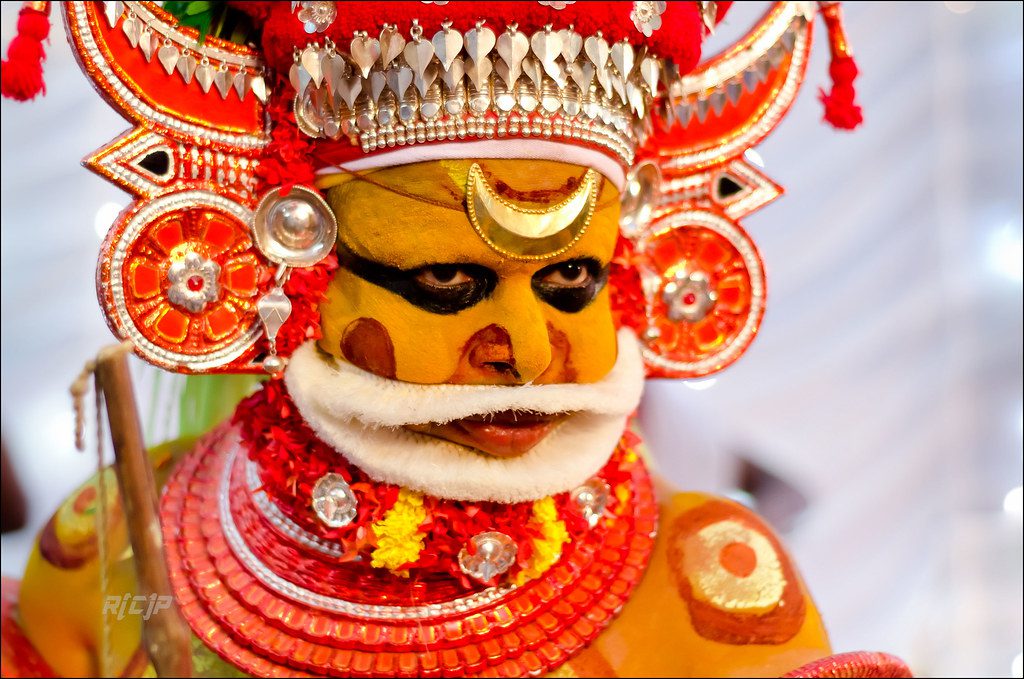
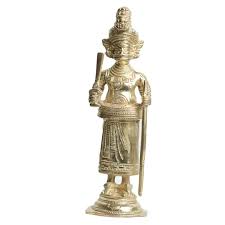
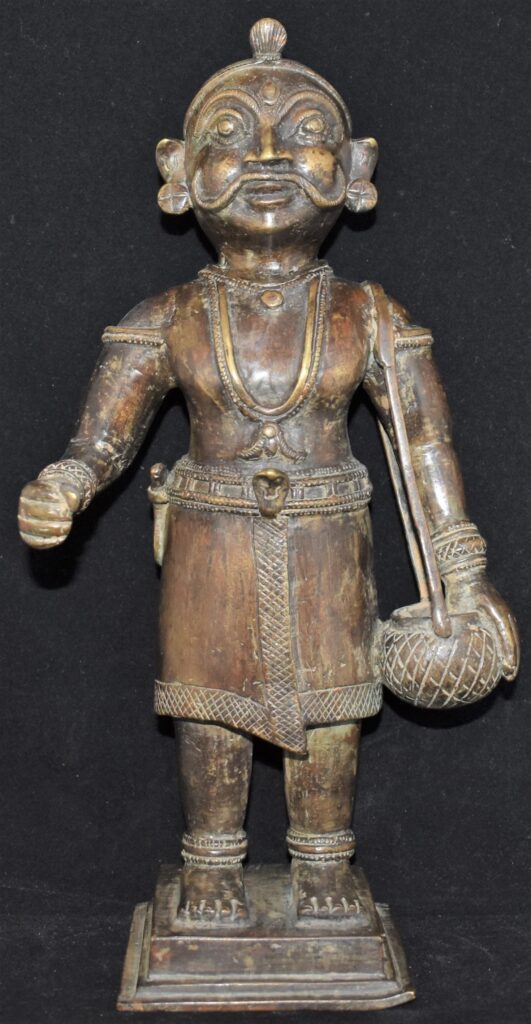
Muthappan is most commonly represented through Theyyam performances rather than permanent idols. During these rituals, performers undergo elaborate preparation to transform themselves into living embodiments of the deity.
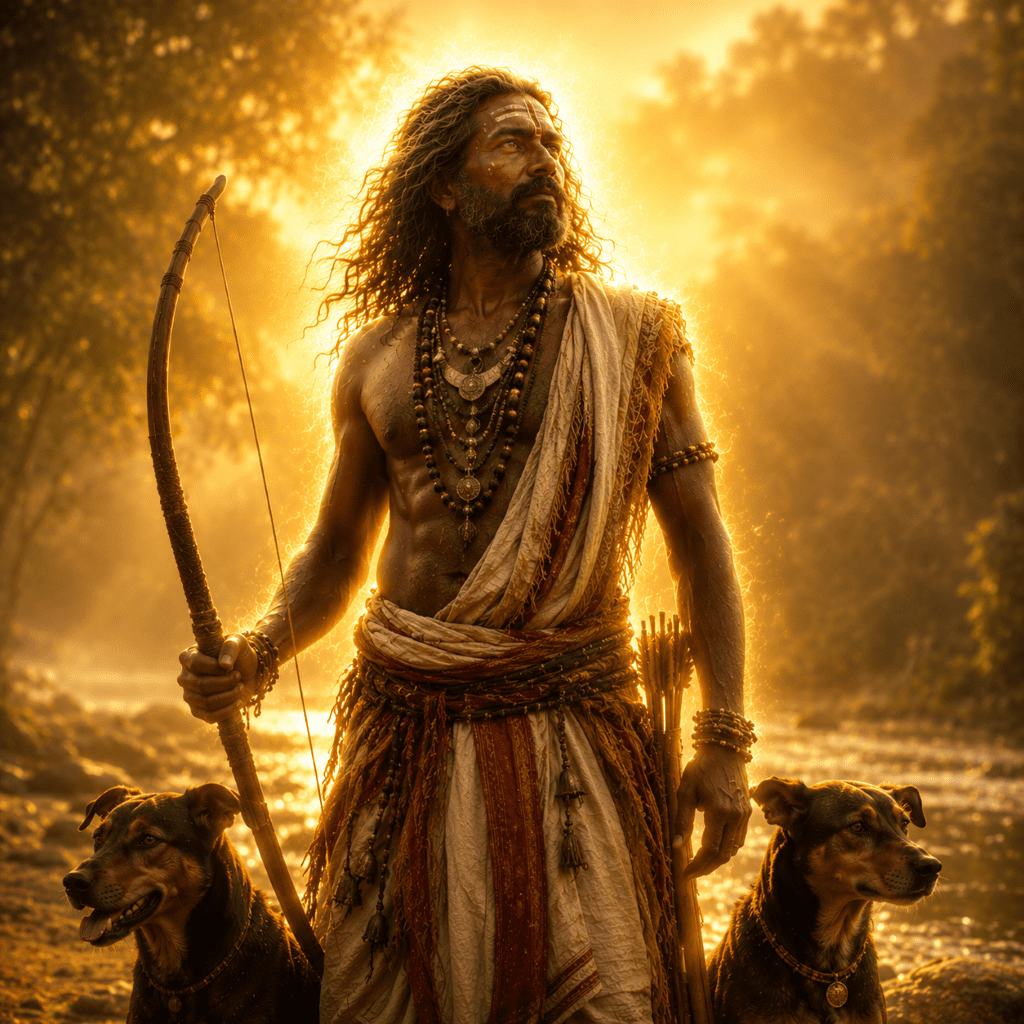
His appearance reflects his role as a hunter god. He is typically shown carrying a bow and arrow, symbolizing his connection to forests, wildlife, and the traditional hunting communities of northern Kerala. In some performances, additional weapons such as spears or swords may also be present, reinforcing his protective nature.
The facial makeup associated with Muthappan is striking and symbolic. Bright red, black, and white colours are used to create an intense and powerful appearance. The elaborate headgear worn during performances is equally significant, often featuring traditional motifs connected to his dual divine nature.
One of the most unique aspects of Muthappan’s iconography is his association with dogs. Unlike many Indian religious traditions where dogs receive limited ritual significance, they are considered sacred companions of Muthappan. Visitors to major Muthappan shrines frequently encounter dogs that are treated with respect and care as symbols of the deity’s presence.
The ritual tradition also recognizes two forms of Muthappan. Thiruvappana represents the Vishnu-associated aspect, while Vellattom represents the Shiva-associated aspect. Together, these forms express the deity’s dual nature and are essential elements of Muthappan Theyyam performances.
Family
The most widely known legend of Muthappan begins with a childless Brahmin couple from Ayyankara Illam. After years of prayer and devotion, they were blessed with a miraculous child who would later reveal his divine identity.
The child was discovered by Padikutty Amma and her husband, who raised him with love and care. Although brought up within a traditional Brahmin household, the young Muthappan displayed behaviour that challenged social expectations from an early age.
Rather than restricting himself to the customs of his adoptive family, he preferred spending time with hunters, tribal communities, and people from marginalized sections of society. He freely interacted with those considered outside the traditional social hierarchy and shared in their daily lives.
As he grew older, his unconventional actions created tension within the household. Eventually, he revealed his divine nature and departed to fulfil his spiritual mission. Through this journey, he became known as a protector of ordinary people and a champion of social equality.
While Muthappan’s earthly story revolves around his foster parents, devotees generally regard him as a manifestation of both Shiva and Vishnu. This divine connection forms the theological foundation of his worship and explains the dual nature reflected in his rituals.
Other names
The name “Muthappan” translates roughly as “Great Father” or “Grandfather,” reflecting his role as a compassionate guardian who watches over his devotees. Among his most important titles is Thiruvappana, the form associated with Vishnu. This aspect represents protection, stability, and benevolence. During ritual performances, Thiruvappana appears with distinctive costume elements that set him apart from the deity’s other manifestation.
The second major form is Vellattom, often called Cheriya Muthappan or Younger Muthappan. This aspect is associated with Shiva and embodies energy, transformation, and spiritual power. The deity is also widely known as Parassinikadavu Muthappan because of his famous shrine at Parassinikadavu in Kannur district. This sacred site attracts pilgrims from across India and remains one of the most important centres of Muthappan worship.
Many devotees additionally refer to him as Nayattu Daivam, meaning the Hunter God. This title reflects the forest origins of his legends and his enduring connection to nature and traditional hunting communities.
Powers and Abilities
Muthappan is widely regarded as a powerful protector who responds quickly to sincere devotion. His followers believe he safeguards individuals, families, and entire communities from harm. One of the most significant aspects of Muthappan worship is the belief that he communicates directly through Theyyam performers. During rituals, devotees seek guidance on personal challenges, family concerns, health issues, and important life decisions. The performer, believed to be temporarily possessed by the deity, offers blessings and advice.
Muthappan is also associated with healing and protection from misfortune. Many devotees visit his shrines seeking relief from illness, financial difficulties, and personal struggles. Stories of answered prayers and miraculous interventions form an important part of his living tradition.
Another defining aspect of his power is his rejection of social discrimination. Throughout his legends, Muthappan consistently stands with marginalized communities and challenges rigid social divisions. For many followers, this commitment to equality is itself a sacred expression of divine power. His role as a guardian extends beyond individuals. Villages and households often regard him as a protective force capable of warding off negative influences and ensuring prosperity for the community.
Modern Day Influence
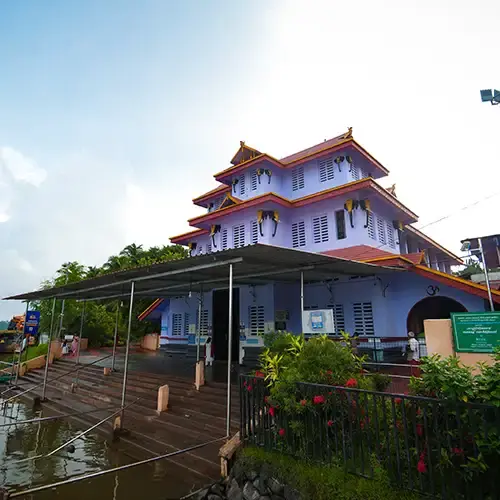
Muthappan’s influence extends far beyond the traditional boundaries of northern Kerala. Today, shrines dedicated to him can be found throughout India and within Indian communities overseas. The most famous centre of worship remains the Parassinikadavu Madappura in Kannur. Unlike many traditional temples, the shrine is known for its welcoming atmosphere and openness to people from all backgrounds. This inclusivity has helped strengthen Muthappan’s reputation as a deity who transcends social divisions.
His worship also preserves several distinctive ritual practices. Offerings commonly include fish, toddy, tea, and other items rarely associated with mainstream temple traditions. These customs reflect the deity’s deep roots in local folk culture and working-class communities.
In modern Kerala, Muthappan Theyyam has become an important cultural symbol. The performances attract pilgrims, tourists, researchers, and photographers who wish to experience one of India’s most remarkable living traditions. Government tourism campaigns frequently highlight Theyyam as an important part of Kerala’s cultural heritage.
Digital media has further expanded Muthappan’s reach. Videos of rituals, devotional songs, and social media communities dedicated to the deity have introduced his traditions to audiences around the world. Despite these modern developments, the core values associated with Muthappan, including protection, equality, compassion, and direct connection with devotees, remain unchanged.
Related Images
Source
Blog author. (2014, January 27). Legend of Parassinikadavu Muthappan. Kerala Mythology Blog. http://keralamythology.blogspot.com/2014/01/parassinikadavu-muthappan.html
Jayaram Poduval, J. (2023, May 20). Muthappan, the prodigal son, deified. The New Indian Express. https://www.newindianexpress.com/opinion/2023/May/20/muthappan-the-prodigal-son-deified-2577098.html
Hearitage author. (2025, November 12). Parassinikadavu: Madapura of Muthappan. HEARITAGE. https://www.hearitage.in/2021/08/madapura-of-muthappan.html
New Indian Express staff. (2012, June 1). An offering to the hunter god of Malabar. The New Indian Express. https://www.newindianexpress.com/opinion/2012/May/24/an-offering-to-the-hunter-god-of-malabar-371268.html
Blogger. (2015, March 25). Shri Muthappan Theyyam. World of Theyyam. http://worldetheyyam.blogspot.com/2015/03/shri-muthappan-theyyam.html
Parassini Madappura Sree Muthappan. (n.d.). Official website. https://parassinimadappurasreemuthappan.com
Travelogue of Kuntala. (2020, November 19). The enigmatic Theyyam festival of Kerala (Part 2). Travelogue of Kuntala. https://travelogueofkuntala.com/the-enigmatic-theyyam-festival-of-kerala-part-2
Paradise Holidays. (n.d.). Parassinikkadavu Muthappan. Paradise Kerala Blog. https://www.paradise-kerala.com/blog/history-parassinikkadavu-muthappan
Menon, K. P. (2010). Gods of Malabar: Folk Traditions and Rituals. New Delhi: Indira Gandhi National Centre for the Arts.
Panikkar, K. N. (1995). Culture and Consciousness in Kerala. New Delhi: Sage Publications.
Namboodiri, P. (2008). Theyyam: Ritual Dance of Malabar. Thrissur: Kerala Sahitya Akademi.
Frequently Asked Questions
Who is Muthappan?
Muthappan is a revered folk deity of northern Kerala worshipped through Theyyam rituals and regarded as a combined manifestation of Shiva and Vishnu.
Why are dogs sacred to Muthappan?
Dogs are considered the loyal companions and guardians of Muthappan, making them an important symbol within his worship tradition.
Where is the main temple of Muthappan located?
The most famous shrine dedicated to Muthappan is the Parassinikadavu Madappura in Kannur district, Kerala.
Why is Muthappan worship different from other deities?
Muthappan is primarily worshipped through Theyyam performances, where devotees believe the deity directly manifests through ritual performers.
What offerings are made to Muthappan?
Traditional offerings include fish, toddy, tea, and boiled legumes, reflecting the deity’s strong connection to Kerala’s folk traditions and local communities.