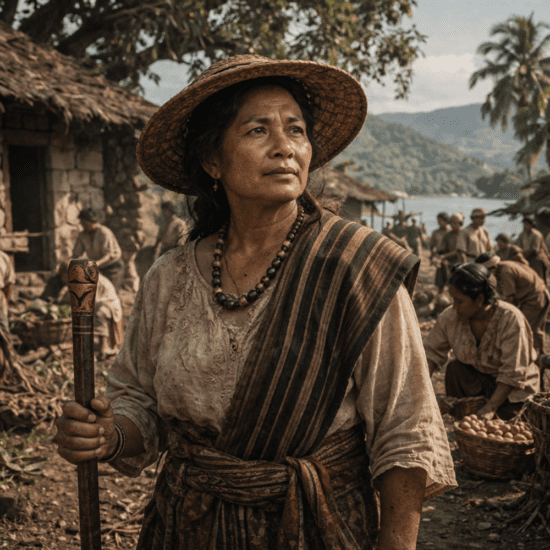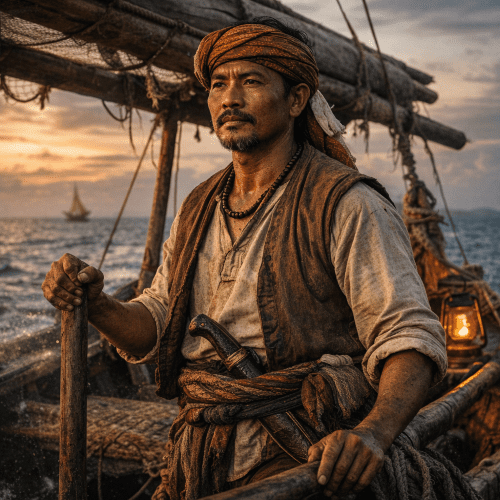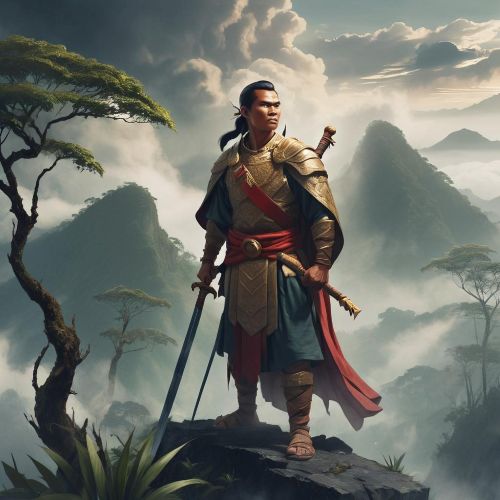


Matabagka : The Wind-Seeking Heroine of Philippine Epics
At a glance
| Description | |
|---|---|
| Origin | Philippine Mythology |
| Classification | Mortals |
| Family Members | Agyo (Brother), Imbununga (Husband) |
| Region | Philippines |
| Associated With | Courage, Strategy, Wind control |
The Mythlok Perspective
In Mythlok’s Perspective, Matabagka stands as one of the most grounded yet powerful representations of feminine heroism in global epic traditions. She does not inherit divinity but earns influence through intellect and action, placing her closer to figures like Atalanta from Greek lore or Mulan from Chinese legend. Unlike storm deities who command nature by birthright, Matabagka negotiates power through wit and symbolic tools, reflecting a uniquely human path to transcendence.
Matabagka
Introduction
Matabagka is a celebrated heroine from Philippine epic tradition, specifically preserved among the Talaandig people of Bukidnon in Mindanao. Her story appears in the ulaging (heroic chant) often referred to as “Matabagka Searches for the Deity of the Wind,” part of the larger Epic of Nalandangan cycle. Unlike many epics that center male warriors, this narrative places Matabagka at the forefront as a decisive and capable protagonist.
The story begins when her brother, Agyo, a chieftain and central hero of the Nalandangan cycle, receives a troubling warning from a guardian spirit about an impending invasion led by the wind-associated figure Imbununga. While Agyo hesitates under the weight of this prophecy, Matabagka steps forward with clarity and confidence. She insists on confronting the threat directly, setting out on a journey that blends strategy, courage, and supernatural encounters.
Matabagka’s role is significant not just within the story but also within Philippine oral literature. She represents a rare archetype: a woman who is not defined by support roles but by leadership, action, and resolution. Her journey reflects themes of autonomy, intelligence, and cultural resilience, making her one of the most compelling figures in indigenous Philippine storytelling.
Physical Traits
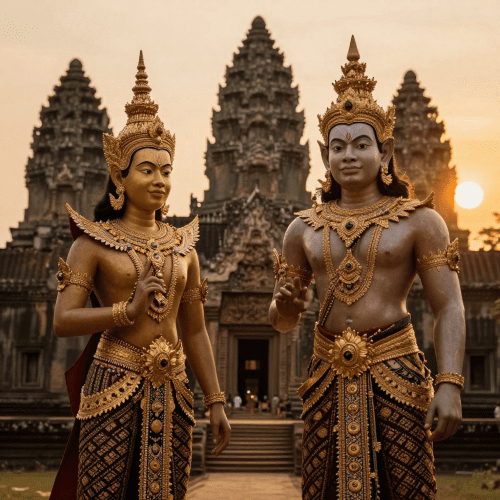
Descriptions of Matabagka emphasize both her beauty and her presence, but always in a way that supports her strength rather than overshadowing it. She is portrayed as radiant and striking, sometimes compared poetically to sunlight or a glowing presence entering a hall. These descriptions are typical of Southeast Asian epic traditions, where visual imagery conveys both physical appeal and symbolic power.
One notable detail in the narrative is the change in her complexion during battle. Initially described as fair and luminous, her skin darkens after prolonged combat under the sun. This shift grounds her character in human reality, reminding audiences that despite her heroic status, she endures physical strain and hardship.
Rather than focusing on precise features like height or build, the epic frames her appearance through movement and energy. She is agile, commanding, and expressive, embodying vitality rather than static beauty. This approach aligns with oral storytelling traditions, where character is often revealed through action rather than detailed physical description.
Family
Matabagka’s closest familial connection is with her brother Agyo, a central figure in the Nalandangan epic cycle. Agyo is both a leader and a warrior, and his stories form the backbone of many Talaandig narratives. However, in this particular tale, it is Matabagka who takes initiative when Agyo is immobilized by fear of prophecy.
Their relationship highlights a balance of roles rather than a hierarchy. While Agyo holds authority as a chieftain, Matabagka demonstrates equal, if not greater, decisiveness in moments of crisis. Her willingness to act contrasts with his hesitation, reinforcing her importance within the narrative.
During her journey, Matabagka encounters Imbununga, a powerful wind-associated being who initially stands as an adversary. Through strategy and circumstance, she eventually marries him, transforming a hostile relationship into an alliance. This union is not portrayed as submission but as a calculated resolution that ultimately strengthens her people’s position.
Other names
Matabagka is known by several alternative names in different versions of the oral tradition, including Pigsayo, Yugmukanon, and Yambunganon. These variations reflect the fluid nature of oral storytelling, where names shift across regions, storytellers, and generations while preserving the essence of the character.
The presence of multiple names does not indicate different individuals but rather different expressions of the same heroic identity. This is common in Philippine epics, where oral transmission allows stories to evolve while maintaining their core narrative structure.
Powers and Abilities
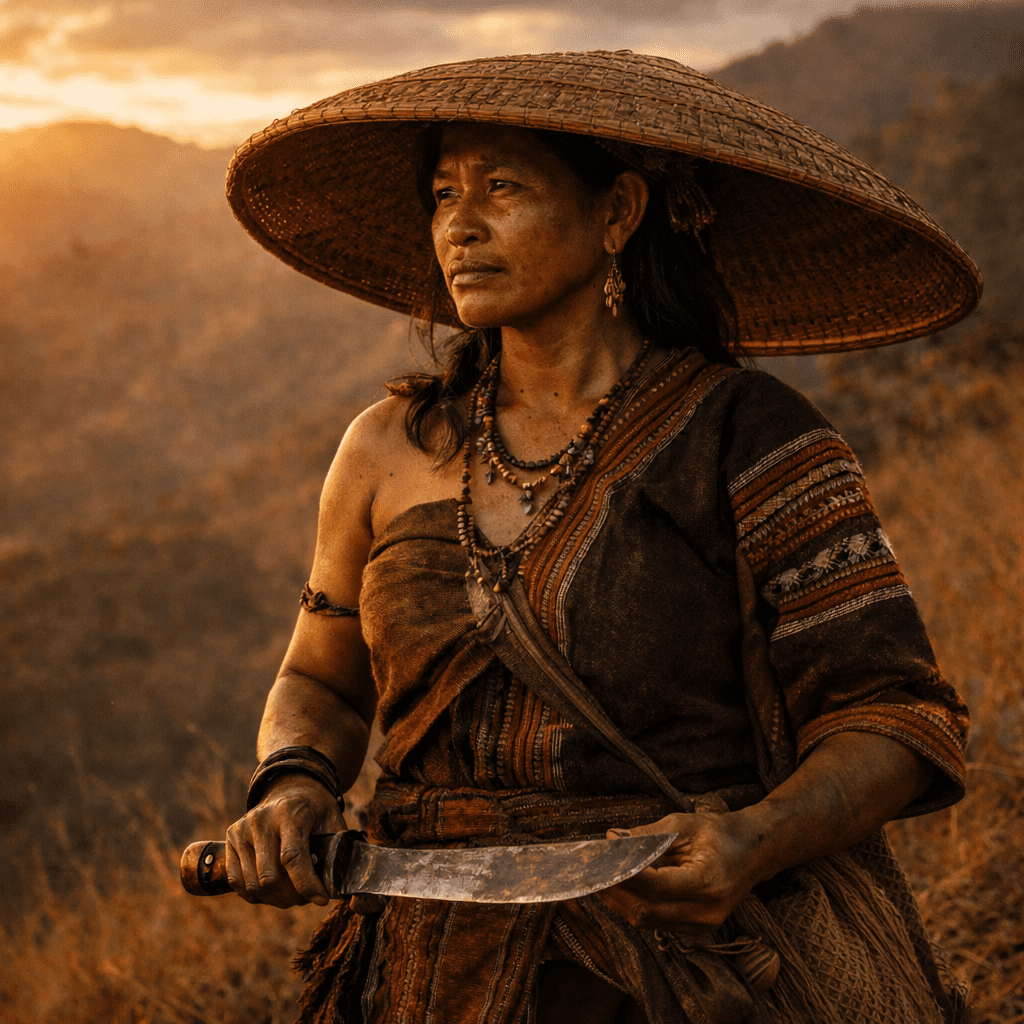
Matabagka’s abilities combine intelligence, combat skill, and the use of culturally significant objects that function as talismans. One of her most distinctive tools is the sulinday, a small hat that she transforms into a flying vessel. This allows her to travel across vast distances, giving her both mobility and strategic advantage.
She also carries a libon or binulay, a traditional maiden’s container for betel chew. This seemingly ordinary item becomes a powerful instrument in her plan. She uses it to incapacitate Imbununga, enabling her to seize two important objects: the taklubu and the baklaw. These items are associated with controlling wind forces, including whirlwinds and storms, making them crucial to her mission.
Matabagka is also a formidable warrior. When confronted by enemies, she fights effectively, defeating multiple opponents despite being outnumbered. Her combat ability is paired with tactical thinking, allowing her to outmaneuver stronger forces rather than relying on brute strength alone.
Perhaps her most extraordinary ability is her power to revive fallen warriors. By placing betel chew into their mouths, she restores them to life, reversing the losses of battle and ensuring victory. This ability reflects a broader theme in Philippine epics, where heroes often gain enhanced capabilities through symbolic objects rather than inherent divinity.
Modern Day Influence
Matabagka continues to resonate in modern interpretations of Philippine culture and storytelling. Her narrative has been preserved in academic collections, including works by scholars such as Damiana L. Eugenio, who documented Philippine epics to ensure their survival. Studies like Corazon A. Manuel’s research on the Nalandangan cycle have further analyzed her role within the tradition.
In contemporary media, her story has been reimagined in formats such as graphic novels, including “Matabagka: Isang Ulaging” by Mervin Malonzo (often associated with independent Filipino komiks creators). These adaptations aim to bring indigenous epics to wider audiences while maintaining cultural authenticity.
Matabagka is also increasingly viewed as a symbol of early female empowerment in Philippine narratives. Long before modern discussions of gender equality, her story presented a woman who leads, strategizes, and reshapes the outcome of conflict. This makes her highly relevant in present-day discussions about representation, identity, and cultural pride.
Related Images


Source
Eugenio, D. L. (2001). Philippine folk literature: The epics. University of the Philippines Press.
Jocano, F. L. (1969). Philippine Mythology and Folklore. Manila: Punlad Research House.
Maslog, C. C. (1988). Philippine Communication: An Introduction. Quezon City: New Day Publishers.
Clark, J. (2022, November 13). Matabagka searches for the deity of the wind. Aswang Project. https://www.aswangproject.com/matabagka-summary-nalandangan/
Zam398. (2018, May 16). A comparative study on Philippine epics – Comparison of the portrayal of women in Amaya and Matabagka. Steemit. https://steemit.com/education/@zam398/a-comparative-study-on-philippine-epics-comparison-of-the-portrayal-of-women-in-amaya-and-…
Kapitbisig.com. (n.d.). The epic of Nalandangan: Matabagka searches for the deity of the wind (of the Talaandig people of Central Bukidnon). Kapitbisig. https://www.kapitbisig.com/philippines/english-version-of-epics-mga-epiko-the-epic-of-nalandangan-matabagka-searches-for-the-dei…
[Anonymous]. (2026, March 3). Si Matabagka at ang tagapag-ingat ng hangin (Dayapera). Scribd. https://es.scribd.com/doc/309938947/Si-Matabagka-at-Ang-Tagapag-Ingat-NG-Hangin-Dayapera
Ramos, M. D. (1990). Creatures of Philippine lower mythology. Calauan, Laguna: Phoenix.
Frequently Asked Questions
Who is Matabagka in Philippine epic tradition?
Matabagka is a heroic figure from a Talaandig epic who embarks on a quest to confront a wind deity and save her people.
What powers does Matabagka have?
She uses magical objects, can fly using her hat, fights skilled battles, and even revives the dead with betel chew.
Is Matabagka a goddess or a human?
Matabagka is portrayed as a human heroine with enhanced abilities through talismans, not a goddess.
What is the Epic of Nalandangan?
It is a cycle of oral epics from Bukidnon that narrates the adventures of Agyo and his kin, including Matabagka.
Why is Matabagka important today?
She represents early female empowerment and continues to inspire modern interpretations of Filipino identity and strength.