

Silungan Baltapa : The Spiritual Hero of the Sama Dilaut Epic
At a glance
| Description | |
|---|---|
| Origin | Philippine Mythology |
| Classification | Mortals |
| Family Members | Mussaq Dalmata (Wife), Datu’ Mu’min (Son), Ugbusan Sahaya (Mother), Muslim Magkapala (Sister) |
| Region | Philippines |
| Associated With | Spiritual journeys, Maritime life, Redemption, |
The Mythlok Perspective
In Mythlok’s Perspective, Silungan Baltapa represents a rare fusion of seafaring realism and spiritual transcendence. He is not a warrior defined by conquest but a voyager shaped by loss, devotion, and inner transformation. His journey mirrors the ocean itself, unpredictable, vast, and deeply symbolic. When compared to other traditions, he echoes figures like Odysseus from Greek lore in his maritime endurance, yet his spiritual ascent aligns more closely with Islamic and Southeast Asian mystical journeys. Unlike many heroes, his strength lies not in battle but in redemption, making him a uniquely introspective figure in global storytelling.
Silungan Baltapa
Introduction
Silungan Baltapa stands as one of the most compelling heroic figures in Philippine oral tradition, emerging from the rich epic narratives of the Sama-Dilaut people of the Sulu Archipelago. His story is not merely a tale of adventure but a deeply spiritual journey shaped by love, loss, and the pursuit of divine understanding. Sung as part of the kata-kata tradition, these epics are performed during healing rituals, where music, memory, and myth merge into a powerful communal experience.
What makes Silungan Baltapa particularly unique is the fusion of older Sama beliefs with Islamic influences. His journey reflects both ancestral traditions and later religious frameworks, creating a layered narrative where maritime life, spirituality, and moral ideals intersect. His voyages across sea, earth, and heaven are not just physical travels but symbolic passages toward enlightenment.
The epic often unfolds over several hours, sometimes across multiple nights, delivered by spirit singers known as wali jin. These performances are believed to heal the sick, calm the mind, and reconnect the living with ancestral spirits. Within this setting, Silungan Baltapa becomes more than a hero. He becomes a bridge between worlds, embodying the Sama-Dilaut worldview shaped by the rhythms of the ocean and the mysteries of the unseen.
Physical Traits
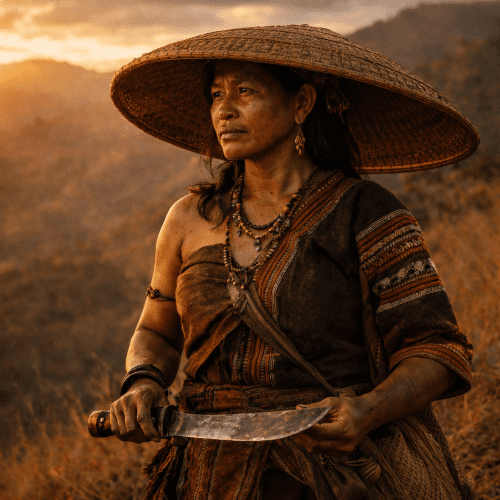
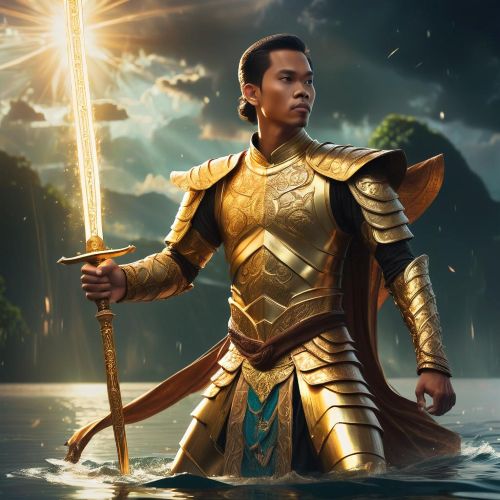
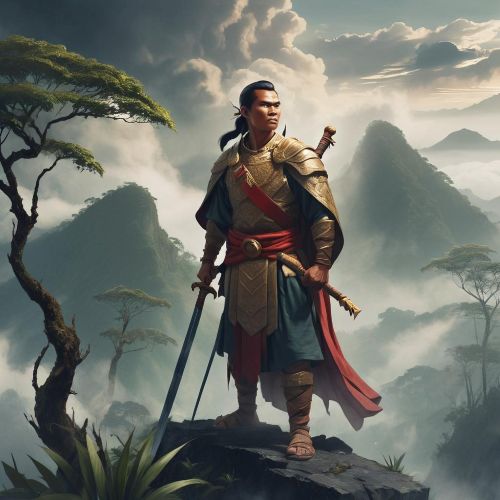
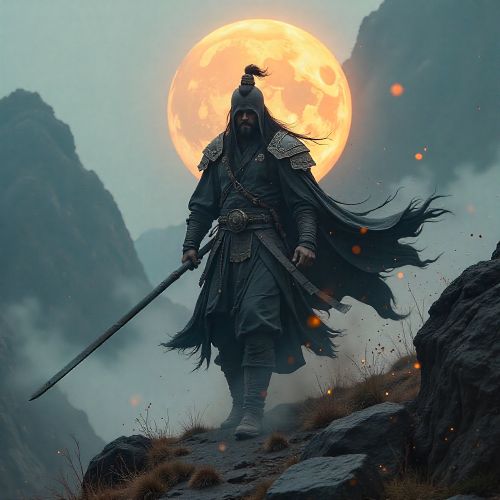
Silungan Baltapa is notably absent of detailed physical description, which is a defining feature of his narrative. Unlike many mythological figures whose appearances are vividly described, his story focuses almost entirely on his actions, character, and spiritual evolution.
This absence is intentional rather than accidental. In Sama-Dilaut storytelling, the emphasis lies on inner qualities such as moral integrity, wisdom, and resilience. Silungan Baltapa is consistently portrayed as a sinless or righteous figure, and it is this purity of character that defines him rather than any physical attribute.
In contrast, other figures in the epic, particularly his wife Mussaq Dalmata, are described in poetic detail. Her beauty is likened to glass-like radiance and the rich red of betel juice, emphasizing grace and elegance. These descriptions serve to highlight emotional and symbolic elements rather than create visual realism.
Moments involving divine realms are often accompanied by imagery of light, glow, and ethereal brilliance. However, these are environmental and spiritual effects rather than inherent traits of Silungan Baltapa himself. This reinforces the idea that his significance lies in his journey and spiritual standing, not his appearance.
Family
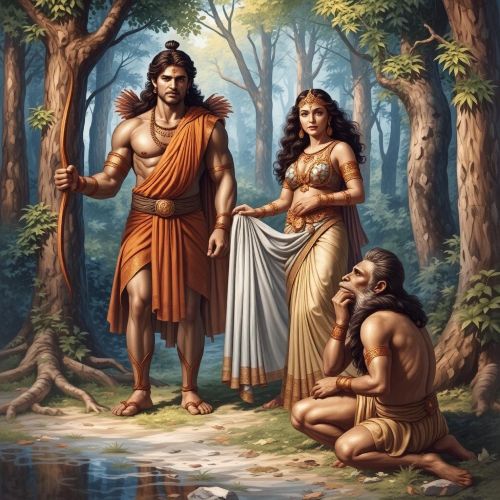
Family plays a central emotional and moral role in the story of Silungan Baltapa. His relationships are not just background details but the driving force behind many of his actions and decisions.
His wife, Mussaq Dalmata, often referred to as the “Unique Pearl,” represents idealized love and purity. Her death shortly after giving birth to their son, Datu’ Mu’min, becomes a pivotal moment in the narrative. This loss sets Silungan Baltapa on a path of spiritual struggle and redemption, as he seeks not only understanding but also a way to restore what was lost.
His mother, Ugbusan Sahaya, meaning “Source of Light,” provides guidance and stability, while his sister, Muslim Magkapala, plays a protective role, sometimes appearing in spiritual form to assist him. These relationships reflect the Sama-Dilaut concept of interconnected family bonds, where the living and the dead remain closely linked.
The epic emphasizes mutual care between family members, including compassion for orphans and respect among siblings. Even deceased relatives are believed to continue supporting the living, especially through rituals that maintain their presence in memory. This strong familial structure reinforces the emotional depth of Silungan Baltapa’s journey, grounding his spiritual quest in deeply human experiences.
Other names
Silungan Baltapa is consistently known by this name across documented versions of the epic, and there are no widely recognized alternative names or regional variations. The name itself is often interpreted as referring to a place of refuge, meditation, or spiritual retreat, which aligns closely with his role in the narrative.
In some poetic contexts, he is also associated with titles such as “Datuq Langka,” which emphasizes his leadership qualities and social standing. However, these are more descriptive titles than distinct names. The consistency of his name across oral and recorded traditions suggests a strong cultural continuity, preserving his identity as a central figure within Sama-Dilaut storytelling.
Powers and Abilities
Silungan Baltapa’s abilities are a blend of spiritual strength and extraordinary narrative feats, reflecting both human and transcendent qualities. While he is not a god, his journey places him in direct interaction with divine realms.
One of his most notable abilities is his mastery over time and space during sea voyages. He is said to travel vast distances with incredible speed, symbolizing the deep maritime knowledge of the Sama-Dilaut people. His journeys span the sea, the earth, and the heavens, each representing different stages of spiritual growth.
He undergoes a series of trials, often described as multiple voyages and conflicts across different realms. These include encounters with powerful enemies, spiritual beings, and cosmic forces. His experiences also include a shamanic initiation, where he is healed and transformed, marking a turning point in his life.
Perhaps the most defining aspect of his journey is his ascent into divine realms, where he witnesses both paradise and punishment. Through his devotion and righteousness, he is able to appeal to divine authority and seek redemption for his wife’s soul. This act highlights themes of love, faith, and perseverance. Rather than relying on brute strength or magical dominance, Silungan Baltapa’s true power lies in his spiritual resilience, moral clarity, and unwavering devotion.
Modern Day Influence
The story of Silungan Baltapa continues to hold cultural and academic significance in the Philippines. It is preserved as part of the oral literature of the Sama-Dilaut and has been documented in various scholarly works, particularly in studies of Southeast Asian epics.
Anthropologists and researchers have recorded versions of the epic, ensuring its survival in written and multimedia formats. Institutions have included it in collections of Philippine epics, recognizing its importance as a cultural treasure.
Despite the lack of mainstream adaptations in film or gaming, the epic remains alive through traditional performances, especially during healing rituals. These performances continue to serve both spiritual and communal functions, reinforcing cultural identity.
In a modern context, Silungan Baltapa represents the resilience of indigenous narratives in the face of social and religious change. His story reflects how traditions evolve while still preserving core values, making him a powerful symbol of continuity and transformation.
Related Images




Source
Nimmo, H. A. (2001). The sea people of Sulu: A study of social change in the Philippines. University of Chicago Press.
Revel, N. (2005). Heroic characters as models of leaders in Philippine oral epics. In Heroic epic and saga: An international annotated bibliography (pp. 186-202). Kuntskamera. https://lib.kunstkamera.ru/files/lib/978-5-88431-141-1/978-5-88431-141-1_16.pdf
Wikipedia contributors. (2026). Philippine mythology. Wikipedia. https://en.wikipedia.org/wiki/Philippine_mythology
Revel, N. (2000). Kata-kata Silungan Baltapa [Epic transcription]. Philippine Epics and Ballads Archive.
Nimmo, H. A. (1986). Songs of the Tausug.
Sather, C. (1997). The sea nomads: A study of the Sama-Bajau. Borneo Research Council.
Ethnographic review on Sama Dilaut’s epic Silungan Baltapa. (n.d.). Slideshare. https://www.slideshare.net/slideshow/condensed-silungan-baltapa/24468808
Academia.edu. (n.d.). The Magosaha in Silungan Baltapa. https://www.academia.edu/8401370/THE_MAGOSAHA_IN_SILUNGAN_BALTAPA
Frequently Asked Questions
Who is Silungan Baltapa?
Silungan Baltapa is a heroic figure from Sama-Dilaut epic tradition, known for his spiritual voyages and deep connection to the sea.
Is Silungan Baltapa a god or human?
He is a human hero, not a god, whose story highlights spiritual strength, moral purity, and resilience across realms.
What is the Silungan Baltapa epic about?
The epic explores love, loss, and spiritual journeys, following his voyages through sea, earth, and divine realms.
What makes Silungan Baltapa unique?
His story blends Sama traditions with Islamic influences, focusing on redemption, devotion, and spiritual awakening.
Why is Silungan Baltapa important today?
He preserves Sama-Dilaut culture and oral traditions, offering insight into maritime life and evolving belief systems.