

Ana Kalang : The Legendary Benefactor of Nagcarlan
At a glance
| Description | |
|---|---|
| Origin | Philippine Mythology |
| Classification | Mortals |
| Family Members | N/A |
| Region | Philippines |
| Associated With | Leadership, Generosity, Agriculture, Lanzones cultivation, |
The Mythlok Perspective
In Mythlok’s Perspective, Ana Kalang represents a rare archetype in folklore: the mortal who becomes legendary not through divine birth, but through lasting impact. Her story reflects the transformation of knowledge into cultural identity, where agriculture and leadership merge into myth. Unlike figures such as Demeter from Greek traditions or Annapurna from Indian belief systems, who govern abundance through divinity, Ana Kalang achieves a similar role through human agency. This positions her closer to culture heroes like Yu the Great in Chinese tradition—figures who shape civilization itself. Her legacy suggests that mythology does not always require the supernatural. Sometimes, it is the memory of human excellence that becomes immortal.
Ana Kalang
Introduction
In Philippine folklore, Ana Kalang stands as a deeply respected cultural figure rooted in the history of Nagcarlan, a town nestled near the sacred slopes of Mount Banahaw and Mount Cristobal. Unlike divine beings such as Bathala or celestial diwatas, Ana Kalang is remembered as a mortal leader whose legacy emerged through action, generosity, and influence rather than supernatural power.
Local tradition portrays her as a wealthy and compassionate tribal head who lived before Spanish colonization. She played a central role in shaping the agricultural identity of the region, particularly through her association with the lanzones fruit. According to legend, she was responsible for removing its natural toxicity, allowing it to become one of the most important crops in Laguna. This act alone secured her place in regional memory.
Her story also intertwines with the naming of Nagcarlan itself. When Spanish settlers heard the sound of bamboo brushing together and were told “nagkakalang-kalang,” they misinterpreted the phrase, eventually calling the place Nagcarlan. Over time, Ana Kalang became both a historical and symbolic figure, representing prosperity, leadership, and cultural continuity.
Today, her legacy lives on through the Ana Kalang Festival, a vibrant celebration of harvest, identity, and shared heritage that continues to define the town’s spirit.
Physical Traits
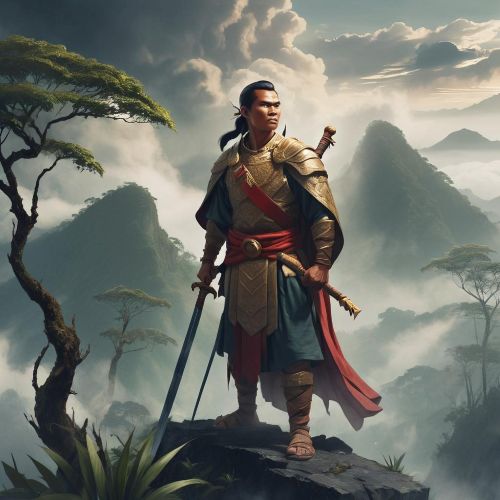
Descriptions of Ana Kalang focus less on physical beauty and more on the symbols of her authority and status. She is consistently depicted carrying a golden cane, initially mistaken by some as a sign of old age but later understood as a symbol of leadership, much like a scepter. This reinterpretation reinforces her role not as a frail elder, but as a commanding presence within her community.
She is also portrayed wearing a golden salakot, a traditional Filipino headpiece associated with dignity and prestige. Together, these elements create an image of quiet power—someone who did not need spectacle to command respect.
Another striking detail in her legend is her stone house, which stood apart from the typical wooden structures of her time. This architectural distinction symbolized both wealth and permanence. Some accounts even suggest that she funded or constructed stone pathways connecting her residence to the local church, emphasizing her devotion and influence in both civic and spiritual life.
Rather than focusing on physical features like height or facial traits, folklore frames Ana Kalang as a figure defined by presence, attire, and the aura of authority she carried.
Family
There is no recorded information about Ana Kalang’s family in Philippine folklore. Unlike many mythological figures whose identities are shaped by lineage, ancestry, or divine connections, her story exists independently of familial ties.
This absence is significant. It shifts attention entirely toward her role as a community leader rather than as a daughter, wife, or mother. In many ways, she becomes a symbolic matriarch of Nagcarlan itself—her “family” being the people she protected and supported.
Some versions of her story reference a vision involving Saint Anne, suggesting spiritual guidance rather than familial connection. However, this remains interpretative and does not establish any genealogical narrative.
Other names
Ana Kalang is primarily known by this single name across folklore and festival traditions. Unlike many figures in Philippine mythology who possess multiple titles or regional variations, her identity remains consistent and grounded.
There are rare mentions of the name “Ana Panalangin” in modern depictions, but these appear to be artistic or interpretative extensions rather than historically rooted alternatives. The term “kalang-kalang,” often associated with the sound of bamboo or symbolic harvest figures, plays a role in the naming of Nagcarlan but does not function as a direct alternate name for her. Instead, it reinforces her connection to the land and its cultural memory.
Powers and Abilities
Ana Kalang is not depicted as a supernatural being. Her influence comes from knowledge, leadership, and action rather than magic.
The most famous aspect of her legend is her connection to the lanzones fruit. Early versions of the fruit were believed to be bitter or toxic, and Ana Kalang is credited with making them safe for consumption. In some interpretations, she achieved this through practical knowledge, while in others, she witnessed a divine act involving Saint Anne. Regardless of the version, the outcome remains the same: she enabled a transformation that would shape the region’s agricultural identity.
Beyond this, her abilities lie in governance and generosity. She is remembered as a benefactor who helped her people during times of hardship, using her wealth to support infrastructure and community needs. Her contributions to the construction of local religious and civic structures further highlight her influence.
Modern Day Influence
Ana Kalang’s legacy continues to thrive through the Ana Kalang Festival, a major cultural event in Nagcarlan. Originally linked to the lanzones harvest, the festival evolved into a broader celebration of agricultural abundance and local identity.
Held annually, the festival spans several days and features parades, street dancing, cultural showcases, and trade exhibitions. One of its most iconic elements is the creation of large “kalang-kalang” figures, once made from fruits and vegetables and now often crafted using indigenous materials for sustainability.
Another highlight is the “Bihis Ana Kalang” event, where participants dress as the legendary figure, blending traditional attire with modern design. This reinterpretation keeps her image alive while allowing new generations to connect with her story.
The festival also serves as an economic driver, attracting tourism and promoting local crafts and produce. It reinforces a shared identity across the town’s many barangays, turning Ana Kalang from a historical figure into a living cultural symbol. Her presence extends beyond the festival as well, with statues, landmarks, and oral traditions ensuring that her story remains embedded in the collective memory of the region.
Related Images






Source
Ethnic Groups of the Philippines. (n.d.). Ana Kalang Festival. http://www.ethnicgroupsphilippines.com/arts-and-culture/festivals/ana-kalang-festival/
Karla. (2018, April 30). Ana Kalang Festival. Travel with Karla. https://travelwithkarla.com/2018/04/30/ana-kalang-festival/
Rodriguez, J. (2016, April 26). Myths, legends, folktales in Region 4A-CALABARZON. https://rodriguezjane.blogspot.com/2016/04/myths-legends-folktales-in-region-4a.html
The Queen’s Escape. (n.d.). Nagcarlan, Laguna’s Ana Kalang Festival 2018. https://thequeensescape.com/nagcarlan-lagunas-ana-kalang-festival-2018/
Traveler on Foot. (2008, April 1). Ana Kalang Festival. https://traveleronfoot.wordpress.com/tag/ana-kalang-festival/
Ramos, S. (2021). Creatures of Philippine Lower Mythology. University of the Philippines Press.
Jocano, F. L. (1968). Philippine Mythology. Punlad Research House.
Frequently Asked Questions
Who is Ana Kalang in Philippine folklore?
Ana Kalang is a legendary leader from Nagcarlan known for her generosity and role in making lanzones fruit edible.
Is Ana Kalang a goddess or a human?
She is a mortal figure, not a deity, remembered for her leadership and community contributions.
What is Ana Kalang famous for?
She is famous for detoxifying lanzones fruit and supporting her community through wealth and guidance.
What is the Ana Kalang Festival?
It is a cultural celebration in Nagcarlan honoring her legacy and the town’s agricultural abundance.
How did Nagcarlan get its name?
The name originated from a mispronunciation of “nagkakalang-kalang,” linked to her story and local folklore.