


Manunubo : The Gentle Power of the Philippine Seas
At a glance
| Description | |
|---|---|
| Origin | Philippine Mythology |
| Classification | Spirits |
| Family Members | N/A |
| Region | Philippines |
| Associated With | Sea, Protection, Safe voyages, Fishing |
The Mythlok Perspective
In Mythlok’s Perspective, Manunubo represents a quieter form of divinity, one that does not demand worship but encourages respect. It reflects a worldview where nature is not conquered but negotiated with. This makes it deeply relevant in a time of environmental imbalance. Comparable figures can be seen in other cultures, such as the Japanese sea kami or Celtic water spirits, yet Manunubo stands apart in its purely benevolent role. It embodies harmony rather than fear, offering a model of coexistence rather than control.
Manunubo
Introduction
The islands of the Philippines have long depended on the sea for food, trade, travel and survival. For communities spread across the Visayas, the surrounding waters were more than geographical boundaries. They were essential sources of life, connecting settlements while also demanding respect for their unpredictable nature. Within this maritime world, Manunubo occupies a distinctive place in the traditional beliefs of the Hiligaynon and Aklanon peoples.
Manunubo is recognised as a benevolent spirit of the sea in the indigenous religious traditions of the Visayas. Historical descriptions associate the spirit with the Ilongo, or Hiligaynon, communities of the region, particularly those connected with Panay, Iloilo, Guimaras and Negros Occidental. An Aklanon account from Aklan also records the closely related name Manunubon, reflecting the presence of this sea spirit in neighbouring cultural traditions.
The description of Manunubo as a good spirit is particularly significant. Philippine folklore contains numerous supernatural beings associated with water, some of which are feared for their destructive behaviour or their ability to harm people who enter their territories. Manunubo, however, represents a more benevolent aspect of the maritime world. Its association with goodness distinguishes it from threatening water spirits and places it among the supernatural presences connected with the sustaining qualities of nature.
Unlike prominent deities with elaborate genealogies and stories of creation, Manunubo appears in relatively brief descriptions of regional religious beliefs. Its importance lies primarily in its association with the sea and the positive spiritual qualities attributed to that environment.
Physical Traits
Traditional accounts provide little information about the physical appearance of Manunubo. There are no established descriptions specifying its height, facial features, clothing, age or bodily characteristics. Nor is there a widely preserved narrative describing the spirit taking a particular human or animal form.
This absence of physical detail is consistent with the way several supernatural beings appear in indigenous Philippine religious traditions. Spirits were not necessarily understood through the same visual conventions used to portray human-like gods. Their identities could instead be established through their association with particular elements, locations or aspects of everyday life.
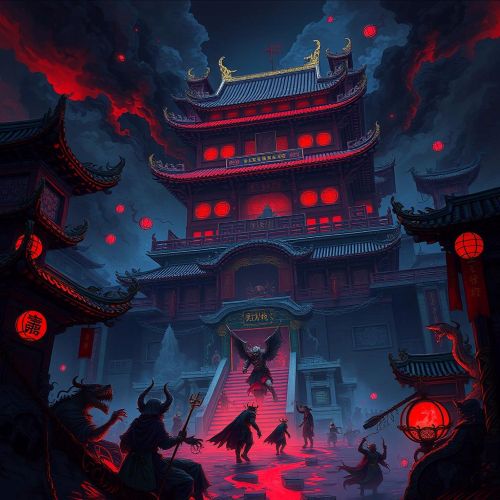
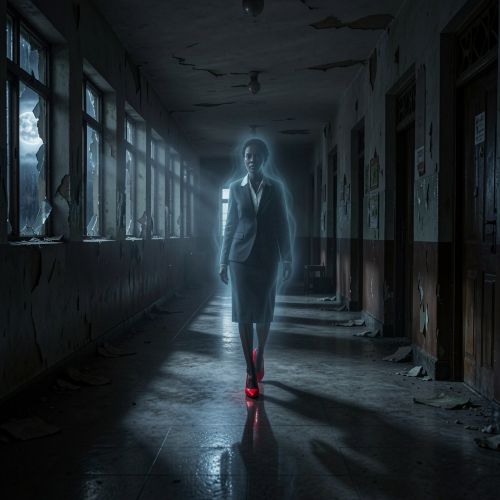
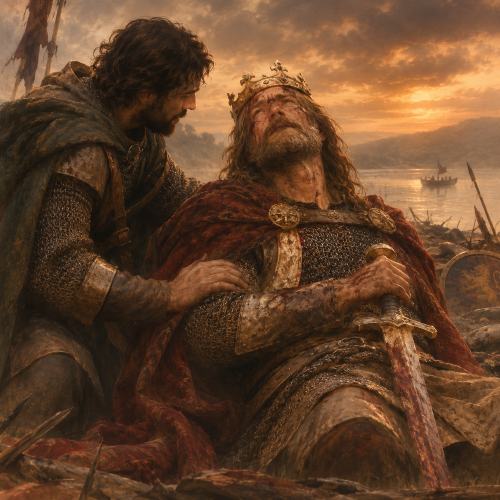
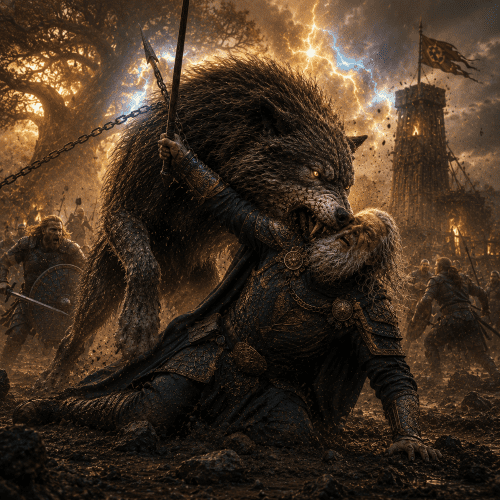
For Manunubo, the sea itself provides the central context for understanding its identity. Its association with maritime nature is more clearly established than any imagined physical manifestation. Consequently, representations of the spirit as a woman emerging from waves, a luminous figure beneath the surface or a creature inhabiting the ocean should be understood as artistic interpretations rather than documented descriptions. The lack of a fixed appearance also leaves room for regional storytelling and artistic representation. What remains consistent is the spirit’s benevolent association with the sea, rather than any particular physical form.
Family
No established family relationships are recorded for Manunubo in the available descriptions of Visayan religious traditions. There is no documented information identifying its parents, siblings, spouse or descendants. Its identity is defined by its association with the sea rather than by a divine genealogy. Other supernatural figures appear in the same broader religious landscape. Bangutbanwa, for example, is associated with prayers concerning successful harvests and the order of the universe. Mangindalon is connected with prayers for the sick and the punishment of enemies, while Soliran and Solian are mentioned in connection with marriage ceremonies.
These figures illustrate how supernatural beings and spiritual intermediaries occupied different positions within traditional Visayan religious life. Their responsibilities touched on agriculture, health, relationships and other essential aspects of community existence. Manunubo’s maritime association places it within this wider spiritual landscape, although no direct familial or organisational relationship between these figures is established. Rather than belonging to a documented divine family, Manunubo is recognised through its own particular connection with the sea.
Other names
Manunubo is the most commonly recorded spelling of the sea spirit’s name in descriptions of Hiligaynon and Panayanon traditions. However, the name Manunubon also appears in documentation of Aklanon beliefs from Aklan. The difference in spelling is worth preserving because it reflects the regional diversity of Philippine folklore. The country’s indigenous religious traditions developed across communities with distinct languages and cultural practices. Names could therefore vary between neighbouring populations without necessarily indicating entirely separate supernatural beings.
Manunubo and Manunubon are associated with the same general identity: a benevolent spirit connected with the sea. The available descriptions do not establish a separate mythology for each spelling, making it reasonable to treat Manunubon as a regional name variant. The name should also be distinguished from references to the Manobo peoples of Mindanao. The Manobo are an indigenous ethnolinguistic group with their own distinct religious traditions and supernatural figures. Despite the similarity in spelling, Manunubo belongs to a different cultural context and should not be confused with beings from Manobo mythology.
Powers and Abilities
Manunubo’s defining supernatural characteristic is its benevolent association with the sea. Historical descriptions identify it as the good spirit of this natural domain, establishing a connection with the maritime environment that shaped the lives of communities throughout the Visayas. The significance of this association becomes clearer when viewed against the importance of the ocean in traditional Philippine society. Coastal settlements depended on marine resources, while boats and waterways provided essential connections between islands. The sea could sustain communities through its resources, but it could also become dangerous through changing weather, strong currents and unpredictable conditions.
Within this environment, Manunubo represents the positive spiritual dimension of the sea. Its identification as a good spirit distinguishes it from supernatural beings associated with harmful or threatening waters. Benevolence is therefore the central characteristic attached to its identity.
However, surviving descriptions do not provide a detailed catalogue of supernatural abilities. Specific powers such as controlling storms, calming waves, directing fishing boats or guaranteeing abundant catches are not established in the available accounts. Similarly, there are no clearly preserved stories describing Manunubo defeating enemies, changing its appearance or engaging in supernatural battles. Its domain and nature remain its most important attributes. Rather than presenting Manunubo as a powerful sea ruler with numerous dramatic abilities, it is more appropriate to understand it as a benevolent spiritual presence associated with the ocean.
Modern Day Influence
Manunubo occupies a relatively obscure position in contemporary Philippine popular culture. Unlike well-known figures such as Bakunawa, Maria Makiling and the Aswang, it has not developed an extensive presence in modern entertainment, literature or popular storytelling. Much of the available information about the spirit survives through historical descriptions of regional religious traditions and collections of Philippine folklore.
The spread of Christianity during the Spanish colonial period transformed religious life across much of the Philippines. Indigenous spiritual beliefs were gradually displaced, adapted or incorporated into changing religious practices. The older traditions did not disappear uniformly, however, and elements of indigenous cosmology continued to influence local folklore, oral narratives and cultural customs.
For Manunubo, the surviving historical references are particularly important because they preserve the memory of a regional spiritual tradition that might otherwise receive little attention. Its association with Hiligaynon and Aklanon beliefs also highlights the diversity of supernatural figures beyond the better-known characters of Philippine mythology.
Today, the growing interest in indigenous heritage and pre-colonial belief systems provides opportunities to rediscover lesser-known figures such as Manunubo. Cultural documentation, folklore research and the preservation of regional traditions help maintain awareness of these older spiritual concepts. Manunubo ultimately represents an important part of the maritime imagination of the Visayas. Its identity may be preserved through only a handful of descriptions, but its association with the benevolent side of the sea offers a glimpse into how coastal communities understood the natural world around them.
Related Images


Source
Aswang Project. (2022, October 13). Visayan deities in Philippine mythology. https://www.aswangproject.com/visayan-deities-in-philippine-mythology/
Dream Jungle Tattoo. (2024, June 25). 65 water deities and spirits in Philippine mythology. https://www.dreamjungletattoo.com/the-travelling-tattoo/65-water-deities
Our Islands Our People. (2018, November 17). Aklanon. https://ourislandsourpeople.wordpress.com/aklanon/
Scribd. (2026, March 11). Indigenous groups of Western Visayas [PDF]. https://www.scribd.com/document/799656853/regionb-5-in-IP
California State University East Bay. (2021, August 31). Aklanon. https://www.csueastbay.edu/museum/virtual-museum/the-philippines/peoples/aklanon.html
Aswang Project. (2022, June 2). The MANÓBOS of Agusan: Classification of deities & spirits. https://www.aswangproject.com/manobos-deities-spirits-2/
Alcina, F. I. (2002). History of the Bisayan People in the Philippine Islands: Part One, Book One. Translated by C. Kobak & L. Gutierrez. University of San Carlos Press.
Eugenio, D. L. (1993). Philippine Folk Literature: The Myths. Quezon City: University of the Philippines Press.
Jocano, F. L. (1969). Philippine Mythology. Quezon City: Capitol Publishing House.
Manuel, E. A. (1973). Philippine Folklore. Quezon City: University of the Philippines Press.
Frequently Asked Questions
Who is Manunubo in Philippine folklore?
Manunubo is a benevolent sea spirit in Visayan folklore, known for protecting fishermen and ensuring safe journeys across the ocean.
Does Manunubo have a physical form?
Manunubo has no fixed form and is experienced through calm seas and natural signs rather than a visible body.
What powers does Manunubo have?
Manunubo protects seafarers, promotes abundant fishing, and maintains balance between humans and the sea.
Is Manunubo still worshipped today?
Direct worship is rare today, but respect for the sea in coastal traditions reflects its enduring influence.
Where is Manunubo worshipped or known?
Manunubo is known among the Hiligaynon and Aklanon peoples in the Visayan regions of the Philippines.


