


Kongamato : The Legendary Flying Creature of Bemba and Kaonde
At a glance
| Description | |
|---|---|
| Origin | Southern African Mythology |
| Classification | Hybrids |
| Family Members | N/A |
| Region | Angola, Zambia |
| Associated With | Destruction, Swamps |
Mythlok Perspective
From the Mythlok perspective, the Kongamato represents one of mythology’s most compelling examples of how folklore can blur the line between legend and natural history. While creatures such as the Griffin or the Roc are unmistakably supernatural, the Kongamato is remembered as a living inhabitant of the wilderness—a dangerous predator rather than a magical beast. Its enduring legend reminds us that some of mythology’s greatest mysteries are not born from the impossible, but from the unsettling possibility that the unknown may still exist in the world’s most remote places.
Kongamato
Introduction
The Kongamato is one of the most intriguing legendary creatures in the mythology and folklore of the Bemba and Kaonde peoples of present-day Zambia. Revered and feared in equal measure, it is described as a large winged beast that inhabits remote swamps, marshes, and river systems. Its name is commonly translated as “breaker of boats” or “overturner of canoes,” reflecting its reputation for attacking anyone who ventures too close to its territory.
Unlike many mythical creatures that possess overtly supernatural powers, the Kongamato is often portrayed as a living, flesh-and-blood animal. Traditional accounts describe it as a dangerous predator rather than a spirit or deity, blurring the line between mythology and natural history. This unique portrayal has made the Kongamato a fascinating figure not only in African folklore but also in modern cryptozoology, where it has been cited as a possible example of a surviving prehistoric flying reptile.
Stories of the Kongamato have been passed down through oral tradition for generations, serving both as cautionary tales about the dangers of wetlands and as expressions of humanity’s fascination with the unknown. Whether regarded as a mythical beast, an undiscovered species, or a symbolic representation of nature’s unpredictability, the Kongamato remains one of Central Africa’s most enduring legends.
Physical Traits
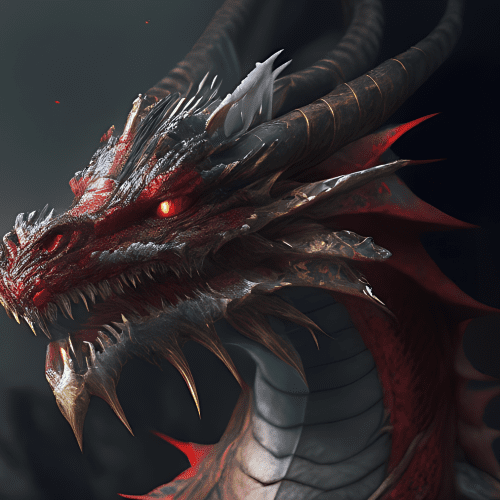
Traditional descriptions portray the Kongamato as a large flying reptilian creature unlike any known bird. Witnesses consistently describe it as having leathery wings without feathers, a long narrow beak lined with sharp teeth, and a body resembling that of a reptile. Its wingspan is generally estimated to range between 1.2 and 2.1 metres (4–7 feet), making it large enough to intimidate travellers navigating rivers and swamps.
The creature is commonly said to have smooth reddish or dark-colored skin, with no feathers covering its body. Some traditions describe it as having a long tail, while others focus primarily on its powerful wings and distinctive beak. Unlike mythical birds that are often depicted as majestic or beautiful, the Kongamato is consistently portrayed as unsettling and primitive in appearance.
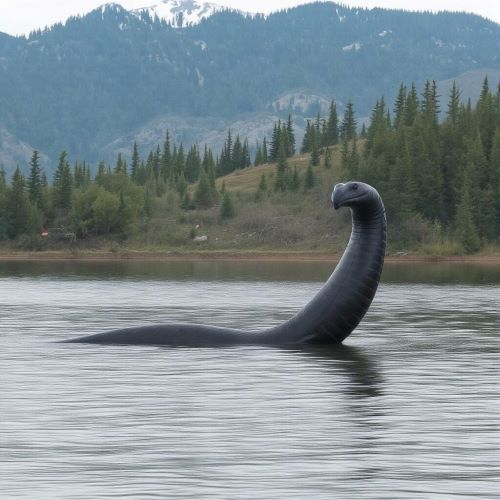
Its preferred habitat is equally distinctive. The Kongamato is believed to dwell in isolated swamps, marshes, dense reed beds, and slow-moving rivers, where thick vegetation provides cover from human activity. These inaccessible environments contribute to its mysterious reputation, as encounters are said to occur only in remote wilderness areas rarely visited by outsiders.
Modern comparisons often liken the Kongamato to a pterosaur, an extinct group of flying reptiles. While this comparison has fueled cryptozoological speculation, within Bemba and Kaonde tradition the Kongamato is simply regarded as a dangerous creature of the wild rather than a surviving dinosaur.
Family
Unlike many beings in African mythology, the Kongamato has no recorded genealogy, family lineage, or divine ancestry. It is not associated with a clan of mythical creatures, nor is it described as the offspring or companion of any deity or supernatural being.
Instead, the Kongamato is portrayed as a solitary creature that lives alone within its marshland territory. Traditional stories rarely mention multiple individuals together, and there are no accounts describing nests, mating pairs, or offspring. This solitary nature reinforces its image as an elusive and unpredictable inhabitant of the wilderness.
Because the Kongamato is viewed more as a dangerous animal than a spiritual entity, its role in mythology differs from that of gods, ancestors, or nature spirits. It exists independently within the landscape, embodying the hidden dangers that lurk in places beyond regular human settlement.
Other Names
The name Kongamato is the primary and most widely recognized name for this legendary creature within Bemba and Kaonde traditions. It is generally translated as “breaker of boats” or “overturner of canoes,” a reference to its fearsome reputation for attacking people travelling by water.
Although neighbouring communities across parts of Zambia, Angola, and the Democratic Republic of the Congo preserve similar stories of mysterious flying creatures, there is no widely accepted alternative traditional name that is universally recognized as another name for the Kongamato. Many of these neighbouring legends represent distinct local traditions rather than different names for the same being.
As the legend spread through colonial reports and later cryptozoological literature during the twentieth century, the name “Kongamato” became the standard term used internationally to describe the creature.
Powers and Abilities
The Kongamato’s greatest ability is its mastery of flight. It is said to move swiftly and silently over rivers and wetlands, allowing it to surprise anyone travelling through its territory. This aerial mobility makes it one of the most feared creatures in Bemba and Kaonde folklore.
Its most famous characteristic is its aggressive defence of its habitat. According to traditional accounts, the Kongamato attacks canoes and small boats, overturning them and endangering those aboard. This behaviour explains the creature’s name and serves as a warning against entering dangerous wetlands without caution.
The Kongamato is also believed to possess exceptional hunting instincts. Its long beak and sharp teeth make it an effective predator capable of capturing fish and other small animals found within swamp ecosystems. Rather than relying on magic or supernatural abilities, its strength lies in its speed, powerful wings, and formidable physical features.
Its elusive nature is another defining trait. The Kongamato is rarely seen, appearing only briefly before disappearing into dense vegetation. This rarity has contributed significantly to its legendary status, as sightings are infrequent and often impossible to verify.
Unlike many mythical creatures, the Kongamato is not traditionally credited with shape-shifting, casting spells, controlling the weather, or performing miracles. Its reputation is based primarily on its physical presence and the fear it inspires.
Modern Day Influences
The Kongamato gained international attention during the early twentieth century through reports collected by explorers, missionaries, and colonial officials working in Central Africa. These accounts introduced the creature to audiences far beyond its traditional homeland and sparked widespread curiosity about its possible existence.
Today, the Kongamato is one of the best-known creatures in cryptozoology, the study of animals whose existence has not been scientifically confirmed. Because traditional descriptions closely resemble prehistoric pterosaurs, some researchers have speculated that the legend may preserve memories of an unknown species or a surviving relic of the distant past. Although no scientific evidence supports these claims, the comparison continues to fuel public fascination.
The Kongamato has also appeared in documentaries, books, television programs, podcasts, and online discussions exploring unexplained creatures and African folklore. These portrayals have introduced the legend to a global audience while highlighting the richness of Bemba and Kaonde oral traditions.
Within Zambia, the Kongamato remains an important part of cultural storytelling. It serves as a reminder of the power and mystery of the natural world, preserving traditional knowledge about landscapes that were once both essential for survival and inherently dangerous. Whether viewed as folklore, cultural symbolism, or an enduring mystery, the Kongamato continues to capture imaginations across generations.
Far beyond its homeland, the legend demonstrates how oral traditions can shape modern curiosity, bridging mythology, history, and scientific speculation. Its enduring popularity reflects humanity’s timeless fascination with creatures that exist at the boundary between the known and the unknown.
Related Images




Source
A Book of Creatures. (2019, May 20). Kongamato. Retrieved from https://abookofcreatures.com
Childress, D. H. (1989). Lost Cities & Ancient Mysteries of Africa and Arabia. Adventures Unlimited Press.
Eberhart, G. (2002). Mysterious Creatures: A Guide to Cryptozoology. ABC-CLIO.
Face2Face Africa. (2021). Kongamato: The real ‘Batmen’ of East Africa. Retrieved from https://face2faceafrica.com
Fairy Tales and Myths. (2023). Kongamato. Retrieved from https://fairytalesandmyths.com/kongamato
Melland, F. H. (1923). In Witchbound Africa. J. B. Lippincott Company.
Monstropedia. (1994). Kongamato. Retrieved from https://www.monstropedia.org
Symbol Hunt Zambia. (2022). The Mythical Creature of Zambia: Kongamato. Retrieved from https://symbolhunt.com/zambia/mythical-creature/
Frequently Asked Questions
What is the Kongamato in Bemba and Kaonde mythology?
The Kongamato is a legendary flying creature from Bemba and Kaonde mythology in Zambia. It is described as a large reptilian beast that inhabits swamps and rivers and is feared for attacking canoes.
Is the Kongamato based on a pterosaur?
Many modern researchers have compared the Kongamato to a prehistoric pterosaur because of its leathery wings and toothed beak. However, there is no scientific evidence linking the legend to an actual surviving species.
What does the name Kongamato mean?
The name Kongamato is commonly translated as “breaker of boats” or “overturner of canoes,” referring to its legendary habit of attacking people travelling through rivers and marshes.
Does the Kongamato have supernatural powers?
Unlike many mythical creatures, the Kongamato is not traditionally believed to possess magical powers. Bemba and Kaonde stories portray it as a dangerous flying predator rather than a supernatural being.
Where is the Kongamato said to live?
According to Bemba and Kaonde folklore, the Kongamato lives in remote swamps, marshes, and river systems of Zambia, particularly in dense wetlands where human encounters are rare.


