

Harionago : The Barbed Hair Yokai of Japanese Traditions
At a glance
| Description | |
|---|---|
| Origin | Japanese Mythology |
| Classification | Spirits |
| Family Members | N/A |
| Region | Japan |
| Associated With | Deception, Predation, Supernatural hair manipulation |
The Mythlok Perspective
In Mythlok’s Perspective, Harionago represents the tension between attraction and danger, where beauty becomes a deliberate illusion masking predation. She is less a character and more an instinctual warning encoded in story form. Similar figures appear across cultures, such as the Greek sirens or the Slavic rusalka, each using allure as a weapon. Harionago stands apart through her physical manifestation of this idea, transforming hair, a symbol of beauty, into an instrument of death.
Harionago
Introduction
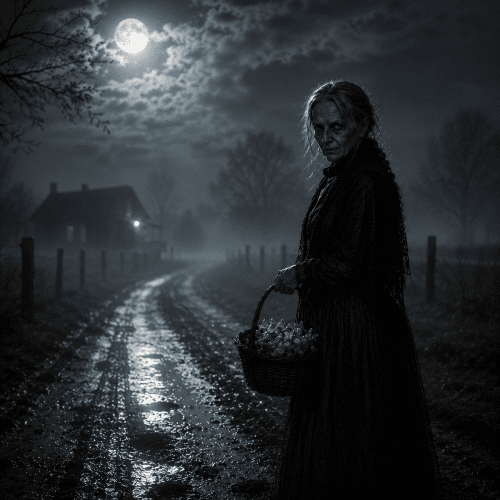
Harionago (針女), often translated as “barbed woman” or “hook girl,” is a lesser-known yet deeply unsettling figure from Japanese folklore. Classified as a yōkai, she is primarily associated with the island of Shikoku, particularly the region of Ehime. Her legend revolves around encounters on lonely roads at night, where she appears as a strikingly beautiful woman. This initial impression is central to her myth, as Harionago uses charm and subtle gestures to draw in unsuspecting victims.
The defining moment in her stories comes when a passerby responds to her smile. That single act triggers her attack. Her long hair, which appears ordinary at first glance, transforms into a deadly weapon tipped with hooks or barbs. She ensnares her victim, overpowers them, and ultimately devours them. The tale functions as a warning rooted in human instinct, highlighting how easily perception can be manipulated.
Harionago’s myth belongs to a broader category of predatory female spirits in Japanese folklore, but she stands out due to the visceral imagery of her weaponized hair. Unlike grand mythological figures tied to creation or divine lineage, she exists in intimate, human-scale encounters. Her presence is not cosmic but immediate, appearing in places people recognize, which makes her legend more disturbing and enduring.
Physical Traits
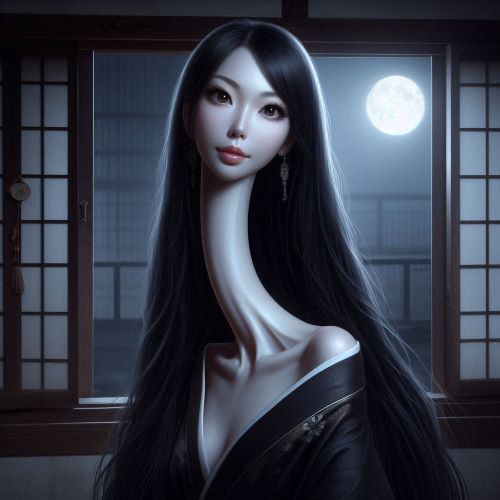
Harionago is typically described as an attractive young woman, blending seamlessly into human society at night. She often wears traditional clothing such as a kimono, reinforcing her illusion of normalcy. Her beauty is not exaggerated or divine; instead, it is believable, which is precisely what makes her dangerous.
Her most distinctive feature is her extraordinarily long hair. At rest, it appears loose and slightly unkempt, but its true nature reveals itself during an attack. Each strand ends in sharp, thorn-like barbs or hooks capable of piercing flesh. The hair moves with intention, behaving like living extensions of her body. It can lash out with speed, wrap around victims, and restrain them with overwhelming force.
Some interpretations describe her skin as unnaturally pale, with an eerie stillness to her expression. In certain modern depictions, her facial features become more abstract or unsettling, including blank or glowing eyes. However, these variations are artistic expansions rather than consistent elements of traditional folklore. What remains constant is the contrast between her calm, human appearance and the violent capability hidden within her hair.
Family
Harionago does not belong to a defined lineage in Japanese folklore. Unlike many mythological beings who are connected to gods, spirits, or ancestral lines, she exists independently. There are no recorded parents, siblings, or offspring associated with her in traditional accounts.
This absence of family reinforces her role as a solitary predator. She is not part of a larger narrative structure but instead appears as an isolated phenomenon. In the broader framework of yōkai, such independence is not unusual. Many are manifestations of fear, memory, or moral lessons rather than characters within a genealogical system.
Later interpretations sometimes attempt to provide her with a tragic origin, such as a woman transformed by betrayal or violence. While these stories add emotional depth, they are not part of the original folklore and should be viewed as modern narrative expansions rather than canonical tradition.
Other names
Harionago is also referred to as Harionna (針女), a variation that carries the same meaning of “needle woman” or “hook woman.” The difference lies mainly in pronunciation rather than concept. Both names emphasize her defining characteristic: hair that functions as a weapon.
In some regional or interpretive contexts, she is loosely associated with similar figures that share behavioral traits, such as smiling predators or female spirits that lure victims. Names like Nure-onago or Warai-onago appear in certain discussions, though they are not always direct equivalents. These variations reflect how folklore evolves across regions, blending characteristics while maintaining core themes.
Despite these alternate names, Harionago remains a distinct entity within Japanese yōkai lore. Her identity is strongly tied to the imagery of barbed hair and the act of luring victims through subtle human interaction.
Powers and Abilities
Harionago’s primary ability lies in her complete control over her hair. Each strand acts with precision, allowing her to strike, bind, and immobilize targets. The barbed ends embed into flesh or clothing, making escape nearly impossible once contact is made. Her attacks are swift and decisive, often leaving victims with little chance to react.
Her method of hunting is equally important. She relies on deception rather than brute force. By presenting herself as approachable and harmless, she encourages interaction. The simple act of returning her smile becomes a fatal mistake, transforming a passive encounter into an attack.
In some later interpretations, particularly in modern media, her abilities are expanded to include levitation or supernatural endurance. Certain portrayals even depict her interacting with shadows, using them as extensions of her power. These elements, while compelling, are not part of early folklore and should be understood as creative reinterpretations.
A consistent theme across most accounts is her vulnerability to daylight. Like many yōkai, her presence fades with the rising sun. This limitation introduces a rare possibility of escape, as victims who can evade her long enough may survive by reaching safety before dawn.
Modern Day Influence
Although Harionago is not among the most widely recognized yōkai, her influence can be seen in the broader landscape of Japanese horror. The motif of long, animate hair has become a defining visual in modern storytelling, appearing in films, manga, and games. Characters in works like Ringu echo this imagery, where hair becomes both concealment and threat.
She also appears in niche adaptations, including yōkai encyclopedias and series such as GeGeGe no Kitaro, where her abilities are expanded for narrative purposes. In tabletop games and digital folklore communities, she is often reimagined with additional powers, blending traditional elements with modern horror tropes.
Online platforms have further extended her reach. Artists and writers reinterpret her story, sometimes shifting her role from predator to tragic figure. While these reinterpretations vary in tone, they ensure that Harionago remains part of contemporary discussions about folklore and horror. Her lasting relevance lies in her simplicity. She does not rely on elaborate mythology or divine status. Instead, she embodies a universal fear: the idea that danger can hide behind familiarity.
Related Images





Source
Foster, M. D. (n.d.). Hari onago. Yokai.com. https://yokai.com/harionago/
Harionago. (n.d.). In Wikipedia. https://en.wikipedia.org/wiki/Harionago
Hari-Onago. (n.d.). In GeGeGe no Kitarō Wiki. https://gegegenokitaro.fandom.com/wiki/Hari-Onago
Harionago. (n.d.). Monstropedia. https://monstropedia.org/index.php?title=Harionago
Harionago. (n.d.). Archives of Nethys (Pathfinder RPG). https://aonprd.com/MonsterDisplay.aspx?ItemName=Harionago
Innocentgirl. (2009, July 3). Hari onago and kitsune. The Otoshimono Papers. https://innocentgirl.wordpress.com/2009/07/03/hari-onago-and-kitsune/
Yanagita, K. (1939). Yokai meii.
Mizuki, S. (1960). GeGeGe no Kitaro (Vol. 1).
Frequently Asked Questions
Who is Harionago in Japanese folklore?
Harionago is a yōkai from Ehime, known for attacking men using her barbed hair after luring them with a smile.
What does the name Harionago mean?
The name translates to “barbed woman” or “hook girl,” referring to her hair tipped with sharp hooks.
How does Harionago attack her victims?
She uses her long hair like tentacles, ensnaring and piercing victims with its sharp, hook-like ends.
Can someone escape Harionago?
Escape is possible if the victim avoids her attack long enough to reach safety before sunrise.
Is Harionago based on a real story?
No, she is a folkloric yōkai, likely created as a cautionary tale about deception and danger.