


Goha : The Legendary Wise Fool of Arabian Folklore
At a glance
| Description | |
|---|---|
| Origin | Arabian Mythology |
| Classification | Mortals |
| Family Members | N/A |
| Region | Egypt, Iraq, Syria, Jordan, Lebanon, Palestine, Saudi Arabia, Yemen, Tunisia, Algeria, Morocco, Libya |
| Associated With | Wisdom, Wit, Satire, Irony, Social criticism, Trickster |
The Mythlok Perspective
In Mythlok’s Perspective, Goha proves that mythology and folklore are not always about gods slaying monsters or heroes conquering kingdoms. He belongs to the same global tradition as Nasreddin Hodja, Till Eulenspiegel, and even the trickster wisdom of Anansi, where laughter becomes a powerful tool for revealing truth. Unlike traditional tricksters who rely on deception, Goha often teaches simply by allowing others to expose their own foolishness. His stories remind us that intelligence is not measured by status or education but by the ability to question assumptions, laugh at ourselves, and find wisdom in everyday life.
Goha
Introduction
Among the countless characters found in Arabian folklore, few have enjoyed the enduring popularity of Goha. Unlike kings, warriors, or supernatural beings, Goha is remembered not for strength or magical powers but for his remarkable ability to expose human foolishness through humor. His stories have entertained audiences across the Middle East and North Africa for centuries, becoming an important part of the region’s oral storytelling tradition.
Goha appears in hundreds of anecdotes told from Morocco to Iraq, with Egypt playing a particularly significant role in preserving and popularizing his tales. Although many people associate him with the Turkish folk hero Nasreddin Hodja, scholars generally believe that the Arabic Goha tradition predates the Turkish version. Medieval Arabic literature mentions a similar figure named Juha as early as the ninth century, while some traditions trace his inspiration to an even earlier individual named Duğayn ibn Thābit al-Fazārī, who lived during the Umayyad period.
What makes Goha unique is that every story can be interpreted in different ways. Sometimes he appears foolish, sometimes brilliantly clever, and often both at the same time. His adventures entertain while quietly questioning authority, challenging social customs, and encouraging people to think beyond appearances. This balance between comedy and wisdom has helped Goha remain one of the most beloved figures in Arabian folklore.
Physical Traits
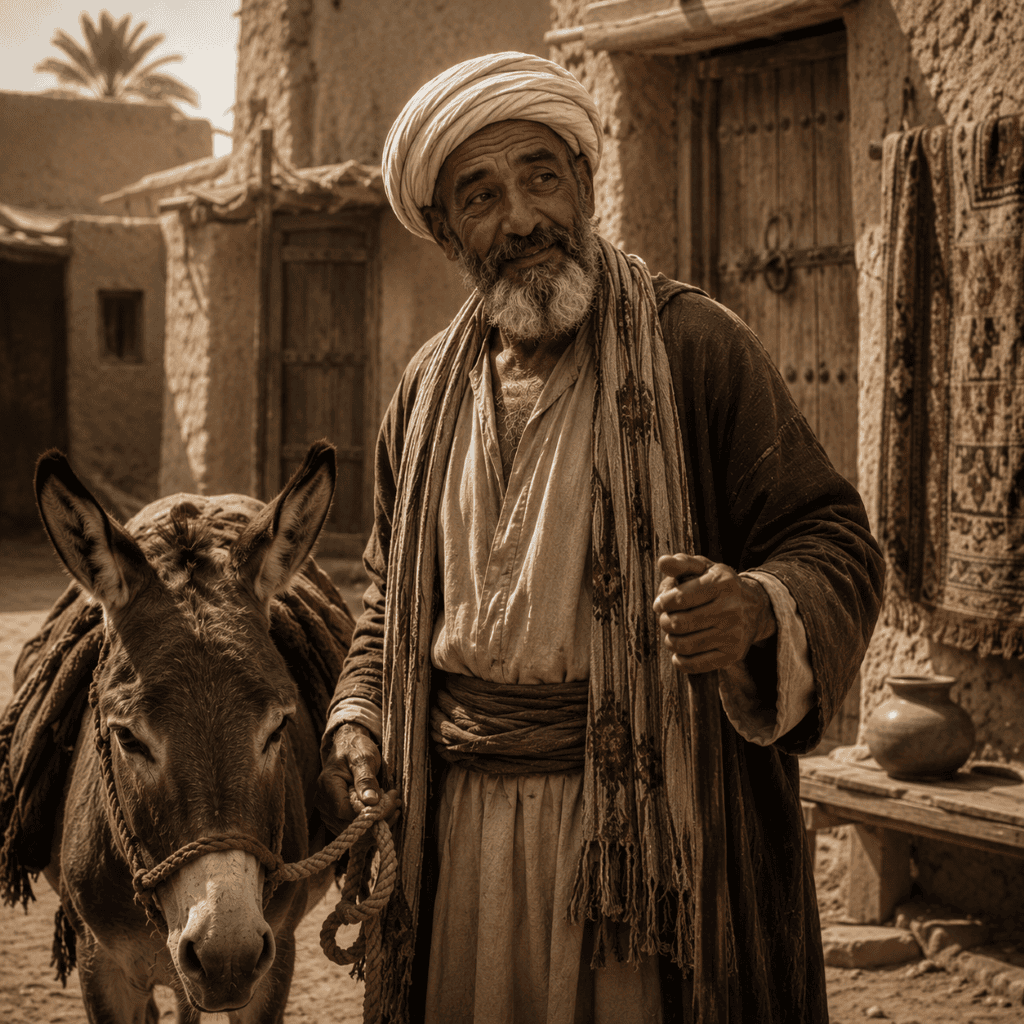
Goha has no single canonical appearance because his stories evolved through oral tradition rather than a single written source. Nevertheless, certain features appear consistently throughout Arab folklore.
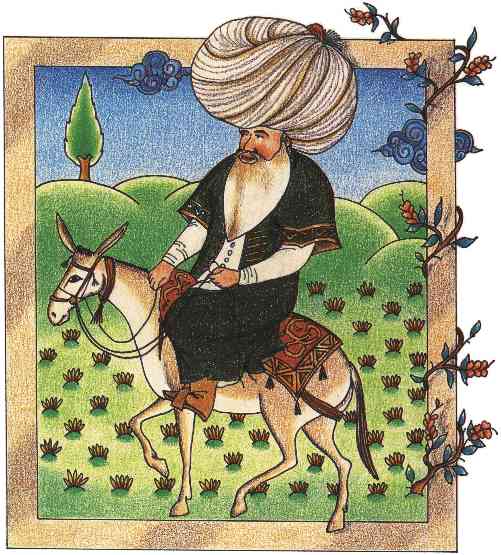
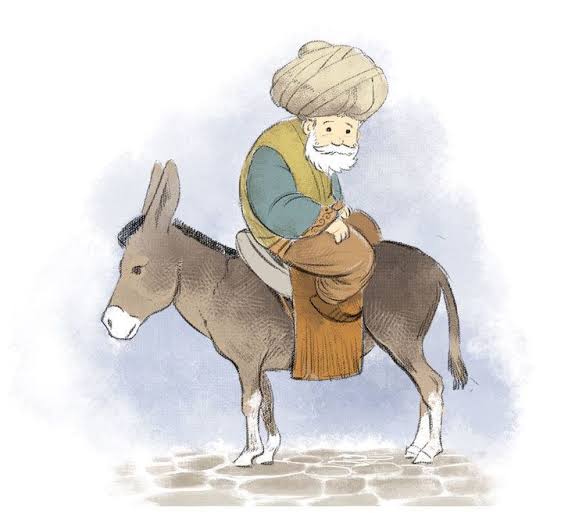
He is usually portrayed as an elderly or middle-aged man of humble means, dressed in simple robes and wearing a turban typical of the medieval Islamic world. Rather than looking heroic or distinguished, Goha resembles an ordinary villager or merchant, making him instantly relatable to audiences from every social class.
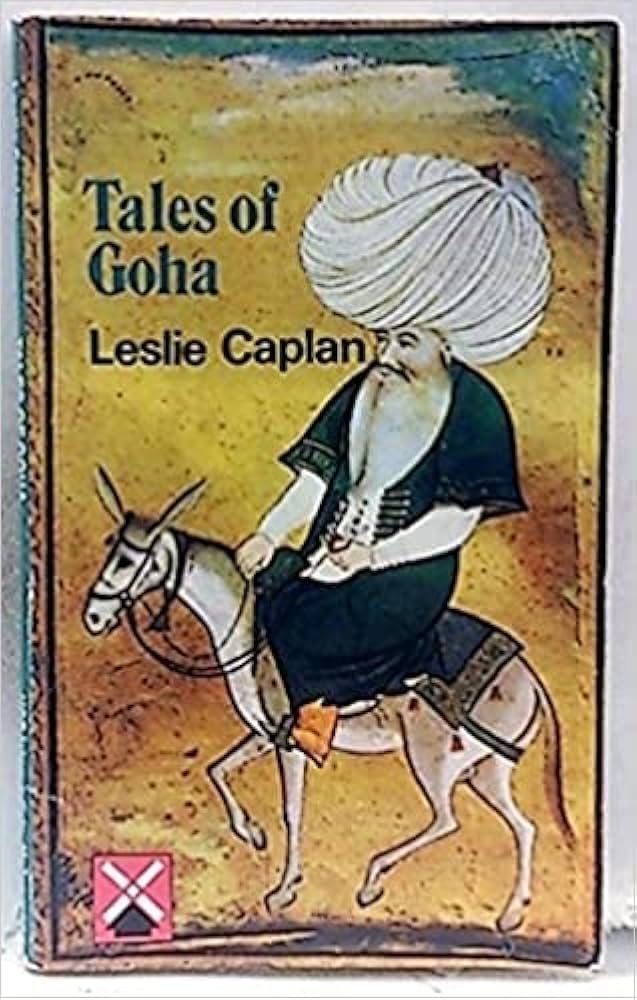
His most recognizable companion is his donkey, which appears in countless stories. The animal often serves as more than simple transportation. In many tales, the donkey becomes part of the joke, helping reveal Goha’s unconventional logic or highlighting the absurdity of those around him.
Illustrations created over the centuries sometimes exaggerate his facial expressions or shabby clothing to emphasize his comic nature, but these artistic choices vary widely across different regions. Ultimately, Goha’s identity depends far more on his personality than on any fixed physical description.
Family
Unlike legendary heroes whose ancestry defines their importance, Goha has no universally accepted family history. Folktales occasionally mention a wife or a son, usually to create humorous domestic situations rather than establish an ongoing narrative.
These family members appear inconsistently from one story to another, suggesting they were introduced by local storytellers to suit particular audiences. As a result, there is no authoritative genealogy associated with Goha.
His donkey, however, is almost inseparable from his character. Across generations of storytelling, it remains his most consistent companion and often functions as a silent participant in his adventures. This flexible background allows Goha to fit naturally into almost any setting, making him less of a historical individual and more of a symbolic representative of ordinary people.
Other names
Goha is known by several names throughout the Middle East, North Africa, and parts of Europe, reflecting the extraordinary spread of his stories. In Arabic-speaking regions, he commonly appears as Juha, Joha, Djoha, or Goha, depending on local pronunciation and dialect. Egyptian traditions especially favor the name Goha, while Juha is more common in classical Arabic literature.
Outside the Arab world, his stories became closely associated with Nasreddin Hodja in Turkey. Although the two figures eventually merged in many collections of folklore, historians generally regard them as separate traditions that gradually influenced one another through centuries of cultural exchange. His adventures also inspired characters such as Giufà in Sicily and similar “wise fool” figures across the Mediterranean, demonstrating how universally appealing his style of humor became.
Powers and Abilities
Goha possesses no supernatural powers, magical weapons, or divine blessings. His greatest strength lies entirely in his mind. His stories celebrate quick thinking, clever wordplay, and an extraordinary ability to expose hypocrisy through seemingly simple observations. He often appears foolish at first, encouraging others to underestimate him before revealing a deeper truth hidden beneath the joke.
Many tales revolve around everyday situations involving merchants, judges, neighbors, or rulers. Rather than confronting powerful people directly, Goha uses irony and humor to reveal their mistakes. His unusual perspective frequently turns ordinary conversations into memorable lessons about justice, greed, pride, or common sense.
Another defining quality is resilience. Whether he loses money, faces embarrassment, or finds himself in impossible situations, Goha rarely reacts with despair. Instead, he transforms setbacks into opportunities for laughter and reflection. Because of these qualities, Goha represents the archetype of the “wise fool”—someone whose apparent simplicity conceals profound insight into human nature.
Modern Day Influence
Despite originating more than a thousand years ago, Goha continues to influence literature, education, and popular culture throughout the Arab world. His stories remain widely published in children’s books, preserving traditional values while entertaining new generations. Schools often use his tales to encourage critical thinking because they invite readers to look beyond obvious conclusions.
Goha also remains an important symbol in political and social satire. Writers, cartoonists, and playwrights continue to adapt his character when commenting on corruption, bureaucracy, or social injustice. By placing criticism within humorous stories, they follow the same tradition that made Goha famous centuries earlier.
Beyond the Middle East, folklorists frequently compare him with other trickster or wise-fool characters from around the world. His tales demonstrate that humor can cross cultural boundaries while still expressing timeless truths about human behavior.
Today, Goha stands not only as a beloved folk character but also as a reminder that wisdom often comes from questioning accepted ideas, laughing at life’s contradictions, and seeing the extraordinary hidden within ordinary experiences.
Related Images




Source
Egyptian Streets. (2022, April 23). Who is Goha? The trickster, fool, and wise man of Arab folklore. https://egyptianstreets.com/2022/04/24/who-is-goha-the-trickster-fool-and-wise-man-of-arab-folklore/
CAABU. (n.d.). Goha, the wise fool. https://www.caabu.org/sites/default/files/resources/Goha%20-%20The%20Wise%20Fool.pdf
Rowayat. (2024, August 1). Goha. https://rowayat.org/goha/
Alicia Patterson Foundation. (2023, July 11). Viewing the Arab. https://aliciapatterson.org/david-lamb/viewing-the-arab/
Studylib. (2025, March 12). Goha: The wise fool in Arabic literature. https://studylib.net/doc/5328371/goha-the-wise-fool
Indpaedia. (2010, December 31). Mewar 03: Birth of Goha. http://indpaedia.com/ind/index.php/Mewar_03:_Birth_of_Goha
Bakathir, A. A. (1951). Goha’s Nail and Colonial Satire. Cairo: Egyptian Nationalist Press.
Marzolph, U. (1999). Nasreddin Hodja and Goha: Comparative Folklore Studies. Journal of Folklore Research, 36(2), 123–145.
El-Shamy, H. (2004). Types of the Folktale in the Arab World: A Demographically Oriented Tale-Type Index. Bloomington: Indiana University Press.
Hasan, M. (2015). Humor and Wisdom in Arabic Folklore: Goha’s Legacy. Middle Eastern Studies Journal, 51(4), 567–582.
Frequently Asked Questions
Who is Goha in Arabian mythology?
Goha is a legendary wise fool from Arabian folklore known for humorous stories that combine wit, satire, and hidden moral lessons. Although not a god or hero, he is one of the Arab world’s most enduring folk characters.
Is Goha the same as Nasreddin Hodja?
Not exactly. While their stories overlap and were later merged in many traditions, most scholars believe the Arabic Goha (Juha) tradition is older and developed independently before influencing the Turkish Nasreddin Hodja tales.
Did Goha have magical powers?
No. Goha possesses no supernatural abilities. His “power” lies in his intelligence, humor, clever observations, and ability to expose human folly.
Why is Goha always shown with a donkey?
The donkey is Goha’s most recognizable companion and appears in many of his stories. It symbolizes his humble lifestyle and often becomes an important part of the humor and lessons found in his adventures.
Why are Goha's stories still popular today?
Goha’s tales remain relevant because they use humor to explore universal themes such as greed, pride, justice, common sense, and human nature. Their timeless wisdom continues to resonate with readers across cultures.
