


Diomedes : The Greek Hero Who Wounded the Gods
At a glance
| Description | |
|---|---|
| Origin | Greek Mythology |
| Classification | Mortals |
| Family Members | Tydeus (Father), Deipyle (Mother), Oeneus (Grandfather), Aegialia (Wife) |
| Region | Greece |
| Associated With | Trojan War, Warfare, Heroic combat, Military leadership, Strategy |
The Mythlok Perspective
In Mythlok’s Perspective, Diomedes stands apart from Greek heroes because his excellence is built on a balance of battlefield strength and strategic judgment rather than a single defining trait. Like Odysseus, he succeeds through intelligence, yet unlike Odysseus, his reputation is fundamentally martial. His temporary ability to challenge gods under Athena’s protection also distinguishes him from Achilles, showing how Greek epic could elevate an ordinary mortal into extraordinary territory without making him divine. Diomedes ultimately represents the disciplined warrior whose heroism depends on skill, judgement, cooperation, and divine favour.
Diomedes
Introduction
Diomedes is one of the greatest warriors of Greek mythology and one of the principal Achaean heroes of the Trojan War. In Homer’s Iliad, he is the son of Tydeus and Deipyle and a king and commander associated with Argos. He leads eighty ships to Troy and stands among the most formidable Greek warriors, alongside figures such as Achilles, Ajax, and Odysseus.
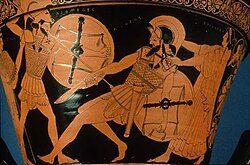
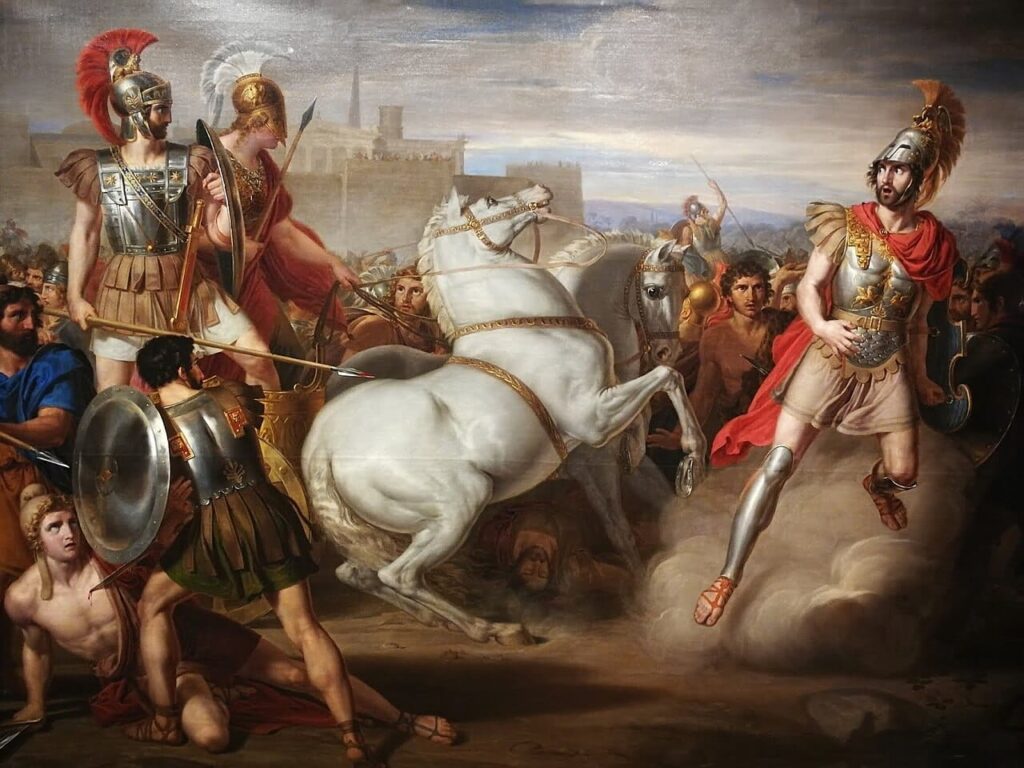
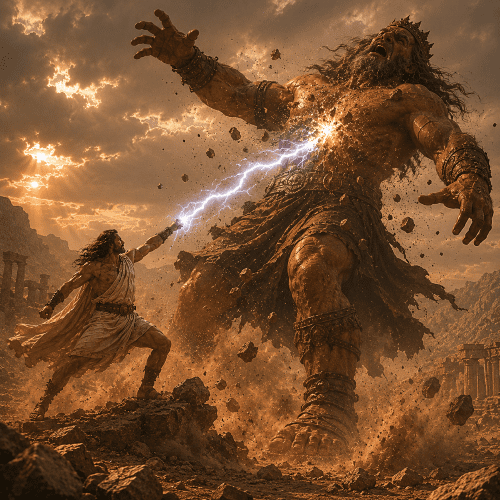
Diomedes is particularly important because his heroism combines physical courage with discipline, intelligence, and divine support. His greatest moment comes in Book 5 of the Iliad, where he performs an aristeia, an extended display of exceptional martial ability. With Athena’s assistance, Diomedes becomes powerful enough to confront divine beings on the battlefield. He wounds Aphrodite when she attempts to protect her son Aeneas and later wounds Ares, the god of war.
Unlike Achilles, whose story is closely associated with extraordinary destiny and mortality, Diomedes remains fundamentally a mortal hero whose achievements arise through courage, skill, judgment, and the favour of Athena. His story continues beyond Homer through later Greek and Roman traditions, where he becomes associated with the Palladium, the founding of settlements in Italy, and heroic cult.
Physical Traits
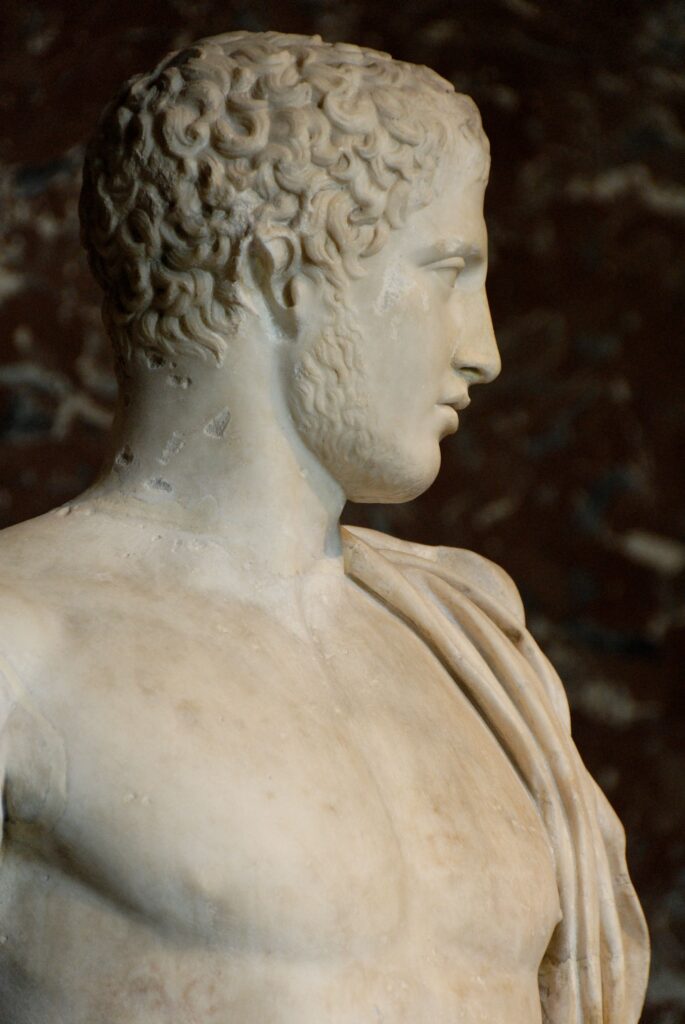
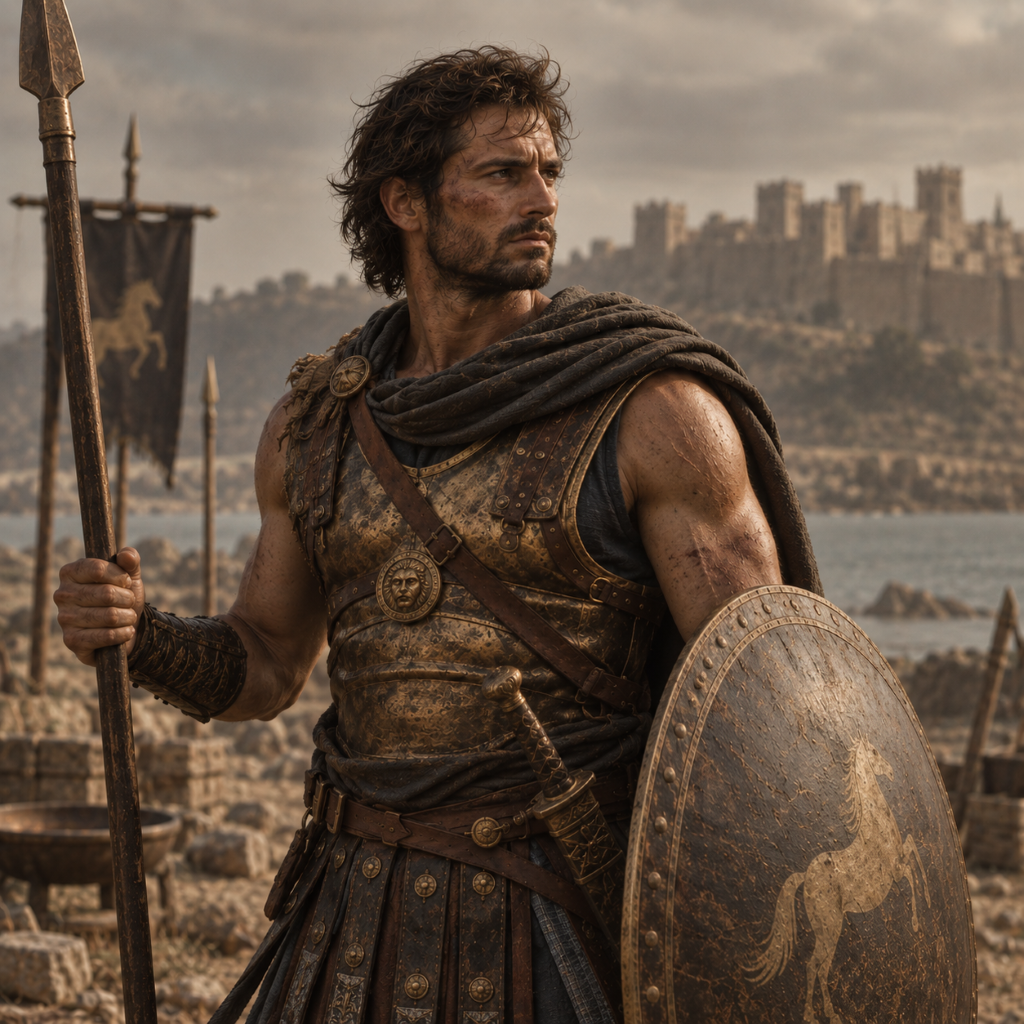
Ancient sources do not provide a consistent, detailed physical portrait of Diomedes. Homer identifies him primarily through his ancestry, actions, reputation, weapons, and martial accomplishments rather than specifying his height, complexion, hair, or facial features.
In Greek art, Diomedes is generally represented as an idealized warrior wearing the armour and equipment of a heroic fighter. Vase paintings associate him with episodes from the Trojan War, including combat scenes and the theft of the Palladium. These representations show him as a youthful or mature armed warrior, but they should not be treated as evidence for a single canonical appearance.
Homer instead emphasizes Diomedes’ extraordinary presence on the battlefield. During his aristeia in Book 5, Athena grants him increased strength and courage and causes a divine radiance to shine from his helmet and shield. This supernatural brightness is not a permanent physical characteristic but a temporary sign of Athena’s favour.
Family
Diomedes was born to Tydeus and Deipyle. His father, Tydeus, was an Aetolian hero and one of the Seven Against Thebes, while his mother was the daughter of Adrastus, king of Argos. Through Tydeus, Diomedes descended from Oeneus, the celebrated king of Calydon. Through Deipyle, he was connected to the royal house of Argos.
This ancestry was central to Diomedes’ identity. Homer repeatedly calls him Tydides, meaning “son of Tydeus”, linking the younger hero directly with his famous father. His genealogy also connects him with an earlier generation of heroic warriors and with the political traditions of Argos.
Later mythology associates Diomedes with the Epigoni, the sons of the Seven Against Thebes who returned to attack and capture Thebes. These traditions place him within a continuing heroic cycle rather than treating the Trojan War as an isolated episode.
Diomedes’ wife is usually named Aegialia. Later sources tell a darker story about their marriage. While Diomedes was away at Troy, Aegialia was said to have taken another lover, sometimes because Aphrodite sought revenge after Diomedes wounded her. On returning to Argos, Diomedes eventually lost his position and left Greece.
Later traditions carry Diomedes to southern Italy, where he is associated with the foundation or establishment of settlements, including Argyrippa, identified with Arpi. His companions were also linked with the Diomedean Islands and with the transformation into birds in later Roman accounts.
Other names
The most important alternative designation for Diomedes is Tydides, the Homeric patronymic meaning “son of Tydeus”. Homer uses patronymics frequently, and Tydides emphasizes Diomedes’ heroic ancestry rather than representing a separate identity. His Ancient Greek name is Diomēdēs (Διομήδης), while Diomedes is the standard Latin and English form. The name is sometimes interpreted in connection with Zeus or divine qualities, although its exact etymology is debated and should not be presented as having one universally accepted meaning. Diomedes should also be distinguished from the Thracian king of the same name whose man-eating mares were captured by Heracles. The two figures belong to different myths.
Powers and Abilities
Diomedes is a mortal hero rather than a god or demigod. His extraordinary achievements come from his exceptional martial ability combined with Athena’s direct assistance. His greatest display occurs in Iliad Book 5. Athena strengthens Diomedes and gives him exceptional courage, allowing him to become the dominant Achaean warrior during the battle. She also enables him to distinguish gods from mortals. This divine assistance is crucial because it permits Diomedes to recognize which supernatural beings are present on the battlefield.
Diomedes first confronts Aphrodite after she intervenes to save Aeneas. He attacks and wounds the goddess, forcing her to retreat from the fighting. The achievement is remarkable because a mortal has physically harmed an Olympian deity. His confrontation with Ares is even more striking. With Athena guiding him, Diomedes attacks the god of war and wounds him. Ares cries out in pain and withdraws from the battlefield. The episode demonstrates the unusual level of divine favour surrounding Diomedes, while also reinforcing the distinction between his temporary supernatural empowerment and permanent divinity.
Diomedes is equally notable for his intelligence. In Book 10 of the Iliad, he works with Odysseus during the night raid against the Thracian camp. The pair infiltrate the enemy position, kill King Rhesus and his men, and seize the king’s famous horses. Their success depends as much on stealth, planning, and cooperation as on combat.
Later traditions give Diomedes another important role in the fall of Troy. He and Odysseus are said to have stolen the Palladium, the sacred image of Athena believed to protect the city. This episode belongs to later Trojan War traditions rather than the narrative of Homer’s Iliad itself.
Modern Day Influence
Diomedes has remained an important figure in literature and classical scholarship, although he is less widely recognized in popular culture than Achilles, Odysseus, or Hector. His character has nevertheless had a significant afterlife in European literature. Roman authors reinterpreted Diomedes within their own versions of the Trojan tradition. Virgil gives him an important place in the Aeneid, particularly through the memory of the Trojan War and his opposition to Aeneas. Ovid subsequently reworks aspects of Diomedes’ story in the Metamorphoses, creating a literary dialogue with earlier Greek and Roman epic.
His medieval reception was also influential. Dante places Diomedes and Odysseus together among the fraudulent counsellors in the Inferno, reflecting their association with deceptive wartime strategies such as the Palladium episode. Chaucer and Shakespeare likewise incorporate Diomedes into their retellings of the Trojan story, although these later versions reshape his character considerably.
Modern interpretations often emphasize the qualities already visible in Homer: strategic intelligence, battlefield courage, leadership, and cooperation with other heroes. Diomedes therefore occupies an unusual position in Greek mythology. He is neither the invulnerable warrior nor the cunning wanderer, but a disciplined combination of fighter and strategist.
His story also demonstrates how Greek heroic mythology developed across centuries. Homer presents Diomedes primarily through warfare and divine interaction, while later Greek and Roman writers expand his story into Italy and connect him with new legends, places, and traditions. His enduring importance lies not only in the battles he fought but in the way successive cultures continued to adapt the image of the ideal mortal warrior.
Related Images




Source
Apollodorus. (1921). The library (J. G. Frazer, Trans.). Harvard University Press. (Original work published ca. 1st–2nd century CE). https://www.perseus.tufts.edu/hopper/text?doc=Perseus:text:1999.01.0022
Britannica, T. Editors of Encyclopaedia. (n.d.). Diomedes. In Encyclopaedia Britannica. Retrieved September 14, 2026, from https://www.britannica.com/topic/Diomedes-Greek-mythology
Homer. (1924). The Iliad (A. T. Murray, Trans.). Harvard University Press. (Original work published ca. 8th century BCE). https://topostext.org/work/2
Homer. (1919). The Odyssey (A. T. Murray, Trans.). Harvard University Press. (Original work published ca. 8th century BCE). https://topostext.org/work/3
Kaldellis, A. (2015). Diomedes. In The Oxford classical dictionary. Oxford University Press. https://academic.oup.com/edited-volume/61673/chapter/548725717
Ovid. (1922). Metamorphoses (F. J. Miller, Trans.). Harvard University Press. (Original work published ca. 8 CE). https://www.perseus.tufts.edu/hopper/text?doc=Perseus:text:1999.02.0028
Virgil. (1916). Aeneid (H. R. Fairclough, Trans.). Harvard University Press. (Original work published ca. 19 BCE). https://www.gutenberg.org/files/61596/61596-h/61596-h.htm
World History Encyclopedia. (2022, September 30). Diomedes. https://www.worldhistory.org/Diomedes/
Frequently Asked Questions
Who was Diomedes in Greek mythology?
Diomedes was a mortal Greek hero and King of Argos who fought in the Trojan War and became one of the greatest Achaean warriors in Homer’s Iliad.
What was Diomedes known for?
Diomedes was known for his exceptional skill in battle, leadership of the Achaean forces, Athena’s favour, and wounding the gods Aphrodite and Ares.
Was Diomedes a god or demigod?
No. Diomedes was a mortal human hero. His extraordinary strength and success in battle came from his own abilities and, at crucial moments, divine assistance from Athena.
How did Diomedes wound Ares and Aphrodite?
With Athena’s assistance, Diomedes wounded Aphrodite when she protected Aeneas and later attacked and wounded Ares during his battle against the Trojans.
What happened to Diomedes after the Trojan War?
Later traditions say Diomedes left Greece after losing his position in Argos and travelled to Italy, where he was associated with several settlements and became the subject of local heroic traditions.


