


Dagan : The Canaanite God of Grain and Fertility
At a glance
| Description | |
|---|---|
| Origin | Canaanite Mythology |
| Classification | Gods |
| Family Members | Shalash (Wife), Baal Hadad (Son) |
| Region | Syria |
| Associated With | Grain, Agriculture, Fertility, Harvests, Prosperity, Kingship |
The Mythlok Perspective
In Mythlok’s Perspective, Dagan occupies a fascinating place among the world’s agricultural deities. Unlike Greek Demeter, who embodies the emotional cycle of the seasons, or the Egyptian Osiris, whose death and resurrection symbolize the renewal of crops, Dagan represents the quiet foundation upon which entire civilizations were built. He is less a god of dramatic myths and more a god of dependable abundance, reminding us that kingdoms rise not only through war or divine heroism but through fertile fields and full granaries. His gradual eclipse by Baal also mirrors a recurring pattern across mythologies, where older creator or fertility gods give way to younger, more dynamic deities who capture the imagination of later generations. Dagan’s legacy endures because he represents the often-overlooked truth that the greatest power is sometimes the one that sustains life rather than commands it.
Dagan
Introduction
Dagan, also spelled Dagon in some ancient sources, was one of the oldest and most influential deities worshipped in the ancient Near East. Revered throughout Canaan, Syria, and northern Mesopotamia from at least the third millennium BCE, he was primarily associated with grain, agricultural abundance, and the prosperity that sustained early civilizations. His name is closely connected to the West Semitic word for “grain,” making him a natural guardian of harvests and fertile land.
Although Dagan is commonly included among the gods of Canaanite mythology, his worship extended far beyond Canaan. Temples dedicated to him have been identified at important Bronze Age cities such as Mari, Ebla, Tuttul, Terqa, and Ugarit, demonstrating his status as a major regional deity. Over time, his cult spread westward, where biblical texts later mention the Philistines worshipping Dagon at cities including Gaza and Ashdod.
Unlike deities whose stories survive in lengthy myths, Dagan remains somewhat enigmatic. Ancient texts consistently portray him as a powerful patriarchal god whose authority was tied to kingship, agriculture, and divine ancestry rather than dramatic adventures. His importance is therefore understood through inscriptions, royal records, and religious texts rather than elaborate mythological narratives.
Physical Traits
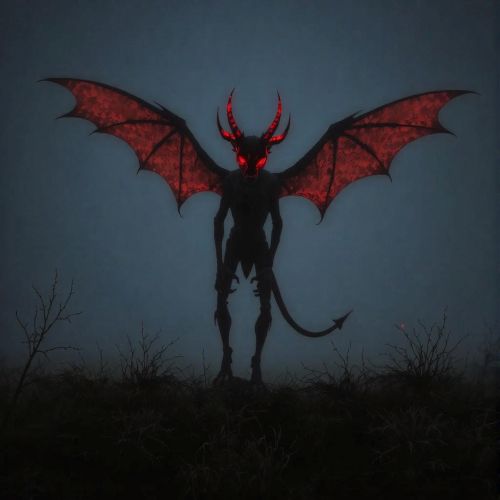
Very little survives that describes Dagan’s physical appearance with certainty. Unlike Baal or Anat, whose iconography became well established, Dagan was never represented through a universally recognised visual form. Archaeological evidence suggests he was portrayed as a mature male deity in the style common to ancient Syrian and Mesopotamian gods, often shown with a beard and royal garments symbolising authority.
Because he was closely linked with agriculture, scholars believe his imagery may have incorporated symbols of grain, harvests, or cultivated land rather than distinctive weapons or animals. However, no surviving artwork conclusively establishes a standard iconography.
One of the most widespread misconceptions about Dagan is that he was a half-man, half-fish deity. This belief became popular during later periods because of an assumed connection between his name and the Semitic word dag, meaning “fish.” Modern scholarship, however, rejects this interpretation. Ancient inscriptions consistently associate Dagan with grain and agricultural fertility rather than the sea, and there is no reliable Bronze Age evidence depicting him as a fish-like god. Today, historians generally regard the famous fish form as a much later misunderstanding rather than an authentic representation of the ancient deity.
Family
Dagan occupied an important position within the divine family of the ancient West Semitic world, although his exact relationships varied across different regions and periods. In Ugaritic literature, he is most famously identified as the father of Baal Hadad, the storm god who eventually became one of the dominant figures of the Canaanite pantheon. This relationship emphasised Dagan’s role as an ancestral patriarch rather than an active participant in heroic myths.
Some Syrian traditions identify his consort as Shalash, a goddess connected with fertility and motherhood. In Mesopotamian traditions, Dagan also appears alongside other major deities as an important divine authority supporting kings and legitimising royal rule.
Because religious beliefs evolved over centuries, Dagan’s genealogy was never entirely fixed. Different cities adapted their own versions of divine family trees, and later traditions occasionally linked him to additional gods and goddesses. Rather than focusing on a single family narrative, ancient worshippers viewed him primarily as a respected elder among the gods whose authority reinforced both political order and agricultural prosperity.
Other names
Dagan appears under several spellings across ancient languages, reflecting the widespread nature of his worship. The forms Dagan, Dagān, and Dagon all refer to the same deity, although their usage depended on regional language and historical period.
In Ugaritic, Hebrew, and other West Semitic languages, forms related to dgn are the most common and closely reflect the word for grain. Biblical texts generally use the spelling Dagon, particularly when describing Philistine temples. Several settlements throughout the Levant also carried names such as Beth-Dagon, illustrating the importance of his cult within local communities.
Some later Greco-Roman writers associated Dagan with regional deities worshipped in Gaza, but these represent later religious developments rather than entirely separate gods. Despite the differences in spelling, all of these names point toward one of the most enduring agricultural deities of the ancient Near East.
Powers and Abilities
Dagan’s greatest power lay in his ability to sustain life through agriculture. Ancient worshippers believed he ensured healthy grain harvests, fertile farmland, and the prosperity necessary for communities to survive. In societies where successful harvests determined survival, this made him one of the most important gods in everyday religious life.
Several ancient traditions credit Dagan with introducing agricultural knowledge, including the use of the plough, symbolising his role as a civilising deity who helped humanity cultivate the land. Whether understood literally or symbolically, these traditions reinforced his connection with abundance and human prosperity.
His influence extended beyond farming. Royal inscriptions from Mesopotamia portray Dagan as a divine supporter of kingship, granting rulers legitimacy and success in military campaigns. Some texts even describe territories as belonging to Dagan, highlighting his importance as both a political and religious protector.
By the Late Bronze Age, many responsibilities connected with storms and vegetation became increasingly associated with Baal Hadad. Nevertheless, Dagan retained his prestige as an ancestral god whose blessings remained essential for fertile fields, stable kingdoms, and flourishing societies.
Modern Day Influence
Although Dagan’s independent cult disappeared centuries ago, his influence continues through archaeology, biblical studies, and the ongoing exploration of ancient Near Eastern religions. Excavations at sites such as Ugarit, Mari, Ebla, and Terqa have revealed inscriptions that demonstrate how widely he was worshipped across Bronze Age Syria and Mesopotamia.
For many people, Dagan is best known from the Hebrew Bible. The stories of Samson destroying the Philistine temple at Gaza and the Ark of the Covenant being placed in the temple of Dagon at Ashdod introduced his name to generations of readers. These biblical narratives preserved his memory long after his active worship had ended.
Modern scholars view Dagan as an important example of how ancient gods evolved alongside changing political and religious landscapes. His worship illustrates the close relationship between agriculture, kingship, and religion throughout the ancient Near East.
Outside academic circles, Dagan frequently appears in fantasy novels, role-playing games, and popular culture. Many of these portrayals still rely on the inaccurate fish-god interpretation, blending later folklore with creative fiction. While these modern depictions have helped keep his name alive, they differ considerably from the historical evidence, which consistently presents Dagan as one of antiquity’s great agricultural and ancestral deities.
Related Images






Source
Van der Toorn, K., Becking, B., & Van der Horst, P. W. (1999). The Dictionary of Deities and Demons in the Bible (2nd ed.). Eerdmans.
“Dagan | Canaanite Deity, Storm God, Fertility God.” Encyclopaedia Britannica. Retrieved July 2026, from https://www.britannica.com/topic/Dagan
Jewish Virtual Library. “Dagon.” Retrieved July 2026, from https://www.jewishvirtuallibrary.org/dagon
“Dagon.” Wikipedia. Retrieved July 2026, from https://en.wikipedia.org/wiki/Dagon
GotQuestions.org. “Who was Dagon in the Bible?” (2013). Retrieved July 2026, from https://www.gotquestions.org/who-Dagon.html
Albright, W. F. (1956). From the Stone Age to Christianity: Monotheism and the Historical Process. Johns Hopkins University Press.
Yamada, S. (2000). “Dagan and the Grain Cult in Ugarit.” Journal of Near Eastern Studies, 59(2), 81–95.
Day, J. (2000). Yahweh and the Gods and Goddesses of Canaan. Sheffield Academic Press.
Smith, M. S. (2001). The Origins of Biblical Monotheism: Israel’s Polytheistic Background and the Ugaritic Texts. Oxford University Press.
Wyatt, N. (2002). Religious Texts from Ugarit: The Words of Ilimilku and His Colleagues. Sheffield Academic Press.
Pardee, D. (1997). Ritual and Cult at Ugarit. Society of Biblical Literature.
Frequently Asked Questions
Who was Dagan in Canaanite mythology?
Dagan was an ancient Canaanite and West Semitic god of grain, fertility, agriculture, and prosperity who was widely worshipped across the Bronze Age Near East.
Was Dagan the father of Baal?
In Ugaritic tradition, Dagan is commonly identified as the father or ancestral predecessor of Baal Hadad, though ancient genealogies vary by region.
Was Dagan a fish god?
No. Modern scholars agree there is no reliable ancient evidence that Dagan was a fish deity. He was primarily associated with grain and agriculture.
Why was Dagan important?
Dagan was believed to ensure fertile harvests, agricultural abundance, and royal legitimacy, making him one of the most significant gods in early West Semitic religion.
Where was Dagan worshipped?
Dagan was worshipped across ancient Canaan, Syria, northern Mesopotamia, Mari, Ebla, Ugarit, Terqa, Tuttul, and later by the Philistines in cities such as Gaza and Ashdod.


