


Bungisngis : The One Eyed Laughing Giant of Philippine Folklore
At a glance
| Description | |
|---|---|
| Origin | Philippine Mythology |
| Classification | Hybrids |
| Family Members | N/A |
| Region | South Africa, Namibia |
| Associated With | Strength, Hearing |
Mythlok Perspective
In Mythlok’s Perspective, Bungisngis represents the curious contradiction between physical power and intellectual weakness. Its stories suggest that strength without judgement can become its own disadvantage. Similar figures appear across cultures, from the Greek Cyclops Polyphemus to the foolish giants of European folklore, where cleverness repeatedly triumphs over brute force. Yet Bungisngis carries a distinctly Filipino character through its perpetual laughter, turning the fear of a monstrous giant into a lesson wrapped in humour.
Bungisngis
Introduction
Bungisngis is a one-eyed giant from Philippine folklore, particularly associated with the Tagalog traditions of Batangas. Recognised by its enormous mouth, unusual facial features and constant laughter, this creature occupies an interesting place among the supernatural beings of the Philippines. Unlike giants that rely entirely on fear and violence, Bungisngis is remembered for a peculiar combination of immense physical strength and remarkable gullibility. Its stories often place it against smaller, cleverer opponents, turning encounters with this formidable creature into tales of humour and deception.
The name Bungisngis is associated with the Tagalog word ngisi, meaning to grin or show one’s teeth. This connection reflects the creature’s most distinctive characteristic: an enormous, seemingly permanent grin. Its laughter is central to its identity, making Bungisngis an unusual figure even among the many giants and monstrous beings found in Filipino oral traditions.
One of its best-known appearances is in the folktale commonly called The Three Friends: The Monkey, the Dog, and the Carabao. Recorded in Dean S. Fansler’s Filipino Popular Tales (1921), the story presents Bungisngis as a powerful forest-dwelling giant whose physical advantages prove insufficient against the intelligence and resourcefulness of smaller creatures.
Physical Traits
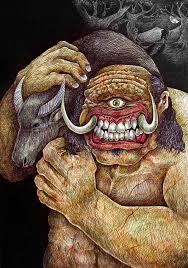
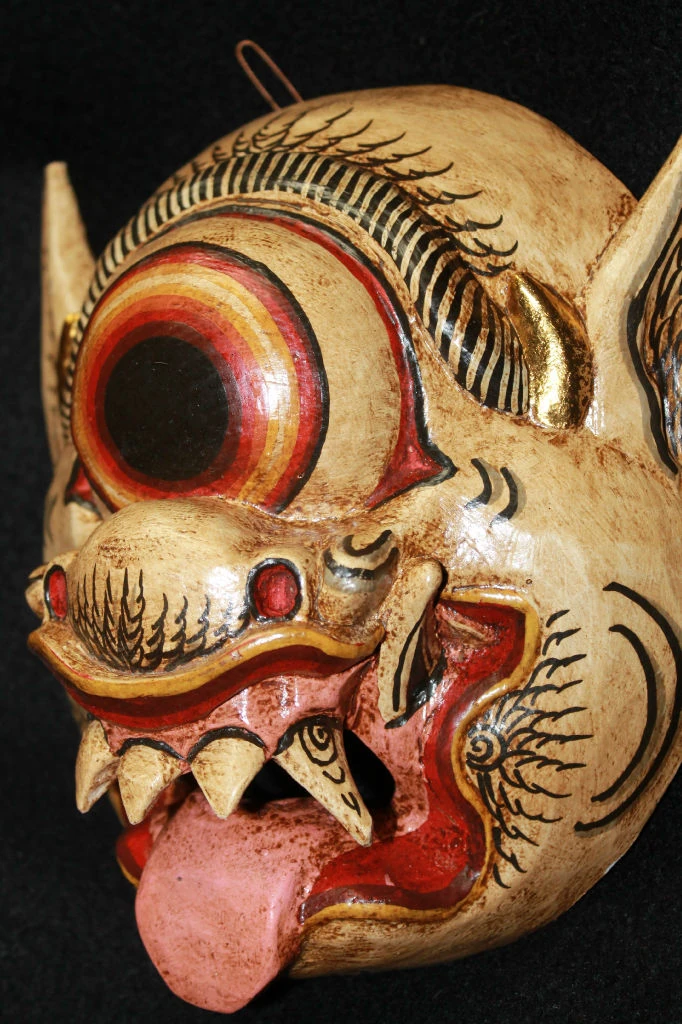
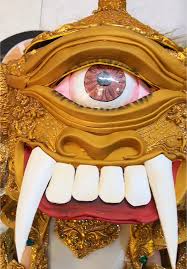
Bungisngis is traditionally described as a humanoid giant with a single eye positioned in the middle of its forehead. This cyclopean appearance gives it a distinctive silhouette and places it among the unusual one-eyed beings found in folklore across different cultures. Its face is dominated by an enormous mouth, large exposed teeth and two prominent tusks that extend from the lower jaw in some descriptions. One particularly unusual feature is its oversized upper lip, which is said to be large enough to cover its entire face when pulled upwards.
Its physical proportions reinforce its identity as a creature far removed from ordinary human beings. Bungisngis possesses a massive frame and extraordinary strength, allowing it to handle animals and heavy objects with little apparent effort. Despite having only one eye, it is also associated with exceptionally sharp hearing. This heightened sense is particularly relevant in traditional stories, where it can detect sounds from considerable distances.
The most memorable aspect of its appearance, however, is its perpetual grin. Bungisngis is frequently portrayed as laughing even when encountering danger or pursuing its prey. This unusual expression creates a contrast between its intimidating physical presence and its seemingly carefree personality. Rather than appearing as a silent, brooding monster, it is imagined as a creature whose laughter accompanies almost everything it does.
Family
Very little is known about the family or origins of Bungisngis in Philippine folklore. Unlike divine beings and legendary heroes with established genealogies, Bungisngis has no widely documented parents, offspring or ancestral lineage. Traditional stories concentrate on its encounters with other creatures and humans rather than explaining how it came into existence.
Its portrayal is largely that of an independent giant inhabiting forested environments, where it encounters animals and unsuspecting travellers. This relative absence of family connections makes Bungisngis different from mythological beings whose identities depend on their relationships with gods, spirits or other supernatural figures.
There are broader similarities between Bungisngis and other cyclopean beings found in Southeast Asian and Indian storytelling traditions. Such similarities suggest interesting possibilities for studying the movement of mythological ideas across the region. However, no established genealogy connects Bungisngis directly to these other figures. Its identity remains firmly rooted in Philippine folk narratives.
Other Names
Bungisngis is the best-known name associated with this laughing giant, although regional folklore references sometimes identify similar creatures by different names. Mahentoy, reported in northern Davao traditions, is one such regional designation associated with a comparable giant. These variations illustrate how supernatural beings can acquire different identities as stories move between communities and languages.
Another interesting comparison comes from the Bicolano epic Ibalong, which features a cyclopean giant named Buring. The presence of another one-eyed giant in Philippine storytelling traditions invites comparisons with Bungisngis, particularly in terms of physical appearance and monstrous strength. However, Buring and Bungisngis belong to different narrative traditions and should not automatically be treated as interchangeable names for the same creature.
The wider Southeast Asian region also contains stories about enormous beings with unusual physical characteristics. These similarities reflect the rich variety of supernatural figures found across neighbouring cultures, although they do not establish a direct connection between every similarly described creature.
Powers and Abilities
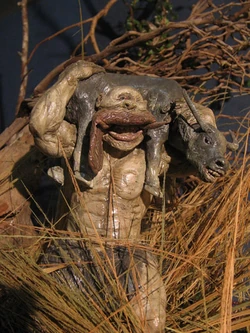
Bungisngis is best known for its extraordinary physical strength. In traditional accounts, it can lift and throw large animals with remarkable ease. Its strength is demonstrated particularly well in The Three Friends: The Monkey, the Dog, and the Carabao, where the giant grabs a carabao by its horns and throws it with such force that the animal becomes embedded knee-deep in the ground. The episode establishes Bungisngis as a creature capable of feats far beyond ordinary physical limitations.
Its exceptional hearing is another notable characteristic. Despite having only one eye, Bungisngis can detect distant sounds and locate their sources. This ability becomes important in its encounters with other creatures, particularly when it searches for food. Its hearing gives it an advantage in the forest, where sounds can reveal the presence of animals and potential prey.
However, physical strength and heightened senses do not make Bungisngis invincible. Its greatest weakness is its susceptibility to deception. In the tale involving the monkey, dog and carabao, the giant repeatedly falls for tricks that exploit its curiosity, appetite and willingness to believe what it is told. The smaller characters use their intelligence to manipulate situations that would otherwise favour the enormous creature.
This contrast between physical power and limited judgement is central to Bungisngis’s character. It is not portrayed as a master of magic or a shape-shifting supernatural force. Its defining abilities are rooted in its immense strength, unusual senses and intimidating appearance. Its vulnerabilities, meanwhile, make it an entertaining and memorable figure in Filipino storytelling.
Modern Day Influences
Bungisngis continues to hold a place in the wider landscape of Philippine folklore and cultural storytelling. Its unusual appearance and distinctive personality make it an appealing subject for illustrations, children’s literature, folklore collections and contemporary interpretations of traditional supernatural beings. As interest in indigenous stories grows, creatures such as Bungisngis offer younger audiences an opportunity to explore the imaginative traditions that existed long before modern entertainment.
Its character also carries a familiar narrative theme: intelligence can overcome physical strength. The encounters between Bungisngis and smaller creatures demonstrate how observation, patience and clever thinking can defeat an opponent who appears overwhelmingly powerful. This theme gives its stories an appeal beyond their supernatural setting, allowing them to function as entertaining tales with a recognisable moral dimension.
The cyclopean appearance of Bungisngis also invites comparisons with supernatural figures from other Asian traditions. One proposed connection involves Kabandha, a monstrous being from the Indian epic Ramayana, who is traditionally described with unusual bodily features. The Bicolano giant Buring has also attracted comparisons in discussions of possible cultural relationships between these figures. Such parallels are interesting when examining the movement of stories and beliefs across Southeast Asia, particularly given the historical exchange of Indian cultural influences with the Philippine archipelago. Nevertheless, these similarities do not establish Bungisngis as a direct adaptation of any particular foreign mythological character.
Today, the continued retelling of Bungisngis’s adventures helps preserve an entertaining part of the Philippines’ oral heritage. Its combination of grotesque physical features, booming laughter and extraordinary strength ensures that it remains distinct among the country’s legendary creatures. More importantly, its stories preserve a traditional form of humour in which even the most formidable giant can become the victim of a clever trick.
Related Images
Source
Bungisngis. (n.d.). In Wikipedia. Retrieved from https://en.wikipedia.org/wiki/Bungisngis
Bungisngis | Noobs Guide to Necromancy Wiki. (n.d.). Retrieved from https://noobs-guide-to-necromancy.fandom.com/wiki/Bungisngis
Bungisngis – Wikipedia – List of Philippine Mythological Creatures. (n.d.). Retrieved from https://en.wikipedia.org/wiki/List_of_Philippine_mythological_creatures
Bungisngis – Philippine Spirits. (2017). Retrieved from https://phspirits.com/bungisngis/
Bungisngis – Myth and Folklore Wiki – Fandom. (n.d.). Retrieved from https://mythus.fandom.com/wiki/Bungisngis
Bungisngis: Uncover the Mythical Filipino Giant. (2024). Retrieved from https://pinoymyths.com/bungisngis-uncover-the-mythical-filipino-giant/
Buñgisñgis | Facts, Information, and Mythology – Encyclopedia Mythica. (2004). Retrieved from https://pantheon.org/articles/b/bungisngis.html
Bungisngis: Mythical Creature. (n.d.). Retrieved from https://mythicalencyclopedia.com/bungisngis/
Frequently Asked Questions
Who is Bungisngis in Philippine mythology?
Bungisngis is a one-eyed giant from Philippine folklore, known for his enormous strength, unusual facial features and constant laughter.
What does Bungisngis look like?
Bungisngis is a giant with one eye in the middle of his forehead, an enormous mouth, large teeth, prominent tusks and an oversized upper lip.
What are the powers of Bungisngis?
Bungisngis possesses extraordinary physical strength and exceptional hearing. He can lift and throw large animals, including carabaos, with remarkable ease.
Where does the legend of Bungisngis originate?
Bungisngis belongs to Philippine folklore, particularly Tagalog traditions associated with Batangas. Stories portray him as a giant inhabiting forested areas.
What is Bungisngis's weakness?
Despite his immense strength, Bungisngis is easily deceived by clever opponents. His gullibility allows smaller creatures, particularly the monkey, to outwit him.


