


7 Ancient Forest Guardian Beings Hidden in Global Folklore
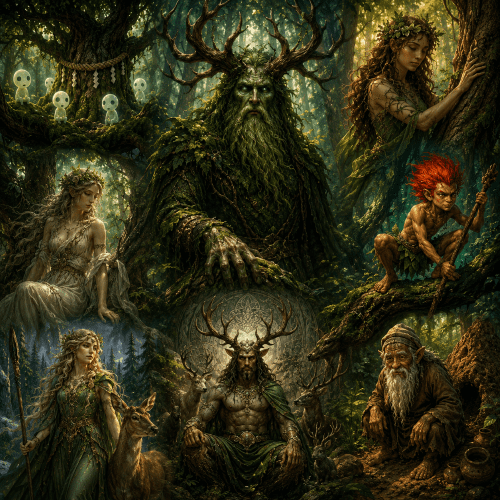
Forests have always occupied a special place in human imagination. Long before modern conservation movements emerged, ancient cultures believed that woodlands were living realms inhabited by powerful spirits, deities, and supernatural beings. These entities acted as protectors of the natural world, ensuring that the balance between humanity and nature remained intact. In many traditions, entering a forest was not simply a journey into the wilderness. It was an encounter with a sacred space watched over by a vigilant Forest Guardian.
These guardians took many forms. Some appeared as gods who ruled over animals and plants, while others were mysterious spirits hidden among ancient trees. They could reward those who respected nature and punish those who acted with greed or arrogance. Their stories served as reminders that forests were not endless resources to exploit but vital parts of the world deserving care and reverence.
Across continents and cultures, legends of the Forest Guardian reveal a remarkable shared belief: nature is alive, powerful, and worthy of protection. Here are seven fascinating forest guardians from around the world whose legends continue to captivate people today.
1. Leshy – The Master of the Slavic Woods
Among the most famous Forest Guardian figures in European folklore is the Leshy, a powerful spirit found throughout Slavic traditions. The Leshy is considered the ruler of the forest and all the creatures that dwell within it. Stories describe him as a shapeshifter capable of changing his size from that of a tiny insect to a giant whose head rises above the tallest trees.
The appearance of the Leshy varies from tale to tale. He is often portrayed as a wild-looking man covered in moss, bark, and leaves, blending perfectly into the forest environment. Some legends claim his eyes glow green, while others say he lacks a shadow and wears his shoes on the wrong feet.
The Leshy serves as both protector and trickster. Travelers who enter the forest respectfully may find themselves guided safely through difficult terrain. Those who damage trees, hunt excessively, or disrespect the woodland environment often become targets of his mischief. The Leshy is known for leading people astray, creating confusing pathways, and causing travelers to wander in circles until they learn humility. More than a frightening woodland spirit, the Leshy represents the idea that forests possess their own authority. Humans may visit the woods, but they do not truly control them.
2. Kodama – The Spirits Within Ancient Trees
Japanese folklore contains one of the most elegant examples of a Forest Guardian in the form of the Kodama. These spirits are believed to reside within ancient trees, particularly those that have stood undisturbed for centuries. Rather than protecting an entire forest, each Kodama is connected to a specific tree, making every ancient tree a sacred dwelling.
The belief in Kodama reflects the deep influence of Shinto traditions, which teach that spiritual energy exists throughout the natural world. Mountains, rivers, rocks, and forests may all possess sacred spirits, and trees are among the most revered.
Because of this belief, cutting down a tree inhabited by a Kodama was considered extremely dangerous. Folklore warns that such actions could bring misfortune, illness, or disaster. As a result, many old trees were protected and treated with respect by local communities.
Kodama legends helped preserve countless woodland areas across Japan by encouraging people to view forests as sacred rather than merely practical resources. Even today, ancient trees wrapped with sacred ropes can be found throughout Japan, symbolizing the enduring connection between humans and the spirits believed to inhabit nature. As a Forest Guardian, the Kodama embodies quiet protection, reminding people that every tree has value and every forest contains unseen life.
3. Dryads – The Tree Spirits of Ancient Greece
The forests of ancient Greece were believed to be inhabited by Dryads, beautiful tree nymphs who served as guardians of groves and woodlands. Unlike many supernatural beings, Dryads were deeply connected to the trees they inhabited. Their lives were intertwined with the health and survival of their forest homes.
Among the various types of Dryads, the Hamadryads were especially significant. These nymphs were bound to individual trees, sharing a single life force. If the tree died, so did the spirit residing within it. This belief created a powerful connection between the natural and supernatural worlds.
Ancient Greeks viewed forests as sacred spaces where gods and spirits could be encountered. Sacred groves dedicated to deities such as Artemis were often protected by Dryads. Anyone who damaged these places risked provoking divine punishment.
Although many stories portray Dryads as graceful and gentle, they could become fierce defenders when their homes were threatened. Their legends reinforced the idea that forests deserved respect and that the destruction of nature carried serious consequences. The image of the Dryad remains one of the most enduring Forest Guardian archetypes in literature and popular culture, inspiring countless depictions of magical tree spirits in fantasy stories.
4. Curupira – Protector of the Amazon
Deep within the forests of Brazil roams the Curupira, one of South America’s most famous Forest Guardian figures. Originating from Indigenous traditions, the Curupira serves as a protector of animals, plants, and the natural balance of the rainforest.
The Curupira is instantly recognizable because of his unusual appearance. He is often depicted as a young boy with fiery red hair and backward-facing feet. These reversed footprints confuse hunters and intruders, making it impossible to follow his trail.
According to legend, the Curupira fiercely opposes those who exploit the forest. Hunters who kill animals for sport rather than necessity often find themselves lost in the wilderness after encountering him. Others hear strange sounds, see illusions, or become hopelessly disoriented.
Unlike many guardians who merely watch over nature, the Curupira actively intervenes when the forest is threatened. He represents a powerful moral lesson found throughout Indigenous traditions: humans may use nature’s resources, but only responsibly and respectfully. Today, the Curupira remains an important symbol of environmental protection in Brazil. His stories continue to highlight the importance of preserving one of the world’s most valuable ecosystems.
5. Mielikki – The Finnish Lady of the Forest
In Finnish folklore, few figures command as much respect as Mielikki, the goddess of forests and wildlife. Living in the vast northern woodlands, she was regarded as the guardian of animals and the protector of hunters who approached nature with proper respect.
Mielikki is often described as a beautiful woman clothed in green garments that blend seamlessly with the forest. Some legends portray her adorned with gold, reflecting the sunlight filtering through the trees. She possesses deep knowledge of every creature living within her domain.
Hunters traditionally prayed to Mielikki before entering the forest. Success depended not only on skill but also on earning the favor of the woodland goddess. She could guide hunters toward game, heal injured animals, and ensure harmony between people and nature.
Unlike many mythological beings associated with power and domination, Mielikki represents stewardship. She does not rule the forest through fear but through care and balance. Her stories emphasize coexistence, teaching that humans are participants in nature rather than masters of it. As a Forest Guardian, Mielikki embodies the deep respect for wilderness that has long characterized Finnish culture.
6. Cernunnos – The Horned Lord of Nature
Among the ancient Celts, few deities are as mysterious as Cernunnos. Known primarily through archaeological discoveries and artistic depictions, he is often shown with antlers, seated among wild animals, and surrounded by symbols of abundance and fertility.
Cernunnos appears to represent the untamed forces of nature. His association with deer, forests, and wildlife positions him as a guardian of the natural world and a mediator between civilization and wilderness.
Although historical records about him are limited, surviving imagery suggests a deity deeply connected to life’s natural cycles. Rather than controlling nature, Cernunnos appears to embody it. The animals surrounding him symbolize harmony between different forms of life, while his antlers connect him to the rhythms of growth, renewal, and seasonal change.
Modern interpretations frequently portray Cernunnos as a Forest Guardian who watches over ancient woodlands and maintains balance within the ecosystem. His image remains influential in contemporary pagan traditions and environmental spirituality. The enduring fascination with Cernunnos demonstrates humanity’s continuing desire to reconnect with the wild landscapes that shaped our ancestors.
7. Nuno sa Punso – Guardian of the Hidden Places
One of the most intriguing Forest Guardian figures in Southeast Asian folklore is the Nuno sa Punso of the Philippines. The name translates roughly as “Old Man of the Mound,” referring to the spirit’s traditional dwelling place within anthills, termite mounds, and earthen formations found in forests and rural landscapes.
The Nuno is commonly portrayed as a small elderly man with a long beard, though many stories suggest his true appearance is rarely seen. Despite his size, he commands great supernatural power and demands respect from anyone entering his territory.
For generations, Filipinos have observed the custom of saying “Tabi-tabi po” when passing through wooded areas or near natural mounds. This phrase serves as a polite request for unseen spirits to step aside and avoid offense. Those who fail to show such courtesy risk attracting the Nuno’s displeasure.
Legends tell of mysterious illnesses, accidents, and misfortunes befalling people who disturb a Nuno’s home. Conversely, respectful visitors are often left unharmed and may even receive protection.
The Nuno sa Punso reflects a broader cultural belief that nature is inhabited by unseen forces deserving acknowledgment. As a Forest Guardian, he reminds people that even the smallest corner of the wilderness may hold sacred significance.
The Enduring Legacy of the Forest Guardian
Although these guardians originate from vastly different cultures, they share a common purpose. Whether appearing as gods, spirits, nymphs, or supernatural tricksters, each Forest Guardian exists to protect nature from carelessness and greed. Their stories emerged long before environmental science, yet they communicate a message that remains remarkably relevant today.
Forests provide food, shelter, biodiversity, and ecological stability, but they also inspire wonder and imagination. Ancient peoples understood that preserving these landscapes was essential for survival, and they expressed that understanding through myths of powerful guardians watching from the shadows of the trees.
In the modern world, these legends continue to remind us that forests are more than collections of trees. They are living ecosystems, cultural treasures, and sources of inspiration. The guardians may belong to folklore, but the values they represent are as important as ever.




No posts were found.


