


God of War: Betrayal : The Forgotten Journey of Kratos
| Description | |
|---|---|
| Inspiration | Greek Mythology |
| Developer | Javaground and Sony Online Entertainment Los Angeles |
| Type | Mobile Game |
| Release Year | 2007 |
| Storyline | Kratos, the new God of War, is framed for the murder of Argos and embarks on a quest across Greece to find the true culprit. |
Mythlok Perspective
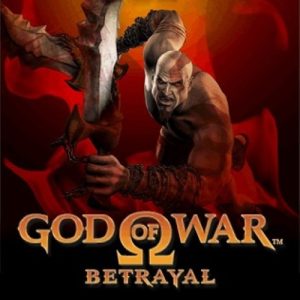
In Mythlok’s Perspective, God of War: Betrayal demonstrates that a change in platform does not necessarily diminish the storytelling potential of a mythological universe. Unlike its visually ambitious console counterparts, this mobile adventure relies on a smaller narrative about suspicion, ambition and divine authority. Its interpretation of Greek mythology may take liberties, but its exploration of Kratos’s relationship with Olympus preserves the franchise’s central tragedy. Sometimes, the most interesting mythological stories are found in the chapters that larger narratives leave behind.
God of War: Betrayal
Introduction
God of War: Betrayal occupies a distinctive place in the history of the God of War franchise. Released on 20 June 2007 for Java-enabled mobile phones, it brought Kratos, the Spartan warrior who had become the Greek God of War, to a platform considerably less powerful than the PlayStation consoles associated with the series. Developed by Javaground and Sony Online Entertainment’s Los Angeles division and published by Sony Pictures Digital, the game adapted the franchise’s trademark violence, Greek mythological setting and dramatic storytelling into a 2D side-scrolling adventure.
Although frequently overshadowed by the major console releases, God of War: Betrayal offers an additional chapter in Kratos’s Greek-era story. Set between the original God of War and God of War II, the game explores the growing tension between Kratos and the Olympian gods. Having defeated Ares and inherited his position, Kratos leads Spartan armies across Greece, but his increasingly aggressive campaigns attract divine opposition.
The story revolves around a murder, a false accusation and Kratos’s relentless pursuit of the person responsible. More importantly, it demonstrates how his inability to control his anger gradually damages his relationship with Olympus. Beyond its narrative contribution, the game remains an interesting example of how an established console franchise adapted its identity to the technological limitations of early mobile gaming.
Game Overview
God of War: Betrayal is a single-player, 2D side-scrolling action-adventure game combining hack-and-slash combat, platforming, environmental puzzles and boss encounters. Instead of reproducing the three-dimensional environments of its console predecessors, the developers created a side-view experience designed specifically for Java Platform, Micro Edition (Java ME) mobile devices.
The story follows Kratos during his campaigns as the newly established God of War. His military expansion across Greece attracts the attention of Hera, who sends Argos, a giant associated with the goddess, to stop him. Before Kratos can resolve the confrontation, an unidentified assassin kills Argos and makes it appear that Kratos is responsible. Determined to discover the truth, Kratos pursues the mysterious killer across Greece.
His investigation eventually brings him into conflict with Ceryx, the son of Hermes, who arrives as a divine messenger with instructions for Kratos to abandon his pursuit. Their confrontation ends with Kratos killing Ceryx, further damaging his relationship with the Olympians.
Combat revolves around Kratos’s chained blades, the Blade of Artemis and magical abilities such as Medusa’s Gaze and the Army of Hades. Players collect red orbs to upgrade their abilities, while green and blue orbs restore health and magic. Gorgon Eyes and Phoenix Feathers increase the respective health and magic capacities.
Despite the limitations of contemporary mobile hardware, the developers incorporated contextual finishing moves, detailed character animations and scrolling environments. These features helped preserve the recognisable gameplay identity of the larger franchise.
Mythological Inspirations
Greek mythology provides the foundation for God of War: Betrayal, although the game does not retell any single ancient Greek legend. Instead, it combines familiar divine figures, supernatural creatures and mythological concepts with an original narrative centred on Kratos.
The most significant mythological connection is the Olympian pantheon. Zeus, Hera, Hermes and the other gods represent a divine hierarchy in which authority, loyalty and punishment determine relationships between immortals. Kratos’s position is particularly unusual because he has moved from being a mortal servant of the gods to occupying Ares’s former throne. His new status creates tensions between his ambitions and the expectations of Olympus.
Argos also has a mythological association. His name recalls Argus Panoptes, the many-eyed giant traditionally connected with Hera in Greek mythology. However, the game’s version is a reinterpretation rather than a faithful representation of the ancient figure. Ceryx draws upon another familiar aspect of Greek religious tradition: the divine messenger. As Hermes’s son, he represents the authority of Olympus and its ability to communicate commands to other gods and mortals.
Other mythological elements appear through weapons, magical abilities and enemies. Medusa’s Gaze, the Army of Hades and the Blade of Artemis incorporate recognisable references to Greek mythology. These elements transform ancient mythological ideas into interactive abilities that support the game’s combat system.
Characters
Kratos is the protagonist of God of War: Betrayal and the only playable character. Following his victory over Ares, he occupies the position of God of War and commands Spartan forces across Greece. However, his new divine status has done little to change his personality. He remains aggressive, ambitious and unwilling to accept interference in his affairs. His pursuit of Argos’s killer reveals how personal pride increasingly influences his decisions.
Argos is the giant whose murder establishes the central conflict. Associated with Hera, he is sent to challenge Kratos’s military expansion. His death becomes the foundation of a false accusation that places the Spartan warrior under suspicion from Olympus. Ceryx, the son of Hermes, serves as an important antagonist. Sent to deliver a warning to Kratos, he attempts to stop the Spartan from continuing his investigation. Their confrontation becomes a turning point because Kratos chooses violence rather than obedience, killing a messenger of the gods.
The unidentified assassin is central to the mystery. By murdering Argos and framing Kratos, the killer manipulates the growing distrust between the Spartan warrior and Olympus. The assassin’s identity remains unresolved, leaving an important question unanswered at the conclusion. Zeus and Hera represent the broader influence of the Olympian pantheon. Their authority shapes the conflict, reinforcing the idea that Kratos’s greatest challenges increasingly come from the gods themselves rather than ordinary enemies.
Symbolism & Gameplay Mechanics
The central theme of God of War: Betrayal is the destructive relationship between power, pride and mistrust. Kratos believes he is pursuing justice after being falsely accused, but his inability to recognise the consequences of his actions gradually turns the Olympians against him. His chained weapons carry an additional symbolic meaning. The Blades of Athena represent his transformation following the defeat of Ares, but they also preserve the visual connection to the violence that defines his existence. Even after achieving divine authority, Kratos continues to rely on the same instruments of destruction.
The combat system reinforces this relationship between violence and power. Red orbs collected from defeated enemies allow players to strengthen weapons and magical abilities. Consequently, defeating opponents becomes the primary means of progression. Green and blue orbs maintain Kratos’s health and magical resources, while Gorgon Eyes and Phoenix Feathers provide permanent improvements.
Environmental puzzles and platforming challenges introduce moments that require more than direct confrontation. Players navigate dangerous terrain, overcome obstacles and explore hostile environments, creating a balance between combat and exploration. Contextual finishing moves also preserve one of the franchise’s defining features. These sequences require players to respond to on-screen prompts, making them active participants in Kratos’s brutality. The result is a gameplay experience in which violence is not simply presented as part of the narrative but becomes central to player interaction.
Cultural Impact
God of War: Betrayal holds historical significance as an early attempt to bring a major console gaming franchise to Java-based mobile phones. Released in 2007, it demonstrated how established gameplay systems and storytelling could be adapted for devices with limited processing power, memory and physical controls. Its 2D presentation was a considerable departure from the three-dimensional environments of the PlayStation games. Nevertheless, the developers retained recognisable elements such as chained weapons, magical abilities, enemy encounters and cinematic finishing moves.
Critical reception was encouraging. IGN awarded God of War: Betrayal a score of 9 out of 10, praising its ability to reproduce the atmosphere and gameplay characteristics of the console franchise. Contemporary coverage from Pocket Gamer also highlighted its combat system, animation and adaptation of the original game’s mechanics. The game also expanded the franchise’s narrative beyond its primary console releases. Its story provided additional context for Kratos’s deteriorating relationship with Olympus, helping connect his ascension to the throne with the events that unfold in God of War II.
Although subsequent portable releases, particularly Chains of Olympus and Ghost of Sparta, received greater recognition, Betrayal remains an unusual and historically interesting part of the franchise. Its importance lies in demonstrating that mobile games could contribute to an established fictional universe rather than functioning solely as simplified promotional adaptations.
Creative Liberties
God of War: Betrayal takes considerable creative liberties with Greek mythology, using ancient characters and religious concepts as foundations for an original fictional narrative. Kratos himself is a modern interpretation rather than a traditional Greek mythological hero. Although the Greek word kratos represents strength or power and appears in ancient mythology as a personification, the Spartan warrior portrayed in the franchise is an original character.
Argos provides another example of adaptation. His association with Hera recalls the ancient tradition surrounding Argus Panoptes, but his role in the game is substantially different. Similarly, Ceryx is transformed into a significant antagonist whose confrontation with Kratos serves the game’s larger narrative. The portrayal of the Olympian gods also reflects the franchise’s creative approach. Rather than presenting them exclusively as distant divine authorities, the game depicts them as political figures concerned with power, loyalty and the consequences of Kratos’s ambition.
These changes are essential to understanding the game’s relationship with mythology. God of War: Betrayal is not intended to reproduce ancient Greek religious traditions accurately. Instead, it uses familiar mythological figures and themes to construct an interactive story about ambition, suspicion and revenge. Its creative liberties allow classical mythology to become the foundation for a distinctly modern gaming experience.


Sources
Buchanan, L. (2007, June 27). God of War: Betrayal review. IGN. https://www.ign.com/articles/2007/06/27/god-of-war-betrayal-review
Cohen, P. (2007, August 29). Phil Cohen talks up God of War: Betrayal. Engadget. https://www.engadget.com/2007-08-29-phil-cohen-talks-up-god-of-war-betrayal.html
Javaground, & Sony Online Entertainment. (2007). God of War: Betrayal [Mobile game]. Sony Pictures Digital.
List of God of War characters. (n.d.). Wikipedia. https://en.wikipedia.org/wiki/List_of_God_of_War_characters
God of War: Betrayal. (n.d.). Wikipedia. https://en.wikipedia.org/wiki/God_of_War:Betrayal
God of War: Betrayal. (n.d.). God of War Wiki. https://godofwar.fandom.com/wiki/God_of_War:Betrayal
God of War: Betrayal review. (2007, November 21). Pocket Gamer. https://www.pocketgamer.com/god-of-war-betrayal/review/
University of Warsaw, Faculty of “Artes Liberales.” (n.d.). God of War: Betrayal. In Video Game Mythologies Survey. https://www.omc.obta.al.uw.edu.pl/myth-survey/item-export/735
Frequently Asked Questions
What is God of War: Betrayal?
God of War: Betrayal is a 2D side-scrolling action game released in 2007 for Java-enabled mobile phones. It follows Kratos as he investigates Argos’s murder.
Is God of War: Betrayal part of the official God of War storyline?
Yes. God of War: Betrayal is an official franchise entry set between the original God of War and God of War II, expanding Kratos’s conflict with Olympus.
Who is the main antagonist in God of War: Betrayal?
Ceryx, the son of Hermes, is the principal opposing character. He confronts Kratos over his refusal to abandon the investigation into Argos’s murder.
Which Greek mythological characters appear in God of War: Betrayal?
The game features or references Zeus, Hera, Hermes, Argos and Medusa, alongside mythological abilities and creatures inspired by ancient Greek traditions.
Can you still play God of War: Betrayal today?
God of War: Betrayal was developed for Java-enabled feature phones and is no longer commercially available through mainstream mobile game stores.


