


Wakwak : The Vampire Shape-Shifter of the Philippines
At a glance
| Description | |
|---|---|
| Origin | Philippine Mythology |
| Classification | Hybrids |
| Family Members | N/A |
| Region | Philippines |
| Associated With | Blood Sucking, Flight |
Mythlok Perspective
In Mythlok’s Perspective, the Wakwak represents the unsettling relationship between darkness, predation and the fear of unseen threats. Like the Greek Strix, a nocturnal bird associated with blood and death, it blurs the boundary between animal and vampire. Yet, unlike the more clearly defined creatures of European folklore, the Wakwak exists through multiple regional interpretations, demonstrating how cultures transform familiar sounds and natural fears into supernatural warnings.
Wakwak
Introduction
The Wakwak is a supernatural creature associated with the darker traditions of Philippine folklore, particularly stories of nocturnal predators, shape-shifting beings and vampires. Known for its eerie cries and association with the night, the Wakwak appears in different regional traditions with varying physical descriptions and supernatural characteristics. In some accounts, it is a bird-like creature that hunts humans after sunset, while others connect it directly with the vampiric Aswang, a broad category of supernatural predators found across the Philippines.
The creature’s name is closely associated with the distinctive sounds attributed to nocturnal birds. These sounds are particularly significant in Philippine folklore, where unusual calls heard around houses are sometimes interpreted as warnings of an approaching Aswang. Depending on the community, the Wakwak may be understood as the vampire itself, a supernatural bird associated with its presence, or a separate predatory creature. These overlapping interpretations make the Wakwak an interesting example of how regional beliefs shape the identity of supernatural beings.
Physical Description
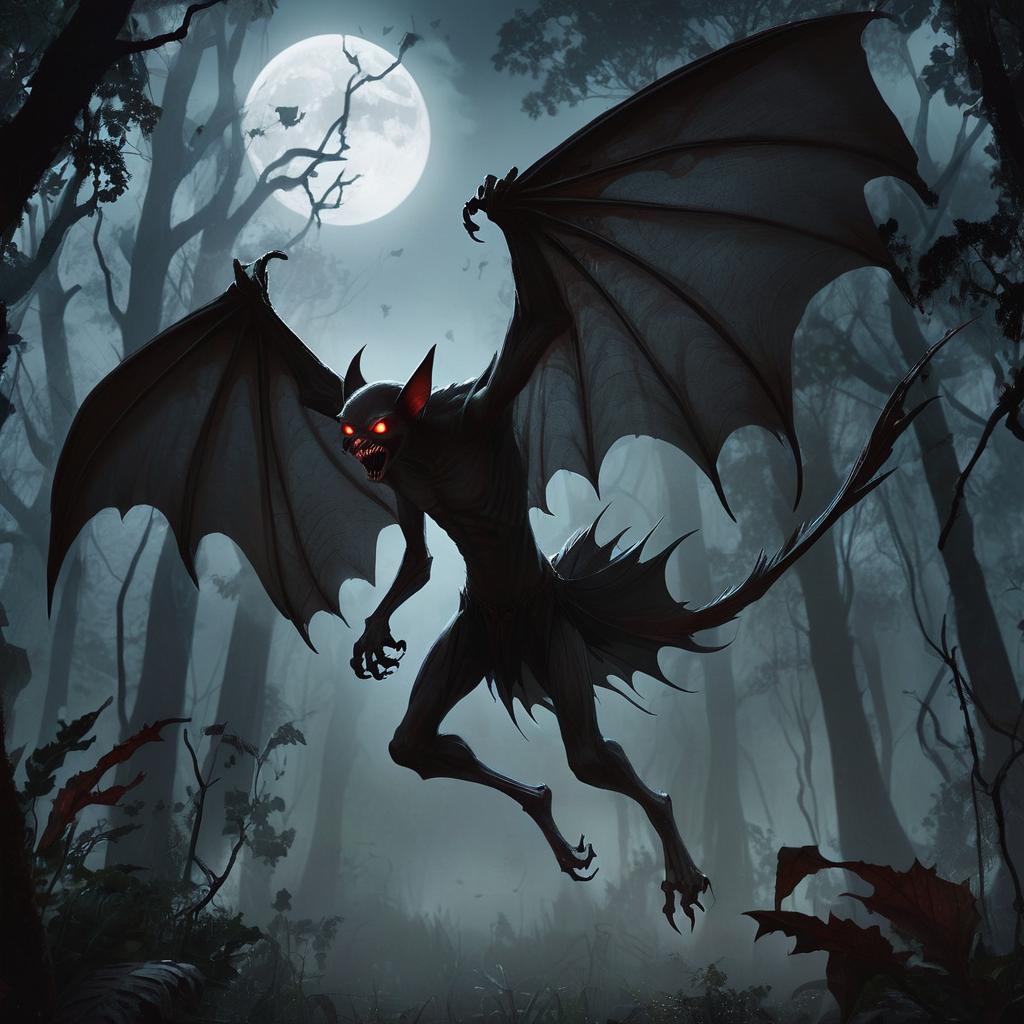
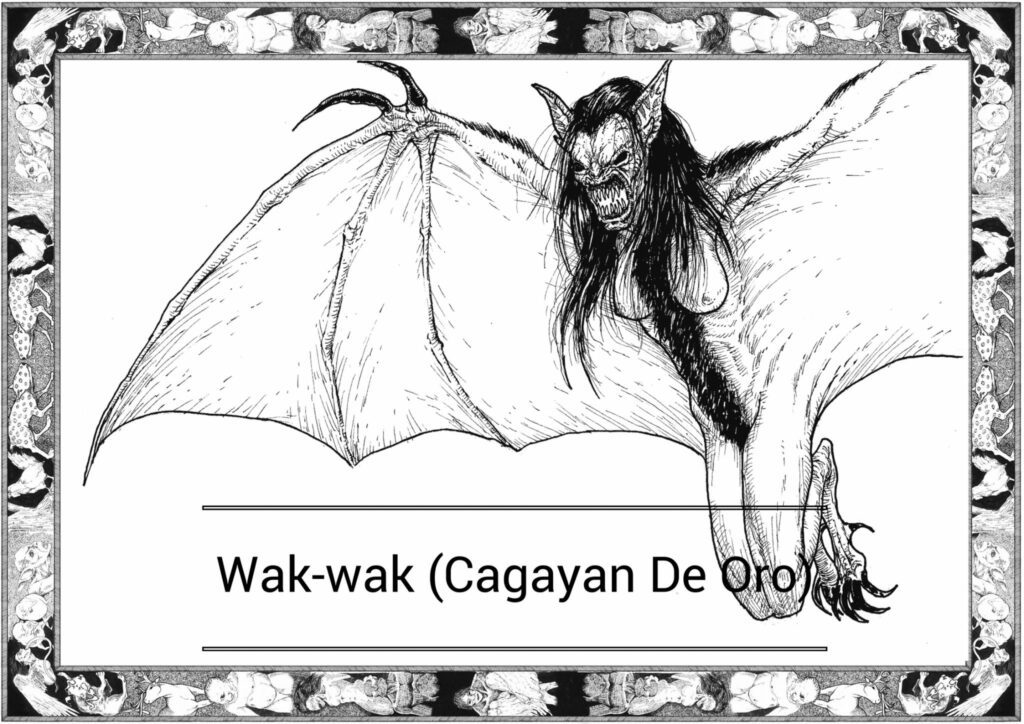
Descriptions of the Wakwak differ considerably across Philippine communities. One recurring representation is that of a large, nocturnal bird with a frightening call. Its appearance is sometimes compared to a crow or another dark-feathered bird, emphasising its association with darkness and predatory behaviour. In other traditions, the creature possesses unusual anatomical features that distinguish it from ordinary birds.
A historical account of Bagobo beliefs recorded by anthropologist Laura Watson Benedict in 1916 describes the Wak-wak as a rapacious bird resembling a crow. Remarkably, this version is described as flying without a head and possessing four legs, two of which are equipped with claws. It hunts living humans during the night, making it considerably different from the more familiar vampire-like representations.
Other regional descriptions associate the Wakwak with bats, witches and supernatural messengers. The Austronesian Comparative Dictionary records the Aklanon interpretation as a large, bat-like creature believed to be a witch’s messenger. These descriptions demonstrate that the Wakwak does not have one universally accepted physical appearance.
Mythological Context
The Wakwak belongs to a wider tradition of Philippine supernatural predators associated with darkness, blood consumption and unexplained deaths. Its strongest connection is with the Aswang, a collective term used for several frightening supernatural beings, including shape-shifters, blood-drinkers and creatures that prey on human organs.
In certain Visayan traditions, the Wakwak is associated with the presence of a vampire-like Aswang. Its distinctive cry can function as a warning that a supernatural predator is nearby. The relationship between the creature and its sound is particularly important because the Wakwak is not always understood as an independent monster. Sometimes, the bird itself is believed to represent the vampire.
The ambiguity surrounding its identity reflects the diversity of Philippine supernatural beliefs. Rather than belonging to one fixed classification, the Wakwak occupies different positions within regional traditions, ranging from an actual nocturnal predator to a supernatural messenger associated with more dangerous beings.
Origins
The Wakwak originates in Philippine oral traditions, although its precise beginnings cannot be traced to a single historical narrative or founding legend. Its name is associated with the repetitive sounds attributed to birds, reflecting the importance of animal calls in traditional explanations of supernatural activity.
Cebuano linguistic traditions describe the Wakwak as a bird that appears at night, whose call signals the presence of a vampire or may represent the vampire taking that form. Aklanon traditions associate it with a large bat-like creature believed to serve as a witch’s messenger. Meanwhile, historical Bagobo accounts describe an entirely different-looking nocturnal predator. These variations demonstrate the creature’s presence across different ethnolinguistic communities. Its identity developed through oral storytelling, local beliefs and interpretations of the natural environment rather than through a single canonical account.
Notable Members
Unlike mythological figures with established genealogies or individual identities, the Wakwak does not have a recognised collection of named characters. It is better understood as a category of supernatural creatures whose descriptions change across regional traditions.
The Bagobo Wak-wak documented by Laura Watson Benedict represents one particularly unusual manifestation. Its crow-like appearance, multiple legs and headless body distinguish it from other descriptions. The Aklanon Wakwak, meanwhile, is associated with a large bat-like supernatural creature believed to act as a witch’s messenger. Cebuano accounts provide another interpretation, associating the Wakwak’s nocturnal bird call with the presence or manifestation of a vampire. These are regional representations rather than individually named members of a shared supernatural family.
Relationship with Other Beings
The Wakwak is closely associated with the Aswang, although the relationship varies according to regional belief. In some traditions, it represents the vampire itself, while in others, it acts as a supernatural bird connected to an Aswang’s activities. Certain Bikol accounts describe Wakwak and Tiktik birds as companions or messengers of Aswang creatures, announcing their master’s approach.
Its relationship with other supernatural beings also reflects the interconnected nature of Philippine folklore. Rather than existing within a rigid hierarchy, these creatures share characteristics and sometimes overlap in their descriptions.
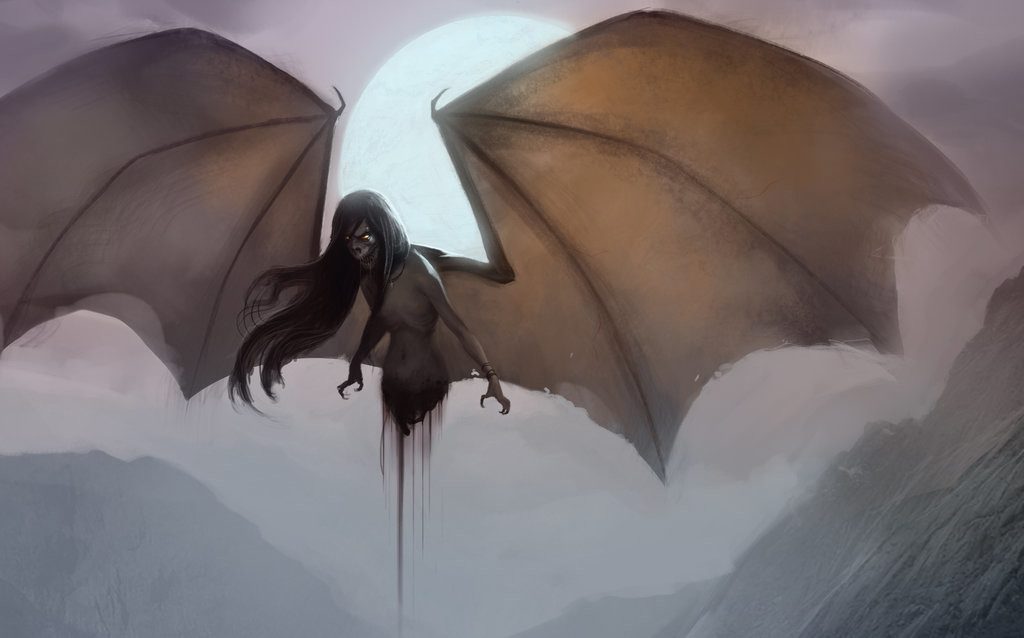
The Manananggal is another important comparison. This feared supernatural predator is known for separating its upper body from its lower half and flying through the night using enormous wings. Although the Manananggal and Wakwak are sometimes associated with the wider Aswang tradition, they are not interchangeable beings.
Similar Beings
Several Philippine supernatural creatures share characteristics with the Wakwak, particularly their association with nocturnal hunting and human vulnerability. The Aswang is the most significant comparison because it encompasses different types of supernatural predators, including blood-drinking and shape-shifting beings. The Manananggal is recognised for its ability to detach its upper body and hunt with wings, often targeting pregnant women. The Ekek is another bird-associated nocturnal predator traditionally connected with attacks on humans.
The Tiktik also deserves mention because its distinctive call is associated with the approach of an Aswang. In some regional accounts, Wakwak and Tiktik refer to supernatural birds or messengers rather than independent vampires. These similarities illustrate how Philippine folklore uses different creatures and sounds to represent the dangers believed to emerge after dark.
Symbolism and Interpretations
The Wakwak represents the fear of unseen dangers and the uncertainty associated with darkness. Its nocturnal behaviour reflects traditional anxieties about leaving the safety of one’s home after sunset, particularly in communities where unfamiliar sounds could signal approaching danger. Its association with vampires and the Aswang also connects the creature with fears surrounding death, illness and human vulnerability. The unusual bird calls attributed to the Wakwak demonstrate how natural sounds can acquire supernatural meanings through generations of storytelling.
The creature also illustrates the relationship between humans and their environment in traditional Philippine communities. Birds, animal behaviour and unfamiliar noises became part of a wider cultural language through which people interpreted threatening events. The Wakwak consequently represents more than a frightening predator; it embodies the intersection of environmental awareness, oral tradition and supernatural belief.
Modern Influence
The Wakwak continues to attract interest among enthusiasts of Philippine folklore, supernatural creatures and horror storytelling. Its association with vampires and the Aswang makes it particularly interesting to audiences exploring supernatural traditions beyond the familiar European vampire.
Modern discussions frequently bring together different regional descriptions, introducing the creature to international audiences through folklore websites, horror communities and digital storytelling. However, these retellings sometimes combine characteristics belonging to different supernatural beings, creating a more standardised version than traditional accounts support.
Preserving the regional distinctions is therefore important when presenting the Wakwak to contemporary audiences. Its different manifestations reveal the diversity of Philippine oral traditions and demonstrate how supernatural creatures evolve through local storytelling. Whether understood as a vampire, a nocturnal bird or a supernatural messenger, the Wakwak remains an intriguing part of the Philippines’ cultural imagination.
Related Images




Sources
Aswang Project. (n.d.). The manananggal & wakwak. The Aswang Project. Retrieved November 1, 2025, from https://www.aswangproject.com/manananggal-wakwak/
Demetrio, F. R. (1991). Encyclopedia of Philippine folk beliefs and customs (Vols. 1–2). Xavier University Press.
Eugenio, D. L. (2013). Philippine folk literature: The legends. University of the Philippines Press.
Fansler, D. S. (1921). Filipino popular tales. American Folklore Society.
Gardner, F. (1906). Philippine (Tagalog) superstitions. The Journal of American Folklore, 19(74), 133–140.
Paraiso, S., & Paraiso, J. J. (2003). The Balete book: A collection of demons, monsters, elves and dwarfs from the Philippine lower mythology. Giraffe Books.
Ramos, M. D. (1971). Creatures of Philippine lower mythology. University of the Philippines Press.
Ichioka, C. S. (1992). An annotated bibliography of folk narratives from the Philippines (ERIC ED354532). ERIC.
Myth and Folklore Wiki. (n.d.). Wakwak. Mythus Wiki. Retrieved November 1, 2025, from https://mythus.fandom.com/wiki/Wakwak
Wars & History. (n.d.). Wakwak – Vampire bird in Philippine mythology. Wars & History. Retrieved November 1, 2025, from https://warsandhistory.com/wakwak-vampire-bird-in-philippine-mythology/
Vampire Facts. (n.d.). Wakwak: The vampire bird. VampireFacts.net. Retrieved November 1, 2025, from https://www.vampirefacts.net/famous-vampires/wakwak/
Frequently Asked Questions
What is the Wakwak in Philippine mythology?
The Wakwak is a fearsome, bird-like creature in Philippine mythology often described as a vampire that hunts humans at night. It is said to tear out the hearts of its victims with its sharp talons and is closely associated with death and misfortune. The name “Wakwak” comes from the sound of its wings flapping in the darkness, which many Filipinos believe signals the approach of danger or death.
How is the Wakwak different from the Manananggal and Ekek?
While the Wakwak shares similarities with the Manananggal and Ekek, it has distinct features. The Manananggal can split its body in half and fly using bat-like wings, while the Ekek resembles a large bird with a long, sharp tongue used to suck blood. The Wakwak, however, does not detach its body—it is usually portrayed as a full, bird-like creature or a human with large wings, making it a more straightforward predator rather than a shapeshifter.
What does the sound of the Wakwak mean?
The eerie “wak-wak” sound made by the creature’s wings is believed to be an omen of death. Folklore suggests that if the sound seems faint, the Wakwak is actually very near, while a loud flapping noise means it is still far away. This reversal creates tension and fear, symbolizing how death often comes when least expected.
Can the Wakwak transform into a human?
Some regional legends claim that the Wakwak can shapeshift into a human at night, blending into communities by day and hunting by night. This ability to disguise itself feeds into local stories about mysterious deaths and disappearances, especially in rural villages where belief in supernatural creatures remains strong.
Does the Wakwak still influence modern Filipino culture?
Yes, the Wakwak continues to appear in Filipino pop culture, including horror films, comics, and TV series. It is also a recurring subject in online urban legends and social media discussions. Artists and writers reinterpret the Wakwak as both a terrifying monster and a symbol of fear, secrecy, and the unknown, keeping the legend alive for new generations.


