Tik Tik : The Night Hunter of Philippine Folklore
At a glance
| Description | |
|---|---|
| Origin | Philippine Mythology |
| Classification | Hybrids |
| Family Members | N/A |
| Region | Philippines |
| Associated With | Nocturnal hunting, Deception, Shapeshifting, Predation on unborn life |
The Mythlok Perspective
In Mythlok’s Perspective, the Tik Tik represents a universal fear tied to vulnerability and the unknown. It is less about a literal creature and more about the anxiety surrounding childbirth and unseen dangers. Similar entities exist across cultures, such as the Slavic night spirits that prey on infants or the Mesopotamian Lamashtu. These parallels show how societies externalize fear into predatory beings. The Tik Tik stands as a distinctly Philippine expression of this shared human concern.
Tik Tik
Introduction
The Tik Tik is one of the most feared nocturnal predators in Philippine folklore, especially in the Visayas and parts of southern Luzon. It belongs to the broader category of the Aswang, a group of supernatural beings known for their ability to shift forms and prey on humans. The Tik Tik is particularly infamous for targeting pregnant women, drawn by the scent of unborn life.
Its name comes from the distinct “tik-tik” sound it produces while hunting. What makes this sound unsettling is its deceptive nature. In many stories, the noise grows softer as the creature gets closer, tricking victims into believing the danger is far away. This auditory illusion is central to its identity as a stealth hunter.
Historical accounts, including early Spanish records from the 16th century, mention creatures resembling the Tik Tik among the most feared beings in local belief systems. While descriptions vary slightly across regions, the core idea remains consistent: a night-dwelling predator that blends into human society by day and hunts with precision after dark.
Physical Traits
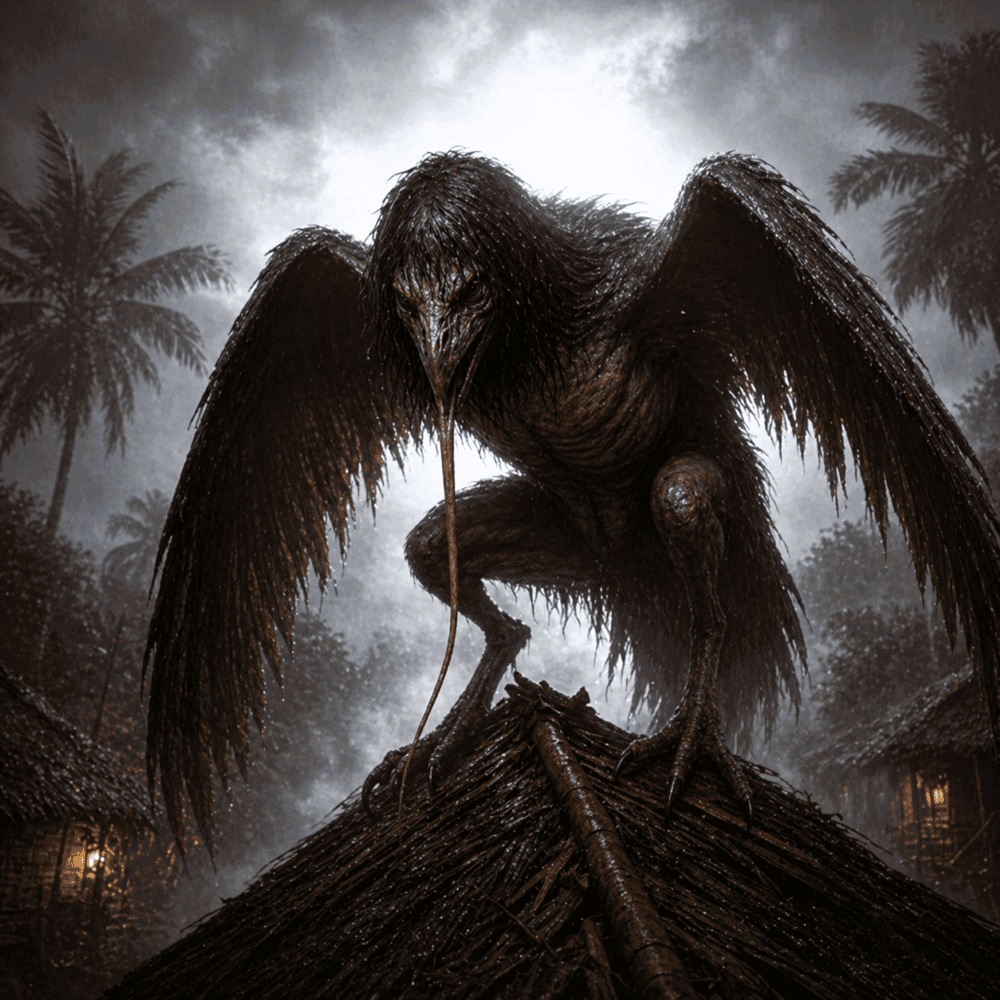
The Tik Tik is typically described as a shape-shifting entity with both human and monstrous characteristics. During the day, it can pass as an ordinary person, allowing it to move unnoticed within communities. At night, however, it transforms into a terrifying winged creature.
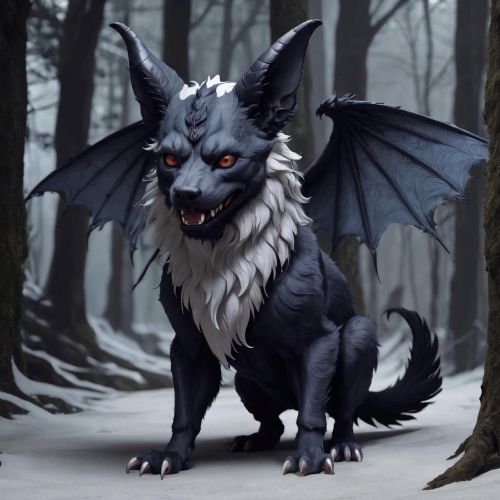
In its hunting form, it often resembles a large bird or bat-like humanoid with wide wings, sharp claws, and glowing red eyes. Its appearance is unsettling but not always grotesque, which adds to its effectiveness as a predator. It is built for stealth rather than brute force.
One of its most distinctive features is its long, thread-like tongue. Folklore describes this tongue as thin enough to slip through small gaps in roofs or walls. Once inside, it can reach a sleeping victim, particularly targeting pregnant women. This anatomical detail is one of the defining traits that separates the Tik Tik from other aswang variants.
Family
The Tik Tik does not exist as an isolated entity but is part of the larger aswang classification. The Aswang is not a single creature but a category that includes vampires, ghouls, witches, and viscera suckers.
Within this classification, the Tik Tik is closely associated with creatures like the Manananggal. While the Manananggal is known for separating its upper torso to fly and hunt, the Tik Tik relies more on stealth and deception rather than physical transformation of that scale.
In some traditions, the Tik Tik is described as a companion or scout for more powerful aswang. It may locate vulnerable targets and signal others, suggesting a coordinated hunting behavior. This idea reinforces the belief that encounters with such creatures are rarely isolated incidents.
Other names
Across the Philippines, the Tik Tik is known by several regional names, often based on the sounds it makes or slight variations in its behavior. Wak-wak is a commonly used term in the Visayas and Mindanao, referring to the flapping sound of its wings. Kikik is used in parts of the Bicol region, echoing a sharper, high-pitched cry. Ekek and Soc-soc are additional variations that describe similar bird-like aswang forms.
These names are not always strictly separate creatures. Instead, they often overlap, reflecting how oral traditions evolve across regions. The differences usually highlight sound, behavior, or minor physical traits rather than entirely distinct beings.
Powers and Abilities
The Tik Tik is defined by its efficiency as a hunter, relying on stealth, deception, and supernatural precision. Its ability to shapeshift allows it to move unnoticed during the day and transform into a winged predator at night. This dual existence makes it difficult to detect and adds to its mythic fear.
Its most unsettling ability is auditory deception. The ticking sound it produces is intentionally misleading. A louder sound suggests distance, while a faint sound indicates that the creature is already dangerously close.
The Tik Tik is also known for its method of feeding. Using its elongated tongue, it can penetrate roofs or small openings and extract fluids from a fetus without waking the mother. This act is often described in folklore as silent and nearly undetectable.
Another commonly mentioned trait is its heightened sense for detecting pregnancy. It is believed to be drawn to the scent of blood or the vitality of unborn life, making it a targeted predator rather than a random one.
Modern Day Influence
The Tik Tik continues to hold a strong place in modern Filipino culture, evolving from rural folklore into mainstream media. Films like Tiktik: The Aswang Chronicles brought the creature into contemporary cinema, presenting it with modern visual effects while preserving its traditional traits.
It also appears in popular series such as Trese, where Philippine folklore is reimagined in an urban fantasy setting. These adaptations have helped introduce the Tik Tik and other aswang variants to a global audience.
Beyond entertainment, the Tik Tik remains part of living folklore. Stories are still shared in communities, often as cautionary tales tied to pregnancy and nighttime vulnerability. Social media platforms have further revived interest, with storytelling, digital art, and short-form content bringing these myths to younger generations. The endurance of the Tik Tik reflects how deeply rooted these beliefs are, blending ancient fears with modern storytelling formats.
Related Images





Source
Maximo, D. R. (1990). Creatures of Philippine lower mythology. [PDF document]. Retrieved from https://about.openlibhums.org/fetch.php/form-library/zjZvJu/Creatures_Of_Philippine_Lower_Mythology_By_Maximo_D_Ramos.pdf
Monie Maunay. (2008, December 20). Tik Tik, the Filipino supernatural folklore. HubPages. https://discover.hubpages.com/religion-philosophy/tiktik-the-filipino-supernatural-folklore
Nasayao. (2010). Bikol beliefs and folkways: A showcase of tradition. https://phspirits.com/tiktik/
Plasencia, J. de. (1589). Customs of the Tagalogs. https://en.wikipedia.org/wiki/Aswang
Ramos, M. D. (1971). Creatures of the lower mythology. University of Kansas.
Wikipedia contributors. (2025). Aswang. Wikipedia. https://en.wikipedia.org/wiki/Aswang
Jocano, F. L. (1969). Philippine Mythology. Quezon City: Capitol Publishing House.
Eugenio, D. L. (1993). Philippine Folk Literature: The Myths. University of the Philippines Press.
Cannell, F. (1999). Power and Intimacy in the Christian Philippines. Cambridge University Press.
Demetrio, F. (1992). The Soul Book: Introduction to Philippine Pagan Religion. GCF Books.
Frequently Asked Questions
What is a Tik Tik in Philippine folklore?
A Tik Tik is a nocturnal aswang that hunts pregnant women using stealth, shapeshifting, and a deceptive ticking sound.
Is Tik Tik the same as Aswang?
Tik Tik is a type of aswang, specifically a viscera-sucking variant with bird-like traits.
Why does the Tik Tik make a ticking sound?
The sound confuses victims, growing quieter as the creature gets closer to mislead them.
What does the Tik Tik eat?
It is believed to feed on fetuses or unborn life using its long, thread-like tongue.
How do people protect against Tik Tik?
Traditional beliefs mention garlic, salt, and light as protective elements against aswang creatures.