


Tikbalang : The Horse-Headed Tricksters of Philippine Folklore
At a glance
| Description | |
|---|---|
| Origin | Philippine Mythology |
| Classification | Hybrids |
| Family Members | N/A |
| Region | Philippines |
| Associated With | Shapeshifting |
Mythlok Perspective
In Mythlok’s Perspective, the Tikbalang represents the unsettling idea that losing one’s way can be more frightening than facing a visible enemy. Its power lies in turning familiar paths into endless confusion, making the traveller question their own perception rather than the world around them. Similar trickster figures appear in Norse tales of Loki and African folklore surrounding Anansi, where deception challenges certainty and exposes human vulnerability. Yet the Tikbalang remains distinct in its intimate connection to the Philippine wilderness, where the forest becomes a space in which human confidence can unravel.
Tikbalang
Introduction
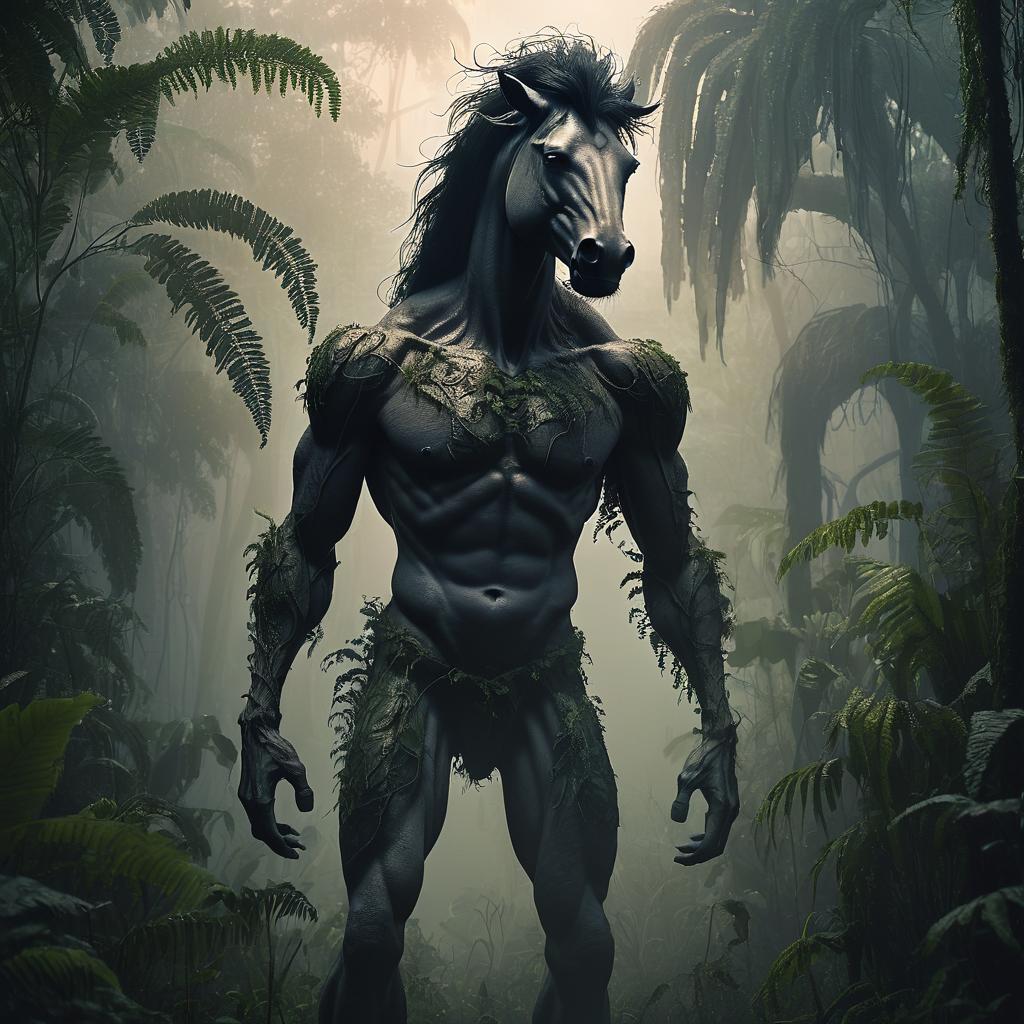
The Tikbalang is a class of supernatural beings in Philippine folklore, best known for its association with forests, remote pathways, and the mysterious experience of losing one’s way. Commonly depicted with a horse’s head and a tall, human-like body, the Tikbalang occupies a distinctive place among the supernatural creatures of the Philippines. Its appearance, behaviour, and abilities vary across regional traditions and individual accounts.
Tikbalang are particularly known for misleading travellers, confusing their sense of direction, and making familiar surroundings seem unfamiliar. A person walking along a forest path might repeatedly return to the same place despite trying different routes. In many stories, the creature relies on deception rather than direct confrontation, turning an ordinary journey into an unsettling encounter with the supernatural.
One traditional method of escaping a Tikbalang’s influence is to turn one’s clothing inside out. This unusual remedy appears in numerous retellings and reflects the folkloric belief that an unconventional action can disrupt the creature’s tricks. The Tikbalang is not always portrayed as malicious, however. Depending on the narrative, it may be mischievous, threatening, or simply an unpredictable presence in the wilderness.
Unlike a mythological hero with a fixed identity and personal history, the Tikbalang represents a category of supernatural beings. Its enduring place in Philippine folklore reflects the relationship between people, the natural environment, and the mysterious forces traditionally believed to inhabit unfamiliar landscapes.
Physical Description
The Tikbalang is commonly depicted as a tall, thin humanoid with a horse’s head, a prominent mane, and unusually elongated limbs. Its body resembles that of a human, while its equine features distinguish it from ordinary forest spirits and other supernatural creatures. Some descriptions emphasise its extraordinary height and disproportionately long legs, creating an unsettling appearance that is difficult to mistake for that of an ordinary animal or person.
One frequently repeated detail describes the Tikbalang’s knees as reaching above its head when it squats. This exaggerated proportion reinforces its unnatural appearance and contributes to its reputation as a creature capable of moving through the wilderness in unexpected ways.
Its physical form is not entirely consistent across Philippine folklore. Some accounts describe a horse-headed figure with a human body, while others present horse-like creatures or beings with different bodily characteristics. Historical descriptions also vary, making it difficult to establish one appearance as universal across every period and region. Later retellings sometimes attribute glowing eyes, unusual sounds, or other supernatural features to the Tikbalang. Such details add to its frightening image, although they are not essential characteristics shared by every account.
The Tikbalang is often compared with the centaur of Greek mythology because both combine human and equine features. Their anatomy, however, differs considerably. A centaur typically has the body and legs of a horse with a human torso and head, whereas the familiar Tikbalang depiction has a horse’s head attached to a predominantly humanoid body. This distinction makes the Tikbalang a recognisably different figure within Philippine supernatural traditions.
Mythological Context
The Tikbalang belongs to the wider world of Philippine folklore, particularly traditions associated with Tagalog communities. Stories describe these beings in forests, mountains, isolated paths, and other natural environments where travellers might become disoriented. Their presence reflects a folkloric understanding of the wilderness as a place inhabited by supernatural forces that cannot always be understood through ordinary experience.
The creature’s most recognisable role is that of a trickster. Rather than relying exclusively on physical strength, the Tikbalang manipulates perception and direction. Travellers may believe they are following a familiar route only to discover that they have returned to their starting point. In other accounts, the creature deceives people through strange appearances or misleading encounters.
These narratives give the Tikbalang a distinctive place among supernatural beings associated with the natural environment. Its influence is experienced through confusion, uncertainty, and the loss of control over an otherwise familiar journey. A person may recognise the path ahead yet remain unable to reach the intended destination.
The traditional practice of turning clothing inside out offers a means of resisting this supernatural interference. In some versions, the action breaks the creature’s hold over the traveller and restores the person’s ability to navigate the landscape. The remedy varies between accounts and is best understood as a traditional folkloric belief rather than a universal rule.
The Tikbalang’s character also changes according to the storyteller and the cultural setting. Some narratives emphasise its frightening qualities, while others portray it as mischievous or capable of leaving people alone once its tricks have run their course. These variations demonstrate that Philippine folklore preserves multiple interpretations rather than one fixed account of the creature’s nature.
Origins
The origins of the Tikbalang remain uncertain, although historical records provide valuable evidence of the name’s presence in Philippine traditions. One important early reference appears in Juan de Plasencia’s 1589 account, Customs of the Tagalogs. The text includes the term Tigbalaang alongside other categories of supernatural beings, but it does not provide the familiar modern description of a horse-headed humanoid.
Early colonial-era records and later folklore collections offer different descriptions of beings associated with the Tikbalang name. These accounts reflect the changing ways in which supernatural traditions were recorded and interpreted. They also demonstrate why the creature’s familiar physical appearance cannot automatically be assigned to every historical reference.
Horses became increasingly prominent in the Philippines through historical contacts with other parts of Asia and during Spanish colonial rule. Their presence may have influenced the development of the Tikbalang’s familiar equine appearance, although the precise relationship between the introduction of horses and the evolution of the creature remains uncertain.
A proposed connection between the Tikbalang and Hayagriva, the horse-headed deity found in Hindu and Buddhist traditions, is sometimes raised in comparative discussions of mythology. Both figures have equine associations, making the comparison interesting from a cultural perspective. However, resemblance alone does not establish a historical connection, and there is insufficient evidence to identify Hayagriva as the origin of the Tikbalang.
The most reliable approach is to understand the Tikbalang as a figure whose identity developed through Philippine folklore, with its appearance and characteristics shaped by different accounts over time. Its early documentary references, regional variations, and later representations together provide a more useful picture of its history than a single definitive origin story.
Notable Members
The Tikbalang is a category of supernatural beings rather than a single mythological individual. Traditional Philippine folklore does not establish one universally recognised Tikbalang with a definitive name, genealogy, and sequence of adventures. Instead, stories describe encounters with individual creatures that share certain characteristics while differing in appearance, behaviour, and temperament.
Named Tikbalang appear in modern literary adaptations, where writers give individual creatures distinct personalities and roles. One example is Lusyo, a Tikbalang featured in Arnold Arre’s graphic novel The Mythology Class. Within the work, the creature forms part of a wider narrative drawing on Philippine supernatural traditions.
Such fictional individuals are important to the modern reception of Tikbalang folklore, but they do not represent a universally accepted figure from traditional mythology. Their identities and characteristics belong to the specific stories in which they appear. For mythological classification, the Tikbalang is therefore best treated collectively. Individual names can be included when discussing particular books, comics, films, or other adaptations, while the broader entry focuses on the shared folkloric category.
Relationship with Other Beings
The Tikbalang exists within a diverse landscape of Philippine supernatural traditions that includes ghosts, spirits, shape-changing beings, and creatures associated with particular places. Its relationship with these beings varies between accounts, and there is no single universally accepted hierarchy that defines its position among them.
The Filipino term multo is commonly associated with ghosts, but it is not a precise synonym for Tikbalang. Similarly, early colonial records use terms such as vibit and Tigbalaang when discussing supernatural beliefs. These historical references are valuable for understanding how such beings were categorised, although the terminology and descriptions should be interpreted in their original context.
Some traditions associate the Tikbalang with large trees, particularly the balete, which features prominently in Philippine supernatural folklore. Such trees are often represented in stories as places connected with mysterious presences and encounters beyond ordinary human experience. However, the Tikbalang is not exclusively a tree-dwelling creature, and its association with forests and pathways is broader than any single location.
The creature can also be compared with other supernatural beings that have horse-like features or the ability to deceive humans. These similarities provide opportunities for comparative folklore research, but they do not mean that the beings are necessarily related or interchangeable. The Tikbalang’s relationships with other supernatural figures are best understood through individual regional traditions and documented accounts. Its identity remains distinct even when its characteristics overlap with those of other beings in Philippine folklore.
Similar Beings
The Greek centaur is one of the most familiar points of comparison for the Tikbalang because both figures combine human and equine characteristics. Their physical forms, however, are different. A centaur is generally depicted with the body and legs of a horse and the upper body of a human, whereas the Tikbalang is commonly portrayed with a horse’s head and a predominantly human body.
Their roles in folklore also differ. Centaurs appear in a wide range of Greek myths, sometimes as teachers or allies and sometimes as violent or unruly figures. The Tikbalang is more strongly associated with misleading travellers, disorienting people, and inhabiting mysterious natural environments. The comparison is therefore useful for understanding their visual similarities without confusing their cultural identities.
Hayagriva provides another comparison because of his horse-associated form. In Hindu traditions, Hayagriva is a divine figure associated with knowledge and the preservation of sacred wisdom. Buddhist traditions also include Hayagriva in different religious contexts. His theological significance is distinct from the Tikbalang’s role in Philippine folklore, and a shared equine association does not demonstrate a common origin.
Other Philippine supernatural beings may also share individual features with the Tikbalang, including unusual appearances, associations with the wilderness, or abilities that confuse or frighten humans. Such comparisons should be made carefully, since related motifs do not necessarily indicate that two beings belong to the same category.
Comparative mythology is most useful when it highlights both similarities and differences. The Tikbalang is best understood within its own cultural setting, rather than as a Philippine version of a creature from another mythology.
Symbolism and Interpretations
The Tikbalang is commonly associated with disorientation, deception, and the unpredictability of the wilderness. Its ability to lead travellers astray transforms a familiar journey into an encounter with uncertainty. A path that appears straightforward may become confusing, while familiar landmarks lose their usefulness as guides.
This makes the Tikbalang a distinctive folkloric trickster. Its power lies not necessarily in defeating its victims through physical force but in undermining their confidence in their surroundings. The creature challenges the assumption that human knowledge and perception are always sufficient to navigate the natural world.
Its association with forests, mountains, and isolated pathways also reflects the cultural significance of landscapes in Philippine folklore. The wilderness becomes more than a physical setting; it is a place where unseen presences may demand caution and respect. Stories about the Tikbalang express this relationship through encounters in which people discover that the environment can be unpredictable.
The practice of turning clothing inside out introduces an additional symbolic dimension. An ordinary garment is deliberately reversed to counter an extraordinary problem. Within the logic of folklore, this unconventional action interrupts the creature’s deception and restores the traveller’s ability to move forward.
The Tikbalang is not always interpreted as an embodiment of evil. Some narratives portray it as mischievous rather than malicious, while modern adaptations sometimes present it as lonely, sympathetic, or protective. These interpretations demonstrate how folklore can accommodate different understandings of a supernatural being without requiring a single moral classification.
Modern Influence
The Tikbalang remains a recognisable figure in Philippine popular culture, appearing in literature, comics, film, television, and children’s books. Its distinctive appearance and association with mysterious landscapes make it particularly adaptable to stories involving horror, fantasy, adventure, and cultural identity.
Arnold Arre’s graphic novel The Mythology Class is one notable modern work that incorporates Philippine supernatural beings into a contemporary adventure. Its portrayal of Lusyo gives an individual identity to a Tikbalang within a fictional narrative, illustrating how traditional creatures can be developed into characters with distinctive personalities.
Children’s literature offers a different interpretation of the creature. Ang Tikbalang Kung Kabilugan ng Buwan, written by Virgilio S. Almario and illustrated by Kora Dandan-Albano, centres on a lonely Tikbalang during the full moon. Published by Adarna House, the picture book presents the creature through a story that invites younger readers to engage with Philippine folklore in a more sympathetic way.
The 2015 web series Creatures of Philippine Mythology also explored the Tikbalang and other supernatural beings from the Philippines. Modern productions such as these introduce traditional figures to new audiences, although their interpretations of historical origins should be distinguished from conclusions established by documentary evidence. Contemporary adaptations may portray Tikbalang as individual characters, members of supernatural communities, or figures involved in modern adventures. These portrayals expand the creature’s narrative possibilities while drawing on its recognisable folkloric characteristics.
The Tikbalang’s continued presence in popular culture demonstrates the adaptability of Philippine folklore. Its familiar association with deception, mysterious landscapes, and the loss of direction continues to inspire new stories, allowing the creature to remain relevant while preserving its connection to the cultural imagination of the Philippines.
Related Images




Sources
Gaverza, K. (2018, March 31). Tikbalang, the horse demon – The Aswang Project. The Aswang Project. Retrieved November 1, 2025, from https://www.aswangproject.com/tikbalang/ THE ASWANG PROJECT
“Tikbalang – The Mythical Creature of Philippine Folklore.” (2025, January 7). Discovery UK. Retrieved November 1, 2025, from https://www.discoveryuk.com/mysteries/tikbalang-the-mythical-creature-of-philippine-folklore/ Discovery UK
“Tikbalang.” (n.d.). Myth and Folklore Wiki. Retrieved November 1, 2025, from https://mythus.fandom.com/wiki/Tikbalang mythus.fandom.com
“Trail of the Tikbalang: The Evolution of the Philippine Horse Demon.” (2025). Owl Cation. Retrieved November 1, 2025, from https://owlcation.com/curiosities/the-trail-of-the-tikbalang-throughout-time
Eugenio, D. L. (Ed.). (2008). Philippine Folk Literature: An Anthology (2nd ed.). University of the Philippines Press.
de los Reyes, I. F. (2010). El Folk-Lore Filipino (Vol. 1) [S. C. Dizon & M. E. Imson, Trans.]. University of the Philippines Press.
Frequently Asked Questions
What does the Tikbalang do?
The Tikbalang is known to trouble travellers by tricking them into straying from their path. They are known to mislead people at night along arbitrary paths usually bringing them back to where they started.
Is the Tikbalang evil?
The Tikbalang is an evil entity from Philippine mythology who is half human and half horse. They are known to trouble and attack human beings especially at night.
How do you escape from a Tikbalang?
To escape from attack from a Tikbalang, all you need to do is to turn your shirt inside out. This angers the Tikbalang and makes them leave you alone.



Pingback: Whispers of the Tikbalang: The Enigmatic Horse-headed Creature of the Philippine Forests - pinoymyths.com