

Ulysses (1954) : A Faithful Retelling of the Odyssey
| Description | |
|---|---|
| Country of Origin | Italy, France, United States |
| Language | Italian, English |
| Genre | Adventure |
| Cast | Silvana Mangano, Kirk Douglas, Anthony Quinn, Rossana Podestà, Jacques Dumesnil |
| Directed by | Mario Camerini |
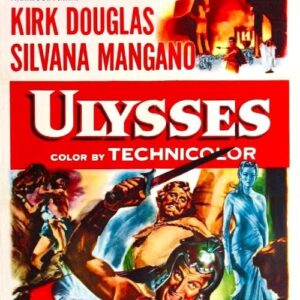
Ulysses
The 1954 film Ulysses attempts something both ambitious and deceptively simple: translating one of the oldest and most influential epics in human history into a visual narrative that modern audiences can follow without losing its mythic weight. Based on Homer’s Odyssey, the film strips away some of the poem’s poetic density and presents a more linear, accessible version of Odysseus’ long journey home. What emerges is not just a historical adventure, but a cinematic interpretation of one of the foundational stories of human endurance, identity, and fate.
At its core, Ulysses is less concerned with spectacle and more focused on the psychological and symbolic journey of its hero. The mythological elements are present throughout—encounters with gods, monsters, and enchanted realms—but they are treated with a grounded realism that reflects the filmmaking limitations and narrative preferences of the time. This choice works in an unexpected way. Instead of overwhelming the viewer with fantastical imagery, the film emphasizes the emotional and moral trials of Odysseus, making the myth feel more human and immediate.
Kirk Douglas’ portrayal of Ulysses anchors the film with a sense of restless intelligence and weary determination. He is not depicted as an untouchable hero but as a flawed, thinking man constantly navigating between survival and honor. This interpretation aligns closely with the original myth, where Odysseus is defined as much by his cunning as by his strength. The mythological journey becomes less about conquering monsters and more about overcoming temptation, pride, and the pull of oblivion. Each encounter—whether with Circe, the Cyclops, or the Sirens—feels like a symbolic test rather than just an episodic adventure.
The gods in Ulysses operate more as distant forces than active characters. Their presence is felt rather than constantly shown, which subtly reinforces one of the central ideas of ancient Greek storytelling: that human lives unfold under divine influence, but the choices made within that framework still matter. Fate and free will coexist uneasily, and the film captures this tension without needing heavy exposition. Odysseus is both guided and punished by forces beyond his control, yet he remains responsible for his journey.
One of the film’s strongest mythological aspects is its treatment of memory and identity. The journey is not just about returning to Ithaca but about remembering who one is after years of transformation. This aligns deeply with the mythic structure of the hero’s return, where the greatest challenge is not the journey outward but the reintegration into a world that has moved on. Penelope’s unwavering presence contrasts with Odysseus’ shifting identity, creating a powerful emotional anchor that elevates the narrative beyond simple adventure.
Visually, the film reflects its era, and this is where modern viewers may feel a disconnect. The creatures and settings lack the immersive realism expected today, but they carry a theatrical quality that echoes ancient storytelling traditions. In a way, this works in favor of the mythological tone. The artificiality becomes part of the experience, reminding the viewer that these stories were never meant to be purely realistic but symbolic and interpretive. The Cyclops, for instance, may not appear terrifying by modern standards, but the scene still conveys the essence of confronting a force beyond human comprehension.
What Ulysses does particularly well is preserve the episodic nature of the original epic while maintaining a coherent narrative flow. Each segment of the journey contributes to a broader theme of endurance and transformation. The mythological encounters are not isolated events but interconnected trials that shape Odysseus into the man who finally returns home. This sense of progression is crucial, as it reflects the deeper purpose of myth: to illustrate the evolution of the human spirit through adversity.
The film also captures the moral ambiguity that defines many ancient myths. Odysseus is not always admirable. His decisions lead to suffering, both for himself and his crew. Yet this complexity is precisely what makes the myth enduring. The film does not attempt to sanitize these elements but presents them as integral to the story. In doing so, it respects the original narrative’s refusal to offer simple heroes or clear moral victories.
From a Mythlok perspective, Ulysses stands as an early attempt to bring ancient narratives into the cinematic space without completely losing their symbolic depth. It may not deliver the visual grandeur expected from modern myth-inspired films, but it succeeds in preserving the essence of the journey. The film understands that the power of the story lies not in its monsters or magic, but in its exploration of what it means to return, to remember, and to endure.
For audiences interested in mythic storytelling, Ulysses offers a valuable experience. It is not a spectacle-driven adaptation but a reflective one, focusing on the timeless themes that have allowed the story to survive for millennia. In an era where adaptations often prioritize visual effects over narrative depth, this film serves as a reminder of the enduring power of simple, well-told stories rooted in human experience.
Ultimately, Ulysses is less about recreating the grandeur of the epic and more about distilling its essence. It invites viewers to see the myth not as a distant legend but as a deeply human story, one that continues to resonate because it speaks to universal truths about struggle, identity, and the longing for home.