Figures Associated With Earthquakes in Ancient Civilizations and Sacred Traditions
Earthquakes have inspired some of mythology’s most dramatic explanations for the instability of the ground beneath human feet. Across cultures, earthquakes have been attributed to gods shaking the Earth, enormous animals moving beneath the world, imprisoned monsters struggling underground, or supernatural guardians temporarily losing control. The figures associated with earthquakes therefore range from powerful deities to mythical creatures and legendary beings whose movements are imagined as large enough to disturb the world itself.
Among the best-known earthquake figures is Poseidon, the Greek god of the sea, horses, and earthquakes. His epithet Ennosigaios, commonly translated as “Earth-Shaker,” reflects the ancient belief that his power could cause the ground to tremble. Earthquakes were closely associated with Poseidon’s subterranean power, particularly in regions where seismic activity was a familiar part of life.
Japan developed one of the most distinctive earthquake traditions through Namazu, a gigantic catfish believed to live beneath the Japanese islands. When Namazu moved, the Earth shook. The creature was traditionally restrained by Kashima, a deity associated with controlling the catfish beneath a powerful foundation stone. The relationship between Namazu and Kashima became especially prominent in namazu-e, woodblock prints produced following major earthquakes, particularly the devastating 1855 Ansei Edo earthquake.
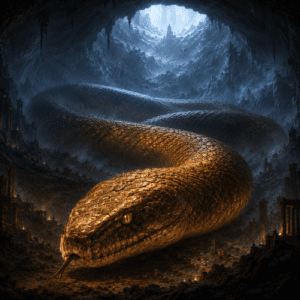
Other traditions imagined the Earth resting upon enormous animals or supernatural foundations. Some Indian earthquake legends describe the world being supported by elephants, a turtle, and a serpent, with movement among these beings causing the Earth to tremble. In Taiwan, the Tē-gû, or Earth Buffalo, became another animal explanation for seismic movement. European folklore likewise contains figures such as L’Orcolat, a monstrous being believed to live within the mountains of Friuli and cause earthquakes when it stirs.
Greek mythology also connects earthquakes with Enceladus, one of the Giants defeated by the Olympian gods. Later traditions placed him beneath Mount Etna, where his movements became associated with volcanic activity and subterranean upheaval. The image of a gigantic being imprisoned beneath the Earth captures a recurring mythological idea: the landscape itself may be the surface of a world containing enormous powers struggling below.
These traditions reveal a fascinating pattern. Earthquakes were not always imagined as random destruction. They could represent divine anger, the movement of cosmic animals, the escape of imprisoned creatures, or a moment when the boundaries holding the world together temporarily failed.
From Poseidon shaking the Earth with divine power to Namazu thrashing beneath Japan, earthquake-associated figures transform geological instability into mythology. Their stories give a face, body, or personality to one of nature’s most frightening forces.