


Falak : The Cosmic Serpent of Arabian Tradition
At a glance
| Description | |
|---|---|
| Origin | Arabian Mythology |
| Classification | Animals |
| Family Members | N/A |
| Region | Middle East |
| Associated With | Fire, Earthquake |
Mythlok Perspective
In Mythlok’s Perspective, Falak represents the ancient fear of cosmic chaos hidden beneath the stability of the world. Unlike ordinary dragons or serpents, Falak exists as a primordial force tied to the structure of creation itself, embodying destruction held in restraint. Its massive scale and terrifying presence reflect humanity’s fascination with creatures too vast to fully comprehend. The imagery of Falak beneath the cosmos suggests a universe balanced precariously over hidden dangers and uncontrollable forces. Across cultures, Falak resembles beings such as Jormungandr from Norse tradition and the world-serpents found in Mesopotamian and Indian cosmology. Yet Falak feels uniquely apocalyptic, portrayed less as a guardian and more as a sleeping catastrophe beneath existence itself.
Introduction
Falak is a gigantic serpent-like creature mentioned in medieval Arabian and Islamic cosmological traditions. The being is often described as existing beneath other colossal cosmic entities within layered models of the universe found in certain medieval texts. Falak is associated with fearsome size, destructive potential, and the hidden depths of creation. Unlike heroic dragons found in some mythologies, Falak is usually portrayed as a terrifying cosmic beast connected to the foundations of the universe itself.
References to Falak appear primarily in cosmological writings that blended folklore, theology, and early attempts to explain the structure of existence. Medieval Islamic scholars and storytellers often described creation as a vast layered system populated by angels, seas, winds, mountains, and enormous creatures. Within this structure, Falak occupied one of the deepest and most frightening levels. The creature’s role was not that of a narrative villain but rather a symbolic force tied to cosmic balance and divine order.
The mythology surrounding Falak reflects a broader tradition of world-serpents and primordial monsters found across many ancient cultures. However, Falak remains distinct because of its place within medieval Islamic cosmology. The creature is less commonly known today than beings such as dragons or djinn, yet it continues to fascinate researchers, mythology enthusiasts, and fantasy artists interested in cosmic mythology and ancient Arabian traditions.
Physical Traits
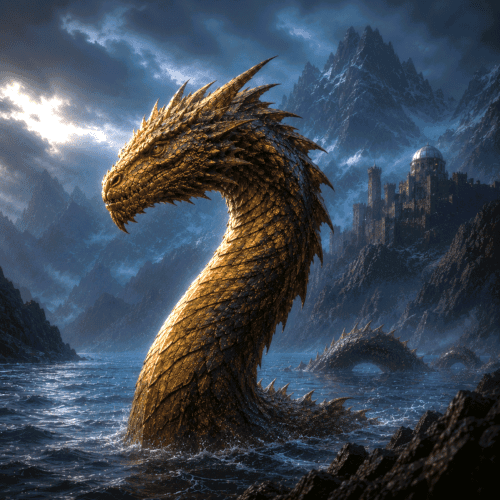
Falak is most commonly described as a colossal serpent or dragon-like being of unimaginable size. Medieval descriptions emphasize the creature’s enormous proportions rather than detailed anatomical features. Some accounts describe Falak as so vast that other cosmic entities exist above it within the structure of creation. This immense scale is one of the defining characteristics of the creature.
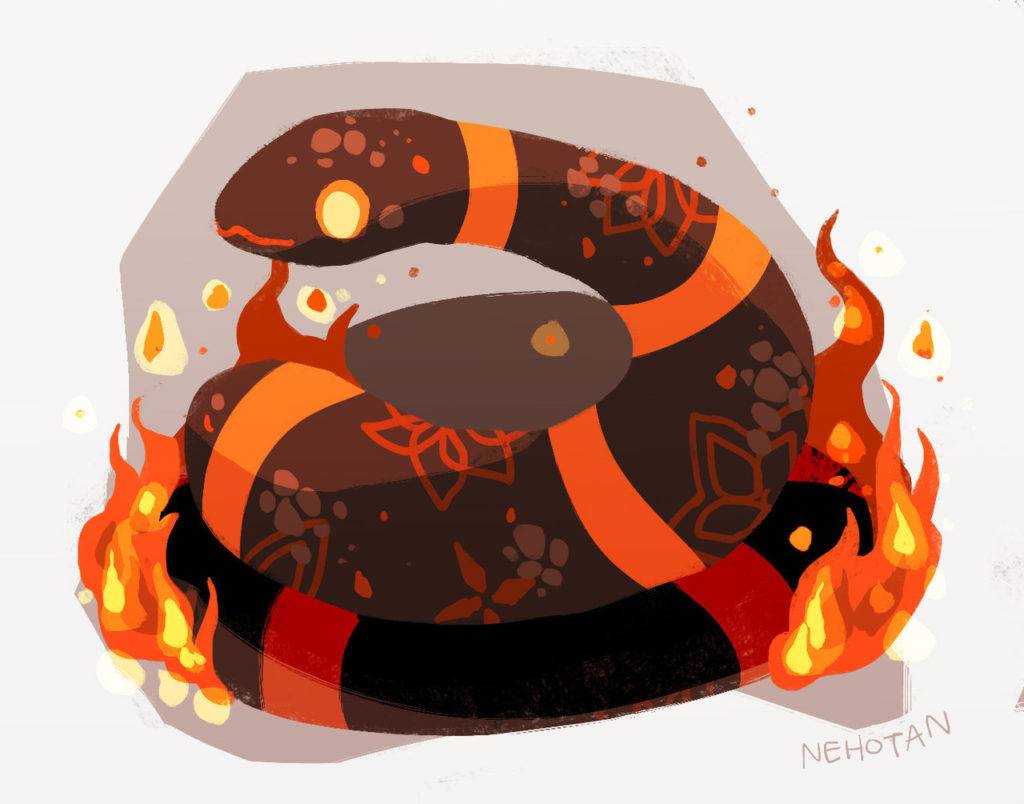
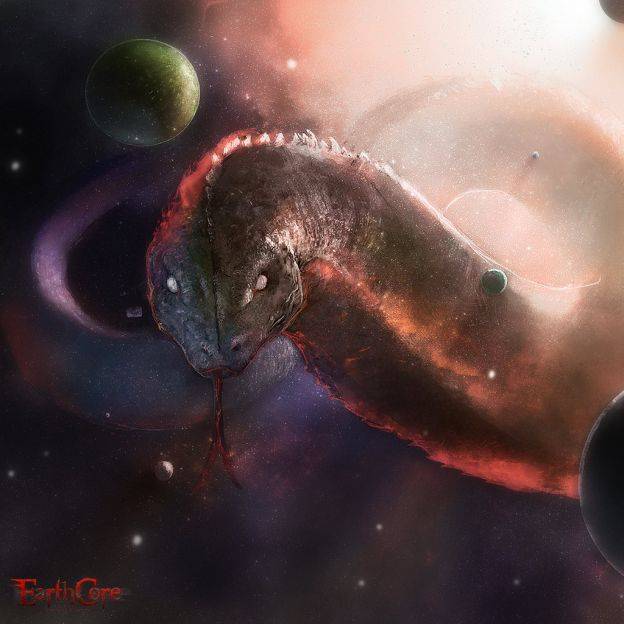
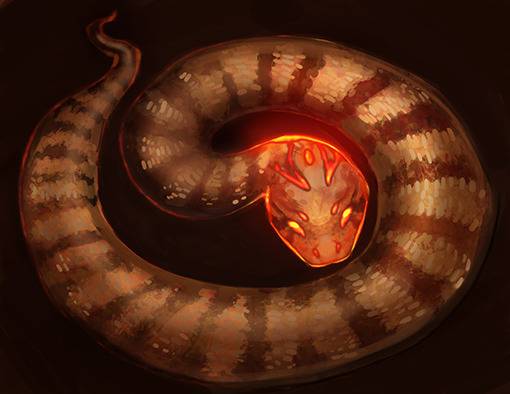
The beast is generally associated with darkness, fear, and overwhelming strength. Traditional cosmological depictions portray Falak as dwelling in the deepest layers beneath the world. Because the descriptions are often symbolic and fragmented, the creature’s exact appearance varies across interpretations. Some modern artistic depictions show Falak with horns, glowing eyes, scales, and smoke-like textures inspired by broader dragon and serpent imagery.
Unlike many mythological monsters that possess highly specific features, Falak remains intentionally mysterious. Medieval cosmological texts focused more on the creature’s terrifying presence and cosmic significance than on precise physical details. This ambiguity contributes to Falak’s unsettling nature, as the creature represents something too immense and ancient to be fully understood by humans.
Family
Falak does not possess a clearly defined family structure in surviving mythological or cosmological traditions. Unlike many mythological beings that belong to divine lineages or monster races, Falak is usually presented as an isolated cosmic entity existing within the layered structure of creation. Medieval cosmological writings focus more on the creature’s position within the universe rather than relationships or descendants.
The being is often associated with other gigantic cosmological creatures found in Islamic cosmology. Some traditions place Falak beneath Bahamut, a colossal fish-like being that supports the layers above it. These layered cosmological structures also include immense angels, seas, mountains, and other supernatural entities. However, these beings are not described as relatives in a biological sense. Instead, they form part of a symbolic cosmic hierarchy.
Because Falak appears mainly in cosmological literature rather than narrative mythology, little information exists regarding companions, offspring, or familial relationships. This absence further reinforces the creature’s role as a primordial force rather than a character involved in mythological stories. Falak functions more as a representation of cosmic terror and hidden power than as a member of a mythological family.
Other Names
The name Falak itself has associations with celestial and cosmic concepts within Arabic language traditions. In some contexts, the term “falak” can relate to the heavens, celestial spheres, or the orbiting structure of the cosmos. However, the mythological creature developed its own distinct identity within medieval cosmological traditions.
There are limited surviving alternate names directly connected to Falak in historical sources. Some modern discussions compare the creature to dragons, world-serpents, or abyssal monsters because of its immense size and cosmic role. However, these are descriptive comparisons rather than traditional names used in the original mythology.
Due to the rarity of references and the fragmented nature of medieval cosmological texts, Falak has not accumulated the extensive list of titles or alternate identities commonly seen with more widely known mythological beings. Most historical and modern references simply use the name Falak when discussing the creature and its role in Arabian and Islamic cosmology.
Powers and Abilities
Falak’s greatest power is its immense cosmic scale. Medieval descriptions portray the creature as a being of overwhelming size and strength, capable of existing beneath massive cosmic layers within the structure of the universe. The sheer scale of Falak symbolizes destructive potential and primordial force rather than magical abilities in the conventional sense.
The creature is often associated with fear, chaos, and catastrophic power. Some cosmological traditions imply that Falak’s existence beneath creation reflects the constant threat of instability beneath the ordered universe. The being’s terrifying presence serves as a reminder of divine authority maintaining balance over cosmic forces that humans cannot control or comprehend.
Falak is also associated with endurance and timelessness. As a primordial cosmic being, it exists outside ordinary human concepts of lifespan and mortality. Its presence within cosmological traditions suggests permanence and ancient origin. Modern fantasy interpretations sometimes add abilities such as fire breath, shadow manipulation, or destructive energy, though these elements are largely artistic expansions rather than details found in traditional sources.
Modern Day Influences
Falak remains a relatively obscure figure compared to dragons, leviathans, or djinn, but the creature has gained increased attention through modern mythology discussions, fantasy art, and online communities exploring lesser-known mythological traditions. Its imagery aligns closely with modern dark fantasy aesthetics centered on cosmic horror and gigantic ancient beings.
Artists and digital creators often depict Falak as a colossal horned serpent or dragon emerging from deserts, underground realms, or storm-filled skies. These interpretations combine medieval cosmological ideas with cinematic fantasy influences. The creature’s mysterious appearance and enormous scale make it especially appealing for visual storytelling and concept art inspired by Arabian mythology.
Falak’s themes also appear indirectly in modern fantasy and horror media involving world-serpents, primordial monsters, and hidden cosmic entities beneath reality. While the creature itself is rarely adapted directly into mainstream entertainment, its symbolism reflects enduring human fascination with gigantic beings representing chaos, destruction, and the unknown depths of the universe.
Related Images


Sources
Encyclopaedia Britannica. (n.d.). Islamic cosmology. Encyclopaedia Britannica. https://www.britannica.com/topic/Islamic-cosmology
Wikipedia contributors. (n.d.). Falak (mythology). Wikipedia. https://en.wikipedia.org/wiki/Falak_(mythology)
al-Qazwini, Z. (2015). The wonders of creation and the oddities of existence. Garnet Publishing.
El-Zein, A. I. (2009). Islam, Arabs, and the intelligent world of the jinn. Syracuse University Press.
Stetkevych, J. (1993). The mantle odes: Arabic praise poems to the Prophet Muhammad. Indiana University Press.
Gruber, C. J. (2019). Dragons, serpents, and cosmological beasts in Islamic thought. Journal of Arabic and Islamic Studies, 19, 45–67. https://doi.org/10.5617/jais.7821
Frequently Asked Questions
What is the story of the falak?
According to Arabian mythology, Falak is the giant serpent that lives below the fish known as Bahamut. It was also mentioned in the One Thousand and One Nights as a dangerous monster.
Who is Falak in Arabian mythology?
One Thousand and One Nights’ versions claim that a massive Falak lives beneath the Earth’s surface, but it avoids consuming everything that’s below it due to its fear of Allah.
How strong is Falak?
Falak is said to be immensely powerful, and could swallow the earth, the heavens and the six hells above it. They have an immunity to flames as well as being well able to withstand great amounts of heat.
Is Falak real in Islam?
The falak is a character from the One Thousand and One Arabian Nights and a part of the folklore of the region. It is not explicitly mentioned in the Quran.

Pingback: DEGEI : The Supreme God - Bula Living