


Ture : The Mischievous Spider Trickster of Zande Tradition
At a glance
| Description | |
|---|---|
| Origin | Zande Mythology |
| Classification | Mortals |
| Family Members | Nanzagbe (Wife) |
| Region | South Sudan, Democratic Republic of the Congo and Central African Republic |
| Associated With | Trickery, Cunning, Intelligence, Food, Water and Fire |
The Mythlok Perspective
In Mythlok’s Perspective, Ture represents the complicated relationship between intelligence and morality. His stories challenge the assumption that cleverness automatically makes someone admirable. Much like Anansi from Akan mythology, Ture uses deception, wit and manipulation to overcome stronger opponents, often driven by personal desires rather than noble intentions. However, while both tricksters occasionally benefit humanity, their stories also expose the consequences of greed and overconfidence. Together, they demonstrate that intelligence is neither inherently virtuous nor destructive; its value ultimately depends on how it is used.
Ture
Introduction
Ture is the central trickster figure in the folklore of the Zande people, also known as the Azande, whose traditional communities are spread across present-day South Sudan, the Democratic Republic of the Congo and the Central African Republic. Known as the Spider, Ture is a mischievous character whose adventures revolve around deception, cleverness, appetite and the occasional spectacular failure. Unlike divine figures who command supernatural powers, Ture relies primarily on intelligence and manipulation to navigate the world around him.
The name Ture means spider in the Zande language. According to an explanation recorded by British anthropologist E. E. Evans-Pritchard, the name reflects the spider’s ability to create a web from its own body, much like Ture constructs elaborate schemes using his intelligence. Although associated with a spider, Ture is generally imagined as a human male in the stories.
Ture occupies an unusual position in Zande storytelling. He is neither a straightforward hero nor a conventional villain. His behaviour frequently involves lying, stealing, gluttony and selfishness, yet his adventures sometimes benefit humanity. Some stories even portray him as a culture hero responsible for obtaining essential resources such as fire, food and water.
The stories were traditionally narrated orally, often after sunset, and were particularly popular as entertainment for children. Evans-Pritchard documented this tradition in his influential 1967 publication, The Zande Trickster, which brought together numerous narratives about Ture and his adventures.
Physical Traits
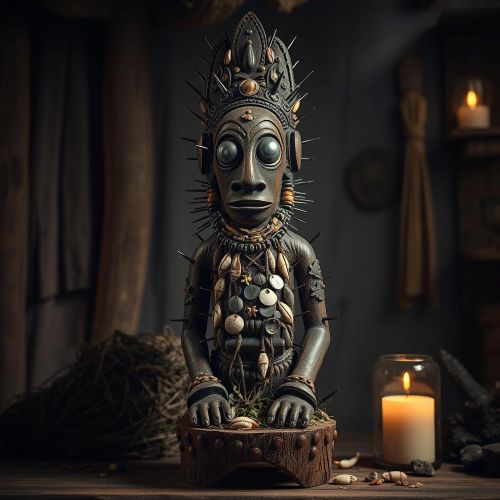
Ture does not have one universally established physical appearance. Although his name identifies him with the spider, Zande storytelling generally presents him as a human character rather than a creature with eight legs or an entirely spider-like body. His association with the animal is primarily symbolic, representing his ability to construct elaborate deceptions and ensnare others through clever schemes.
Some historical descriptions provide additional details about his appearance. An account by African art historian Jan-Lodewijk Grootaers associates Ture with a feathered hat, a feature connected with representations of the character in Zande storytelling. Such descriptions give him a recognisable human presence without turning him into a supernatural monster.
His physical identity is less important than his behaviour. Ture is characterised by his restless curiosity, appetite for food and tendency to become involved in situations that require considerable ingenuity to escape. His human appearance also allows him to participate in familiar social activities involving marriage, hunting, fishing, cooking and relationships with other members of his community.
The distinction between Ture’s human form and spider identity is central to understanding the character. He represents the spider’s resourcefulness rather than simply reproducing its physical characteristics.
Family
Ture’s family relationships appear in several Zande folktales, although they do not establish a consistent genealogy. His domestic life is particularly interesting because his adventures frequently involve his relationships with his wives and the complications created by his selfish behaviour.
Nanzagbe is one of the wives associated with Ture in the recorded stories. She appears in domestic narratives that explore marriage, jealousy, deception and household disagreements. Ture’s behaviour often creates tension within the relationship, particularly when his appetite and dishonest schemes interfere with family responsibilities. Some accounts also identify another wife, Nangbafude, suggesting that Ture’s marital relationships are not limited to one character. However, the surviving narratives do not provide enough information to establish a complete or universally accepted family structure.
Two other names, Bambasi and Bangirimo, appear in the title of a recorded narrative called The Fathers of Ture who were Bambasi and Bangirimo. This establishes their association with Ture in that particular story, although it should not automatically be interpreted as a definitive account of his parentage across all Zande traditions. These family narratives are important because they place Ture within recognisable social relationships. Rather than presenting him as an isolated supernatural being, they explore the same domestic tensions, obligations and conflicts experienced by ordinary people.
Other names
Ture is sometimes written as Tule in English-language accounts of Zande folklore. Both spellings refer to the same principal trickster character rather than separate mythological beings. The most familiar alternative identification is the Spider, a direct reference to the meaning of his name in the Zande language. The title also explains his association with intelligence, deception and the construction of elaborate traps.
In academic literature, he is frequently described as the Zande or Azande trickster. These descriptions identify his cultural background and narrative role rather than functioning as additional personal names. Ture is sometimes compared with Anansi, the spider trickster of Akan folklore, because both characters use intelligence and deception to overcome difficult situations. However, they belong to distinct cultural traditions and should not be treated as different versions of the same character.
Powers and Abilities
Ture’s greatest ability is his extraordinary intelligence. He regularly uses deception, manipulation and unconventional thinking to achieve objectives that would otherwise be impossible. Rather than depending on physical strength, he studies the behaviour of others and identifies opportunities to exploit their weaknesses.
One particularly interesting characteristic is his use of sanza, a Zande concept involving speech with double meanings. Through ambiguous expressions, indirect communication and carefully chosen words, Ture can manipulate how others understand a situation. His ability to communicate deceptively makes language one of his most effective tools.
His adventures also establish him as an occasional culture hero. In some recorded stories, Ture obtains essential resources for humanity, including food, water and fire. These achievements are generally accomplished through theft or deception rather than generosity, making his contributions morally complicated.
One memorable adventure involves a dangerous man-eating monster that uses a double-sided gong to trap its victims. Instead of confronting the creature directly, Ture manipulates the situation by pretending to enter the trap while keeping part of his body outside. He subsequently persuades the monster to demonstrate how the mechanism works, turning the creature’s own device against it.
However, Ture’s intelligence does not guarantee success. His greed, vanity and uncontrolled appetites frequently undermine his plans. The spider symbolism captures this contradiction particularly well. A spider creates its own web, but that web can also become a trap. Similarly, Ture’s elaborate schemes sometimes become the source of his own difficulties. His defining characteristics are therefore cunning, verbal manipulation, resourcefulness and deception rather than unrestricted supernatural power.
Modern Day Influence
Ture’s continuing influence is most visible through the preservation and academic study of Zande oral literature. His stories provide valuable insights into the community’s storytelling traditions, social expectations, humour and understanding of human behaviour. One of the earliest important printed collections was Sangba Ture: Zande Folk-lore, associated with Mrs. Edward Clive Gore and published in the early twentieth century. The collection helped preserve narratives that might otherwise have remained accessible primarily through oral storytelling. Its publication history includes a 1921 edition and a later revised publication.
The most influential academic work devoted to the character is E. E. Evans-Pritchard’s The Zande Trickster, published by Clarendon Press in 1967. The book contains numerous Ture narratives and examines their relationship with Zande society and culture. Evans-Pritchard’s research remains an important reference for understanding African trickster traditions.
Ture also features in comparative folklore studies, where researchers examine his similarities and differences with characters such as Anansi and other tricksters from African and international storytelling traditions. His adventures offer opportunities to explore themes of moral ambiguity, social behaviour, storytelling and the relationship between human intelligence and animal symbolism.
In educational settings, Zande trickster stories have also become useful examples for introducing students to African oral literature and comparative folklore. They demonstrate how communities use humour and fictional characters to communicate social observations and explore human weaknesses. Although there is limited documented evidence of Ture appearing in mainstream films, television or commercial video games, his cultural significance does not depend on modern entertainment adaptations. His strongest legacy remains the preservation of Zande storytelling and the continued academic interest in the Spider who repeatedly outsmarts others, sometimes only to become trapped by his own cleverness.
Related Images




Source
Evans-Pritchard, E. E. (1963). Sixty-one Zande proverbs. Man, 63, 109–112. https://doi.org/10.2307/2796900
Evans-Pritchard, E. E. (1965). Four Zande tales. The Journal of the Royal Anthropological Institute of Great Britain and Ireland, 95(1), 44–74. https://doi.org/10.2307/2844209
Evans-Pritchard, E. E. (1965). Some Zande animal tales from the Gore collection. Man, 65, 70–77. https://doi.org/10.2307/2797214
Evans-Pritchard, E. E. (1966). Some Zande folk-tales from the Gore collection. Anthropological Quarterly, 39(4), 265–287. https://doi.org/10.2307/3316908
Evans-Pritchard, E. E. (1967). The Zande trickster. Oxford University Press.
Gore, E. C. (1931). Sangba Ture: Zande folk-lore. Sheldon Press.
Kalu, A. C. (Ed.). (2007). The Rienner anthology of African literature. Lynne Rienner Publishers.
Okpewho, I. (1992). African oral literature: Backgrounds, character, and continuity. Indiana University Press.
Frequently Asked Questions
Who is Ture in Zande mythology?
Ture is the principal trickster figure in Zande folklore, known as the Spider. He uses deception, intelligence and cunning to overcome opponents and navigate difficult situations.
Why is Ture called the Spider?
Ture’s name means spider in the Zande language. The association reflects the spider’s ability to construct intricate webs, symbolising his talent for creating elaborate schemes.
Is Ture a god or a human in Zande mythology?
Ture is primarily portrayed as a human trickster in Zande folklore. Although some stories give him culture-hero characteristics, he is not consistently described as a god.
What are Ture's powers and abilities?
Ture is known for cunning, deception, double-meaning speech and strategic thinking. Some stories also credit him with obtaining food, water and fire for humanity.
Who is Ture's wife in Zande folklore?
Nanzagbe is one of Ture’s documented wives. Other accounts mention Nangbafude, although the surviving stories do not establish a complete or consistent family genealogy.


