

Simargl : The Winged Guardian of the Slavic World
At a glance
| Description | |
|---|---|
| Origin | Slavic Mythology |
| Classification | Gods |
| Family Members | N/A |
| Region | Ukraine, Russia, Belarus |
| Associated With | Fire, Fertility, Seeds, Crops, Protection |
The Mythlok Perspective
In Mythlok’s Perspective, Simargl represents one of the most fascinating examples of how mythological figures can survive despite the loss of their stories. While many gods are remembered through epic tales and detailed legends, Simargl endures primarily through symbolism. His image as a winged guardian embodies protection, fertility, and the connection between earthly life and divine forces. Cross-culturally, he shares similarities with the Persian Simurgh and even guardian creatures such as the Egyptian griffin-like protectors of sacred spaces. These parallels suggest that ancient cultures often imagined divine guardians as hybrid beings capable of bridging different realms. Simargl’s mystery may ultimately be his greatest power, inviting each generation to rediscover him anew.
Simargl
Introduction
Simargl is one of the most mysterious figures in Slavic tradition. Unlike deities such as Perun or Mokosh, whose roles are relatively well documented through folklore and historical references, Simargl survives largely as an enigma. His name appears in the famous pantheon established by Prince Vladimir the Great in Kyiv around 980 CE, making him one of the officially recognized gods of pre-Christian Kievan Rus’. Beyond that brief mention, however, very little direct information about him has survived.
This scarcity of evidence has led generations of historians, linguists, and mythologists to debate Simargl’s true nature. Some scholars view him as a guardian deity associated with agriculture, fertility, and the protection of crops. Others believe he functioned as a divine messenger connecting the mortal world with the realm of the gods. A number of researchers have also suggested links between Simargl and the Iranian mythical creature Simurgh, pointing to possible cultural exchanges between Slavic and Iranian peoples.
Despite the uncertainty surrounding his role, Simargl occupies a unique position within Slavic belief systems. His enduring image as a winged guardian beast has allowed him to survive in folklore, art, and modern spiritual traditions. Today, he remains one of the most intriguing figures in Slavic religious history, representing both the richness and the mysteries of the ancient Slavic world.
Physical Traits
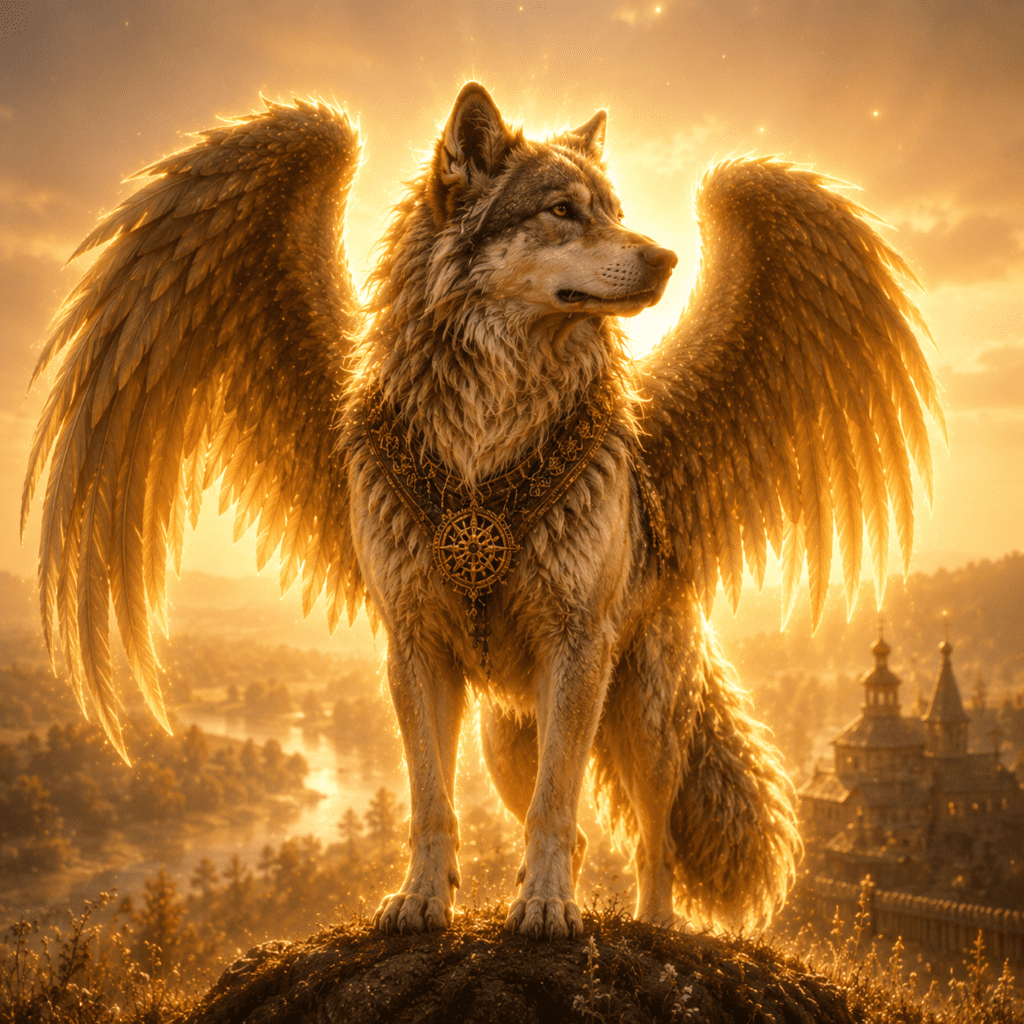
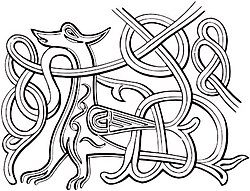
The most widely recognized depiction of Simargl portrays him as a winged dog. This unusual appearance distinguishes him from many other Slavic gods, who were generally represented in human form. The image combines the loyalty and protective instincts associated with dogs with the celestial symbolism of wings, creating a creature that appears both earthly and divine.
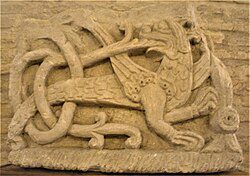
Archaeological discoveries from medieval Eastern Europe have revealed decorative motifs featuring winged canine-like creatures that many scholars associate with Simargl. These images appear on jewelry, ornaments, and ceremonial objects dating from the Kievan Rus’ period. Although none of these artifacts explicitly identify the creature by name, their similarities have contributed significantly to modern perceptions of Simargl’s appearance.
Some artistic interpretations portray him with lion-like characteristics, including a powerful build and regal posture. Others emphasize bird-like features, creating a hybrid creature that combines elements of canine, avian, and feline forms. These variations stem largely from comparisons with the Iranian Simurgh, a legendary creature that also possesses a mixed animal form.
While the exact appearance of Simargl cannot be confirmed with certainty, the winged dog remains the most accepted and recognizable representation. This form symbolizes vigilance, protection, and the ability to move between earthly and heavenly realms.
Family
The family relationships of Simargl remain unknown. Unlike many mythological figures whose genealogies are preserved through stories and oral traditions, no surviving early Slavic text identifies Simargl’s parents, spouse, siblings, or children.
His appearance within Prince Vladimir’s pantheon demonstrates that he held an important position among the gods worshipped in Kievan Rus’, but the historical sources provide no details regarding how he related to other deities. As a result, any attempt to construct a family tree for Simargl relies primarily on later interpretations rather than historical evidence.
Some modern neopagan traditions and popular retellings have attempted to connect Simargl with major Slavic gods such as Svarog or Perun. These associations often reflect efforts to create a more complete mythological framework rather than information preserved from authentic medieval sources.
Because no reliable primary evidence exists, it is most accurate to regard Simargl’s familial connections as unknown. This lack of information contributes to the broader mystery that surrounds his character and role within Slavic religion.
Other names
Simargl appears under several different spellings due to variations in medieval manuscripts, linguistic conventions, and modern scholarship. The most common forms are Simargl and Semargl, although Sěmargl is also frequently used in academic works.
Differences in spelling largely result from the challenges of translating and interpreting Old East Slavic texts. As scholars examined historical documents across different languages and regions, multiple transliterations emerged, all referring to the same deity.
A notable scholarly theory proposes that the name recorded in the Primary Chronicle may actually represent two separate figures rather than one god. According to this interpretation, the name should be divided into Sěm and Rgel. While this idea has generated considerable discussion among researchers, it remains speculative and has not achieved universal acceptance.
Simargl’s name is also frequently compared to the Iranian Simurgh, a legendary winged creature found in Persian mythology. The similarity between the names has led some scholars to suggest cultural borrowing or influence. However, Simurgh was never used as an alternative name for Simargl in Slavic tradition itself. Instead, it serves as a comparative reference that may help explain the deity’s origins and symbolism.
Powers and Abilities
Although no surviving myths describe Simargl’s actions in detail, scholars have reconstructed several likely functions based on historical evidence, iconography, and linguistic analysis. One of the most widely accepted interpretations identifies Simargl as a protector of agriculture. In this role, he guarded seeds, crops, and fertile land, ensuring successful harvests and agricultural prosperity. This association would have made him especially important in the predominantly agrarian societies of early Eastern Europe.
Simargl is also frequently viewed as a guardian figure. His winged canine form suggests vigilance and protection, qualities that align with the belief that he watched over fields, settlements, and sacred spaces. Some researchers connect him with the safeguarding of the World Tree, a recurring symbol in Slavic cosmology that represents the structure of the universe.
Another commonly proposed role is that of a divine intermediary. In this interpretation, Simargl acted as a messenger between humanity and the gods, carrying prayers upward and delivering divine influence back to the mortal world. His wings symbolize the ability to travel between different realms of existence.
Several modern interpretations associate Simargl with fire. Unlike Svarog, who was linked to celestial or cosmic fire, Simargl is sometimes viewed as the guardian of earthly fire and the life-giving warmth necessary for growth and survival. This connection further strengthens his relationship with fertility, cultivation, and renewal. While the exact nature of his powers remains uncertain, themes of protection, growth, guardianship, and sacred energy consistently appear across scholarly interpretations.
Modern Day Influence
Despite the limited historical information available about him, Simargl continues to inspire people throughout Eastern Europe and beyond. His image remains particularly significant within modern Slavic Native Faith movements, where he is often revered as a symbol of protection, fertility, and spiritual strength.
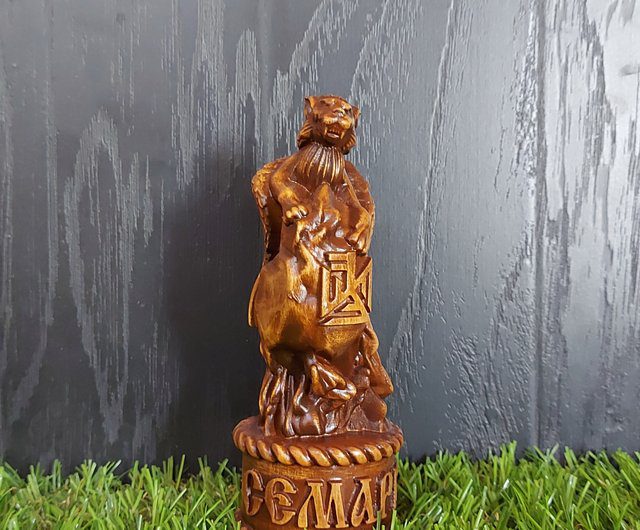
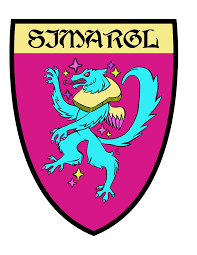
Artists frequently depict Simargl as a majestic winged guardian, drawing upon both medieval motifs and contemporary fantasy aesthetics. His distinctive appearance has made him a popular subject for paintings, sculptures, tattoos, and digital artwork. The combination of canine loyalty and celestial power resonates strongly with modern audiences.
Simargl has also found a place in literature, fantasy fiction, role-playing games, and video games inspired by Slavic folklore. These portrayals often expand upon his limited historical record, presenting him as a powerful guardian spirit or ancient divine beast.
In Ukraine and other parts of Eastern Europe, Simargl continues to serve as a cultural symbol connected to heritage and historical identity. His image appears in various artistic and commemorative contexts, reflecting renewed interest in pre-Christian Slavic traditions.
Although many aspects of his story remain uncertain, Simargl’s enduring legacy demonstrates how even the most enigmatic figures can continue to capture the imagination centuries after their original worship disappeared.
Related Images


Source
De.wikipedia.org. (n.d.). Simargl [Online encyclopedia entry]. Retrieved June 12, 2026, from https://de.wikipedia.org/wiki/Simargl
Slowiański Bestiariusz. (2020, September 2). Simargł – tajemniczy bóg ze wschodu [Blog article]. Retrieved June 12, 2026, from https://blog.slowianskibestiariusz.pl/bogowie/simargl/
Meet the Slavs. (2022, December 17). Simargl or Semargl: Slavic god of fire [Web article]. Meet the Slavs. Retrieved June 12, 2026, from https://meettheslavs.com/simargl/
Slavic Mythology Archive. (2026). Simargl: Winged Guardian of the Slavic Cosmic Order. Retrieved June 12, 2026, from https://slavicmythology.org/simargl
Cross, S. H., & Sherbowitz-Wetzor, O. P. (1953). The Russian Primary Chronicle: Laurentian Text. Medieval Academy of America.
Ivanov, V., & Toporov, V. (1974). Research on Slavic Mythology. Moscow: Nauka.
Mansikka, V. (1922). Die Religion der Ostslaven. Helsinki: Suomalainen Tiedeakatemia.
Famitsin, A. (1884). Slavic Paganism and Its Deities. St. Petersburg: Imperial Academy.
Frequently Asked Questions
Who is Simargl in Slavic tradition?
Simargl is a mysterious Slavic god mentioned in the pantheon of Prince Vladimir, often associated with protection, fertility, and fire.
What does Simargl look like?
Simargl is most commonly depicted as a winged dog, though some representations include lion-like or bird-like features.
Is Simargl connected to the Persian Simurgh?
Many scholars suggest a possible connection due to similarities in name and appearance, though the relationship remains debated.
What powers does Simargl have?
He is commonly associated with guarding crops, protecting sacred spaces, mediating between worlds, and preserving fertility.
Why is Simargl important today?
Simargl remains a popular figure in Slavic cultural revival movements, art, literature, gaming, and modern folklore.