
Belobog : The Slavic White God of Light and Prosperity
At a glance
| Description | |
|---|---|
| Origin | Slavic Mythology |
| Classification | Gods |
| Family Members | N/A |
| Region | Poland, Belarus, Russia, Ukraine, Czech Republic, Slovakia |
| Associated With | Light, Daylight, Prosperity, Fortune, Justice |
The Mythlok Perspective
In Mythlok’s Perspective, Belobog is fascinating precisely because of his uncertainty. Unlike fully documented gods with elaborate myths, Belobog survives as a symbol reconstructed through fragments, contrasts, and cultural memory. He represents humanity’s instinct to imagine light as an active force that protects communities from chaos and fear. His role mirrors many global archetypes tied to solar purity and cosmic order. Similar to Baldr in Norse tradition or Mithra in Indo-Iranian belief, Belobog embodies the comforting idea that illumination is not merely physical, but moral and spiritual. His enduring popularity proves that even partially lost myths can continue shaping modern imagination.
Belobog
Introduction
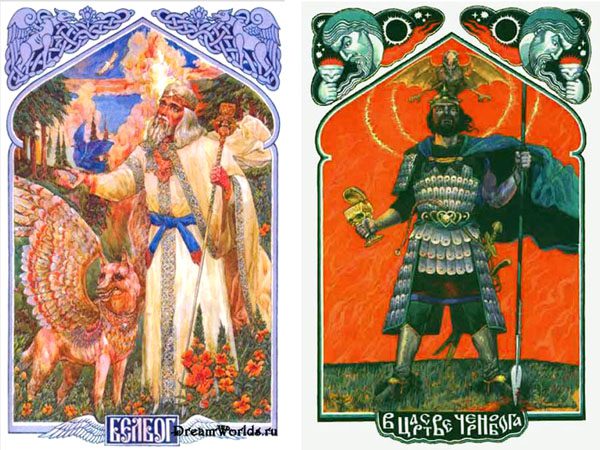
Belobog is one of the most intriguing and debated figures in Slavic tradition. His name comes from Slavic words meaning “White God,” and he is commonly associated with light, good fortune, prosperity, and protection. In modern retellings, Belobog is often presented as the divine counterpart to Chernobog, the figure linked with darkness and misfortune. Together, they symbolize the balance between opposing cosmic forces.
Unlike many well-documented mythological deities, Belobog’s historical origins remain uncertain. Medieval records about him are limited, and much of what is known today comes from later folklore studies, comparative mythology, and modern reconstructions of Slavic beliefs. Some historians even argue that Belobog may not have been worshipped as a separate god in ancient times, but instead emerged later as a conceptual opposite to Chernobog.
Despite these scholarly debates, Belobog has become an important symbol in modern interpretations of Slavic spirituality. He represents the hope of daylight after darkness, the arrival of warmth after winter, and the idea that goodness and fortune are forces worth protecting. His image survives because he embodies a universal human desire for guidance, safety, and prosperity.
In contemporary mythology discussions, Belobog is often viewed less as a historically verified deity and more as a powerful archetype of light and benevolence. That combination of mystery and symbolism has helped him remain relevant in folklore, fantasy fiction, gaming, and modern spiritual movements.
Physical Traits
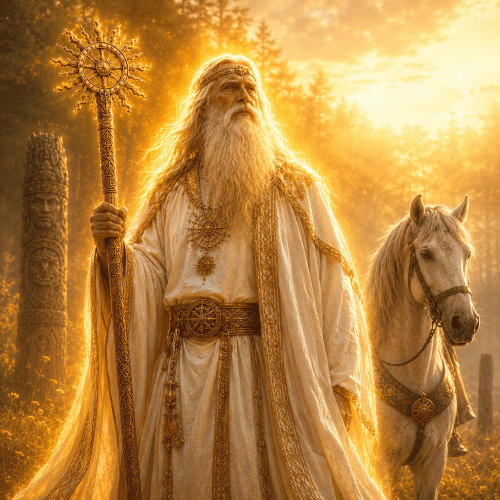
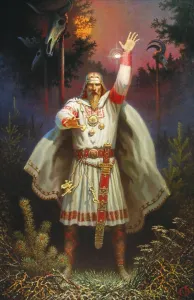
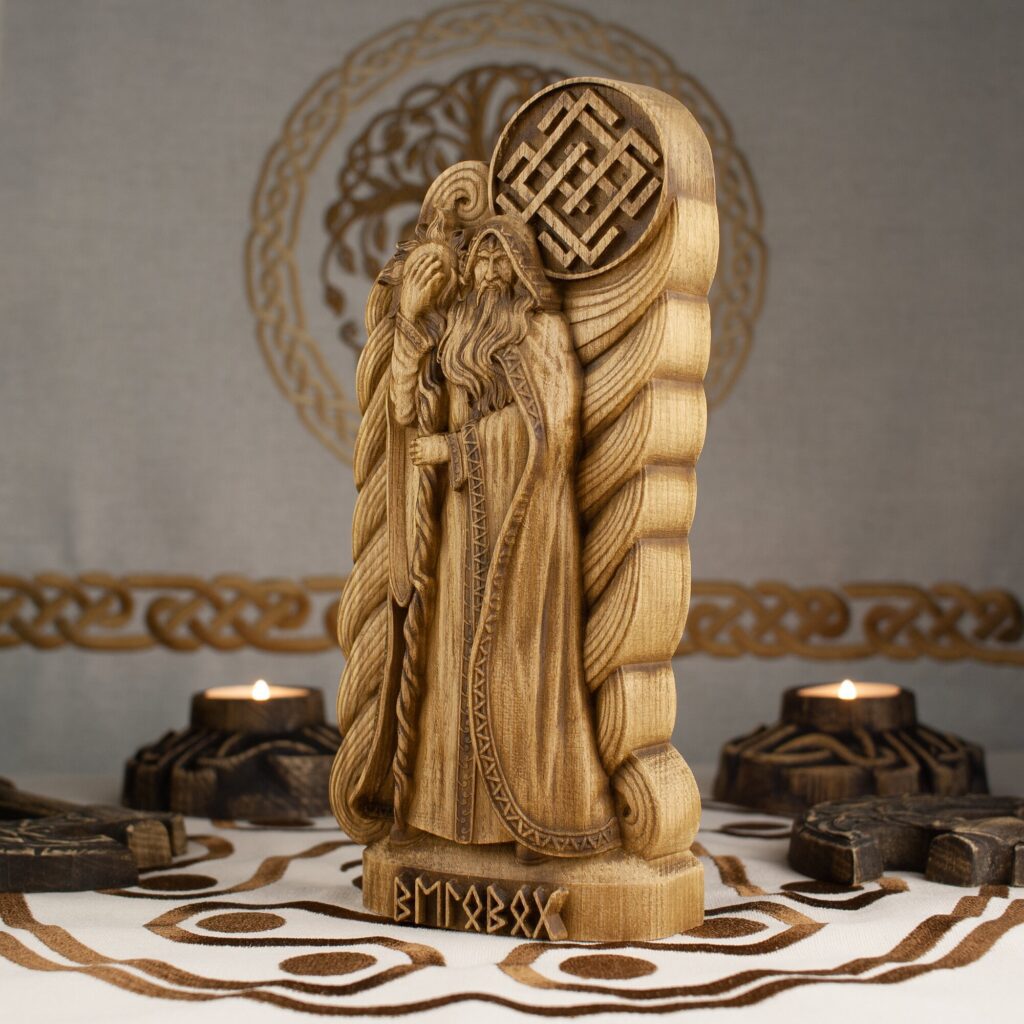
Descriptions of Belobog vary widely because there are no surviving ancient statues or confirmed historical depictions of him. Most modern portrayals describe him as an elderly man with a long white beard and flowing white robes. His appearance is designed to reflect purity, wisdom, and illumination rather than physical strength or warfare.
Many legends describe him carrying a staff, often interpreted as a symbol of guidance and authority. In some regional traditions, he appears as a wandering old man who helps lost travelers find safe paths through forests or harsh landscapes. These stories reinforce his role as a protector and bringer of fortune.
Belobog is also frequently associated with bright daylight and sunrise. Some accounts suggest he only appears during the daytime, emphasizing his connection to sunlight and clarity. Artists and writers often surround him with a golden glow or radiant aura to visually separate him from darker mythological forces.
Another recurring symbol linked to Belobog is the white horse. In reconstructed Slavic imagery, the white horse represents purity, victory, and divine favor. This symbolism creates a direct contrast with the darker imagery traditionally connected to Chernobog.
Although these visual traits are widely recognized today, it is important to remember that most are modern interpretations rather than firmly documented ancient descriptions. Belobog’s image has evolved over time through folklore, literature, and artistic imagination.
Family
Belobog does not possess a clearly defined family lineage in surviving Slavic sources. Unlike mythological pantheons such as those of Greece or Scandinavia, where divine genealogies were carefully recorded, Slavic mythology survives in fragmented traditions that often leave relationships uncertain.
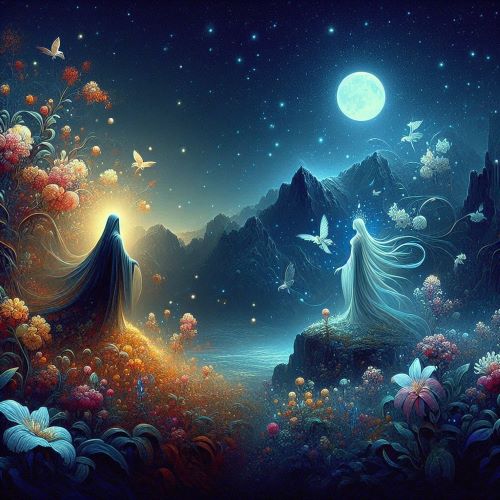
The figure most closely associated with Belobog is Chernobog. Modern interpretations frequently describe them as opposites representing light and darkness, fortune and misfortune, or day and night. Some modern stories portray them as twin brothers born from the same cosmic force, but there is little historical evidence confirming this relationship.
Certain reconstructed traditions connect Belobog to Rod, the primordial creator associated with fate and creation. In these interpretations, Belobog becomes part of a larger cosmic order alongside other Slavic deities such as Svarog and Dazhbog. However, these connections remain speculative rather than historically verified.
Some scholars have also proposed that Belobog may not have been a separate god at all. Instead, the name could have functioned as an epithet or title for another solar deity connected with light and goodness. This theory further complicates attempts to establish a reliable mythological family tree. Because of these uncertainties, Belobog’s family relationships remain one of the most debated aspects of his mythology.
Other names
Belobog appears under several regional spellings and linguistic variations throughout Slavic studies and modern folklore references. The most common English spelling is “Belobog,” but other forms include Bielobog, Bielebog, Bilobog, Bialbog, and Byelobog.
These differences mostly result from regional pronunciation and transliteration across Slavic languages. The root meaning remains consistent in nearly all versions, combining words connected to “white” and “god.”
Another related figure sometimes linked to Belobog is Belun, especially in Belarusian folklore. Belun is portrayed as a benevolent old man who helps farmers, travelers, and harvesters. While some researchers treat Belun as a separate folkloric character, others believe he may preserve elements of older Belobog traditions.
Certain comparative mythology studies have also associated Belobog with broader Indo-European solar archetypes. Because of his connection to light and protection, he is occasionally compared to figures such as Baldr or Mithra. These comparisons are symbolic rather than historical, but they demonstrate how Belobog fits within a larger pattern of light-associated deities across cultures.
Powers and Abilities
Belobog is primarily associated with beneficial and life-giving forces. Across most interpretations, he represents light, fortune, prosperity, guidance, and protection from darkness. His role is less about warfare and more about maintaining balance and harmony within the world.
One of his most important symbolic powers is the ability to bring good fortune. In folklore-inspired retellings, Belobog blesses communities with prosperity, successful harvests, and peace. Farmers and travelers were believed to seek his favor for protection and guidance.
Belobog is also linked with sunlight and dawn. These associations make him a figure of renewal and hope. Just as sunrise drives away night, Belobog symbolizes the triumph of order over chaos and clarity over fear.
Some modern interpretations connect him with justice and morality. In these traditions, he serves as a divine force that guides humanity toward fairness and ethical behavior. Stories portraying him as a wise elder helping lost people reflect this moral dimension.
Healing and protection are additional traits often connected to Belobog in contemporary reconstructions. His radiant nature is viewed as cleansing and restorative, capable of driving away harmful influences associated with darkness or misfortune. Although many of these powers come from modern interpretations rather than ancient written sources, the core idea remains consistent: Belobog embodies positive cosmic energy and the sustaining power of light.
Modern Day Influence
Belobog has gained renewed popularity in modern culture, especially through fantasy fiction, gaming, and online mythology communities. His mysterious background and symbolic connection to light make him an appealing figure for reinterpretation.
One of the most famous modern references connected to Belobog appears in American Gods, where the concept of Slavic duality involving Belobog and Chernobog is explored through literary adaptation. Video games and fantasy worlds have also used the name Belobog for kingdoms, cities, or divine characters associated with protection and light.
The deity’s influence extends into modern Slavic neopagan movements as well. Some practitioners of reconstructed Slavic spirituality view Belobog as a symbol of positive energy, balance, and cosmic harmony. However, scholarly caution remains important because direct historical evidence for his worship is still limited.
Academic discussions about Belobog often focus on whether he was an actual ancient deity or a later reconstruction inspired by dualistic interpretations of Slavic belief systems. Ironically, this uncertainty has become part of his modern appeal. Belobog exists at the intersection of history, folklore, and imagination, allowing modern audiences to reinterpret him in many different ways.
Today, Belobog continues to symbolize the eternal struggle between darkness and light. Whether understood as a historical god, a folkloric evolution, or a mythological archetype, he remains one of the most recognizable figures connected to Slavic spiritual traditions.
Related Images

Source
Anonymous. (n.d.). Belobog – Slavic God of Light. Slavic Mythology. Retrieved May 20, 2026, from https://slavic-mythology.com/gods/belobog/
Godchecker. (2023, June 15). BELOBOG – the Slavic God of Good (Slavic mythology). https://www.godchecker.com/slavic-mythology/BELOBOG/
Sutherland, A. (2017, December 3). Belobog White God In Everlasting Fight With His Cursed, Evil Counterpart, Chernobog In Slavic Beliefs. Ancient Pages. https://www.ancientpages.com/2017/12/04/belobog-white-god-everlasting-fight-cursed-evil-counterpart-chernobog-slavic-beliefs/
“Chernobog and Belobog.” (2023, April 18). Simple English Wikipedia. https://simple.wikipedia.org/wiki/Chernobog_and_Belobog
Noble, B. (2021, June 17). Chernobog and Belobog – The Slavic Gods Who Weren’t. https://brendan-noble.com/chernobog-and-belobog-the-slavic-gods-who-werent/
Chernobog and Belobog. (n.d.). Wikipedia. Retrieved May 20, 2026, from https://en.wikipedia.org/wiki/Chernobog_and_Belobog
Helmold of Bosau. (12th century). Chronica Slavorum. Latin Chronicle.
Lindner, J. (1530). Compilation of Slavic Deities. Pirna Monastic Records.
Kantzow, T. (1538). Chronicle of Pomerania.
Frencel, A. (17th century). List of Lusatian Gods.
Ivanov, V. V., & Toporov, V. N. (1974). Slavic Mythology and Dualism. Moscow: Nauka Press.
Frequently Asked Questions
Who is Belobog in Slavic mythology?
Belobog is a legendary Slavic figure associated with light, fortune, prosperity, and protection against darkness.
Is Belobog a real ancient Slavic god?
His historical existence is debated, as medieval evidence for Belobog is limited and partly reconstructed.
What does the name Belobog mean?
The name Belobog translates to “White God” from Slavic linguistic roots meaning white and god.
What is the relationship between Belobog and Chernobog?
Belobog and Chernobog are commonly portrayed as opposing forces representing light and darkness.
What powers is Belobog associated with?
Belobog is linked with sunlight, prosperity, justice, guidance, healing, and protection from misfortune.