


Palraiyuk : The Fearsome Aquatic Predator of Yup’ik Tradition
At a glance
| Description | |
|---|---|
| Origin | Yupik Mythology |
| Classification | Spirits |
| Family Members | N/A |
| Region | United States of America |
| Associated With | Aquatic predation, Ambush attacks, Lakes, Rivers, Marshes |
The Mythlok Perspective
In Mythlok’s Perspective, Palraiyuk reflects the complex relationship between fear and protection in Yup’ik storytelling. Much like Qalupalik from Inuit mythology, it embodies the dangers lurking beneath Arctic waters and reinforces caution around natural environments. However, Palraiyuk has an additional cultural dimension: its likeness was painted on traditional watercraft to ward off danger. This contrast transforms a feared predator into a protective symbol, revealing how Indigenous communities negotiated their relationship with nature through storytelling.
Palraiyuk
Introduction
Palraiyuk is a fearsome aquatic creature from Yup’ik folklore, particularly the traditions of southwestern Alaska. Described as a dangerous predator inhabiting lakes, rivers, creeks and marshlands, this mysterious being was believed to attack humans and animals approaching the water. Its presence was especially associated with the waterways between the Yukon and Kuskokwim rivers, where wetlands and shallow channels formed part of everyday life.
Unlike many mythological creatures that exist primarily within supernatural realms, Palraiyuk belongs to a landscape familiar to the communities that told its stories. It was imagined as something that could remain concealed beneath the water, waiting for an unsuspecting traveller or hunter to approach the shoreline.
One of the earliest substantial written records of the creature appears in Edward William Nelson’s ethnographic study, The Eskimo About Bering Strait, published in 1900. Nelson documented Indigenous traditions and material culture from the Bering Strait region, including descriptions of unusual creatures represented in local artwork.
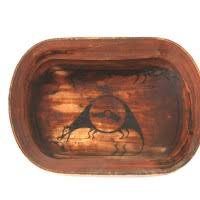
Palraiyuk also occupies an interesting place in Yup’ik material culture. Its likeness appeared on traditional boats, wooden dishes and other objects, suggesting that its significance extended beyond storytelling. These representations connected the creature with the dangers of travelling through waterways and the importance of protection when navigating unfamiliar waters.
Physical Traits
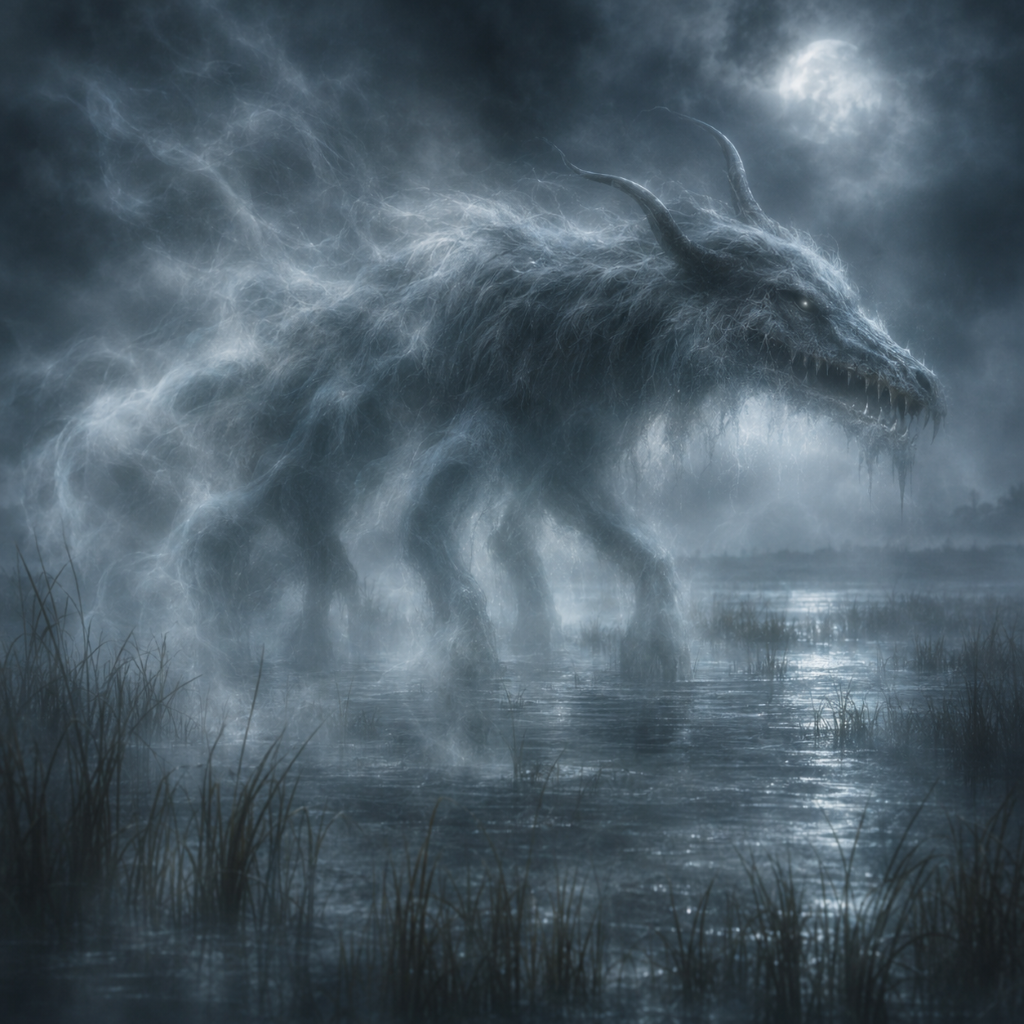
Descriptions of Palraiyuk present a creature that combines reptilian features with unusual mammalian characteristics. Although frequently compared to an alligator or crocodile, some traditional accounts describe an animal considerably stranger than either. One particularly detailed description gives Palraiyuk six legs. Its hind legs are long and powerful, while its forelegs are comparatively short. A smaller middle pair hangs beneath its abdomen, giving the creature an unusual arrangement of limbs. Its elongated body supports a narrow head with small eyes and a pair of horns extending forward before curving outwards and backwards.
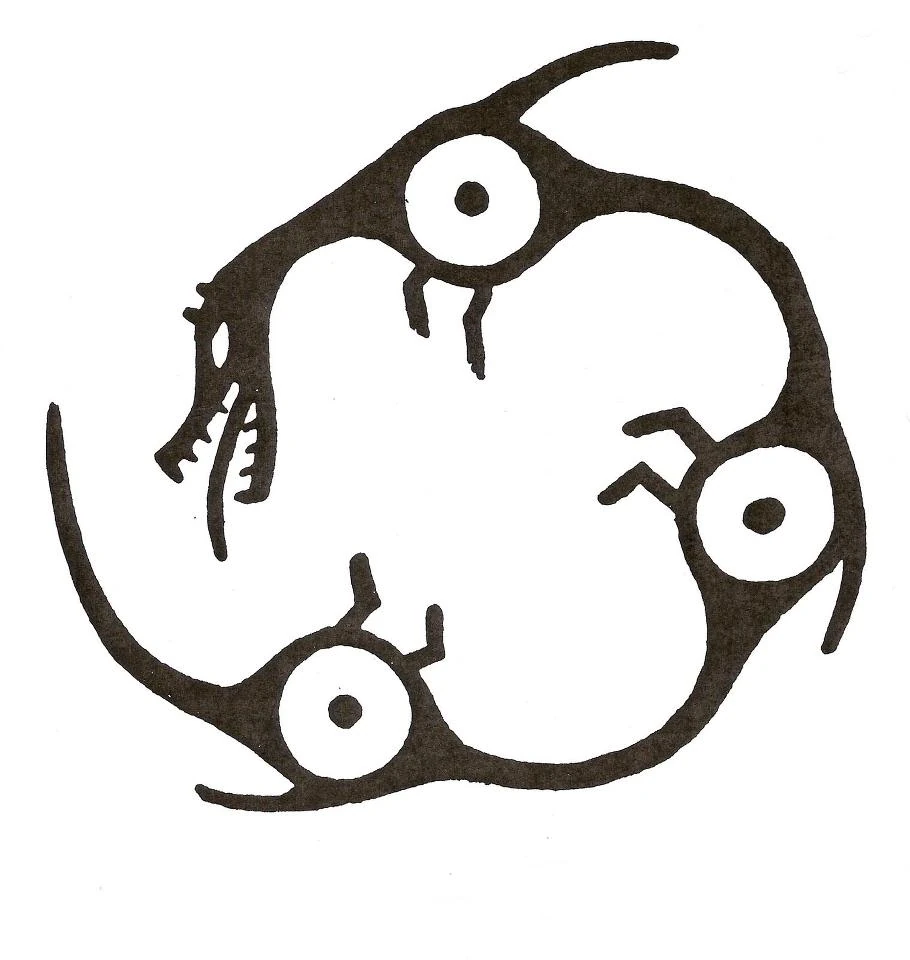
Perhaps its most unexpected feature is its coat. Rather than possessing conventional reptilian scales, this version of Palraiyuk is covered in dense, dark fur resembling that of a shrew. The fur is reportedly especially prominent around its feet. Other descriptions and traditional representations emphasise its elongated, reptilian appearance, sharp teeth and multiple stomachs. Some illustrations depict these stomachs in cutaway views containing human remains, highlighting the creature’s reputation as a man-eater.
Its enormous size is another recurring element. Palraiyuk was described as a bulky animal capable of remaining concealed among marsh vegetation. One account even suggests that it could rest on grass without bending the stems, despite its considerable weight. These physical characteristics should not be treated as a single fixed anatomical description. Palraiyuk’s appearance varies across recorded accounts and artistic representations, reflecting the diversity of the oral traditions surrounding it.
Family
Palraiyuk does not have an established biological family in the surviving accounts of Yup’ik tradition. There are no reliably documented parents, siblings, spouses or offspring associated with the creature. Its most significant mythological relationship is with Raven, a prominent creator and trickster figure in several Indigenous traditions of northwestern North America.
In one account, Palraiyuk is identified as one of Raven’s creations. Raven supposedly created the creature to inhabit waterways and attack those who approached too closely. He subsequently warned First Man to exercise caution around lakes and rivers because of the danger lurking beneath their surfaces. This relationship places Palraiyuk within a wider narrative involving Raven’s creation of beings that inhabit and influence the natural world. However, being described as Raven’s creation does not establish a biological relationship or make Palraiyuk a member of a divine family. The available accounts therefore support Raven as its creator, rather than identifying a conventional family structure.
Other names
Palraiyuk appears under several different spellings in historical and modern descriptions. These variations largely reflect differences in transcription and the representation of Indigenous words in English-language publications. Some recorded forms include Pal-Rai-Yuk, Pal-Rai-Yûk and Păl-raí-yûk. The spelling Palraiyuk is commonly used in contemporary discussions of the creature. The name Tizheruk is also associated with Palraiyuk. Bowdoin College’s Arctic Museum uses the expression Palraiyuk or Tizheruk when describing a lizard-like aquatic monster with sharp teeth and multiple stomachs.
Although these names are frequently treated as interchangeable in modern mythology publications, the precise relationship between them is not consistently established across historical sources. It is therefore more accurate to recognise Tizheruk as an associated name rather than assume that every account describes an identical creature. The different spellings and naming conventions demonstrate how oral traditions can acquire several written identities as they pass between communities, collectors and researchers.
Powers and Abilities
Palraiyuk’s defining characteristic is its ability to ambush unsuspecting prey from beneath the water. It was believed to remain submerged in shallow lakes, rivers and marshes, waiting for humans or animals to approach the shoreline. Its attacks were not restricted to individuals collecting water. Boats entering its territory were also considered vulnerable. This made Palraiyuk particularly threatening to communities that depended on kayaks and umiaks for fishing, hunting and transportation.
Its reputation as a man-eater is reinforced by stories describing its consumption of human victims. One account tells of a creature that killed and ate a woman who had approached a lake to collect water. A hunter subsequently tracked down and killed the monster. Palraiyuk was not considered invulnerable. Traditional accounts describe hunters working together to overcome the creature. Its immense weight and strength reportedly made the task difficult, requiring several people to restrain it with heavy logs before attacking its head with clubs.
Beyond its physical strength and predatory behaviour, Palraiyuk also had a symbolic protective dimension. Its likeness was painted on kayaks and other watercraft, with the intention of warding off danger or appeasing the creature. This apparent contradiction is particularly interesting. The same being feared as a dangerous predator could also become a protective symbol when represented on objects used for travelling across the water.
Modern Day Influence
Palraiyuk remains an important subject in discussions of Yup’ik folklore and the artistic traditions of Alaska’s Indigenous communities. Its distinctive appearance has allowed it to survive in museum collections, cultural exhibitions and contemporary interpretations of Arctic storytelling.
Historical representations of the creature on umiaks, wooden dishes and other objects offer valuable insights into how traditional communities incorporated mythological beings into everyday material culture. These objects demonstrate that Palraiyuk was not simply a character in a frightening story but also a recognisable visual symbol associated with water and protection.
A particularly significant modern presentation took place at Bowdoin College’s Arctic Museum through its exhibition Northern Nightmares: Monsters in Inuit Art, which ran from May 2024 to March 2025. The exhibition included Palraiyuk or Tizheruk among the aquatic monsters represented in Inuit artistic traditions. It also highlighted the historical practice of painting the creature on kayaks to ward off danger.
Contemporary Indigenous artists continue to explore similar subjects through paintings and other artistic forms, demonstrating how traditional creatures can remain relevant within evolving cultural expression. Palraiyuk has also attracted attention from modern cryptozoology enthusiasts, particularly because of its resemblance to large aquatic predators. However, claims of modern sightings should be distinguished from documented Indigenous traditions and historical ethnographic records.
Ultimately, Palraiyuk represents more than an unusual aquatic monster. Its stories preserve an understanding of the dangers associated with waterways and the relationship between people and their natural surroundings. Through oral storytelling and artistic representation, the creature continues to offer a fascinating glimpse into the cultural imagination of the Yup’ik people.
Related Images



Source
Bowdoin College Museum of Art. (2024, May 7). Northern nightmares: Monsters in Inuit art.
https://www.bowdoin.edu/arctic-museum/exhibits/2024/northern-nightmares-monsters-in-inuit-art.html
Island Institute. (2024, August 20). Northern nightmares: Monsters in Inuit art.
https://www.islandinstitute.org/working-waterfront/northern-nightmares-monsters-in-inuit-art/
Nelson, E. W. (1900). The Eskimo about Bering Strait (Extract from the Eighteenth Annual Report of the Bureau of American Ethnology). Government Printing Office.
A Book of Creatures. (2015, October 30). Păl-raí-yûk. https://abookofcreatures.com/2015/10/30/pal-rai-yuk/
Alaska Magazine. (2022, January 9). Sightings of odd creatures throughout Alaska. https://alaskamagazine.com/travel/sightings-of-odd-creatures-throughout-alaska/
Gods and Monsters. (2026, August 5). Palraiyuk: Six-legged water monster of Yup’ik Alaska.
https://godsandmonsters.info/palraiyuk/
Encyclopaedia of Cryptozoology. (2026, January 9). Palraiyuk. https://cryptidarchives.fandom.com/wiki/Palraiyuk
Wikipedia. (n.d.). Inuit religion. https://en.wikipedia.org/wiki/Inuit_religion
Frequently Asked Questions
What is Palraiyuk in Yupik mythology?
Palraiyuk is a terrifying aquatic creature in Yup’ik folklore, believed to inhabit lakes, rivers and marshes in southwestern Alaska.
What does Palraiyuk look like?
Palraiyuk is described as a large, six-legged creature with dark fur, a long reptilian head, sharp teeth and backward-curving horns.
Who created Palraiyuk?
According to one recorded Yup’ik tradition, Palraiyuk was among the many creatures created by Raven, who warned humans to avoid dangerous waterways.
Is Palraiyuk the same as Tizheruk?
Palraiyuk is sometimes identified as Tizheruk in modern accounts, although historical sources do not consistently establish that both names describe the same creature.
Why did Yupik people paint Palraiyuk on kayaks?
Historical accounts describe Palraiyuk images painted on kayaks as protective symbols intended to ward off danger or appease the dangerous aquatic creature.


