
Clash of the Titans (2010) : Perseus, Gods and Greek Monsters
| Description | |
|---|---|
| Country of Origin | United States of America |
| Language | English |
| Genre | Action, Drama |
| Cast | Sam Worthington, Gemma Arterton, Mads Mikkelsen, Alexa Davalos, Ralph Fiennes, Liam Neeson |
| Directed by | Louis Leterrier |
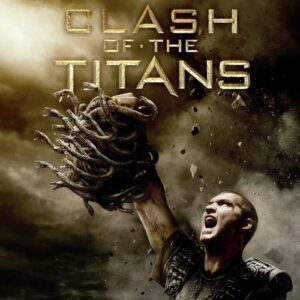
Clash of the Titans
Clash of the Titans (2010), directed by Louis Leterrier, attempts to bring the legendary adventures of Perseus to modern audiences through large-scale action and visual spectacle. Inspired by the famous Greek legend surrounding the slayer of Medusa, the film blends elements of ancient myth with contemporary fantasy storytelling. While the narrative draws from classical sources, the film significantly reshapes many mythological details to create a fast-paced heroic adventure.
In Greek legend, Perseus is one of the most celebrated heroes, traditionally described as the son of Zeus and the mortal princess Danaë. His story is recorded in several ancient sources, including works attributed to Hesiod and Apollodorus. According to these traditions, Perseus becomes famous for slaying Medusa, rescuing Andromeda, and eventually founding powerful dynasties in Greece. The film retains the central identity of Perseus as a demigod hero but reframes his motivation in a more modern narrative of rebellion against divine authority.
One of the most notable mythological shifts in the film is Perseus’s relationship with the gods. In classical Greek stories, Perseus is often portrayed as a favored hero who receives direct assistance from divine beings. Gods such as Athena and Hermes provide him with magical tools including a mirrored shield, a sword, winged sandals, and a special bag to hold Medusa’s severed head. These gifts represent a recurring theme in Greek mythology: heroes succeed not only through courage but also through the blessings of the gods.
The 2010 film dramatically alters this dynamic by presenting Perseus as a reluctant son of Zeus who rejects his divine heritage. This version of the character seeks to prove that humans can overcome both monsters and gods without relying on divine assistance. The shift transforms the myth from a story about cooperation between mortals and gods into a narrative about defiance against divine power.
The portrayal of the Olympian gods also differs from traditional myth. Zeus, played by Liam Neeson, appears as a powerful yet conflicted ruler who desires human devotion. His brother Hades, portrayed by Ralph Fiennes, becomes the film’s primary antagonist. In ancient Greek tradition, Hades is rarely depicted as evil. Instead, he serves as the stern but necessary ruler of the underworld, maintaining the order of the dead. The film’s darker interpretation reflects modern fantasy storytelling rather than the more balanced portrayal found in Greek sources.
Another major mythological element in the film is the monstrous creatures that Perseus encounters during his quest. Greek mythology is famous for its rich bestiary of legendary monsters, many of which appear in the story. The Gorgon Medusa remains one of the most iconic figures. In myth, she is a creature whose gaze turns anyone who looks directly at her into stone. Perseus defeats her by using a reflective shield so that he can strike without meeting her eyes.
The film also introduces creatures such as giant scorpions and the Kraken, expanding the mythological landscape with dramatic visual battles. The Kraken, however, is not originally part of Greek mythology. The creature actually originates from Scandinavian folklore and became loosely associated with Greek myths through later artistic adaptations. In the film, the Kraken becomes the ultimate weapon unleashed by the gods against humanity.
Another important mythological thread involves the story of Andromeda, the princess who becomes the sacrificial victim meant to appease a monstrous sea creature. In the traditional legend, Andromeda is chained to a rock after her mother Cassiopeia claims that her beauty surpasses that of the sea nymphs. This act of arrogance angers the sea god Poseidon, who sends a monstrous beast to punish the kingdom. Perseus eventually arrives and rescues Andromeda after slaying Medusa.
The film simplifies this myth but retains the central idea of a hero arriving to prevent a sacrifice demanded by divine wrath. In doing so, the narrative reinforces one of the recurring themes of Greek legend: the dangerous consequences of human pride when it challenges divine authority.
Visually, Clash of the Titans embraces the epic scale often associated with Greek mythology. Massive temples, divine palaces, and towering monsters create a cinematic world meant to evoke the grandeur of ancient legends. The Olympian gods appear almost cosmic in their presence, emphasizing the enormous power gap between mortals and divine beings.
However, the film ultimately reframes the mythological message. Traditional Greek myths rarely portray humans successfully defying the gods without consequences. In contrast, the film presents a more modern heroic ideal where determination and human courage can rival divine power.
From a mythological perspective, Clash of the Titans works best as a fantasy adaptation rather than a faithful retelling of ancient Greek legend. The film borrows characters, creatures, and settings from myth but reshapes them into a contemporary action narrative. While this approach sacrifices some authenticity, it also introduces many viewers to the rich world of Greek heroic stories.
For audiences interested in mythology, the film provides a visually engaging gateway into the legendary adventures of Perseus and the world of Olympian gods and monsters. Even with its creative liberties, the story reflects the enduring appeal of Greek mythological heroes who confront impossible dangers in pursuit of glory and justice.