


Kotan-kor-kamuy : The Ainu Guardian of Village and Land
At a glance
| Description | |
|---|---|
| Origin | Ainu Mythology |
| Classification | Spirits |
| Family Members | N/A |
| Region | Japan, Russia |
| Associated With | Village protection, Owl |
The Mythlok Perspective
From the Mythlok perspective, Kotan-kor-kamuy represents an elemental idea rather than a personalized god. This kamuy is land as awareness, settlement as trust, and protection as presence rather than force. Unlike warrior guardians in other traditions, Kotan-kor-kamuy protects simply by being attentive, reflecting a worldview where balance prevents conflict before it arises. Comparable figures appear in other cultures, such as Slavic domovoi spirits or Celtic land guardians, yet Kotan-kor-kamuy remains distinct in its explicit identification with village land rather than individual households. This makes it closer in concept to Indigenous Australian land spirits, where territory itself is conscious and responsive. Across cultures, such beings remind humanity that land is not passive ground but an active participant in communal life.
Kotan-kor-kamuy
Introduction
Kotan-kor-kamuy occupies a central yet often misunderstood position within Ainu spiritual thought. Among the indigenous Ainu people of Hokkaido, Sakhalin, and the Kuril Islands, the world is animated by kamuy, sacred beings who temporarily inhabit natural forms and sustain cosmic balance. Kotan-kor-kamuy is the kamuy who “possesses the village,” acting as the stabilizing force that allows human settlements to exist in harmony with the land. Unlike creator figures such as Kotan-kar-kamuy, this deity is not concerned with bringing the world into being but with maintaining it. The presence of Kotan-kor-kamuy reflects an Ainu worldview where land is not owned by humans but entrusted to them through respectful coexistence. Understanding this kamuy is essential to understanding how the Ainu conceive of community, territory, and survival.
Physical Traits
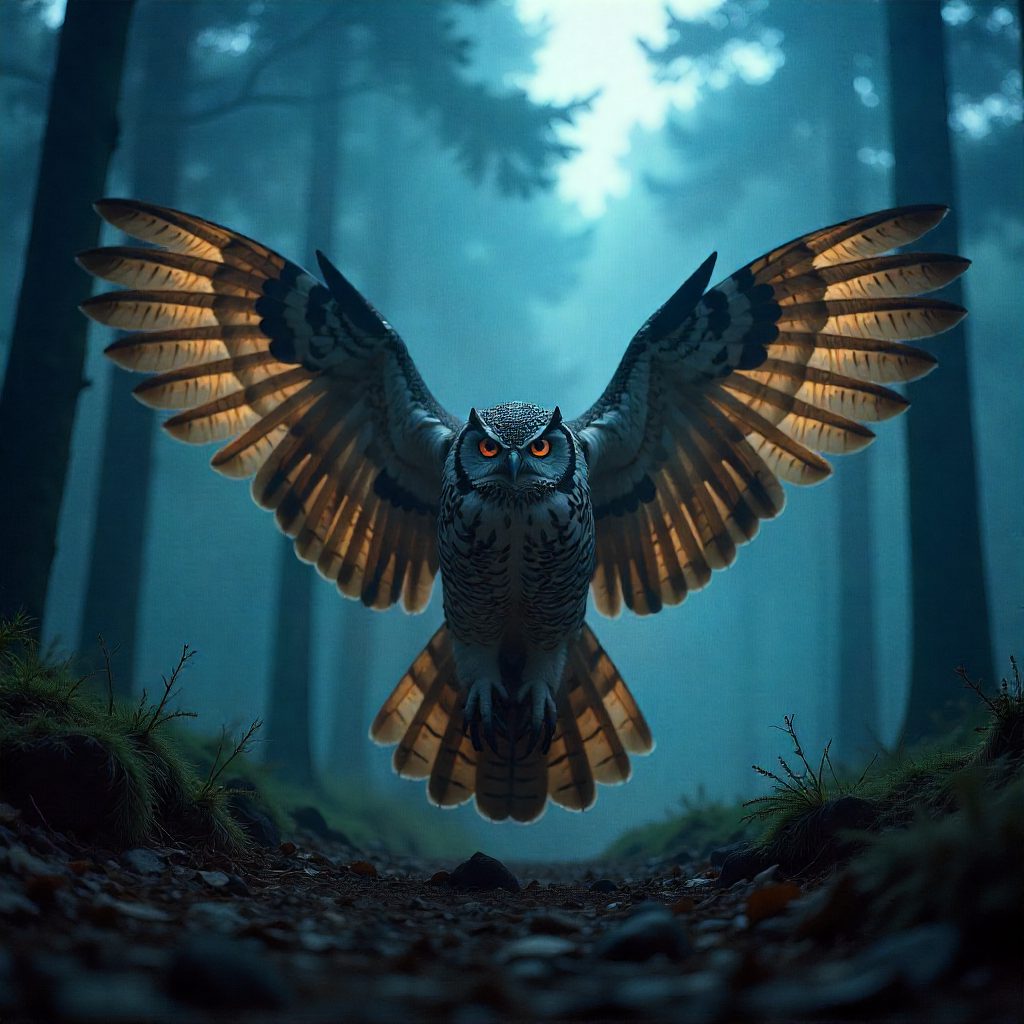
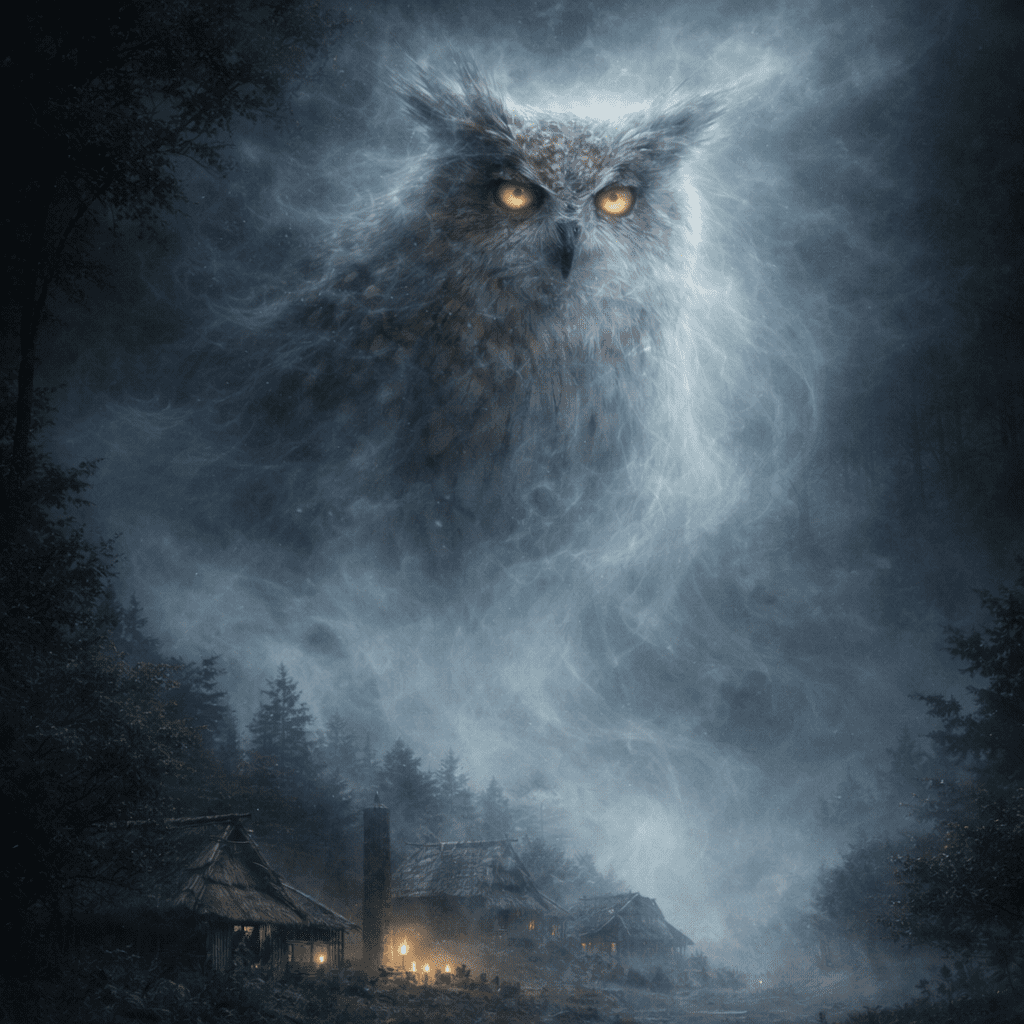
Kotan-kor-kamuy is most vividly known through its manifestation as the Blakiston’s fish owl, the largest owl species in the world and a creature native to northern Japan. This owl form is not symbolic but sacred, understood as the kamuy’s chosen body when visiting the human realm. Descriptions emphasize its immense wingspan, penetrating golden eyes, and thunderous call that echoes through forests and river valleys. In Ainu carvings and ritual objects, the owl is sometimes rendered with subtle humanoid qualities such as an upright stance or expressive eyes, reinforcing its intelligence and vigilance. These representations do not anthropomorphize the kamuy fully but instead communicate authority, awareness, and guardianship. The physical presence of Kotan-kor-kamuy, whether imagined or ritually depicted, conveys watchfulness rather than aggression, embodying protection through constant awareness of the village and its borders.
Family
Ainu mythology does not frame divine beings within rigid genealogies. Instead, kamuy exist in functional relationships based on responsibility and cooperation. Kotan-kor-kamuy is linked to other guardian and land-based spirits such as Kim-un-kamuy, the mountain and bear deity, and Mosir-kor-kamuy, who oversees the land more broadly. Some oral traditions describe Kotan-kor-kamuy emerging indirectly from the creative acts of Kotan-kar-kamuy, particularly through the sacred materials left behind after creation. Rather than children or spouses, Kotan-kor-kamuy’s “family” consists of allied kamuy who collectively safeguard hunting grounds, waterways, and settlements. These relationships reinforce the Ainu understanding that survival depends on balance among many forces rather than dominance by a single supreme god.
Other names
The name Kotan-kor-kamuy literally means “the kamuy who possesses the village,” clearly defining its jurisdiction. Regional dialects and oral traditions sometimes render the name as Kotankor Kamui or Kotan Kor Kamuy, without altering its meaning. In some contexts, the deity overlaps with owl-related titles such as Chikap-kamuy, though this term more broadly refers to bird spirits and messengers. Certain mountain traditions refer to variants like San Kor Kamuy, emphasizing the kamuy’s role in driving away disease or misfortune through its powerful cry. Historical confusion arose when early researchers and missionaries conflated Kotan-kor-kamuy with Kotan-kar-kamuy due to similar names. Later scholarship clarified that one governs creation, while the other governs habitation, an important distinction within Ainu cosmology.
Powers and Abilities
Kotan-kor-kamuy’s powers are protective rather than destructive. The kamuy is believed to guard villages against illness, malevolent spirits, and environmental imbalance. Its call, described in myth as thunderous and commanding, is said to repel harmful forces that approach human settlements. As a land guardian, Kotan-kor-kamuy also ensures that the relationship between humans and animals remains respectful, preventing overhunting or ecological disrespect that could invite spiritual retaliation. The deity is credited with constant surveillance, symbolized through the owl’s nocturnal vision and silent flight, allowing it to see threats before humans become aware of them. Through rituals and offerings, villagers seek the kamuy’s wisdom in resolving disputes, planning hunts, and maintaining communal harmony. These abilities position Kotan-kor-kamuy as a silent sentinel rather than an intervening ruler.
Modern Day Influence
Today, Kotan-kor-kamuy remains deeply woven into Ainu cultural revival and identity. Large owl carvings stand at the entrances of reconstructed Ainu villages such as Akan Kotan, visually asserting the continued presence of the village guardian. The Blakiston’s fish owl has also become a focus of conservation efforts, with environmental activism drawing on its sacred status to promote habitat protection. Contemporary media has further extended awareness of Kotan-kor-kamuy, with appearances inspired by Ainu folklore in manga, video games, and documentaries introducing global audiences to the kamuy tradition. For modern Ainu communities, Kotan-kor-kamuy is not a relic of belief but a living symbol of territorial dignity, ecological responsibility, and cultural continuity.
Related Images



Source
Adami, N. R. (n.d.). Ainu religion and folklore. (Cited in Wikipedia contributors. (2024). Kotan-kar-kamuy. In Wikipedia. https://en.wikipedia.org/wiki/Kotan-kar-kamuy)[1]
Batchelor, J. (1901). The Ainu and their folk-lore. The Religious Tract Society.
Chiri, Y. (2009). Ainu shin’yōshū (S. M. Strong, Trans.). University of Hawaii Press.
Etter, C. (1949). Ainu folklore: Traditions and culture of the vanishing aborigines of Japan. Wilcox and Follett.
Foundation for Ainu Culture. (2019). Mt. Ishigaki: Kamikawa Ainu. https://www.daisetsu-kamikawa-ainu.jp/en/story/ishigaki/
Munro, N. G. (1995). Ainu creed and cult. Columbia University Press.
Niki, H. (2022, June 22). Golden Kamuy: The successful manga questioning Japanese-Ainu relations. Le Monde. https://www.lemonde.fr/en/culture/article/2022/06/22/golden-kamuy-the-successful-manga-questioning-the-relationship-of-the-japan
Wikipedia contributors. (2024). Kamuy. In Wikipedia. https://en.wikipedia.org/wiki/Kamuy
Frequently Asked Questions
Who is Kotan-kor-kamuy in Ainu belief?
Kotan-kor-kamuy is the kamuy who protects villages and oversees the land where human settlements exist.
Is Kotan-kor-kamuy the creator god of the Ainu?
No. Kotan-kor-kamuy is distinct from Kotan-kar-kamuy, who is associated with creation.
Why is Kotan-kor-kamuy associated with an owl?
The Blakiston’s fish owl is believed to be the kamuy’s chosen physical form when visiting the human world.
What powers does Kotan-kor-kamuy have?
Its powers include village protection, repelling disease and spirits, and maintaining harmony between humans and nature.
Is Kotan-kor-kamuy still worshipped today?
Yes. The kamuy remains important in Ainu rituals, cultural revival, and environmental symbolism.
