

Aztec Batman: Clash of Empires (2025) : A Dark Knight in a Mythic Empire
| Description | |
|---|---|
| Country of Origin | United States, Mexico |
| Language | Spanish |
| Genre | Animated |
| Cast | Horacio García Rojas, Omar Chaparro, Álvaro Morte |
| Directed by | Juan Meza-León |
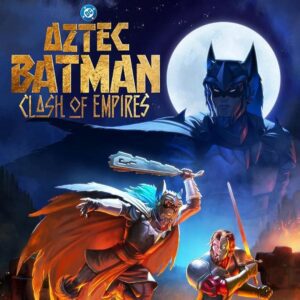
Aztec Batman: Clash of Empires
The idea of placing Aztec Batman: Clash of Empires within the world of pre-Columbian Mesoamerica could have easily become a surface-level aesthetic experiment. Instead, the film leans into its mythic framework with surprising conviction, transforming the familiar Batman archetype into something far older, almost ritualistic in nature. This is not Gotham with a new coat of paint. This is a complete cosmological shift where justice, fear, and heroism are filtered through the worldview of the Aztec empire.
At its core, the film reframes Batman not as a lone vigilante shaped purely by trauma, but as a figure operating within a universe governed by divine cycles, sacrifice, and cosmic balance. The influence of Aztec belief systems is unmistakable. The world is not divided into simple binaries of good and evil; instead, it reflects a delicate equilibrium between forces that must coexist. This philosophical shift adds depth to the character, making his actions feel less like personal vengeance and more like participation in a larger, almost sacred order.
The reinterpretation of villains is where the mythological layer becomes especially compelling. Antagonists are not just criminals but embodiments of chaos, disorder, or divine opposition. They often echo traits associated with deities and spirits from Aztec cosmology, blurring the line between human and supernatural. This elevates conflict beyond physical confrontation and turns it into a symbolic clash between cosmic principles. The “Clash of Empires” in the title is therefore not just political or territorial, but metaphysical, representing the tension between competing worldviews and destinies.
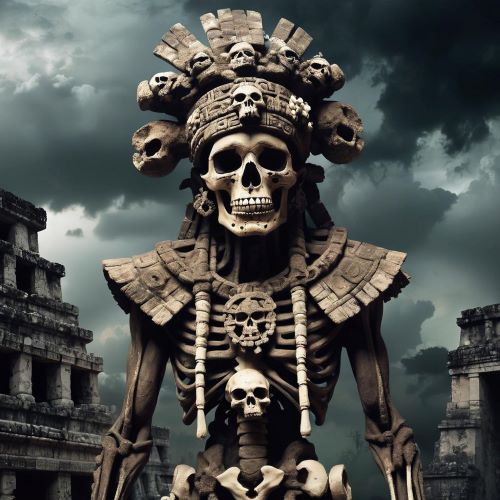
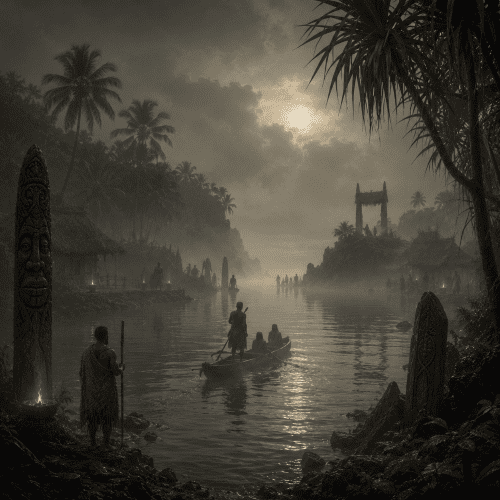
Visually and thematically, the film draws heavily from Mesoamerican iconography. Architecture, attire, and ritual spaces are not mere background elements but active participants in storytelling. Temples, pyramids, and sacred landscapes carry narrative weight, often reflecting the inner state of characters or the stakes of the conflict. The presence of ritualistic elements, particularly those inspired by sacrificial traditions, reinforces the idea that power and survival come at a cost. This aligns with Aztec mythology, where sacrifice was not seen as cruelty but as a necessary act to sustain the cosmos.
What stands out most is how the film reinterprets the concept of fear. In traditional Batman narratives, fear is a psychological weapon. Here, it becomes something closer to divine awe, reminiscent of how ancient cultures perceived their gods. Batman is not just feared; he is almost revered, a shadow that exists between the mortal and the divine. This subtle shift transforms him into a figure that feels less like a man in a mask and more like a myth in motion.
However, the film is not without its limitations. At times, it risks compressing a vast and complex belief system into familiar narrative beats. While the mythological elements are rich, they occasionally serve the plot rather than fully reshaping it. A deeper exploration of Aztec cosmology could have pushed the story into even more original territory. Still, what is presented is respectful, visually immersive, and thematically ambitious.
Ultimately, Aztec Batman: Clash of Empires succeeds because it understands that mythology is not just decorative. It is structural. By embedding its story within the rhythms of Aztec belief, the film creates a version of Batman that feels ancient, inevitable, and deeply rooted in a worldview where heroes are not just protectors, but participants in the ongoing balance of the universe.