


Jiang Ziya : The Legendary Sage and Strategist of Chinese Lore
At a glance
| Description | |
|---|---|
| Origin | Chinese Mythology |
| Classification | Mortals |
| Family Members | Yi Jiang (Daughter), Ma Shi (Wife) |
| Region | China |
| Associated With | Military strategy, Wisdom, Political leadership, Divine appointments |
The Mythlok Perspective
In Mythlok’s Perspective, Jiang Ziya represents a different understanding of power, one built on patience and strategic intelligence rather than physical strength or supernatural dominance. Much like Odin in Norse mythology, who values wisdom and knowledge above brute force, Jiang Ziya demonstrates how intelligence can shape the destiny of both mortals and gods. However, while Odin pursues knowledge to understand and influence the cosmos, Jiang Ziya earns his place through political judgement and becomes the authority responsible for establishing the heavenly hierarchy.
Jiang Ziya
Introduction
Jiang Ziya (姜子牙), also known as Jiang Shang, Lü Shang and Jiang Taigong, is one of the most fascinating figures connecting Chinese history with mythology. Remembered as an exceptional military strategist and political adviser, he played a significant role in the overthrow of the Shang dynasty and the establishment of the Zhou dynasty during the eleventh century BCE. His story eventually moved beyond historical accounts and became part of China’s supernatural literary tradition, particularly through the famous Ming dynasty novel Fengshen Yanyi, commonly translated as Investiture of the Gods.
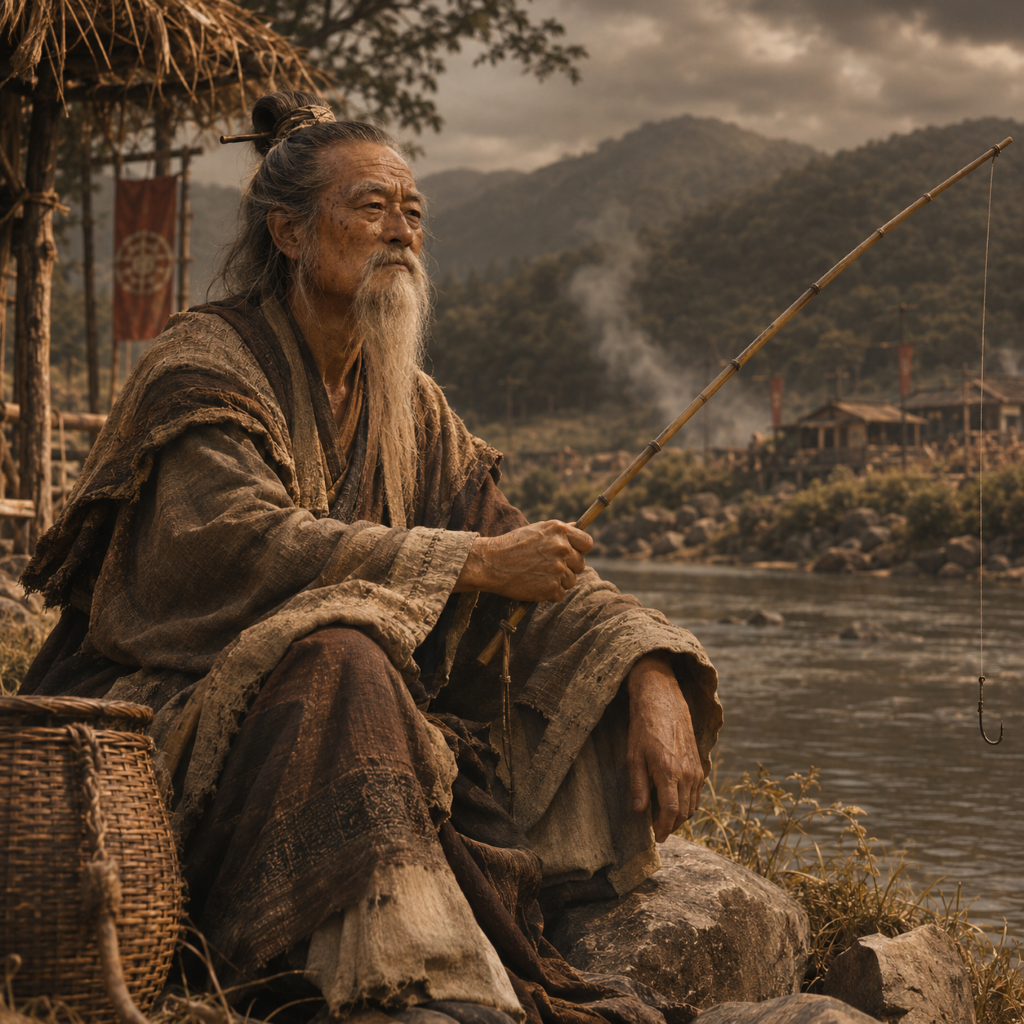
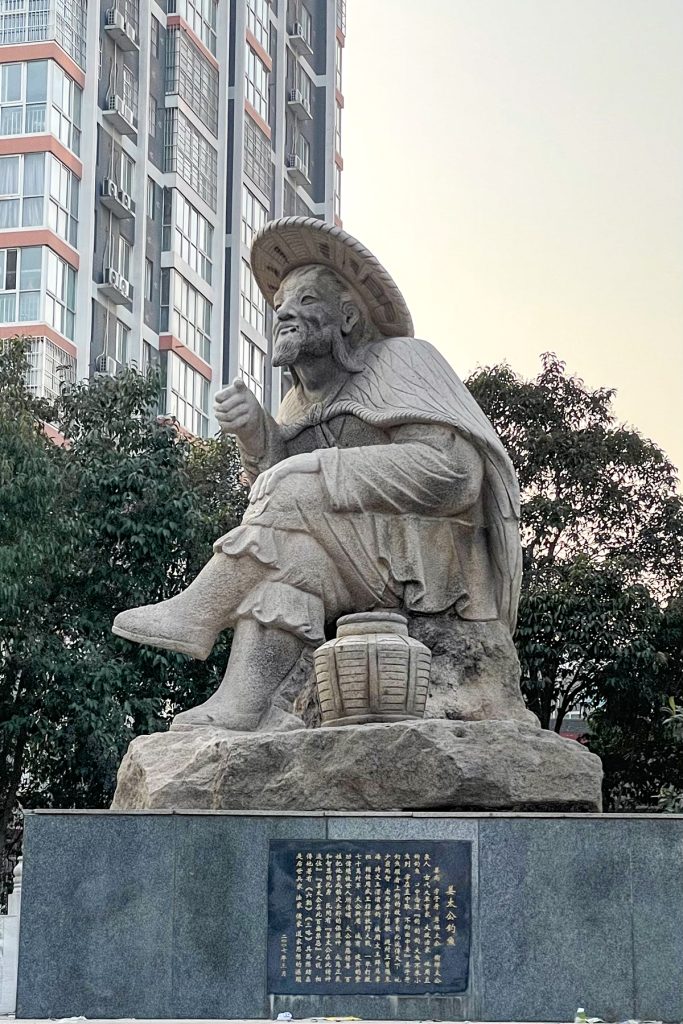
One of the most enduring stories associated with Jiang Ziya is his encounter with King Wen of Zhou. According to traditional accounts, the elderly Jiang Ziya spent his days fishing beside the Wei River using a straight hook without bait. He was supposedly waiting for something far more important than a catch: a ruler who could recognise his abilities. When King Wen encountered him, he recognised the wisdom of the old fisherman and invited him to serve the Zhou court. This meeting established the legend of Jiang Ziya as a man whose patience and intelligence eventually changed the course of a kingdom.
His historical reputation rests on military strategy and political leadership, but his mythological identity is considerably more extraordinary. In Investiture of the Gods, he becomes a disciple of the celestial master Yuanshi Tianzun and receives the responsibility of appointing gods to their heavenly positions. This combination of historical achievement and supernatural authority makes Jiang Ziya an important character in Chinese mythology.
Physical Traits
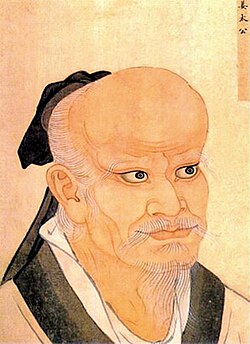
Traditional representations of Jiang Ziya depict him as an elderly Chinese man with a long white beard, thinning white hair and a deeply weathered face. His appearance reflects the popular belief that he was already advanced in age when King Wen discovered his talents. Rather than portraying him as a physically imposing warrior, Chinese artistic traditions emphasise his intelligence, experience and quiet authority.
His most recognisable representation shows him sitting beside a river with a fishing rod. The straight, unbaited hook is an important part of this imagery, symbolising his belief that the right opportunity would eventually find him. He is generally dressed in traditional scholar’s robes, with understated clothing that reflects his identity as a learned adviser rather than a military commander.
In Investiture of the Gods, however, Jiang Ziya takes on a more supernatural appearance. He is associated with divine weapons, magical abilities and a mythical mount known as Sibuxiang, often translated as the Four Non-Similar. His God-Beating Whip is another recognisable element of his mythological representation. These additions belong to the literary tradition and should not be confused with descriptions of the historical individual.
Family
Jiang Ziya’s family background is traditionally associated with the Jiang ancestral lineage and the Lü clan. His connection with these names explains why historical and literary accounts frequently identify him as Jiang Shang or Lü Shang. Traditional genealogies also connect his ancestors with Emperor Yan, although these ancestral claims belong to Chinese historical tradition rather than independently verified biography.
His family became connected to the Zhou royal house through his political relationship with King Wen and King Wu. One particularly important family connection was his daughter Yi Jiang, who is traditionally identified as the wife of King Wu of Zhou. She became the mother of King Cheng of Zhou and Shu Yu of Tang, linking Jiang Ziya’s family to the royal succession. Traditional genealogical accounts also identify several sons, including Prince Ji, who succeeded him as Duke Ding of Qi. However, details concerning his descendants vary between historical genealogies and later accounts.
In Investiture of the Gods, his domestic life receives a different treatment. The novel identifies Ma Shi as his wife and gives her the divine title of Broom Star during the celestial appointments. This relationship belongs to the literary mythology surrounding Jiang Ziya and should be distinguished from the less certain details of his historical family life.
Other names
Jiang Ziya is known by several names across Chinese history, literature and religious tradition. These names reflect his changing identity from a political adviser and military strategist to a celebrated mythological figure. Jiang Shang is another widely recognised name, while Lü Shang refers to his association with the Lü lineage. Jiang Taigong, meaning Grand Duke Jiang, is a traditional honorific that emphasises his importance to the Zhou rulers.
Tai Gong Wang, sometimes written as Taigong Wang, is particularly associated with the story of King Wen recognising him as the long-awaited adviser whose arrival had been anticipated by his ancestors. The title is commonly interpreted in connection with the idea of the Grand Duke’s hoped-for sage. He is also known as Lü Wang and Shi Shangfu. His courtesy name was Ziya, which became especially prominent through the popularity of Investiture of the Gods. Following his establishment of the state of Qi, he was honoured posthumously as Duke Tai of Qi.
Another name associated with his mythological identity is Feixiong, meaning Flying Bear. This designation belongs primarily to the supernatural traditions surrounding his character. Together, these names demonstrate how one individual came to represent several aspects of Chinese cultural memory.
Powers and Abilities
Jiang Ziya’s abilities differ considerably between historical accounts and Chinese mythology. Historically, his greatest strengths were strategic intelligence, political judgement and military leadership. His contribution to the Zhou campaign against the Shang dynasty established him as one of China’s celebrated military thinkers.
A classical military work known as the Six Secret Teachings (Liutao) is traditionally attributed to Jiang Ziya. The text discusses military organisation, leadership, battlefield tactics and the relationship between effective government and military success. It became part of China’s Seven Military Classics and influenced later generations of military thinkers. However, its surviving form is generally considered to have been compiled considerably later than Jiang Ziya’s lifetime, making direct authorship uncertain.
His supernatural abilities are developed much further in Investiture of the Gods. According to the novel, his celestial master Yuanshi Tianzun entrusts him with the Fengshen Bang, or Investiture of the Gods. This sacred register contains the names of individuals destined to receive positions within the heavenly hierarchy. Following the conflict between the Shang and Zhou forces, Jiang Ziya receives the responsibility of appointing 365 gods to their respective celestial positions. This makes him an important figure in the organisation of the supernatural world.
His God-Beating Whip is another significant element of his mythological identity. The divine weapon allows him to challenge powerful supernatural beings and symbolises his authority over the celestial appointments. His association with Sibuxiang further establishes his position within the novel’s supernatural universe. These different traditions present Jiang Ziya as both a master strategist in the human world and an important administrator of divine order in the mythological one.
Modern Day Influence
Jiang Ziya continues to influence Chinese literature, entertainment and popular culture. His story provides a connection between one of China’s most significant historical transitions and an imaginative supernatural universe that has inspired generations of writers and artists. The Ming dynasty novel Investiture of the Gods remains the most important source of his mythological popularity. Its combination of historical personalities, celestial beings, magical weapons and supernatural conflicts has provided material for numerous adaptations across television, animation, manga and video games.
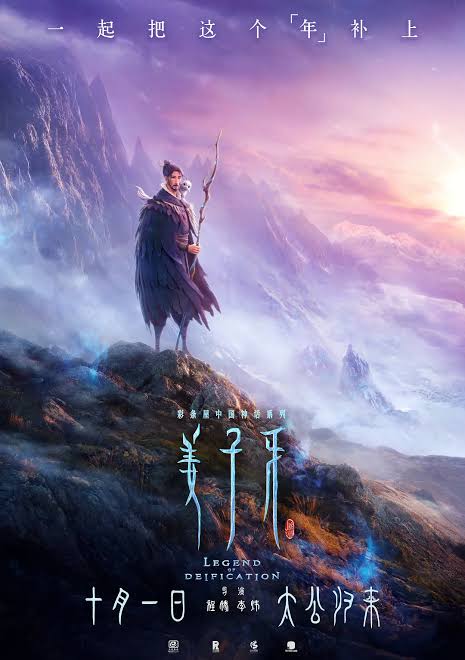
One particularly notable adaptation is the 2020 Chinese animated film Jiang Ziya, also released internationally as Jiang Ziya: Legend of Deification. The film reimagines the legendary strategist through a story involving celestial authority, moral responsibility and the consequences of challenging divine commands. It introduced the character to a new generation of audiences and renewed interest in the wider Fengshen universe.
Japanese popular culture has also adapted his story. In the manga Houshin Engi, known internationally as Soul Hunter, a fictionalised version of Jiang Ziya called Taikoubou serves as the central protagonist. He also appears in the Warriors Orochi video game series, alongside other characters inspired by Chinese historical and mythological traditions.
Beyond entertainment, Jiang Ziya remains a cultural symbol of patience, intelligence and late recognition. His famous fishing story continues to inspire the idea that exceptional abilities do not always receive immediate recognition. Sometimes, the greatest opportunities emerge when the right person finally recognises the value of experience and wisdom. His legacy therefore extends beyond the battlefield and the celestial world. Jiang Ziya represents the belief that intelligence, preparation and sound judgement can shape both human history and the order of the universe.
Related Images




Source
Britannica. (2025, August 23). Jiang Ziya. https://www.britannica.com/topic/Jiang-Ziya
ChinaKnowledge.de. (2019). Liutao 六韜. http://www.chinaknowledge.de/Literature/Diverse/liutao.html
Chinese Thought. (n.d.). Grand Duke Jiang: Founding father of Western Zhou dynasty. https://www.chinesethought.cn/EN/detail.aspx?nid=114&pid=131&id=2193
National Defense University Press. (n.d.). Sun Tzu in contemporary Chinese strategy. https://ndupress.ndu.edu/portals/68/documents/jfq/jfq-73/jfq-73_76-83_ota.pdf
Sawyer, R. D. (1993). The seven military classics of ancient China. Westview Press.
Wikipedia. (2023). List of media adaptations of the Investiture of the Gods.
https://en.wikipedia.org/wiki/List_of_media_adaptations_of_the_Investiture_of_the_Gods
Wikipedia. (2005). Investiture of the Gods. https://en.wikipedia.org/wiki/Investiture_of_the_Gods
Wikipedia. (2005). Jiang Ziya. https://en.wikipedia.org/wiki/Jiang_Ziya
Frequently Asked Questions
Who was Jiang Ziya in Chinese mythology?
Jiang Ziya was a legendary Chinese strategist who helped establish the Zhou dynasty and became the central authority responsible for appointing gods in Investiture of the Gods.
What powers did Jiang Ziya possess?
In Chinese mythology, Jiang Ziya possessed supernatural abilities, divine weapons and authority to appoint 365 gods through the sacred Fengshen Bang.
Why did Jiang Ziya fish without bait?
According to legend, Jiang Ziya fished with a straight, unbaited hook while waiting for a worthy ruler to recognise his intelligence and abilities.
Was Jiang Ziya a god or a mortal?
Jiang Ziya was traditionally a mortal historical strategist. In Investiture of the Gods, he became a supernatural figure responsible for establishing the heavenly hierarchy.
What is Jiang Ziya famous for?
Jiang Ziya is famous for helping the Zhou overthrow the Shang dynasty, founding the state of Qi and becoming the central figure in Investiture of the Gods.


