


Castor : The Greek Hero Whose Brotherhood Conquered Death
At a glance
| Description | |
|---|---|
| Origin | Greek Mythology |
| Classification | Mortals |
| Family Members | Leda (Mother), Tyndareus (Father), Pollux/Polydeuces (Brother), Helen and Clytemnestra (Sisters) |
| Region | Greece |
| Associated With | Horsemanship, Horse-taming, Warfare, Heroic protection, Sailors, Travellers |
The Mythlok Perspective
In Mythlok’s Perspective, Castor is compelling because his heroism begins with mortality rather than divinity. Unlike Heracles, whose divine ancestry defines his extraordinary status, Castor’s greatest distinction is his human mastery of horses and warfare. His eventual shared immortality with Pollux makes their story less about supernatural power than loyalty—the idea that even death cannot completely separate two brothers bound by sacrifice.
Castor
Introduction
Castor is one of the famous Dioscuri, the twin heroes of Greek mythology who were worshipped together with his brother Pollux, known in Greek as Polydeuces. Their story is unusual because the brothers occupied different positions between the mortal and divine worlds. In the tradition followed by Apollodorus and several later writers, Castor was the son of the Spartan king Tyndareus and Leda, making him mortal, while Pollux was the son of Zeus and therefore immortal. Other ancient traditions, however, gave both brothers Zeus as their father, showing that their genealogy was not entirely consistent across Greek literature.
Castor’s identity was closely connected with Sparta, warfare, horses, and heroic excellence. While Pollux became famous for his skill as a boxer, Castor was celebrated particularly as a horseman and horse-tamer. Together, the brothers participated in heroic adventures, including the voyage of the Argonauts, and were remembered as courageous protectors who could come to the aid of people facing danger.
The most important episode in Castor’s mythology came with his death. During a conflict involving their cousins Idas and Lynceus, Castor was killed. Pollux refused to accept immortality if his brother had to remain dead, and Zeus ultimately allowed the brothers to share a divided existence between the divine and mortal realms. Their story transformed Castor from a mortal hero into part of a sacred pair whose bond represented loyalty, sacrifice, and brotherhood.
Physical Traits
Castor does not have a distinctive physical description comparable to the individual portraits given to some major Greek gods. Instead, ancient art generally presents him together with Pollux as a youthful, athletic and closely matched pair. Their visual similarity was important because their identity as twins was central to their religious significance.
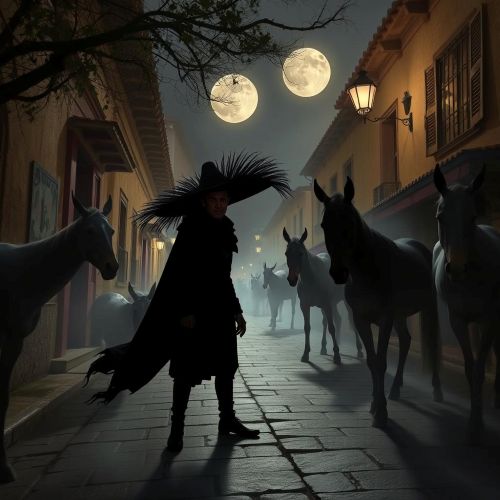
The Dioscuri were commonly represented as young horsemen wearing helmets or distinctive caps, short cloaks and carrying spears. Horses are especially important to Castor’s visual identity because ancient literary traditions repeatedly associate him with horsemanship. Apollodorus specifically distinguishes the brothers by describing Castor as skilled in warfare while Pollux excelled at boxing, while other traditions explicitly call Castor a tamer of horses.
Their artistic representation therefore focuses less on supernatural physical features and more on heroic youth, athletic ability and equestrian equipment. In some representations, stars appear above or around the twins, connecting their earthly identities with their later celestial association. The imagery reinforces an important feature of their mythology: Castor and Pollux were human-looking heroes whose extraordinary status came from their deeds, relationship and eventual elevation rather than from monstrous or visibly divine bodies.
Family
Castor’s mother was Leda, the Spartan queen, while the tradition that most clearly explains his mortality identifies Tyndareus, king of Sparta, as his father. His twin brother Pollux had a different father, Zeus, who had approached Leda in the form of a swan in one famous version of the story. This made Castor mortal while Pollux was divine.
The same genealogical tradition makes Helen and Clytemnestra Castor’s sisters. Hyginus states that Zeus fathered Pollux and Helen, while Tyndareus fathered Castor and Clytemnestra. Other ancient sources give different genealogies, including traditions in which both twins were sons of Zeus, so their family relationships should be understood as part of a changing mythological tradition rather than a single fixed genealogy.
Castor and Pollux were collectively called the Dioscuri, while the name Tyndaridae emphasized their connection with Tyndareus. Their family also became important in the wider mythology of Sparta. The twins participated in the rescue of their sister Helen after her abduction by Theseus and later joined the Argonauts. Castor’s marriage is associated with the Leucippid sisters, although the details vary among ancient accounts.
Other names
Castor’s Greek name is Kastor, while his twin is Polydeuces or Polydeukes. Together they were called the Dioskouroi, rendered in Latin as Dioscuri. The name is generally translated as “sons of Zeus,” although this creates an interesting tension with traditions that made Castor the mortal son of Tyndareus. The collective name Tyndaridae, meaning “sons of Tyndareus,” similarly emphasizes a different aspect of their parentage.
Castor is also associated with the title of a horseman or horse-tamer, reflecting the skill that distinguished him from Pollux. The Roman world continued to worship the pair as the Dioscuri or Castores, while their celestial identity became associated with Gemini, the constellation of the Twins.
The name Gemini itself comes from Latin and refers to the pair rather than Castor alone. In astronomical tradition, Castor and Pollux became the two prominent stars representing the heads of the mythological twins. Modern astronomy retains Castor as the name of the stellar system associated with one of those positions in Gemini.
Powers and Abilities
Castor’s greatest distinction was his mastery of horses. Ancient poetic and mythological traditions describe him as a skilled horseman and horse-tamer, making equestrian ability the defining characteristic associated with him. His reputation also extended to warfare, where he was remembered as a capable warrior alongside Pollux.
Unlike many Greek mythological figures, Castor was not primarily defined by a collection of magical powers. His heroic status came from exceptional human abilities, especially horsemanship, martial skill and courage. His partnership with Pollux created a complementary heroic pair: Castor represented the horseman and warrior, while Pollux was particularly celebrated for boxing.
The Dioscuri later acquired broader protective functions. They were associated with sailors, travellers and people in danger, and ancient traditions described their appearance during storms or peril at sea. Their connection with the phenomenon later known as St. Elmo’s fire helped strengthen their reputation as supernatural protectors of sailors.
Castor’s death is ultimately what transformed his status. After Castor was killed in the conflict involving Idas and Lynceus, Pollux refused to live eternally without his brother. Zeus therefore allowed the twins to share their existence between heaven and the realm of the dead, with the exact description varying among sources. This alternating existence became one of the most enduring symbols of their brotherhood.
Modern Day Influence
Castor’s most enduring modern legacy is astronomical. The constellation Gemini remains one of the best-known constellations associated with Greek mythology, with the stars Castor and Pollux representing the mythological twins. Modern astronomy has preserved the name Castor for a complex six-star system located roughly 51 light-years from Earth. NASA identifies Castor and Pollux as the prominent “heads” of Gemini, while noting that the two stars are not physically bound to each other.
The mythology of Castor and Pollux also continues to influence literature, visual art and popular representations of brotherhood. Their story offers a particularly powerful image of duality because one brother is mortal while the other is immortal, yet neither identity remains complete without the other.
Their ancient religious importance was equally significant. The Dioscuri were worshipped as protectors of sailors, travellers and communities, and their cult spread beyond Sparta into other parts of Greece and the Roman world. Ancient writers also connected them with heroic protection and divine intervention during moments of crisis.
Castor therefore survives not simply as one of the names attached to Gemini, but as a mythological symbol of the mortal hero whose relationship with his immortal brother overcame the boundary between human life and divine existence. His story continues to make the Dioscuri one of Greek mythology’s clearest expressions of loyalty, sacrifice and inseparable brotherhood.
Related Images


Source
Burkert, W. (1985). Greek religion. Harvard University Press.
Homer. (8th century BCE). The Iliad.
Hyginus. (1st century CE). Fabulae.
Pindar. (464 BCE). Nemean Ode 10.
Walker, H. J. (2015). The twin horse gods: The Dioskouroi in mythologies of the ancient world. I.B. Tauris.
Wikipedia. (2026). Castor and Pollux. https://en.wikipedia.org/wiki/Castor_and_Pollux
Britannica. (2026). Dioscuri. https://www.britannica.com/topic/Dioscuri
Lucian. (n.d.). Dialogues of the gods: Apollo and Hermes. Theoi Classical Texts Library. https://www.theoi.com/Text/LucianDialoguesGods1.html
Ovid. (n.d.). Fasti, Book 5. Theoi Classical Texts Library. https://www.theoi.com/Text/OvidFasti5.html
Theoi Project. (n.d.). Dioscuri (Dioskouroi): Greek gods of horsemanship and protectors of sailors. https://www.theoi.com/Ouranios/Dioskouroi.html
Frequently Asked Questions
Was Castor a god or a mortal?
Castor was traditionally mortal because he was the son of Tyndareus and Leda. After his death, Zeus allowed him and Pollux to share immortality, making him a worshipped divine hero.
Who was Castor’s twin brother?
Castor’s twin brother was Pollux, or Polydeuces in Greek. Pollux was the son of Zeus and was immortal, while Castor was traditionally the mortal son of Tyndareus.
What was Castor famous for?
Castor was famous for exceptional horsemanship and horse-taming. Ancient traditions also portrayed him as a skilled warrior, distinguishing him from Pollux, the celebrated boxer.
How did Castor become immortal?
Castor died during a conflict with Idas and Lynceus. Pollux refused immortality without him, so Zeus allowed the brothers to share existence between heaven and the underworld.
Why is Castor associated with Gemini?
Castor and Pollux were identified with the two stars representing the mythological twins in Gemini. Modern astronomy still uses Castor for one of Gemini’s prominent stellar systems.


