


Busaw : The Shape-Shifting Flesh Eater of Philippine Folklore
At a glance
| Description | |
|---|---|
| Origin | Philippine Mythology |
| Classification | Spirits |
| Family Members | N/A |
| Region | Philippines |
| Associated With | Shapeshift, Invisibility, Strength, Speed |
Mythlok Perspective
In Mythlok’s Perspective, Busaw stands out because its greatest danger lies not in its monstrous appearance, but in its ability to appear human and deceive those around it. Unlike the broader Aswang tradition, Busaw is particularly connected with death, corpses, and the unsettling boundary between the living and the dead. Its different forms across Mindanao also show how local communities shaped supernatural beliefs around their own fears, environments, and cultural experiences.
Busaw
Introduction
In Philippine mythology, the Busaw is a malevolent supernatural being found particularly in the indigenous traditions of Mindanao. Among the Bagobo, the Búsaw is described as a monstrous being capable of taking human form and deceiving people. It is feared for its association with the dead and is believed to consume human corpses, with some traditions also describing children as its prey.
The name Busaw, however, does not describe exactly the same being throughout the Philippines. Related traditions among groups such as the Manobo and Mandaya give the Busaw or Busau different characteristics. Manobo traditions describe a dark and hideous spirit associated with desolate places, while Mandaya accounts portray a gigantic and ferocious spirit connected with warriors. These differences reflect the diversity of indigenous mythology in Mindanao and show how supernatural traditions developed within distinct cultural communities.
Physical Traits
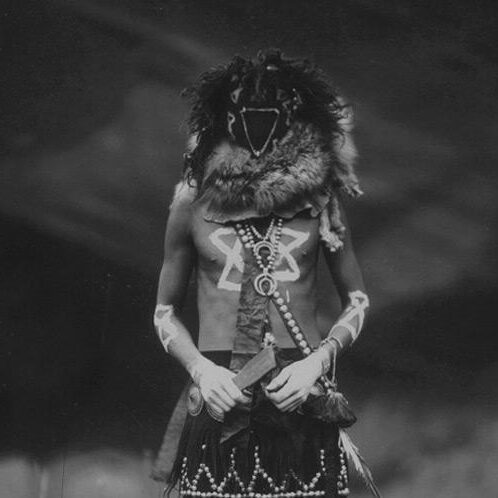
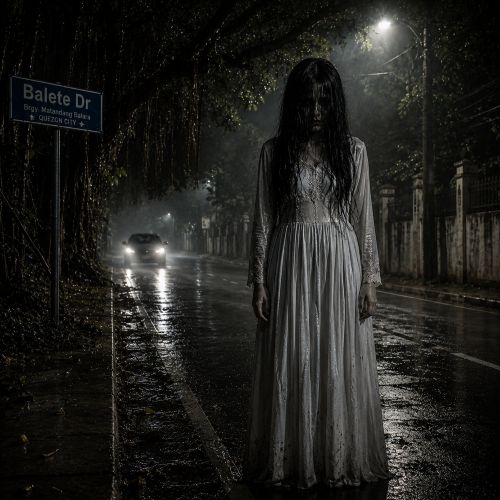
The appearance of the Busaw varies between regional traditions. In Bagobo folklore, its most distinctive characteristic is its ability to assume human form. Rather than appearing as an obviously monstrous creature, the Busaw can resemble an ordinary person, allowing it to approach its victims without immediately revealing its true nature. This ability to deceive is central to several Bagobo stories.
Other traditions give the being a more frightening physical appearance. Among the Manobo, the Busau is described as a black and hideous spirit that inhabits dark and desolate places. Mandaya traditions portray Busau as a gigantic, ferocious man who displays his teeth. Because these descriptions come from different communities, there is no single traditional appearance that can accurately be applied to every Busaw. Its form ranges from a deceptive human figure to an imposing and visibly supernatural being, depending on the tradition in which the story is told.
Family
The Busaw does not have a clearly established family lineage comparable to the gods and heroic figures found in more genealogical mythologies. In fact, Busaw is often better understood as a type or category of supernatural being rather than one individual character with a fixed identity, parents or descendants.
Among the Bagobo, Búsaw is described in the plural, referring to supernatural beings associated with death, human flesh and danger to the living. Related forms of the belief appear among other Mindanao communities, although their characteristics differ. The term busaw, busau or buso can therefore refer to related supernatural concepts rather than members of one mythological family.
This lack of a fixed genealogy is significant because it distinguishes Busaw from deities whose myths revolve around divine ancestry and family relationships. Its identity instead comes from its nature, behavior and relationship with the human world.
Other Names
Busaw appears in several linguistic and regional forms across Mindanao. Among the Bagobo, Búsaw and Buso are associated with malevolent supernatural beings, although the terms can carry somewhat different meanings depending on context. The Manobo use Busau for a dark and malevolent spirit, while Mandaya traditions contain the forms Busaw and Busau. The Mandaya tradition also associates the being with the names Tuglinsau, Tagbusau and Mandangum.
These names should not be treated as simple synonyms for one universal monster. Their similarities point to related traditions and linguistic connections, while their differences reflect the beliefs of the individual communities that preserved them.
Powers and Abilities
The most clearly documented supernatural ability of the Bagobo Busaw is shape-shifting or assuming human form. This allows it to disguise itself as someone familiar and deceive unsuspecting people. In the Bagobo story Ang Busaw at Dalawang Bata (“The Busaw and Two Children“), a Busaw takes the appearance of the children’s mother after her death and attempts to lure them into danger.
The Busaw is also associated with consuming human corpses. Some Bagobo accounts specifically describe it as being fond of human flesh and children. Its association with the dead is sufficiently strong that traditional practices surrounding corpses included measures intended to discourage such beings from approaching them.
Stories also portray the Busaw as physically powerful. In the tale of the two children, a deer attempts to defend them but is defeated by the creature. The children eventually find a way to overcome the Busaw using plants gathered from the forest.
Related traditions attribute other supernatural effects to buso or busau. Among some Mindanao communities, such spirits are associated with illness, natural disasters and other misfortunes. The Mandaya tradition additionally connects Busau with warriors and describes rituals and offerings intended to prevent the spirit from causing harm.
Modern Day Influence
The Busaw continues to have cultural significance beyond its role as a frightening figure in traditional stories. Among some Bagobo communities, the concept has acquired a modern metaphorical meaning. The National Commission for Culture and the Arts records the use of Busaw as a way of describing outsiders who enter ancestral territory, including miners and missionaries. In this interpretation, the Busaw represents threats to the community’s culture, environment and health.
This modern interpretation demonstrates how traditional mythology can adapt to changing circumstances. The Busaw is no longer understood only through stories about supernatural creatures preying upon humans; it can also express concerns about intrusion and the protection of ancestral lands.
Its continuing significance also lies in the diversity of traditions attached to the name. Bagobo, Manobo and Mandaya communities preserve different understandings of Busaw or Busau, each shaped by their own cultural histories. Rather than representing a single standardized Philippine monster, the Busaw illustrates how indigenous mythology can develop different forms while retaining older ideas about spirits, death, danger and the boundaries between the human and supernatural worlds.
Related Images


Sources
Almario, V. S. (Ed.). (2015). Búsaw. In Sagisag Kultura (Vol. 1). National Commission for Culture and the Arts. https://philippineculturaleducation.com.ph/busaw/
Benedict, L. W. (1916). A study of Bagobo ceremonial, magic and myth. Annals of the New York Academy of Sciences, 25(1), 1–308. https://doi.org/10.1111/j.1749-6632.1916.tb55170.x
Benedict, L. W. (1913). Bagobo myths. The Journal of American Folklore, 26(101), 13–63. American Folklore Society. https://www.jstor.org/stable/534456
Blust, R., Trussel, S., Smith, A. D., & Forkel, R. (Eds.). (n.d.). *Austronesian Comparative Dictionary: Cognateset busaw. https://acd.clld.org/cognatesets/25764
National Commission for Culture and the Arts. (2004, May 3). Talisman, leadership, and power: The belief in magical potency continues to pervade Filipino life. https://ncca.gov.ph/about-culture-and-arts/in-focus/talisman-leadership-and-power-the-belief-in-magical-potency-continues-to-pervade-filipino-life/
National Museum of the Philippines. (2021). Lumad Mindanao: Lumad worldview. National Museum of the Philippines. https://www.nationalmuseum.gov.ph/wp-content/uploads/2021/09/Lumad-Mindanao.pdf
Samar, E. C. (2015). 101 Kagila-gilalas na nilalang. Adarna House.
Frequently Asked Questions
What is a Busaw in Philippine mythology?
Busaw is a malevolent supernatural being found in several Mindanao traditions. Among the Bagobo, it is known for taking human form and feeding on human corpses.
What does the Busaw look like?
The Busaw has different appearances across Mindanao traditions. Bagobo stories emphasize its ability to look human, while Manobo and Mandaya traditions describe more frightening forms.
What powers does the Busaw have?
The Busaw is best known for assuming human form and deceiving people. It is also associated with great physical strength and consuming human flesh and corpses.
Where does the Busaw come from?
Busaw traditions are particularly associated with indigenous communities of Mindanao, including the Bagobo, Manobo, and Mandaya, with each tradition giving the being different characteristics.
Is Busaw the same as an Aswang?
No. Busaw and Aswang are distinct traditions, although both can involve supernatural beings that prey on humans. Busaw is especially associated with death, corpses, and deception.


