Bunzi : The Kongo Rainbow Serpent of Renewal
At a glance
| Description | |
|---|---|
| Origin | Kongo Mythology |
| Classification | Gods |
| Family Members | Mboze (Mother), Makanga (Father), Kuitikuiti (Husband) |
| Region | Democratic Republic of the Congo, Angola |
| Associated With | Rain, Fertility, Rivers, Rainbows, Agriculture, Renewal, Water |
The Mythlok Perspective
In Mythlok’s Perspective, Bunzi represents the ancient understanding that nature is not merely a resource but a living divine force deserving reverence. Her identity as a rainbow serpent goddess reflects how early societies viewed rain, rivers, and fertility as sacred powers capable of sustaining entire civilizations. What makes Bunzi especially fascinating is her balance between beauty and danger. She brings life through rain and fertility, yet she can also unleash destruction through storms and floods. This duality mirrors serpent deities such as Quetzalcoatl from Mesoamerican tradition and Mbumba from Central African belief, where serpents symbolize cosmic balance, transformation, and the eternal cycle of renewal.
Bunzi
Introduction
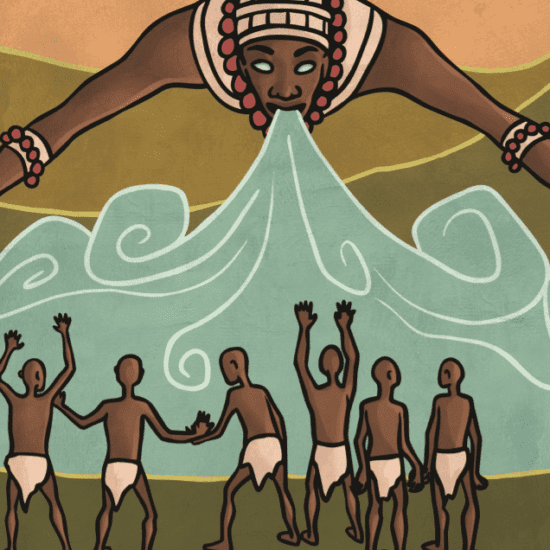
Bunzi is a powerful rain and fertility goddess from Kongo tradition, particularly revered among the Woyo people of the historic Kingdom of Ngoyo in Central Africa. Closely associated with rivers, rainfall, fertility, and rainbows, Bunzi represents the sacred connection between nature and survival. In agricultural communities where seasonal rain determined prosperity or famine, she was honored as a divine force capable of nourishing both the land and the people.
Within Kongo cosmology, Bunzi occupies an important place among the sacred beings connected to water and natural balance. Although the supreme creator in many Kongo traditions is Nzambi Mpungu, Bunzi played a more direct role in everyday life through her influence over storms, rivers, harvests, and fertility. Her worship reflected the deep spiritual relationship the Bakongo people maintained with the natural world.
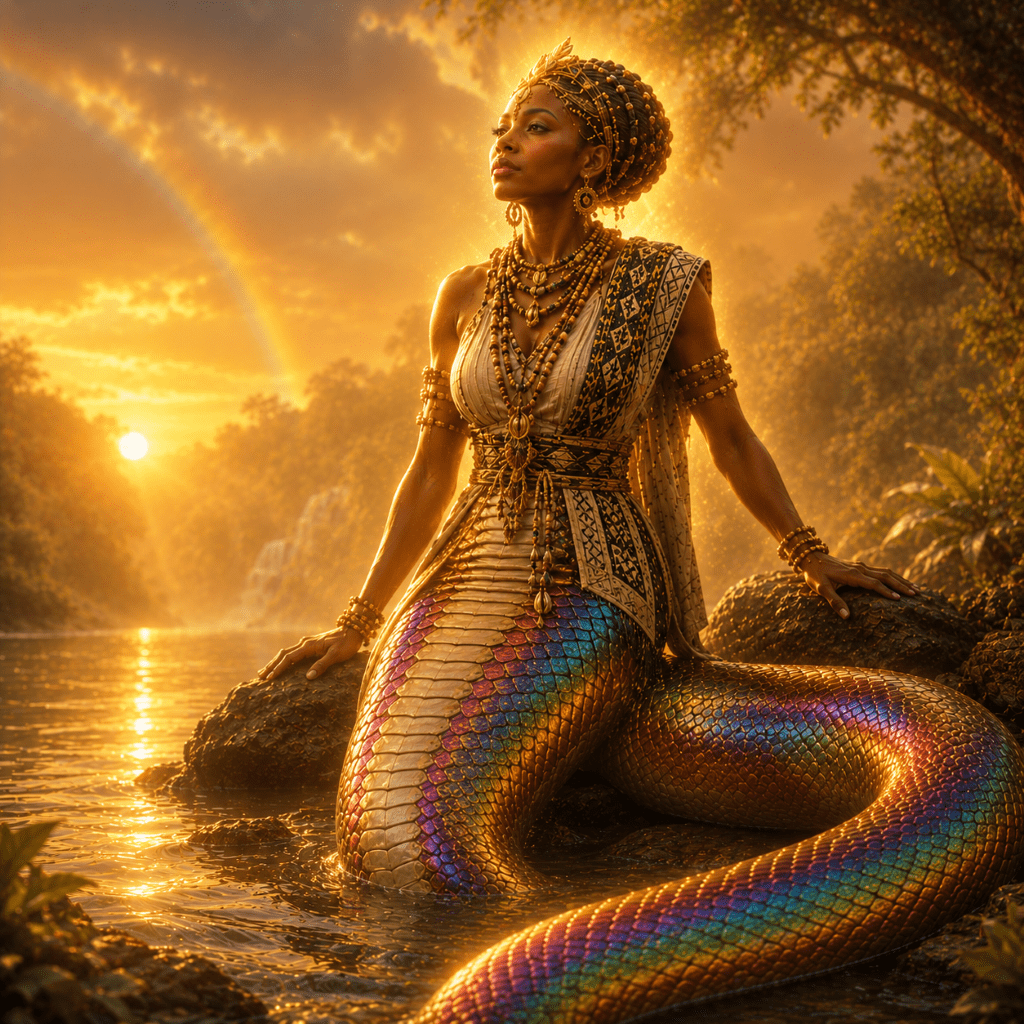
Bunzi is most famously depicted as a radiant rainbow serpent gliding through rivers or appearing in the sky after storms. Her appearance symbolized renewal, transformation, and harmony between the heavens and the earth. Communities believed that honoring her ensured healthy crops, abundant harvests, and protection from destructive droughts.
The mythology surrounding Bunzi also reveals the complexity of Kongo oral traditions. Different regions preserved slightly different versions of her story, with some traditions portraying her as a female goddess while others described a masculine counterpart known as Phulu Bunzi. Despite these variations, the core symbolism remained unchanged. Bunzi was the divine embodiment of rain, water, and the cycles of life.
Physical Traits
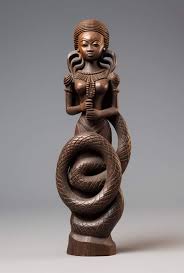
Bunzi is traditionally portrayed as a multicolored serpent whose scales reflect the brilliant colors of the rainbow. Her serpent form is not seen as monstrous or evil but as sacred, majestic, and deeply connected to the life-giving power of water. In many stories, she is described as moving gracefully through rivers, appearing in rippling waters illuminated by the setting sun.
Rainbows themselves were often considered manifestations of Bunzi’s presence. After heavy rain, the appearance of a rainbow across the sky symbolized the goddess watching over the land and restoring harmony after the storm. This connection made her one of the clearest examples of a rainbow serpent deity within Central African belief systems.
According to oral tradition, Bunzi was born in serpentine form, marking her as divine from the moment of her birth. Her colorful appearance linked her directly to natural phenomena involving water and light. The shimmering patterns of rivers at sunset and the vivid colors that emerge after rainfall were interpreted as visible signs of her spiritual energy.
Serpent symbolism holds deep meaning in Kongo spirituality. Serpents often represent transformation, continuity, hidden wisdom, and cosmic power. Bunzi’s form reflects these qualities while also emphasizing fertility and renewal. Her presence was believed to flow through rivers, rainfall, and the fertile earth itself. Unlike many deities depicted in fully human form, Bunzi remained closely tied to nature. This strengthened her identity as a goddess who existed not above the world, but within the natural forces that sustained life.
Family
The story of Bunzi’s family is one of tragedy, inheritance, and divine transformation. She is commonly described as the daughter of Mboze, a powerful maternal figure often referred to as the Great Mother. Mboze possessed sacred rain-bringing abilities and was deeply associated with fertility and creation.
Bunzi’s biological father was Makanga, although Mboze was married to Kuitikuiti. According to Kongo oral tradition, the birth of Bunzi in serpent form revealed Mboze’s infidelity to Kuitikuiti. Enraged and consumed by jealousy, Kuitikuiti killed Mboze after discovering the truth.
Following her mother’s death, Bunzi inherited Mboze’s divine powers over rain and fertility. This inheritance transformed her into a major goddess associated with renewal, agricultural abundance, and the continuation of life. The story reflects recurring themes found in many mythological traditions where death gives rise to spiritual rebirth and divine succession.
Some regional traditions present variations of these relationships. Among certain Yombe communities, Phulu Bunzi appears as a masculine water deity connected to rivers and cosmic balance. These differences are natural within oral traditions that evolved across generations and geographic regions. Despite the changes in individual retellings, Bunzi consistently remains tied to themes of inherited power, fertility, and the sacred continuity of nature.
Other names
Bunzi is known by several names across different Kongo-speaking communities. The most common variations include Mpulu Bunzi and Phulu Bunzi. These alternate forms developed through regional dialects and local storytelling traditions rather than representing completely separate deities.
The name Mpulu Bunzi is often associated with the rain goddess traditions connected to the Woyo and related Kongo groups. Meanwhile, Phulu Bunzi appears more commonly in Yombe narratives, where the figure may sometimes be interpreted as male.
These differing interpretations demonstrate the fluid nature of African oral mythology. Rather than existing in one rigid form, deities often adapted to the beliefs and cultural realities of different communities. This flexibility allowed Bunzi’s worship and symbolism to remain relevant across generations.
In broader discussions of African mythology, Bunzi is sometimes grouped alongside other water and serpent deities connected to rain, rivers, and fertility. However, her strong connection to the rainbow remains one of her most distinctive characteristics. Regardless of the name used, Bunzi always represents the sacred relationship between water, renewal, and life itself.
Powers and Abilities
Bunzi’s greatest power is her control over rain and fertility. In the farming communities of the Kongo region, rainfall determined whether crops would flourish or fail. Because of this, Bunzi was worshipped as a goddess capable of sustaining entire communities through her blessings.
Her rain nourished fields, replenished rivers, and restored life to the earth after periods of drought. Communities believed that proper respect and ritual devotion toward Bunzi could bring healthy harvests and prosperity. Fertile soil and abundant crops were often interpreted as signs of her favor.
At the same time, Bunzi possessed destructive potential. Just as water can sustain life, it can also destroy it through storms and floods. Some traditions describe her punishing disrespect or spiritual imbalance with violent rainfall and overflowing rivers. This dual nature emphasized the immense and unpredictable power of nature.
Bunzi was also strongly connected to fertility beyond agriculture. Water symbolized birth, cleansing, growth, and renewal throughout many African spiritual systems. Through her association with rivers and rain, Bunzi became a divine symbol of life’s continuous cycle.
Rainbows served as another sign of her power. They represented balance between sky and earth, acting as visual bridges between the physical and spiritual worlds. In some traditions, Bunzi also mediated between elemental forces, helping maintain harmony between thunder, rain, and the heavens. Her abilities made her not only a goddess of fertility but also a guardian of cosmic balance and environmental harmony.
Modern Day Influence
Although traditional Kongo religious systems changed significantly during colonialism and the spread of Christianity, Bunzi’s legacy continues to survive in oral traditions, scholarship, and modern interpretations of African mythology.
Researchers studying Central African belief systems often compare Bunzi to other sacred water figures such as Mami Wata and Simbi spirits. These comparisons highlight the widespread importance of water deities throughout African cosmologies and their connections to fertility, protection, and transformation.
Bunzi also remains culturally significant through academic studies of rainbow serpent symbolism. Scholars examining African mythological traditions frequently reference her as an important example of how natural phenomena became integrated into spiritual belief systems.
Her influence even extends beyond Earth itself. A mountain on Venus known as Bunzi Mons was named after the goddess, reflecting her recognition within global scientific and cultural naming traditions.
Elements of Kongo spirituality also traveled across the Atlantic during the transatlantic slave trade. Beliefs connected to sacred rivers, serpent symbolism, and ancestral water forces influenced spiritual traditions in parts of the Americas, particularly in regions shaped by African diasporic culture.
Today, Bunzi continues to symbolize ecological balance, fertility, and humanity’s dependence on the natural world. Her mythology remains especially relevant in modern discussions about environmental respect and the spiritual importance of water.
Related Images


Source
Wikipedia contributors. (2016, March 21). Bunzi. In Wikipedia. Retrieved May 20, 2026, from https://en.wikipedia.org/wiki/Bunzi
“Bunzi The Rainbow Goddess.” (2008, May 22). Goddesses and Gods. Retrieved May 20, 2026, from http://goddesses-and-gods.blogspot.com/2008/05/bunzi-rainbow-goddess.html
Vansina, J. (1985). Oral Tradition as History. University of Wisconsin Press.
Thornton, J. K. (1999). Africa and Africans in the Making of the Atlantic World, 1400–1800. Cambridge University Press.
MacGaffey, W. (1986). Religion and Society in Central Africa: The Bakongo of Lower Zaire. University of Chicago Press.
Vansina, J. (1973). The Makungu of the Bantu: Studies in Kongo Mythology and Belief.
“Bunzi.” (n.d.). Eerie Worlds Wiki. Retrieved May 20, 2026, from https://eerie-worlds.fandom.com/wiki/Bunzi
Auset, B. (2009). The Goddess Guide: Exploring the Attributes and Correspondences of the Divine Feminine. Llewellyn Worldwide.
Leeming, D. A. (1996). Goddess: Myths of the Female Divine. Oxford University Press.
Lynch, P. A. (2004). African Mythology A to Z. Infobase Publishing.
Frequently Asked Questions
Who is Bunzi in Kongo mythology?
Bunzi is a rainbow serpent goddess associated with rain, fertility, rivers, renewal, and agricultural prosperity in Kongo tradition.
What does Bunzi symbolize?
Bunzi symbolizes rainfall, fertility, renewal, balance in nature, and the sacred relationship between water and life.
Why is Bunzi depicted as a serpent?
The serpent represents transformation, hidden wisdom, continuity, and the flowing power of rivers within Kongo spiritual traditions.
Is Bunzi connected to rainbows?
Yes. Rainbows were believed to be visible signs of Bunzi’s presence after storms and rainfall.
What is Bunzi Mons?
Bunzi Mons is a mountain on Venus named after Bunzi, reflecting the goddess’s lasting cultural significance.