
How Gandalf Became Tolkien’s Greatest Tribute to Odin
For generations of fantasy fans, Gandalf has been the ultimate wizard. Whether arriving at Bilbo’s doorstep with a fireworks display, leading the Fellowship through impossible odds, or facing the Balrog on the Bridge of Khazad-dûm, he embodies wisdom, courage, and quiet authority. His influence extends far beyond The Lord of the Rings, inspiring countless mentors in books, films, television, and video games. Yet beneath the familiar grey robes and pointed hat lies a character shaped by stories that are more than a thousand years old.
J.R.R. Tolkien never hid his fascination with ancient mythology. As a professor of Old English and medieval literature, he immersed himself in Norse legends, Anglo-Saxon poetry, and Icelandic sagas long before writing Middle-earth. Rather than copying these myths directly, Tolkien reimagined them into something entirely new. Among all the mythological figures who influenced his work, none left a stronger impression on Gandalf than Odin, the enigmatic Allfather of Norse mythology.
A Wizard Who Looks Surprisingly Familiar
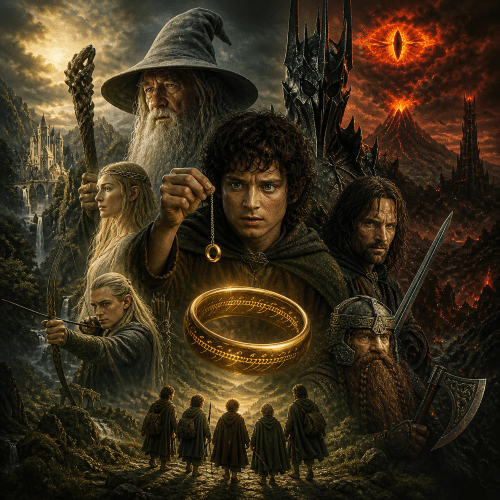
One of the first things readers notice about Gandalf is his appearance. He is an elderly traveller with a long grey beard, a weathered cloak, a broad-brimmed hat, and a sturdy staff that accompanies him wherever he goes. Peter Jackson’s film adaptations cemented this image in popular culture, making Gandalf one of the most recognisable fantasy characters ever created. Yet anyone familiar with Norse mythology will immediately recognise another figure who shares these same characteristics.
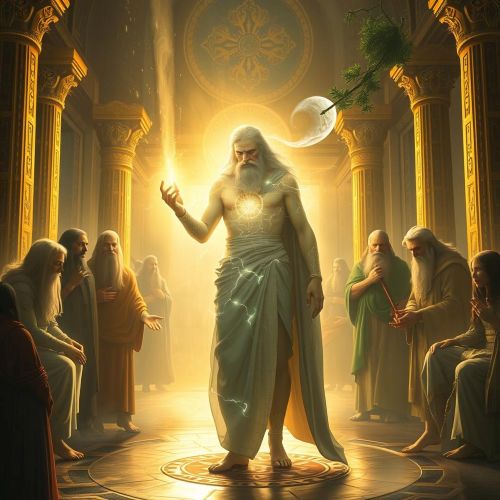
Odin frequently wandered the Nine Worlds disguised as an old man. Instead of appearing as a radiant king seated upon a golden throne, he often chose the appearance of a lone traveller wrapped in a cloak and carrying a spear or walking staff. Known by names such as Grímnir and Vegtam, Odin preferred to observe the world unnoticed, gathering knowledge while testing the wisdom and character of those he encountered. Tolkien transformed this ancient image into Gandalf, preserving the mysterious wanderer while giving him a uniquely compassionate personality.
More Than a Powerful Wizard
Fantasy often portrays wizards as masters of spectacular magic, capable of overwhelming enemies with dazzling displays of power. Gandalf, however, rarely relies on brute force. Although he possesses immense magical abilities, he spends far more time advising kings, encouraging reluctant heroes, and guiding others toward making the right choices. His greatest victories come not from casting spells but from inspiring courage in those around him.
This emphasis on wisdom over raw strength echoes Odin’s role in Norse mythology. While Odin is undoubtedly a powerful god, his greatest obsession is knowledge. He willingly sacrifices one of his eyes at Mímir’s Well in exchange for wisdom and later hangs himself upon the World Tree, Yggdrasil, for nine days to uncover the secrets of the runes. Both Odin and Gandalf demonstrate that true leadership comes from understanding rather than domination, making them remarkably different from the action-driven heroes common in modern fantasy.
The Wanderer Who Changes History
Unlike kings who govern from castles or gods who remain in distant heavens, both Gandalf and Odin spend much of their existence travelling. Gandalf is constantly moving across Middle-earth, visiting forgotten kingdoms, hidden forests, dwarven halls, and humble villages. He rarely settles in one place because his purpose is to connect people, gather information, and quietly influence events before darkness can spread.
Odin fulfils a strikingly similar role throughout Norse mythology. His travels are not random adventures but deliberate journeys to observe humanity, challenge rulers, and shape destiny without revealing his true identity. This wandering archetype has become one of fantasy’s most enduring traditions, appearing in everything from role-playing games to blockbuster films. Every mysterious old traveller carrying hidden knowledge owes at least part of their existence to the path first walked by Odin and later perfected by Gandalf.
Death Was Never the End
One of the most unforgettable moments in The Lord of the Rings occurs when Gandalf confronts the Balrog beneath the Mines of Moria. His declaration, “You shall not pass,” has become one of cinema’s most iconic lines, but the battle itself represents something much deeper than heroic sacrifice. Gandalf falls into the abyss believing that others must continue the quest without him. His apparent death transforms him into a symbol of selflessness rather than invincibility.
His return as Gandalf the White mirrors one of Odin’s most profound myths. Seeking ultimate wisdom, Odin sacrifices himself by hanging upon Yggdrasil, pierced by his own spear and suspended between life and death for nine days. He emerges transformed, possessing knowledge unavailable to ordinary beings. Tolkien adapted this ancient pattern of symbolic death and rebirth into Gandalf’s journey, creating a character whose greatest strength comes through sacrifice rather than conquest. It is a mythological structure that continues to resonate because it reflects the universal belief that true transformation often demands personal loss.
Why Pop Culture Keeps Returning to Gandalf
The success of Gandalf can be measured by the countless characters who follow in his footsteps. Albus Dumbledore in Harry Potter, Obi-Wan Kenobi in Star Wars, Brom in Eragon, and numerous wise mentors across anime, comics, and video games all reflect aspects of Tolkien’s legendary wizard. Each serves as a guide whose purpose is not to overshadow the hero but to prepare them for challenges they must ultimately face alone.
What many fans overlook is that this familiar mentor archetype stretches back even further. Gandalf inherited much of his DNA from Odin, who had already established the image of the wise traveller centuries before modern fantasy existed. Through Tolkien’s storytelling, that ancient Norse archetype became accessible to a global audience, proving that mythology remains one of pop culture’s richest sources of inspiration. Every time audiences embrace another mysterious mentor, they are unknowingly reconnecting with stories first told around Viking hearths.
Tolkien Didn’t Copy Odin—He Reinvented Him
Despite the similarities, Gandalf should never be viewed as simply Odin in different clothing. Odin is a complex and often morally ambiguous deity who deceives, manipulates, and pursues knowledge regardless of the consequences. He prepares relentlessly for Ragnarök, fully aware that victory may be impossible. Gandalf, in contrast, consistently places compassion above ambition, encouraging cooperation rather than personal glory and refusing to dominate others even when given the opportunity.
This distinction reveals Tolkien’s greatest achievement. Instead of transplanting Norse mythology directly into Middle-earth, he reshaped its archetypes to fit a world built upon hope, humility, and fellowship. Gandalf retains the appearance and wisdom of Odin’s wandering form while becoming a hero whose moral compass reflects Tolkien’s own philosophy. That balance between ancient inspiration and original storytelling explains why Gandalf feels timeless rather than derivative.
Why Gandalf Continues to Inspire
Nearly seventy years after The Lord of the Rings concluded, Gandalf remains one of fiction’s most beloved characters because he represents more than a wizard with extraordinary powers. He embodies the idea that wisdom matters more than strength, that guidance can be more powerful than command, and that sacrifice often changes history more profoundly than violence. These themes have remained relevant across generations because they were already deeply embedded within humanity’s oldest myths.
The enduring connection between Gandalf and Odin also demonstrates why mythology continues to thrive in popular culture. Ancient stories are rarely forgotten; they simply evolve into new forms that speak to new audiences. Tolkien’s greatest tribute to Odin was not recreating the Allfather but transforming him into a mentor who would inspire millions of readers and viewers around the world. In doing so, Gandalf became living proof that the oldest legends still have the power to shape the greatest stories of our time.
No posts were found.