


Tiyanak : The Crying Child Spirit of Philippine Folklore
At a glance
| Description | |
|---|---|
| Origin | Philippine Mythology |
| Classification | Ghosts |
| Family Members | N/A |
| Region | Philippines |
| Associated With | Blood sucking, Murder, Evil |
Mythlok Perspective
In Mythlok’s Perspective, the Tiyanak is fascinating because it transforms the instinct to protect a child into a source of fear. Unlike the Pontianak, whose stories centre on the tragedy of maternal death, the Tiyanak embodies the unsettling boundary between innocence and danger. Its many forms also reveal how indigenous beliefs and Christian interpretations shaped Filipino folklore. To us, that makes the Tiyanak more than a creature of horror; it is a reflection of how cultures give supernatural form to their deepest anxieties about life and death.
Tiyanak
Introduction
The Tiyanak is a class of supernatural beings in Philippine mythology associated with infant-like appearances, deceptive cries, and encounters with unsuspecting travellers. Found in various Filipino folkloric traditions, these creatures are best known for imitating the sounds of a crying baby to attract people into isolated places before revealing their dangerous nature. Although modern portrayals frequently depict them as vampiric monsters, traditional accounts present a more varied picture of their appearance, origins, and behaviour.
The Tiyanak occupies a distinctive place in Philippine folklore because its stories combine the vulnerability of childhood with the fear of the supernatural. Its identity has evolved through centuries of storytelling, incorporating indigenous beliefs, Christian interpretations of death and baptism, and contemporary horror narratives. Rather than representing one individual with a fixed identity, the Tiyanak encompasses a collection of related supernatural beings whose characteristics vary across regional traditions.
Physical Description
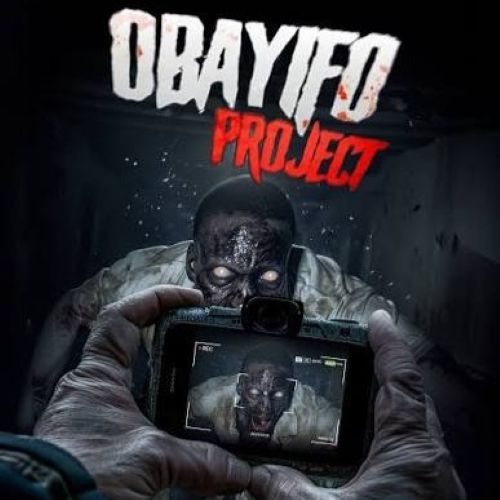
The Tiyanak is most commonly described as a newborn infant or young child. Its apparent helplessness allows it to attract the attention of travellers who hear its cries in forests, fields, or other isolated locations. Once approached or picked up, the seemingly innocent child may transform into a frightening supernatural creature and attack its rescuer.
Its appearance, however, is not consistent across all accounts. Some descriptions portray the Tiyanak as a baby that develops sharp claws and fangs when revealing its true nature. Other traditional narratives describe a small, grotesque, elderly-looking being with wrinkled skin, a beard, a moustache, and uneven legs. These latter characteristics connect the Tiyanak with certain dwarf-like beings in Philippine folklore rather than the monstrous infant familiar from modern horror films.
The ability to change its appearance is central to many depictions of the Tiyanak, although not every tradition describes the transformation in the same way. Its familiar infant form represents only one expression of a more diverse folkloric identity.
Mythological Context
The Tiyanak belongs to the supernatural traditions of the Philippines, where spirits and other non-human beings frequently inhabit forests, fields, mountains, and places associated with death or danger. Its stories reflect traditional beliefs about the relationship between the living and the spirit world, particularly the uncertainties surrounding childbirth, infant mortality, and death.
Historical accounts offer evidence that beliefs associated with the Tiyanak existed before the creature acquired its familiar modern appearance. In 1589, the Franciscan missionary Juan de Plasencia recorded a Tagalog belief involving the patianac, associated with the suffering of a woman who died during childbirth and the child who died with her.
Over subsequent centuries, the creature’s identity became associated with other supernatural traditions. Some accounts portrayed it as a being that misdirected travellers, while later interpretations emphasised its transformation into a predatory infant. These variations demonstrate how Philippine folklore developed through the interaction of local beliefs, religious influence, and oral storytelling.
Origins
The origins of the Tiyanak differ across Philippine traditions. One account associated with the Mandaya people of Mindanao describes the creature as the spirit of a child whose mother died while pregnant. According to this interpretation, the child was born in the ground rather than entering the world through an ordinary birth.
Another influential explanation developed through the interaction between indigenous beliefs and Spanish colonial Christianity. In this tradition, the Tiyanak is associated with the souls of infants who died before baptism. Their inability to receive the expected religious rites becomes part of the explanation for their continued existence as supernatural beings.
Other contemporary stories connect the creature with abandoned, murdered, or aborted infants. These interpretations reflect later developments in folklore and popular culture rather than a single origin shared by every community.
The name Tiyanak is commonly thought to derive from the Tagalog expression patay-anak, associated with a dead child. Historical spellings include tianak, tianac, and patianak. These linguistic variations, together with the different origin stories, illustrate the diversity of traditions associated with the creature.
Notable Members
Unlike mythological figures with individual names and established biographies, the Tiyanak is primarily understood as a collective category of supernatural beings. Traditional stories generally describe encounters with individual Tiyanaks without establishing a single central character or a recognised hierarchy.
The most familiar depiction is that of the crying infant, which appears to be an abandoned newborn and imitates the cries of a distressed baby to attract people. When someone approaches or picks it up, the creature may reveal its true form and attack. This version dominates contemporary representations of the Tiyanak in Filipino horror.
Other accounts describe a dwarf-like Tiyanak with the features of an elderly man. Its small stature, wrinkled face, facial hair, and unusual legs distinguish it from the infant-like creature popularised in modern films. A separate tradition associated with the Mandaya people of Mindanao connects the Tiyanak with a child whose mother died during pregnancy and whose birth is linked to the earth.
These descriptions represent different folkloric interpretations rather than formally established individuals or universally recognised subspecies. Their characteristics depend on the particular traditions in which they appear.
Relationship with Other Beings
The Tiyanak shares characteristics with several supernatural beings in Philippine mythology, although these relationships should not be interpreted as evidence of a common family or species. The Aswang, a broad category of malevolent supernatural beings in Filipino folklore, is associated in some traditions with shapeshifting, predation, and attacks on vulnerable people. Modern stories sometimes connect the Aswang with the Tiyanak, but the latter is not universally described as the Aswang’s offspring.
The Tiyanak is also sometimes compared with the Pontianak of Malay and Indonesian folklore. The Pontianak is associated with a female supernatural being connected with death during childbirth. Despite similarities in their names and connections with childbirth, the Pontianak and Tiyanak have distinct identities and should not be treated as interchangeable creatures.
More broadly, the Tiyanak belongs to a wider landscape of Philippine supernatural traditions concerning spirits of the dead, earth-dwelling beings, and creatures that deceive travellers. These connections reflect overlapping folkloric themes rather than a single, unified supernatural family.
Similar Beings
Several supernatural beings from other cultures share characteristics with the Tiyanak, particularly its association with childbirth, infant mortality, and deceptive appearances. The Pontianak of Malay and Indonesian folklore is associated with a female supernatural being connected with death during childbirth. Its origins provide a thematic parallel to some Tiyanak traditions, although its characteristic appearance and behaviour differ.
The Japanese Ubume is another relevant comparison. This supernatural figure is associated with a woman who dies during childbirth, and some stories portray her as a mother who continues to care for her child after death. Unlike the predatory Tiyanak in many Filipino accounts, the Ubume may be depicted as a tragic figure whose actions arise from maternal attachment.
The Changeling of European folklore offers a different parallel. In some traditions, a supernatural being replaces a human child, creating uncertainty about the child’s true identity. Like the Tiyanak, the changeling motif draws upon the fear that something apparently familiar and vulnerable may conceal a supernatural presence.
These comparisons reveal recurring themes in world folklore, including the vulnerability of infants, the dangers associated with childbirth, and the uncertainty surrounding the boundary between human and supernatural life. However, such similarities do not establish direct historical connections between the traditions.
Symbolism and Interpretations
The Tiyanak can be interpreted through several themes that emerge from its changing folkloric identity. Its association with childbirth and infant mortality reflects historical anxieties surrounding pregnancy, delivery, and the death of young children. In societies where maternal and infant mortality were significant concerns, supernatural narratives provided ways to understand experiences that people could not always explain.
Christian interpretations associated the Tiyanak with infants who died before baptism. This development demonstrates how older folkloric traditions could acquire new meanings as religious beliefs changed. The creature consequently occupies a place where indigenous understandings of spirits intersect with later Christian ideas about death and the afterlife.
The Tiyanak’s deceptive appearance also gives its stories a distinctive psychological dimension. Its infant disguise transforms an instinctive response to a crying child into a source of danger. The resulting narratives explore the tension between compassion and fear, showing how something apparently helpless can conceal a threatening identity.
Some traditions connect the creature with the earth, unfulfilled lives, or souls unable to enter the expected afterlife. These themes position the Tiyanak between the human world and the supernatural realm. Although the creature is predominantly portrayed as malevolent, its symbolism extends beyond fear to encompass cultural memories of loss, anxieties surrounding childbirth, and changing explanations of death.
Modern Influence
The Tiyanak remains a recognisable figure in contemporary Filipino popular culture, particularly in horror films, literature, comics, and television. Its distinctive combination of an innocent infant appearance and a frightening transformation provides an effective foundation for suspense and supernatural storytelling.
One notable example is the Filipino horror film Tiyanak (1988), directed by Peque Gallaga and Lorenzo A. Reyes. The creature has also appeared in contemporary fantasy and horror narratives, including Trese, where Philippine supernatural traditions are reinterpreted for modern audiences.
Its representation has evolved considerably. Older accounts include stories about misdirected travellers and small, dwarf-like beings, while modern horror frequently emphasises sharp teeth, claws, bloodthirstiness, and the transformation of a baby into a monster. These portrayals have helped introduce the Tiyanak to audiences beyond the Philippines while reinforcing its status as a recognisable figure in Filipino horror.
The creature also retains cultural significance through its associations with childbirth, infant mortality, and religious belief. These themes help explain why the Tiyanak has endured beyond its role as a frightening figure in popular entertainment. As Philippine folklore continues to inspire contemporary storytelling, the Tiyanak demonstrates how supernatural traditions can change while retaining their cultural significance. Its many forms reflect not a single definitive character, but a continuing body of stories shaped by regional beliefs, historical encounters, and the imagination of successive generations.
Related Images







Sources
Gaverza, K. (2019, March 31). The protean tale of the Tiyanak – Demon Babies of Philippine Folklore. Victor Manibo’s blog. Retrieved November 1, 2025, from https://www.victormanibo.com/blog/e1dx8xmxq52ea7yxqyaeg424iwr86t Victor Manibo
“Tiyanak.” (n.d.). Myth and Folklore Wiki. Retrieved November 1, 2025, from https://mythus.fandom.com/wiki/Tiyanak
“Tiyanak – The Demon Baby of Philippine Folklore.” (n.d.). Encyclopedia Mythica. Retrieved November 1, 2025, from https://pantheon.org/articles/t/tiyanak.html
“Exploring the Tiyanak legend: The chilling folklore of the Philippines.” (2024). Stories Philippines. Retrieved November 1, 2025, from https://storiesphilippines.com/exploring-the-tiyanak-legend-the-chilling-folklore-of-the-philippines/
“Birth of the Tiyanak: Demon Babies of Philippine Folklore.” (2023). HubPages. Retrieved November 1, 2025, from https://discover.hubpages.com/religion-philosophy/Tracing-the-Umbilical-Cord-of-the-Tiyanak-Demon-Babies-of-Philippine-Folklore
Eugenio, D. L. (2013). Philippine folk literature: The legends. University of the Philippines Press.
Fansler, D. S. (1921). Filipino popular tales. American Folklore Society.
Gardner, F. (1906). Philippine (Tagalog) superstitions. The Journal of American Folklore, 19(74), 133–140.
Paraiso, S., & Paraiso, J. J. (2003). The Balete book: A collection of demons, monsters, elves and dwarfs from the Philippine lower mythology. Giraffe Books.
Ramos, M. D. (1971). Creatures of Philippine lower mythology. University of the Philippines Press.
Frequently Asked Questions
What is a Tiyanak in Philippine mythology?
A Tiyanak is a mythical creature from Philippine folklore often described as a demon or vampiric spirit that takes the form of an innocent baby. It is said to lure unsuspecting victims by crying like a child in the forest or on lonely roads. When someone comes closer to help, the Tiyanak reveals its monstrous form and attacks, feeding on the victim’s flesh or blood.
Where did the legend of the Tiyanak come from?
The Tiyanak legend dates back to pre-colonial Philippine beliefs and was later influenced by Spanish Catholicism. In indigenous animist traditions, it was thought to be the spirit of an unborn or unbaptized child trapped between worlds. The arrival of Christianity re-cast it as a demonic being punished for not receiving baptism, blending ancient animistic fears with colonial religious interpretations.
How does a Tiyanak appear or transform?
The Tiyanak typically appears as a helpless baby crying in the dark. Once a victim picks it up, the creature transforms into a small, fanged monster with sharp claws and fiery eyes. Its skin turns dark or red, its teeth grow long, and it emits a chilling laugh before attacking. Some stories describe it as capable of flying or vanishing suddenly into the forest after killing its prey.
How can people protect themselves from a Tiyanak?
According to folklore, several methods can repel or confuse a Tiyanak. Turning your clothes inside out is believed to break its illusion and cause it to retreat. Carrying religious symbols such as a rosary or crucifix, or calling out the creature’s true name, may also drive it away. Some rural traditions suggest leaving offerings or saying a prayer for lost or unborn souls to appease its restless spirit.
What does the Tiyanak symbolize in modern Filipino culture?
In modern times, the Tiyanak symbolizes guilt, grief, and the darker side of motherhood and child loss. It has become a recurring figure in Filipino horror films, TV shows, and comics, often reimagined as a tragic rather than purely evil spirit. Its enduring presence in pop culture reflects how Filipinos continue to explore moral and emotional themes through myth and folklore.



Pingback: Forsaken Souls: The Tiyanak's Unhallowed Hunt