


Teke Teke : The Legless Japanese Ghost That Can Outrun Its Victims
| Description | |
|---|---|
| Origin | Japan |
| Classification | Vengeful Spirit |
| Demeanour | Hostile |
| Habitat | Railway Crossings |
| Status | Not Proven |
Mythlok Perspective
From the Mythlok perspective, Teke Teke demonstrates how modern urban legends can become as culturally recognisable as traditional supernatural figures. Unlike Japan’s ancient yōkai, whose identities developed through centuries of storytelling, Teke Teke gained recognition through school rumours and popular media. Her evolution also illustrates how separate legends such as Kashima Reiko can gradually merge. The distinction between ancient folklore and contemporary horror is precisely what makes her cultural journey interesting.
Teke Teke
Introduction
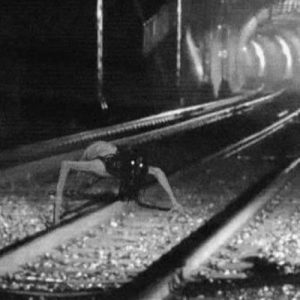
Teke Teke (テケテケ), also written as Teketeke or Teke-Teke, is a Japanese urban legend about a restless spirit that moves rapidly across the ground despite having no lower body. Usually portrayed as a young woman or schoolgirl, the apparition is said to have been severed at the waist by a train. Unable to walk, she drags herself forward using her hands and elbows, producing a repetitive scraping sound that resembles her name. According to the legend, anyone unfortunate enough to encounter her may become the target of a relentless pursuit that ends in a similarly gruesome death.
Unlike traditional Japanese supernatural beings such as the kappa and tengu, Teke Teke belongs to contemporary urban folklore rather than an established historical yōkai tradition. Her popularity grew through Japanese school ghost stories, particularly during the 1990s, when collections of supernatural tales introduced unusual apparitions to younger audiences. The figure was already appearing in Gakkō no Kaidan (School Ghost Stories) publications around 1993–1994.
The legend is particularly interesting because its origins are not entirely straightforward. Although modern retellings frequently connect Teke Teke to a railway accident in Hokkaido, folklorists have identified earlier stories about half-bodied apparitions that may have developed independently. The character also shares several characteristics with Kashima-san, another Japanese ghost legend involving a woman who has lost her legs.
Physical Attributes
Teke Teke is most commonly depicted as a female apparition whose body ends abruptly at the waist. Her missing lower half is the defining characteristic of the legend, and she compensates for her inability to walk by dragging her upper body across the ground. Her hands and elbows support her movements, producing the characteristic tapping or scraping noise that gives her name its distinctive identity.
Her appearance changes considerably between different accounts. Some describe her as a young schoolgirl with long black hair, pale skin and a damaged school uniform. Other versions portray an older woman, while certain early accounts describe male apparitions with only their upper bodies visible. Consequently, the popular image of a young female ghost is not necessarily representative of the earliest versions.
Her extraordinary speed makes her particularly frightening. Despite having no legs, she supposedly moves quickly enough to pursue people attempting to escape. Some school-based stories describe her appearing outside classroom windows or across sports grounds before rapidly approaching students who attract her attention. The absence of a fixed physical description is important because Teke Teke represents a collection of related supernatural stories rather than a character with one established appearance.
First Sighting/Reporting
There is no verified first sighting of Teke Teke, and no documented railway accident has been established as the historical event behind the legend. Its development appears to involve several related stories that gradually became associated with the same name.
One possible early reference comes from an account associated with Okinawa around 1980. The story describes a child encountering a strange boy resting his chin on the roof of a parked car. When observed for long enough, the figure supposedly emerges as an upper body and approaches while making a sound resembling Teke Teke. Related names included Teketekē, Tekutekū and Shakashakā. However, this account was recorded retrospectively and does not constitute a verified contemporary report from 1980.
The more familiar railway narrative describes a high-school girl in Hokkaido who falls onto railway tracks during winter and is struck by a passing train. Her upper body supposedly continues moving in search of help, eventually becoming a restless apparition that pursues people.
Folklorist Asazato Itsuki has suggested that this railway narrative originally circulated as a separate urban legend before becoming associated with Teke Teke. The figure’s wider recognition can be connected to Japanese school ghost-story publications of 1993–1994, which helped establish the name and its familiar characteristics.
Other Names
Teke Teke appears under several spellings and related names across Japanese urban folklore. Teketeke and Teke-Teke are alternative romanisations of the same Japanese expression, while Teketeke-san adds the honorific suffix -san, creating a strangely polite name for a frightening apparition. The closest related figure is Kashima Reiko, frequently associated with the Kashima-san urban legend. In this story, a female spirit who has lost her legs appears to people and asks questions about their whereabouts. Some versions involve telephone calls or supernatural encounters in dreams, with incorrect answers supposedly resulting in death or mutilation.
Although the two figures are frequently treated as the same ghost, folklore accounts suggest that they developed as separate legends before borrowing elements from one another. Their shared association with missing legs and railway-related deaths made the stories particularly easy to combine. Other regional figures with similar characteristics include Patapata-san from Kagoshima, Kotokoto-san from Shiga and Katakata from Kanagawa. These stories feature unusual apparitions associated with repetitive sounds and partial or missing bodies.
Modus Operandi
Teke Teke is generally portrayed as a hostile apparition that pursues people before killing them through the same type of bodily mutilation associated with her own death. Her attacks are usually described as deliberate acts of revenge rather than random supernatural encounters. The typical encounter begins with an unfamiliar scraping or tapping noise. Someone walking near a railway station, school building, isolated street or deserted passage may hear the repeated sound before noticing the apparition. Once she identifies a potential victim, she supposedly accelerates towards them using her hands and elbows.
The most common version describes Teke Teke cutting her victims in half at the waist, recreating the injury that supposedly caused her death. Certain retellings give her a sharp weapon, such as a scythe, while others suggest that the attack itself is supernatural. Stories connected with Kashima Reiko introduce a different method of encountering the spirit. Instead of immediately pursuing someone, she may ask where her missing legs are. Certain versions claim that providing an incorrect response invites a deadly consequence. Some retellings even provide supposedly correct answers that allow the victim to escape.
Pop Culture References
Teke Teke has developed from a school ghost story into a recognisable character in Japanese and international horror entertainment. Her unusual appearance and straightforward supernatural premise have made her particularly suitable for visual adaptations. One of her most prominent appearances came through the 1994 Japanese television series Gakkō no Kaidan. The episode titled Yōkai Teketeke introduced the apparition to television audiences. Screenwriter Chiaki Konaka later explained that the character had already appeared in school ghost-story publications from 1993–1994. His television adaptation helped establish the school corridor as one of her recognisable settings.
The legend received further attention through the 2009 Japanese horror film Teketeke, directed by Kōji Shiraishi and featuring Yūko Ōshima. The film introduced a particularly memorable version in which people who encounter the ghost have only 72 hours to survive. It also connected the character’s origin story with Kashima Reiko and a supposed railway death in Hyōgo Prefecture. A sequel, Teketeke 2, followed the same year.
The character has also appeared in Japanese video games. The Nintendo DS title Hayarigami DS: Toshi Densetsu Kaii Jiken included Teke Teke among its supernatural urban-legend cases. Beyond Japan, the apparition has become a familiar subject in horror podcasts, YouTube storytelling, online folklore collections and creepypasta discussions.
Current Status
Teke Teke remains an active Japanese urban legend, but there is no credible evidence establishing the existence of the supernatural apparition or identifying an actual person as its original inspiration. No verified eyewitness documentation, forensic evidence or authenticated historical investigation has established the ghost as a real entity.
Its continued popularity comes from its adaptability. The basic image of a half-bodied apparition moving at extraordinary speed can be transferred to almost any setting. A railway crossing, school corridor, deserted street or dark passage can become the location of a new encounter. Each retelling can introduce different details without losing the central identity of the figure.
For folklorists, Teke Teke offers an interesting example of how contemporary legends evolve. Stories that initially circulate independently can acquire shared characteristics, names and narratives as they move between communities. The influence of school ghost-story collections, television, cinema and digital media has further strengthened this process.
Unlike traditional yōkai whose identities are often preserved through established folklore, Teke Teke continues to evolve through modern storytelling. Her popularity demonstrates that supernatural folklore does not need centuries of history to become culturally significant. Sometimes, a frightening story passed between schoolchildren is enough to create a lasting legend.




Source
Ashydaka. (n.d.). Teke teke. Yokai.com. https://yokai.com/teketeke/
Beasts of Legend. (2026). Teke Teke: Japan’s haunting urban legend. https://beastsoflegend.com/bestiary/asia-2/east-asia/japanese/teke-teke/
Dai Yokai. (2026). Teke Teke: The Japanese urban legend explained. https://www.daiyokai.com/en/post/teke-teke-japanese-urban-legend/
Foster, M. D. (2015). The book of yokai: Mysterious creatures of Japanese folklore. University of California Press. https://www.ucpress.edu/book/9780520271029/the-book-of-yokai
Kijin, S. (2025). The true Teke Teke story: Japan’s scariest urban legend. Wakoku. https://wakokujp.com/teke-teke-story/
Terror & Leyendas. (2026). Teke Teke: The Japanese spirit legend who lost his legs and seeks revenge. https://terroryleyendas.com/en/the-legend-of-teke-teke/
Wikipedia contributors. (2026). Teke Teke. Wikipedia. https://en.wikipedia.org/wiki/Teke_Teke
Yoda, H., & Alt, M. (2013). Yurei attack!: The Japanese ghost survival guide. Tuttle Publishing. https://www.tuttlepublishing.com/japan/yurei-attack-the-japanese-ghost-survival-guide?srsltid=AfmBOorYQnu4VHEdjCnobEyWSW5q-LgEVaMIkKPHGxcs6j8B1tE0iiII
Frequently Asked Questions
What is Teke Teke in Japanese folklore?
Teke Teke is a Japanese urban legend about a legless female ghost who drags her upper body across the ground and pursues people at terrifying speed.
How did Teke Teke lose her legs?
The most popular version claims she fell onto railway tracks in Hokkaido and was severed by an approaching train. However, this origin is not historically verified.
Is Teke Teke the same as Kashima Reiko?
No. They are generally considered separate Japanese urban legends, although their shared association with missing legs has caused their stories to overlap.
Can Teke Teke run despite having no legs?
According to the legend, Teke Teke moves rapidly using her hands and elbows. Some versions claim she can pursue victims faster than they can escape.
Is Teke Teke a real ghost?
There is no credible evidence that Teke Teke exists. She is recognised as a Japanese urban legend that developed through school stories and modern horror media.


