

Dreams Across Cultures in Ancient Civilizations and Sacred Traditions
Dreams occupy a mysterious territory in mythology, and many cultures imagined supernatural beings who governed, carried, interpreted, or inhabited this strange realm of sleep. These figures could appear as gods who shaped dreams, spirits who visited sleepers, divine messengers who delivered warnings, or mysterious beings whose presence transformed ordinary sleep into an encounter with another world.
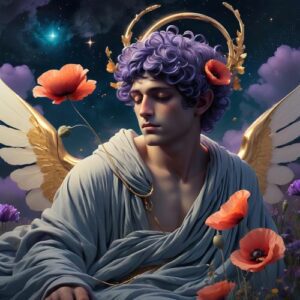
Among the most famous dream figures is Morpheus, the Greek god associated with dreams and one of the Oneiroi, the personifications of dreams in Greek mythology. Morpheus was particularly associated with appearing in human form within dreams, while his brothers Phobetor and Phantasos were connected with animal forms and fantastical or inanimate appearances. Together, the Oneiroi represented different ways the dream world could manifest to a sleeping person.
Greek mythology was not alone in giving dreams supernatural personalities. In Roman tradition, the dream world continued to be associated with divine and personified forces, while Somnus, the Roman personification of sleep, became closely connected with the dream realm. His relationship with dreams demonstrates how mythology frequently blurred the boundary between sleep itself and the visions experienced within it.
Other traditions developed very different dream beings. In Mesopotamian mythology, dreams could function as channels through which gods communicated with humans, particularly rulers and heroes. Rather than always imagining dreams as the work of a single dream deity, Mesopotamian traditions often placed them within a larger supernatural system involving gods, omens, divination, and prophetic messages.
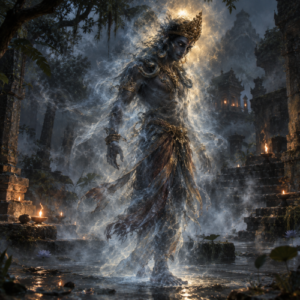
Across South Asian traditions, dreams could similarly involve gods, spirits, ancestors, and supernatural visitors. A dream might be interpreted as divine communication or as an encounter with beings existing beyond ordinary perception. These traditions demonstrate that dream-associated figures were not necessarily limited to beings whose sole function was dreaming; gods and spirits from many mythological systems could enter dreams and use them as a means of communication.
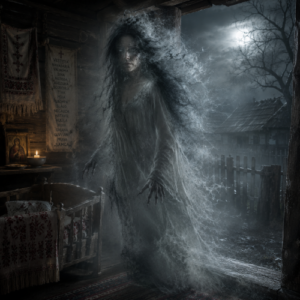
Some cultures also imagined more threatening beings associated with sleep. Mare, from European folklore, is a supernatural creature traditionally connected with oppressive nightmares and the experience of being unable to move during sleep. The figure became part of a wider family of night spirits whose presence helped explain frightening experiences occurring between sleeping and waking.
Dream-associated mythology therefore encompasses far more than dedicated dream gods. It includes personifications of sleep and dreaming, prophetic messengers, spirits that visit sleepers, supernatural beings that cause nightmares, and gods capable of crossing the boundary between waking life and the dream world. Together, these figures reveal how cultures around the world transformed one of humanity’s most mysterious experiences into characters, stories, and supernatural encounters.