


Santelmo : The Mysterious Fire Spirits of Philippine Folklore
At a glance
| Description | |
|---|---|
| Origin | Philippine Mythology |
| Classification | Gods |
| Family Members | N/A |
| Region | Philippines |
| Associated With | Fire, Shapeshifting |
Mythlok Perspective
In Mythlok’s Perspective, Santelmo represents humanity’s enduring discomfort with the unexplained, transforming mysterious lights into stories about restless spirits, unresolved attachments and the dangers of wandering beyond familiar paths. Its closest parallels appear in European traditions of the will-o’-the-wisp and the Japanese hitodama, both of which associate floating lights with the presence of the dead. Yet Santelmo carries a distinctive cultural dimension through Filipino beliefs connecting it with ancestral memory, earthly possessions and unfinished grievances
Santelmo
Introduction
Santelmo is a supernatural phenomenon in Philippine mythology, commonly described as a floating ball of fire that appears over fields, swamps, rivers and other dark landscapes. Unlike mythological figures with individual identities, established genealogies or divine lineages, Santelmo represents a category of mysterious fire apparitions found in Filipino folklore. Its appearances are associated with wandering spirits, unexplained deaths and encounters that leave travellers disoriented or frightened.
The name Santelmo is derived from Apoy ni San Elmo, a Tagalog expression meaning St. Elmo’s Fire. Although the name shares its origins with the atmospheric phenomenon known to European sailors, the Filipino interpretation developed its own supernatural associations. In some accounts, Santelmo is regarded as a restless spirit, while other traditions connect it with unresolved grievances and the lingering attachment of the dead to their earthly possessions.
These beliefs vary across the Philippines, reflecting the different ways communities have interpreted unexplained lights and encounters in their surroundings. Santelmo therefore occupies an interesting position between natural phenomena, spiritual beliefs and traditional storytelling.
Physical Description
Santelmo is primarily described as a luminous ball of fire that moves independently through the darkness. It can hover above the ground, bounce across open fields or roll through marshes and wetlands. Unlike an ordinary flame, which requires combustible material and remains connected to its source, the folkloric Santelmo appears to possess an independent movement that makes it difficult to approach.
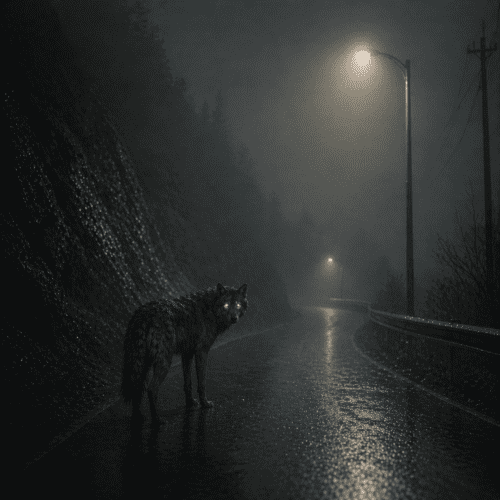
Maximo D. Ramos, in The Creatures of Midnight (1990), records accounts of Santelmo appearing as a fireball in fields and swamps. Some descriptions include the apparition changing into a beast with fire emerging from its mouth. These accounts give Santelmo a more threatening appearance than a simple floating light.
Its movements are particularly significant in traditional descriptions. The apparition may appear at a distance, move away when approached and seemingly encourage observers to follow it. Its unpredictable behaviour contributes to the fear surrounding encounters with Santelmo. Although modern illustrations often portray it as a brightly coloured orb or a humanoid figure surrounded by flames, the traditional descriptions are generally centred on its appearance as a moving ball of fire.
Mythological Context
Santelmo belongs to the supernatural traditions of the Philippines, where unexplained natural occurrences have frequently been interpreted through beliefs about spirits and the afterlife. Its identity is not tied to one particular creation story or religious hierarchy. Instead, it emerges through regional accounts of mysterious lights and encounters experienced by people travelling or working outdoors at night.
One particularly interesting interpretation comes from Bula in Camarines Sur. A 2021 academic study by Jerald Alpe Bermas documents local beliefs that Santelmo represents the lingering memory of someone unable to relinquish earthly possessions, particularly land. The study also records a belief that these apparitions may appear to descendants of people who committed wrongdoings during their lifetimes.
Such accounts demonstrate that Santelmo is not understood uniformly throughout the country. While some traditions associate it with restless spirits, others connect it with memory, injustice and unresolved relationships between the living and the dead.
Origins
The origins of Santelmo are closely connected to the introduction of Spanish terminology into the Philippines. The expression derives from St. Elmo, the traditional name associated with Saint Erasmus of Formia, who became a patron saint of sailors. European sailors used the expression St. Elmo’s Fire to describe luminous electrical discharges appearing around ships’ masts during atmospheric disturbances.
In the Philippines, the name became associated with indigenous beliefs about mysterious floating lights. However, the supernatural interpretations surrounding these apparitions cannot simply be attributed to the European phenomenon. Filipino communities had their own explanations and traditions concerning unexplained lights before the Spanish term became widespread. Historical documentation provides evidence of the regional significance of Santelmo. Ferdinand Blumentritt’s Diccionario Mitológico de Filipinas (1895) records the phenomenon in connection with Samar, particularly the waters around Leyte Gulf and the coastal areas near Basey.
Damiana L. Eugenio’s Philippine Folk Literature: The Legends (2002) and Ramos’s work also preserve accounts of the apparition under different forms of the name.The scientific phenomenon of St. Elmo’s Fire should be distinguished from ball lightning, which describes apparently free-floating luminous spheres. Both provide useful comparisons, but neither establishes the supernatural identity of Santelmo.
Notable Members
Santelmo does not have a documented family, hierarchy or collection of individually named members in traditional Philippine mythology. It is better understood as a collective category of apparitions rather than a single supernatural character. The different manifestations described in folklore are variations of the same general phenomenon. Some appear as floating fireballs, while others are associated with fiery animal-like forms. Their characteristics depend on the particular account and regional interpretation.
An interesting modern example appears in the Filipino supernatural series Trese. Its interpretation features a Santelmo associated with the Great Binondo Fire of the 1950s. This gives the apparition a more individual identity within the fictional narrative, but it should not be confused with the broader traditional belief.
Relationship with Other Beings
Santelmo shares the supernatural landscape of Philippine mythology with various spirits and otherworldly entities, although traditional accounts do not establish a specific family relationship between them. The diwata and enkanto are important categories of supernatural beings in Filipino folklore, often associated with natural environments and places inhabited by unseen forces. Santelmo shares the broader association with the supernatural world but is not necessarily classified as a member of either group.
Its relationship with wandering spirits is more closely connected to traditional interpretations of its origins. In some communities, Santelmo is understood as a manifestation of someone who died with unresolved grievances or an inability to relinquish earthly attachments. This association places it within a wider collection of Filipino beliefs concerning the persistence of the dead among the living.
Similar Beings
Santelmo has similarities with several supernatural lights and apparitions found in other cultural traditions. The European will-o’-the-wisp, also known as ignis fatuus, is perhaps its closest folkloric comparison. Traditionally associated with marshes and wetlands, these mysterious lights are believed to mislead travellers and lure them away from familiar paths.
St. Elmo’s Fire is another important comparison, although it is a genuine atmospheric electrical phenomenon rather than a supernatural entity. It typically appears as a luminous discharge around pointed objects during electrically charged weather conditions. Ball lightning also resembles the traditional descriptions of Santelmo because of its reported appearance as a freely moving sphere of light.
These comparisons demonstrate how different cultures have developed stories around mysterious lights, particularly those appearing in isolated landscapes. However, Santelmo retains its distinctive identity through its connections with Filipino beliefs about spirits, death and unresolved grievances.
Symbolism and Interpretations
Santelmo represents the uncertainty surrounding death, memory and the relationship between the physical and spiritual worlds. Its appearance as a moving fireball makes it an especially compelling symbol of something visible yet impossible to understand or control. In traditions that associate it with restless spirits, Santelmo reflects the belief that death does not necessarily end an individual’s connection with the earthly world. Unresolved grievances, attachment to possessions and unfinished matters may continue to influence the living.
The Bula interpretation provides another dimension to this symbolism. Its association with land ownership and an inability to relinquish possessions connects the apparition with human greed, attachment and the consequences of past wrongdoing. Its reputation for misleading travellers also carries a practical warning. Following an unfamiliar light in darkness can lead people away from safe paths and into dangerous surroundings. Folklore transforms this physical danger into a supernatural encounter, giving mysterious lights a deeper cultural meaning.
Modern Influence
Santelmo continues to appear in contemporary Filipino popular culture, particularly through literature, graphic novels, animation and television. One of its most recognisable modern appearances is in Trese, created by Budjette Tan and Kajo Baldisimo. The 2021 Netflix adaptation introduces audiences to several supernatural beings from Philippine folklore, including Santelmo. The series reimagines the apparition as a fire elemental associated with the Great Binondo Fire, giving it a more defined identity and role in the narrative.
The character’s appearance demonstrates how traditional supernatural beliefs can be adapted for contemporary storytelling without losing their cultural associations. Santelmo also remains part of the broader effort to preserve Philippine folklore through academic research and literature. Works such as Ramos’s The Creatures of Midnight and regional folklore studies document beliefs that might otherwise remain confined to oral storytelling. As interest in Filipino mythology grows internationally, Santelmo offers an example of how local interpretations of mysterious natural occurrences become enduring cultural traditions.
Related Images




Source
Clark, J. (2016). Santelmo: Rekindling Philippine Mythology. The Aswang Project. https://www.aswangproject.com/santelmo/
Ramos, M. (1990). The Creatures of Midnight. Manila: CreateSpace Independent Publishing Platform.
Limos, M. A. (2021). The Enigmatic Philippine Origins of Trese’s Santelmo. Esquire Philippines. https://www.esquiremag.ph/long-reads/features/santelmo-origin-trese-a00293-20210614-lfrm
Spike, I. (2024). The Scorching Santelmo: Real or Myth?. HubPages. https://discover.hubpages.com/education/the-scorching-santelmo-myth-or-reality
Trese Wiki. (n.d.). Santelmo. https://trese.fandom.com/wiki/Santelmo
Frequently Asked Questions
What is Santelmo in Philippine mythology?
Santelmo is a supernatural fire apparition in Philippine mythology, commonly described as a floating ball of fire associated with wandering spirits and unexplained encounters.
Is Santelmo a spirit or a fire elemental?
Santelmo is traditionally understood as a supernatural fire apparition. Some Filipino beliefs associate it with restless souls, while modern fiction portrays it as a fire elemental.
What does Santelmo look like?
Santelmo typically appears as a luminous ball of fire that floats, bounces or moves through fields, swamps and waterways. Some accounts describe it transforming into a fiery beast.
Why is Santelmo associated with St. Elmo's Fire?
Santelmo comes from the Tagalog expression Apoy ni San Elmo, meaning St. Elmo’s Fire. However, the Filipino folkloric apparition is distinct from the scientific electrical phenomenon.
Does Santelmo lure people into danger?
Yes. Filipino folklore describes Santelmo as a mysterious fireball that attracts travellers, leads them away from familiar paths and causes confusion or disorientation.


