


Manlalayog : The Terrifying Hair-Covered Spirit of the Philippines
At a glance
| Description | |
|---|---|
| Origin | Philippine Mythology |
| Classification | Spirits |
| Family Members | N/A |
| Region | Philippines |
| Associated With | Long Hair, Evil |
Mythlok Perspective
In Mythlok’s Perspective, the Manlalayog represents how familiar human features can become instruments of supernatural fear. Her extraordinary hair transforms an ordinary physical characteristic into a weapon, challenging conventional associations between femininity and vulnerability. A similar image appears in Japanese folklore through the long-haired female apparition Sadako, although their origins and supernatural roles differ. While Sadako embodies the terror of an unresolved curse, the Manlalayog reflects regional fears of physical danger and the unknown lurking after dark.
Manlalayog
Introduction
Among the supernatural beings found in Philippine folklore, the Manlalayog occupies a particularly unsettling place. Described as a female spirit covered in hair from head to toe, this nocturnal creature is feared for its unusual appearance and the deadly way it attacks unsuspecting victims. Unlike mythological figures associated with divine intervention, creation or heroic battles, the Manlalayog belongs to the traditions surrounding mysterious encounters and dangers lurking after dark.
Its stories are particularly associated with Cagayan de Oro in Mindanao, where regional folklore preserves accounts of supernatural beings that inhabit the boundaries between the human and spirit worlds. Sometimes known as Manlalayug, the name refers to a category of supernatural female beings rather than a single individual with a distinct identity. Its extraordinary hair, which reportedly becomes longer and more dangerous after sunset, forms the defining feature of this creature and distinguishes it from other entities in Philippine folklore.
Physical Description
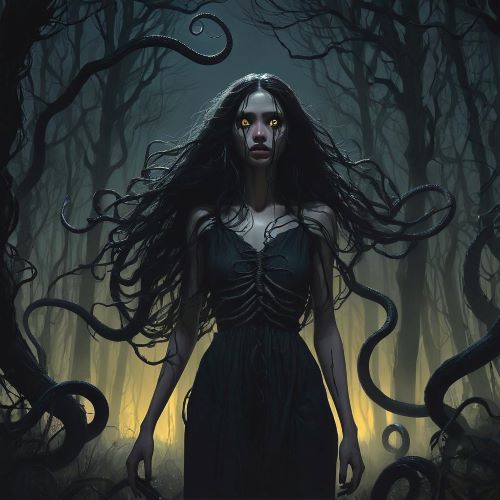
The Manlalayog is traditionally described as a woman whose entire body is covered in hair, extending from the crown of her head to the tips of her toes. This is not ordinary body hair but an unusual supernatural characteristic that becomes particularly dangerous during the night. As darkness falls, her hair reportedly grows longer, becoming thick, stiff and wire-like. This transformation gives the Manlalayog an increasingly threatening appearance and provides her with the primary means of attacking her victims.
Rather than relying on claws, teeth or conventional physical weapons, she uses her extraordinary hair to overpower those who encounter her. Her most disturbing characteristic is the ability to force strands of hair into the natural openings of a victim’s body, eventually causing suffocation and death. The descriptions of the Manlalayog emphasise her broadly human appearance, making her particularly unsettling because her supernatural nature emerges from an otherwise familiar physical form. Some later accounts also associate her with an unpleasant smell, although this characteristic is not consistently recorded across descriptions.
Mythological Context
The Manlalayog belongs to the wider tradition of supernatural beings found in Philippine folklore, where spirits and mysterious creatures frequently appear in familiar landscapes and communities. These entities often represent dangers that cannot be explained through ordinary experience, particularly those associated with darkness, isolation and unfamiliar surroundings. The Manlalayog is primarily a nocturnal being, and the transformation of her hair after sunset reinforces the association between nighttime and supernatural vulnerability.
Her stories also contain an unusual gender dimension. Unlike several other Philippine supernatural creatures whose victims are predominantly pregnant women, children or the sick, the Manlalayog is traditionally associated with attacks on men. She reportedly overpowers her victims through physical struggle before using her hair to kill them.
This distinctive behaviour separates her from many other supernatural figures in the Philippine tradition. The Manlalayog is therefore best understood as a regional folkloric entity with a recognisable collection of characteristics rather than an individual spirit with a personal history, genealogy or established position within a supernatural hierarchy.
Origins
The Manlalayog is particularly associated with Cagayan de Oro and the surrounding region of Mindanao. Its characteristics appear in documented collections of Philippine folk beliefs, including Francisco R. Demetrio’s The Encyclopedia of Philippine Folk Beliefs and Customs, Volume 1, published by Xavier University in 1990. The alternative spelling Manlalayug also appears in accounts of the creature.
An interesting linguistic association connects its name with the Visayan word gilayog, meaning to wrestle down. This connection is relevant because the Manlalayog is traditionally described as physically struggling with its victims before killing them. However, the precise linguistic development of the name and the historical period in which the creature first entered regional storytelling remain uncertain. One particularly interesting account connects the Manlalayog with the Second World War.
According to folklore researcher Karl Gaverza, American and Filipino soldiers reportedly spread stories about the creature to frighten Japanese soldiers hiding in the mountains. The frightening reputation of the long-haired spirit was supposedly used to encourage the soldiers to abandon their hiding places. Although this account is an intriguing example of folklore being employed during wartime, it is best understood as a reported historical anecdote rather than a conclusively documented military operation. It nevertheless demonstrates how traditional supernatural beliefs could become part of the psychological landscape of a community during periods of conflict.
Notable Members
Unlike mythological families or groups of divine beings, the Manlalayog tradition does not identify individual members with separate names, genealogies or personal histories. The term describes a type of supernatural female being whose members share broadly similar physical characteristics and predatory behaviour. Their collective identity is defined by their extraordinary hair, nocturnal transformation and unusual method of killing.
Consequently, there are no established individual Manlalayog figures who can be distinguished through separate adventures, relationships or mythological narratives. This collective nature is important when understanding the creature’s place within Philippine folklore. The Manlalayog is not a goddess, ancestral figure or named supernatural personality but a category of beings recognised through recurring descriptions in regional storytelling.
Relationship with Other Beings
The Manlalayog exists within the broader supernatural landscape of Philippine folklore, which includes numerous spirits and creatures associated with predatory behaviour, shapeshifting and encounters with humans. One possible point of comparison is the Aswang, a broad category of supernatural beings known for their association with nighttime attacks and unusual physical transformations.
Some modern descriptions group the Manlalayog within the wider Aswang tradition, although classifications differ between folklore collections. It is important to distinguish the specific characteristics of the Manlalayog from the much broader range of beings described as Aswang. The Manlalayog is recognised primarily through its hair-covered body and its ability to kill through physical contact, whereas Aswang traditions encompass several distinct types of supernatural creatures. Its association with wartime storytelling also illustrates how supernatural beings could become part of local narratives about human conflict, fear and survival.
Similar Beings
The Manlalayog has interesting similarities with supernatural female figures found in other Asian folklore traditions, particularly those associated with unusually long or dangerous hair. Japanese folklore contains several female apparitions whose physical appearance and supernatural abilities involve long hair. The Iso Onna, for example, is a coastal apparition associated with dangerous encounters and supernatural attacks.
Another figure, the Hari Onna, appears in Japanese popular representations of folklore as a supernatural woman with needle-like hair. These figures offer interesting comparative material because they transform a familiar human characteristic into something threatening and unnatural. Within Philippine folklore, the Manlalayog can also be compared with the Manananggal, a female-associated supernatural creature known for attacking human victims at night. However, their physical appearances and methods of hunting are fundamentally different.
The Manananggal separates its upper body from its lower half and flies in search of victims, while the Manlalayog relies on its extraordinary hair to overpower its prey. These similarities and differences demonstrate how different societies have developed distinct supernatural figures around recurring fears of nighttime encounters, predatory spirits and the transformation of the human body.
Symbolism and Interpretations
The Manlalayog offers several interesting interpretations within the context of regional folklore. Its association with darkness reflects the traditional fear of environments where ordinary human perception becomes limited and unexplained dangers are believed to emerge. The transformation of its hair after sunset reinforces the idea that familiar surroundings can become threatening when darkness removes the reassurance of visibility.
Its extraordinary hair also represents an unusual transformation of something ordinarily associated with beauty, identity and personal appearance into an instrument of violence. This reversal challenges the distinction between familiar physical characteristics and supernatural danger. The creature’s ability to overpower male victims also presents an interesting contrast to traditional representations of physical strength and gender.
Rather than relying on conventional weapons or exceptional muscular power, the Manlalayog uses an unusual biological feature to overcome its opponents. Its reported use during the Second World War adds another dimension to its cultural significance, illustrating how supernatural stories can become tools for influencing human behaviour during periods of uncertainty and conflict. The Manlalayog therefore represents more than a frightening creature in regional storytelling; it also provides an example of how communities use supernatural narratives to express anxieties about vulnerability, physical danger and the unknown.
Modern Influence
The Manlalayog continues to attract interest among researchers, folklore enthusiasts and artists documenting the supernatural traditions of the Philippines. Its distinctive appearance makes it particularly suitable for visual representations of regional folklore, especially because its defining characteristics are considerably different from those of more widely recognised Philippine supernatural creatures. The international popularity of horror stories featuring long-haired female apparitions has also created opportunities for comparisons with the Manlalayog.
Japanese horror cinema, particularly Ringu and its American adaptation The Ring, popularised the image of a terrifying female apparition with long, dark hair. However, there is no established historical evidence that the Manlalayog directly inspired these films. The similarities are better understood as examples of how different cultures have used the image of long-haired supernatural women to communicate fear and unease.
The growing availability of digital folklore archives, independent research and illustrated cultural collections has also helped bring lesser-known regional beings into wider discussions about Philippine heritage. The Manlalayog remains a distinctive example of how local storytelling transforms familiar human characteristics into something extraordinary and frightening, preserving a regional supernatural tradition that might otherwise remain unfamiliar to audiences beyond Mindanao.
Related Images





Sources
Aswang Project. (n.d.). Manlalayog, the long-haired wraith. The Aswang Project. Retrieved November 1, 2025, from https://www.aswangproject.com/manlalayog/
PHSpirits. (n.d.). Manlalayog. PHSpirits. Retrieved November 1, 2025, from https://phspirits.com/manlalayog/
Ramos, M. D. (1990). Creatures of Philippine lower mythology. University of the Philippines Press.
Jocano, F. L. (1969). Philippine mythology. Quezon City: Capitol Publishing House.
Demetrio, F. R. (1992). Encyclopedia of Philippine folk beliefs and customs (Vol. 2). Xavier University Press.
GMA Network. Know Your Philippine Regions: Halloween Edition. https://www.gmanetwork.com/regionaltv/specials/29617/know-your-philippine-regions-halloween-edition/story/
Frequently Asked Questions
Who is Manlalayog in Filipino mythology?
Manlalayog is a spirit from Filipino folklore known for its long, flowing hair that symbolizes both beauty and terror. Often described as a ghostly woman haunting isolated places, she is believed to lure or frighten those who cross her path, representing the mysterious connection between nature, the spirit world, and human fears.
What does the name Manlalayog mean?
The name Manlalayog roughly translates to “the one with long hair” in some regional interpretations of Filipino languages. It highlights the spirit’s defining feature—her endless, black hair, which is said to move on its own and even possess supernatural power.
Is Manlalayog considered good or evil?
Manlalayog’s nature depends on the story or region. In some tales, she is a vengeful spirit punishing those who harm women or nature. In others, she serves as a guardian of sacred spaces or a warning figure meant to teach respect and humility. This duality makes her both feared and revered in folklore.
Where is Manlalayog said to appear?
Legends say Manlalayog appears near rivers, forests, or abandoned villages, especially at dusk or during full moons. Her presence is often marked by the sound of hair rustling in the wind or a faint scent of wildflowers before she manifests in her ghostly form.
What is the cultural significance of Manlalayog today?
In modern times, Manlalayog has become a symbol of female strength and mystery in Filipino storytelling. She appears in literature, art, and short films as a reminder of the deep ties between the spiritual world and human emotion, bridging old beliefs with contemporary interpretations of womanhood and nature.


